Injection blow molding (IBM) and injection stretch blow molding (ISBM) are both one-step plastic container manufacturing processes that begin with injection moulding. Both produce containers without parting lines on the body and with precise neck thread geometry. Both are widely used across pharmaceutical, cosmetic, and food packaging. And despite the apparent similarity of their names, they are fundamentally different processes that produce structurally and optically different containers — suited to different applications, different materials, and different production economics.
The confusion between the two is understandable. Both processes are sometimes referred to as “one-step blow moulding.” Both use a rotary station machine architecture. Both inject a preform and then blow it into a finished container. The critical difference lies in what happens between injection and blowing — and that difference has profound consequences for the physical properties of the container produced.
This guide explains the engineering distinction between IBM and ISBM, clarifies which process produces which type of container, identifies the applications where each is the correct choice, and describes the Ever-Power machine range covering both technologies.
The One Difference That Changes Everything
Both processes inject a preform and blow a bottle. The distinction is whether a stretch rod is used — and that single engineering decision determines everything about the finished container.
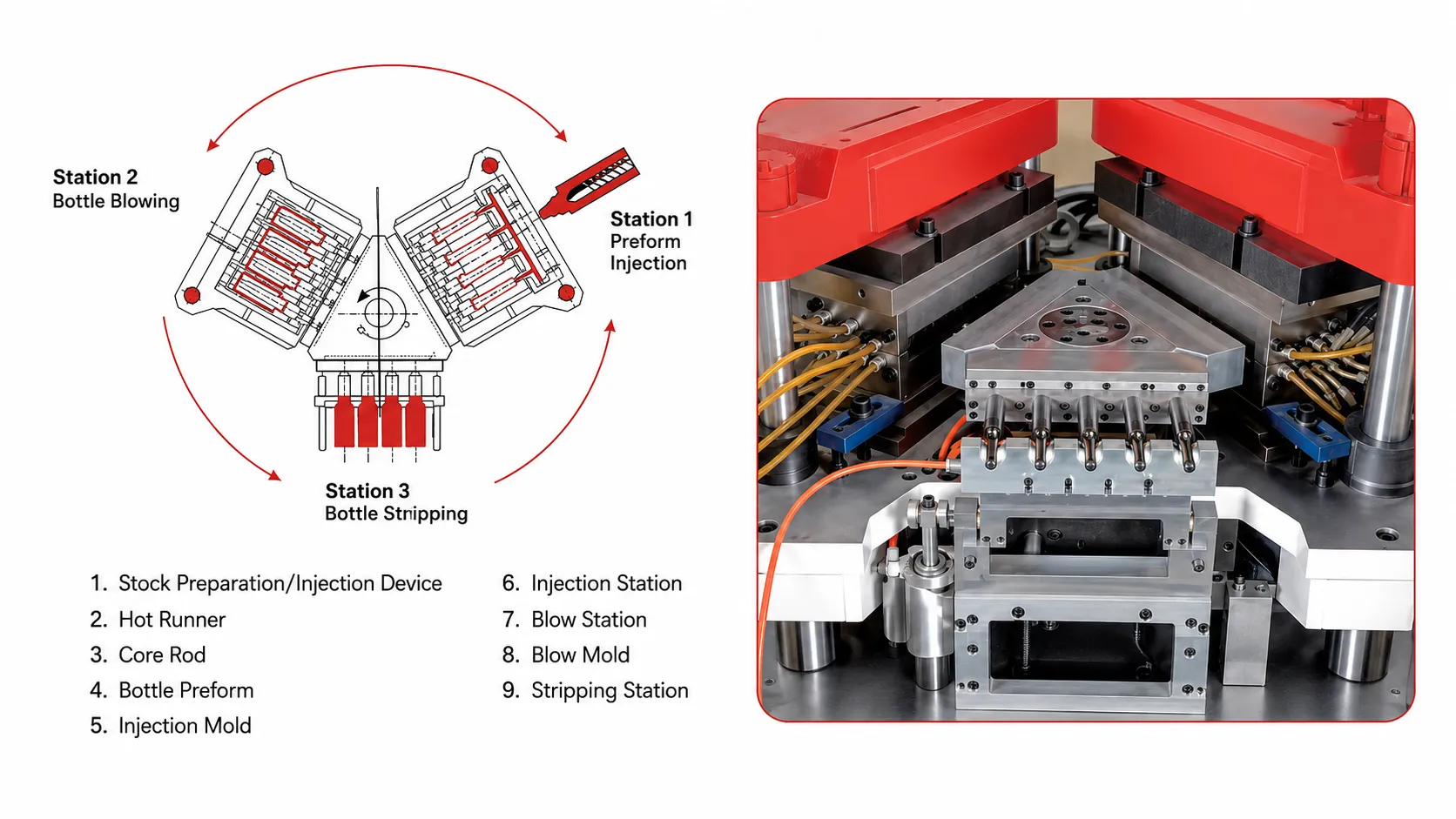
How the IBM Process Works: Station by Station
The 3-station IBM machine rotates through injection, blowing, and ejection in one continuous cycle
At Station 1, molten resin is injected around a precision core rod to form the preform. The core rod defines the internal bore of the container neck, guaranteeing closure thread accuracy that extrusion blow moulding cannot match. At Station 2, the core rod — still carrying the thermally active preform — indexes into the blow mould cavity. Compressed air is admitted through the core rod, inflating the preform against the cooled blow mould surface to form the finished container. At Station 3, the core rod retracts and the finished container is ejected by a stripper plate. All three operations occur simultaneously on every machine cycle.
The core rod remains inside the preform throughout transfer to the blow station, maintaining the internal neck geometry and acting as a mandrel during blowing. This continuous core rod contact is the engineering reason IBM containers have no internal parting line and consistently superior neck thread precision compared to all extrusion-based blow moulding alternatives.
IBM Production Line Components
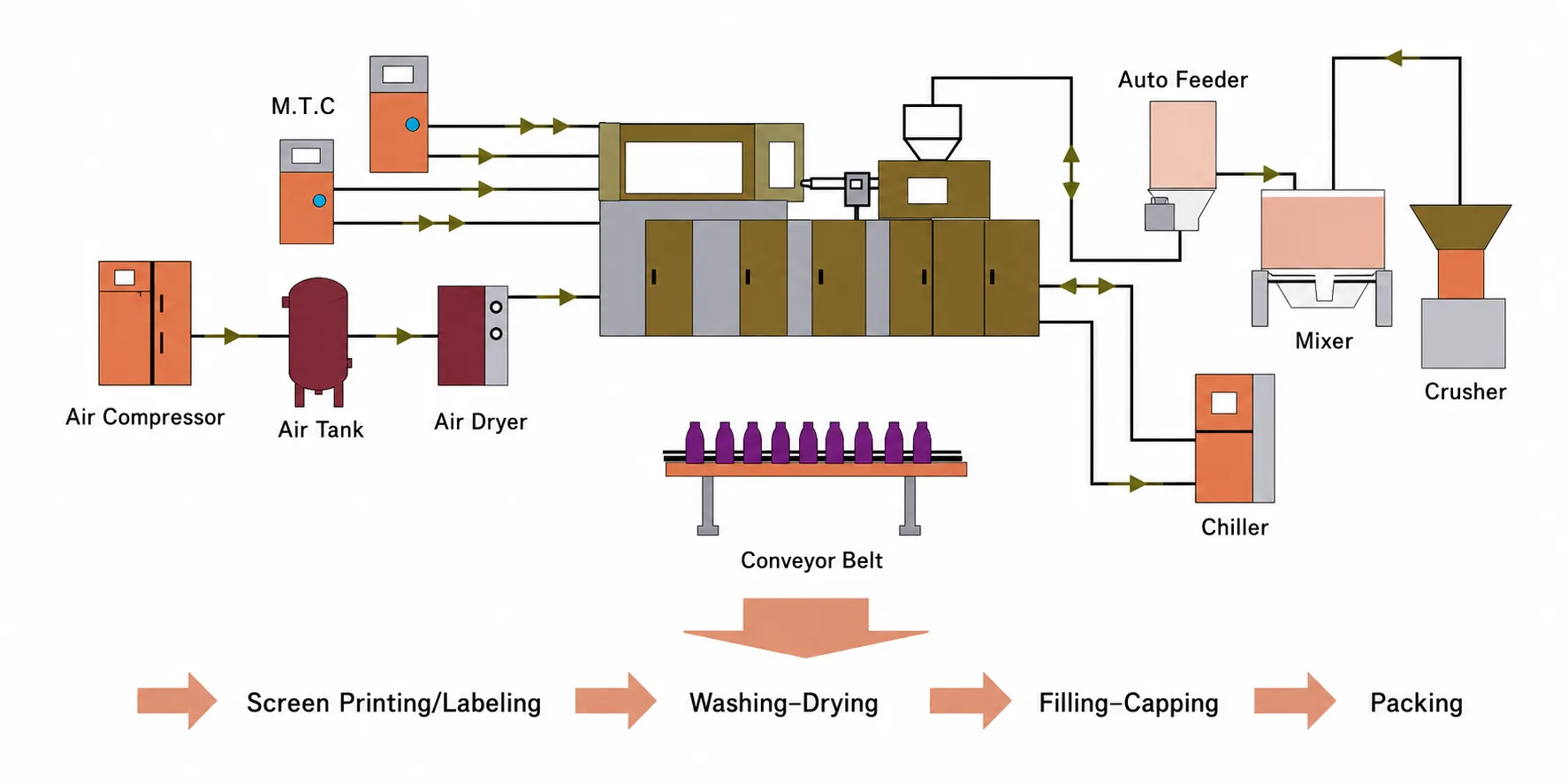
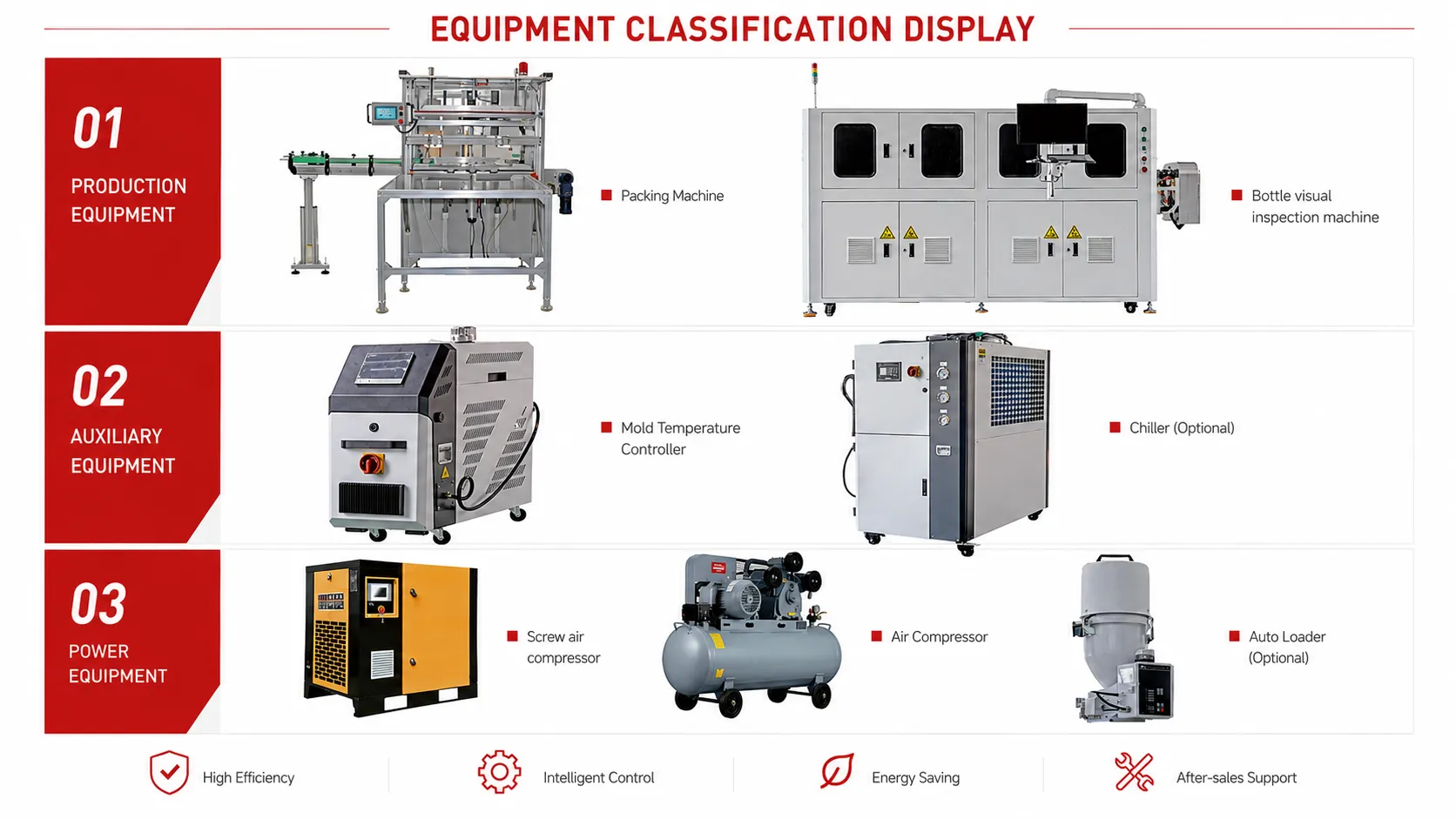
A complete IBM production line integrates several upstream and downstream components around the core machine
The IBM machine itself is the central element, but consistent pharmaceutical-grade output requires the surrounding production line to be correctly specified. Upstream, a hopper dryer removes residual moisture from the resin to the levels required by each material — PP typically requires 2 to 4 hours at 80 degrees Celsius, while materials with higher hygroscopicity require more controlled drying protocols. A mould temperature controller maintains the blow mould cavity at a consistent surface temperature, ensuring repeatable container geometry across long production runs.
Downstream, a conveyor system transfers finished containers to inspection, counting, and packaging stations. For pharmaceutical production, in-line vision inspection systems verify container dimensions, check for contamination, and confirm closure fitment before packing. Ever-Power can advise on complete production line layouts and integration of auxiliary equipment with any IBM machine model.
IBM vs ISBM: Container Property Comparison
The physical property differences are measurable, significant, and directly relevant to packaging specification decisions
When PET is injected and cooled without stretching, the molecular chains solidify in a random, amorphous arrangement. The container wall is relatively weak, somewhat hazy, and has moderate gas barrier performance. This is the IBM container. When PET is injected and then stretched and blown while still above its glass transition temperature, the mechanical energy of stretching forces the long polymer chain molecules to align in both the axial and hoop directions simultaneously. These aligned chains form a semi-crystalline structure that is fundamentally stronger than the amorphous structure.
The practical consequence of this molecular difference is visible in every performance metric that packaging engineers use to specify containers — tensile strength, top-load strength, drop impact resistance, oxygen barrier, and optical clarity are all superior in biaxially oriented ISBM containers compared to IBM containers of equivalent wall thickness and resin weight.
IBM Mould Design and Characteristics
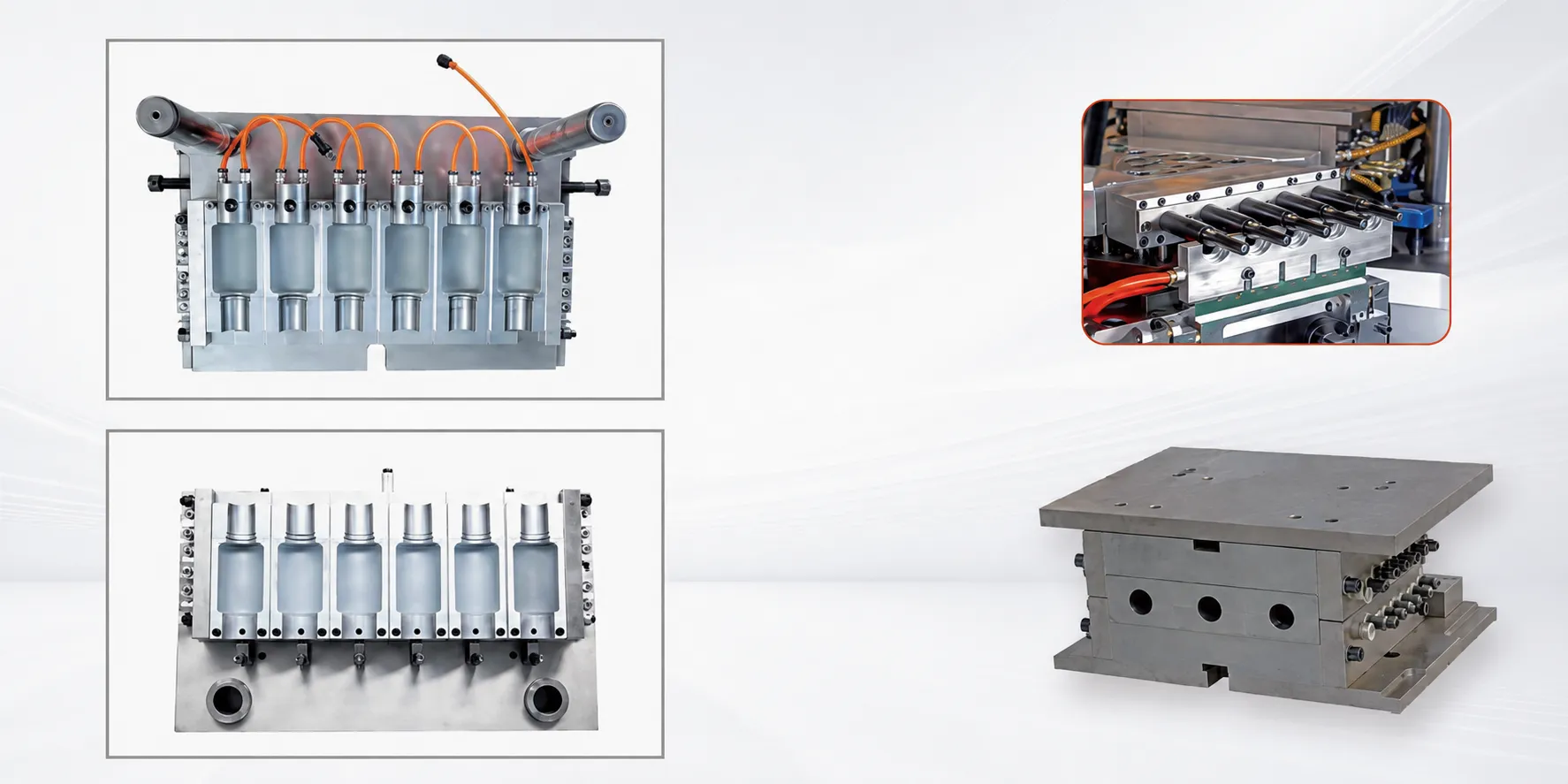
The IBM mould set consists of the injection mould, the blow mould, and the core rod — three elements that must work in precise dimensional harmony
The injection mould cavity defines the external geometry of the preform and, critically, the complete neck thread profile of the finished container. Because the neck thread is formed by injection rather than by the blow mould, IBM containers achieve neck thread tolerances that are impossible with extrusion blow moulding — typically held to within ±0.05 mm on thread pitch diameter.
The core rod is the precision mandrel that defines the internal bore of the neck. Its diameter and surface finish determine the sealing performance of the closure. Core rod material is typically H13 tool steel with a nitriding surface treatment to resist the abrasive wear from repeated resin contact at injection temperatures.
The blow mould defines the external container body profile. Because the body is formed by air pressure rather than injection pressure, blow mould materials can be less thermally demanding than injection mould steels. Ever-Power designs and manufactures IBM mould sets in-house, with full compatibility guaranteed across all EP-IBM machine platforms.
IBM Applications: Where the Process Excels
IBM’s combination of injection-formed neck precision, no-parting-line body, and high cavitation makes it the dominant process for small pharmaceutical and cosmetic containers
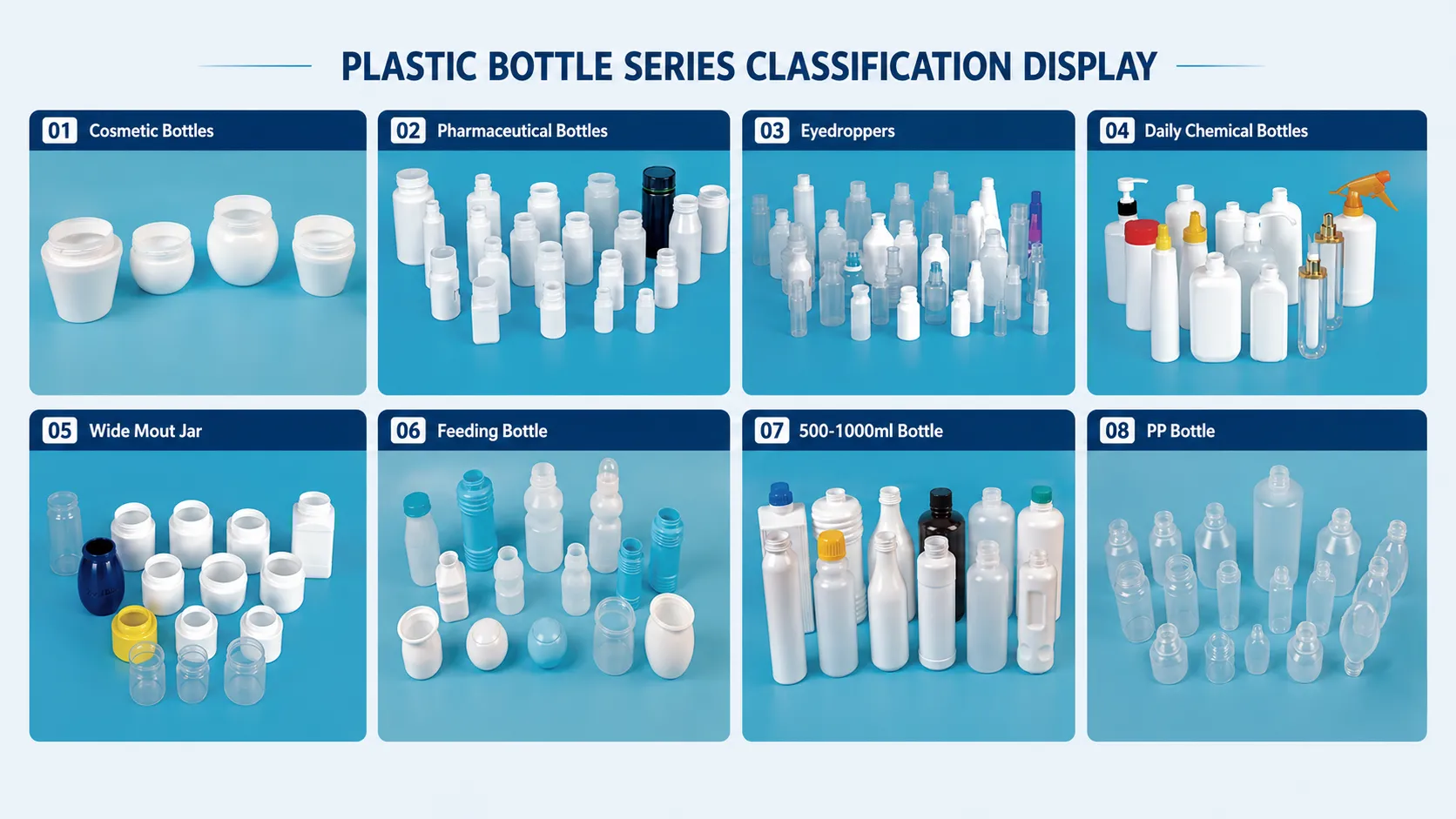
Pharmaceutical Eye Drop and Nasal Spray Bottles
Small volume (1 to 30 ml), very precise neck finish required for tip or pump fitment, PP or LDPE material, high cavity count. IBM’s ability to produce consistent small containers at high cavitation with no parting line makes it the standard pharmaceutical process for this category. The injection-formed neck bore holds ±0.05 mm on internal diameter — a specification extrusion blow moulding cannot reliably achieve.
Small Cosmetic Vials and Roller Ball Bottles
Perfume samples, roller ball bottles, lip balm containers, and small serum vials. IBM produces these with smooth body surfaces, no flash, and precise closure compatibility. HDPE, PP, or PC at 5 to 100 ml volumes where dimensional accuracy and closure precision matter more than optical clarity or gas barrier performance.
Diagnostic Reagent and Specialty Chemical Vials
Diagnostic reagent vials, contact lens solution bottles, veterinary pharmaceutical containers, and specialty chemical vials. IBM in HDPE or PP produces chemically resistant containers with controlled oxygen ingress suitable for sensitive formulations where biaxial orientation adds no additional requirement over amorphous PP or HDPE.
IBM Auxiliary Equipment
Correct auxiliary equipment specification is as important as the IBM machine itself for achieving consistent pharmaceutical-grade output
A complete IBM installation requires a resin hopper dryer sized to the machine’s hourly throughput, a mould temperature controller (MTC) maintaining independent temperature zones for the injection and blow moulds, a chiller providing cooling water to the blow mould at 8 to 15 degrees Celsius, and a material conveying system to feed resin from bulk storage to the hopper. For pharmaceutical applications, a cleanroom interface enclosure can be fitted over the ejection station to receive containers under positive-pressure clean air.
Downstream, a container counting and packaging system ensures the correct quantity of containers per bag, box, or tray. Vision inspection systems can verify container dimensions and check for contamination on 100% of output. Ever-Power can provide guidance on the complete auxiliary equipment package appropriate for your production volume, material, and application.
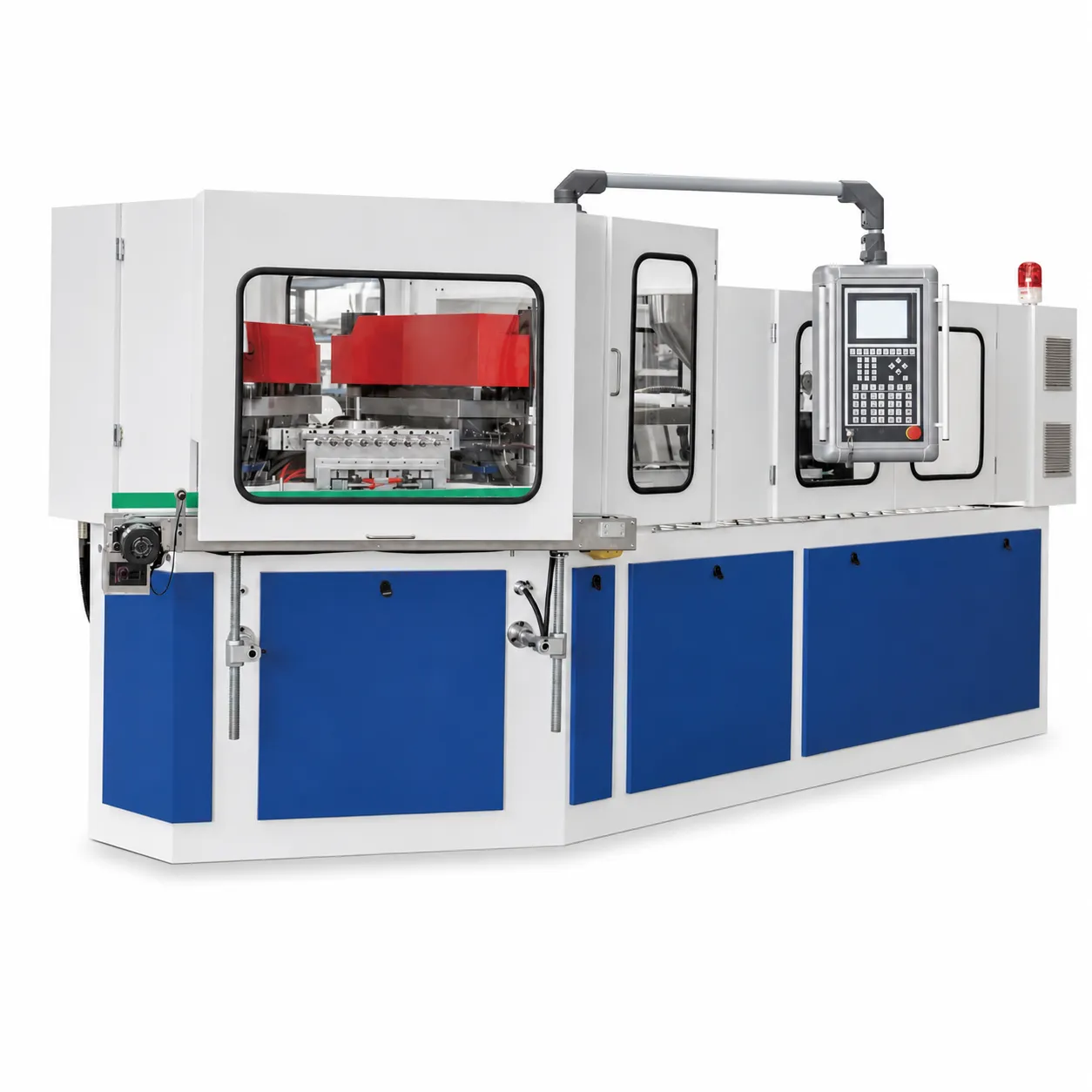
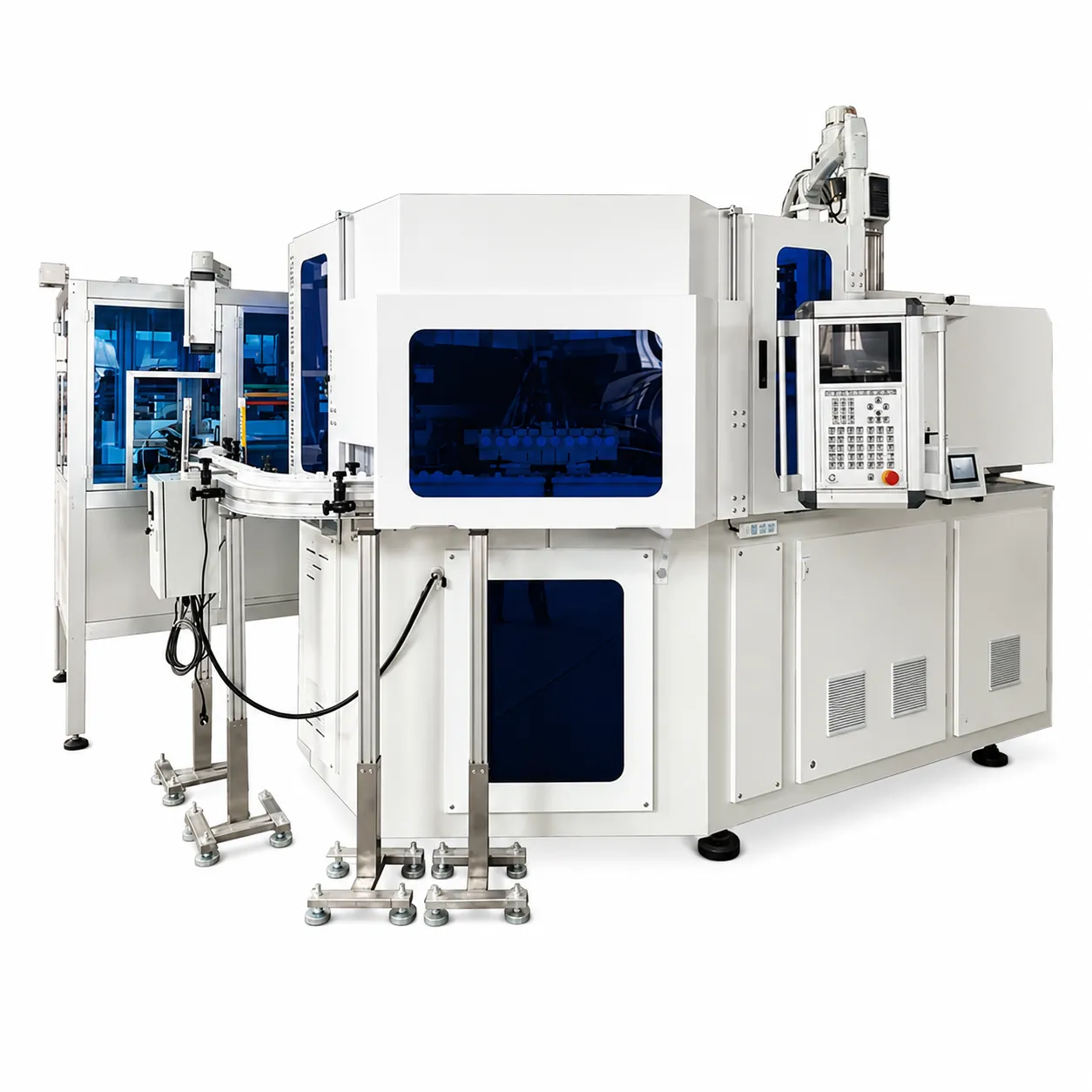
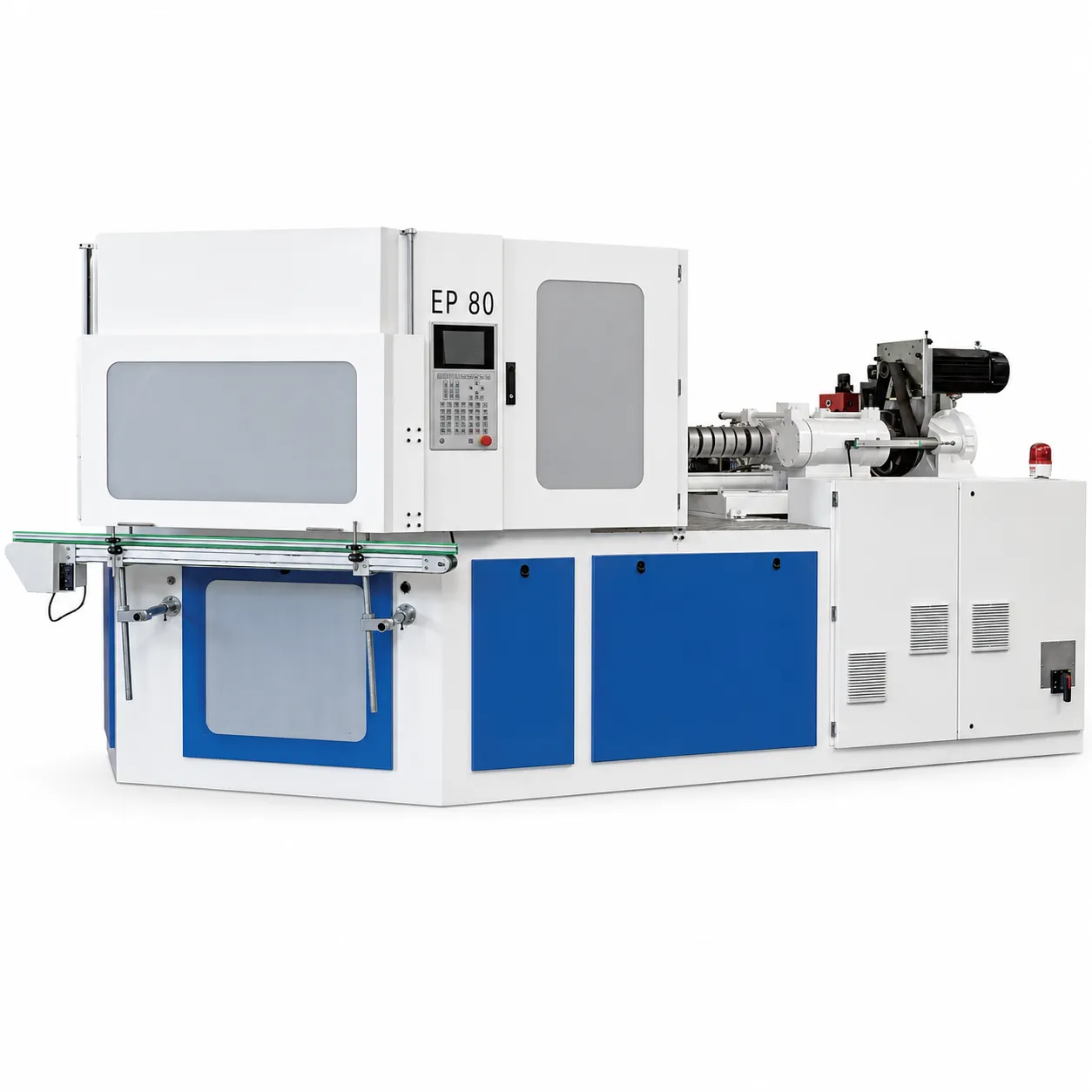
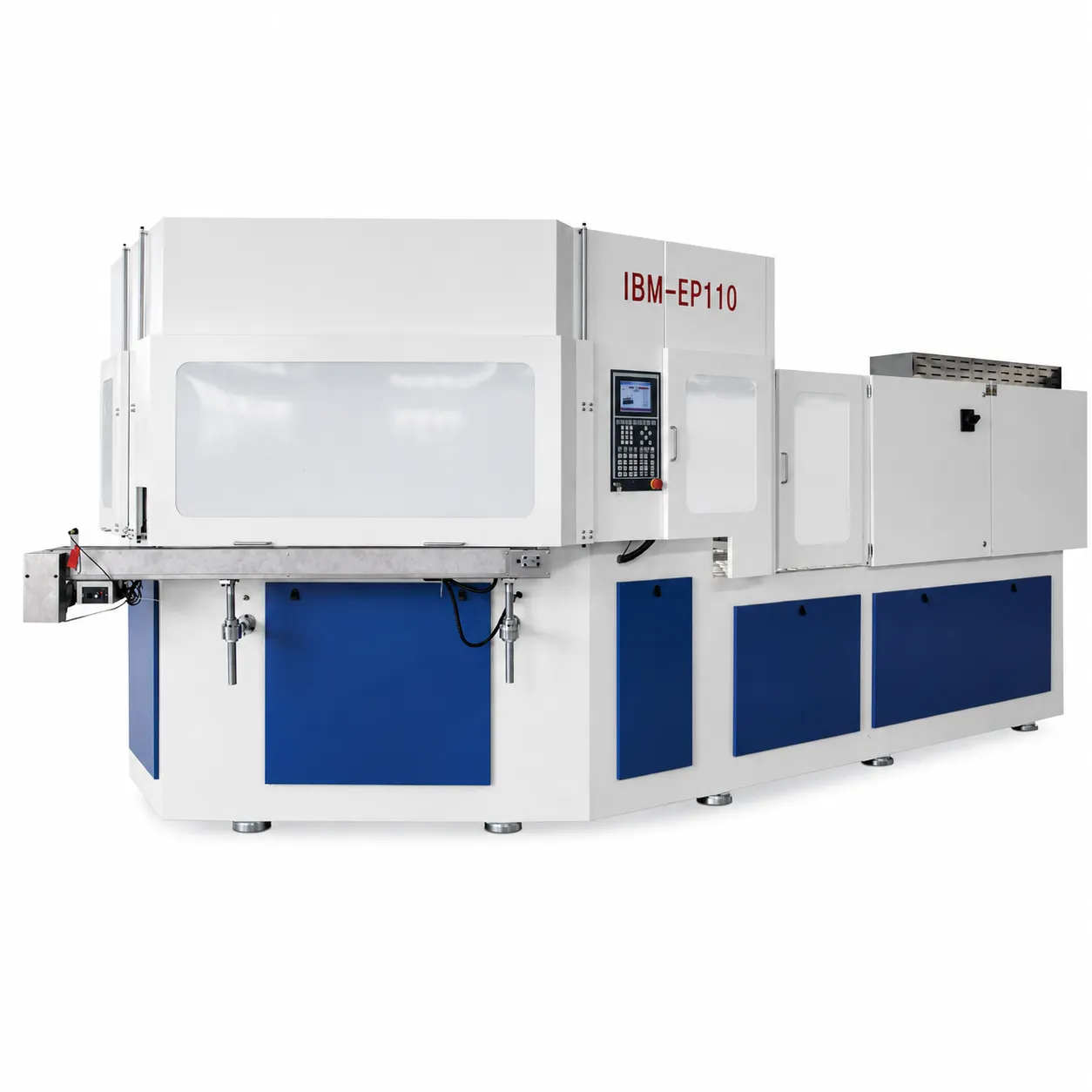
Ever-Power EP-IBM Machine Series
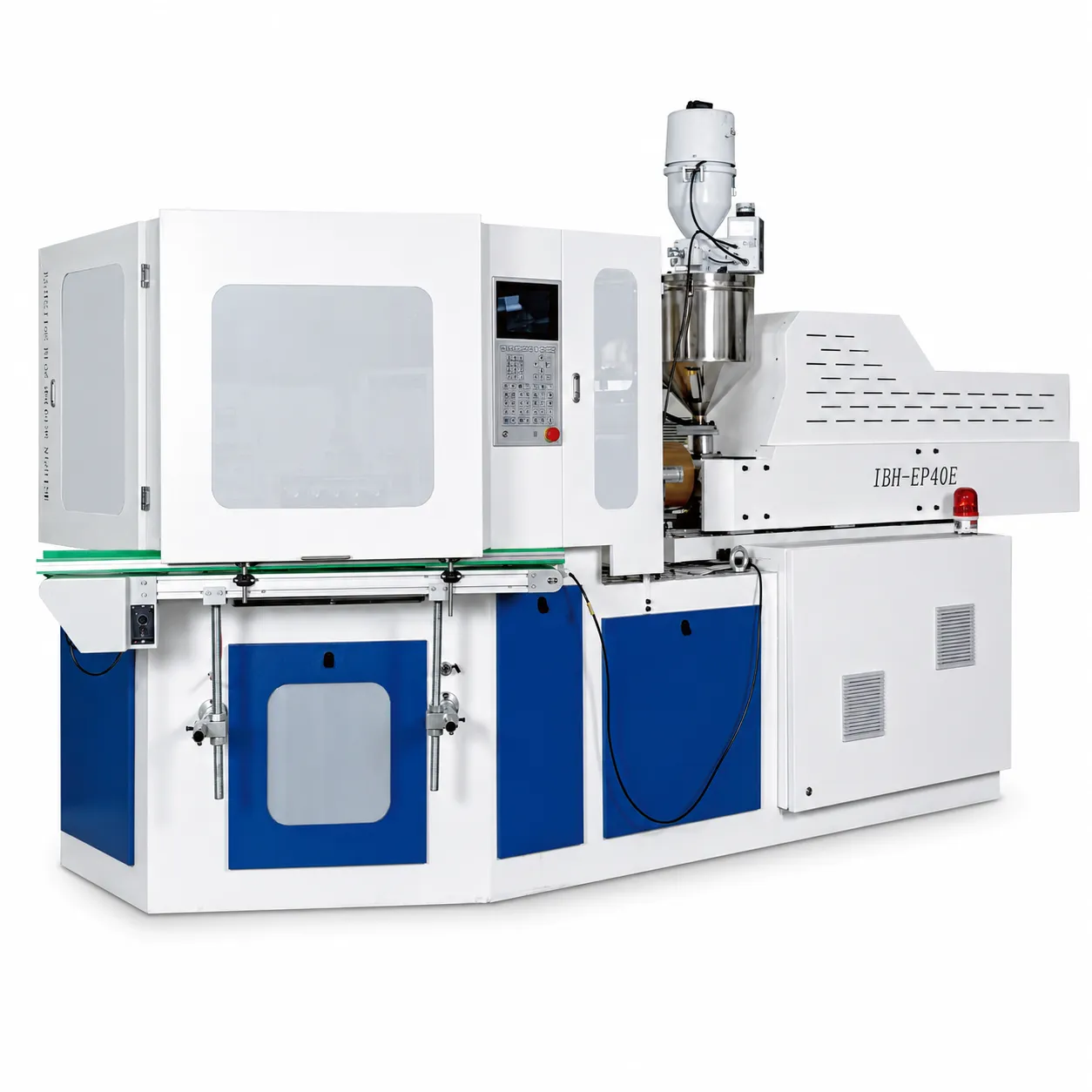
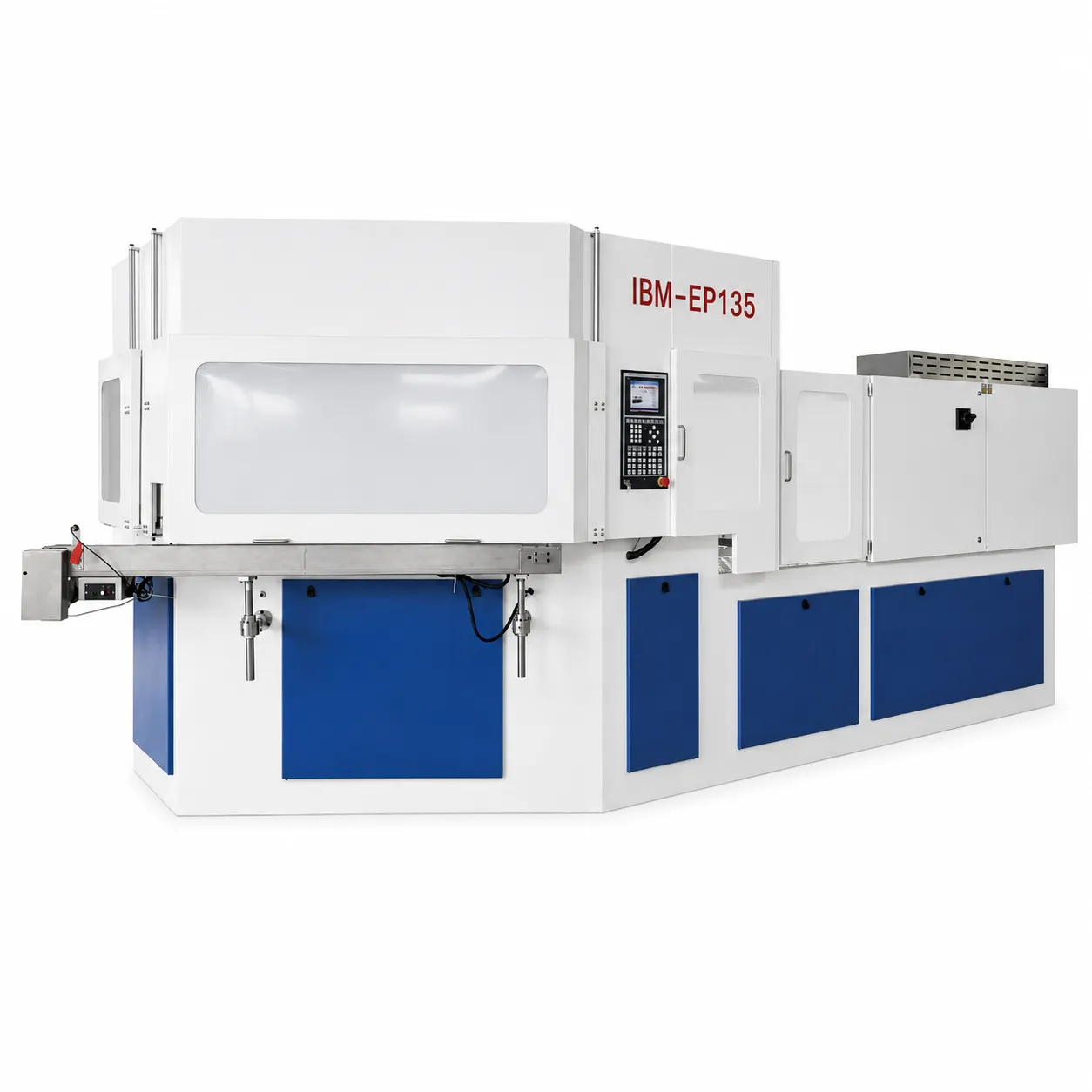
Six IBM machines covering clamping forces from 40 KN to 135 KN, serving pharmaceutical, cosmetic, and specialty chemical packaging across global markets
IBM or ISBM: A Practical Decision Framework
Use the container specification to drive the process selection — never the other way around
Not Sure Whether Your Application Needs IBM or ISBM?
Send us your container drawing, material specification, and volume target. Our engineers will recommend the correct process, the appropriate machine from our IBM and ISBM ranges, and provide factory-direct pricing within 48 hours — at no charge.
Frequently Asked Questions
Technical comparisons in this article are based on Ever-Power engineering experience and industry-standard process characterisation data. Application suitability recommendations are general guidance — specific applications should always be assessed with container drawings and material specifications. Contact [email protected] or visit our contact page for application-specific engineering advice.