Description
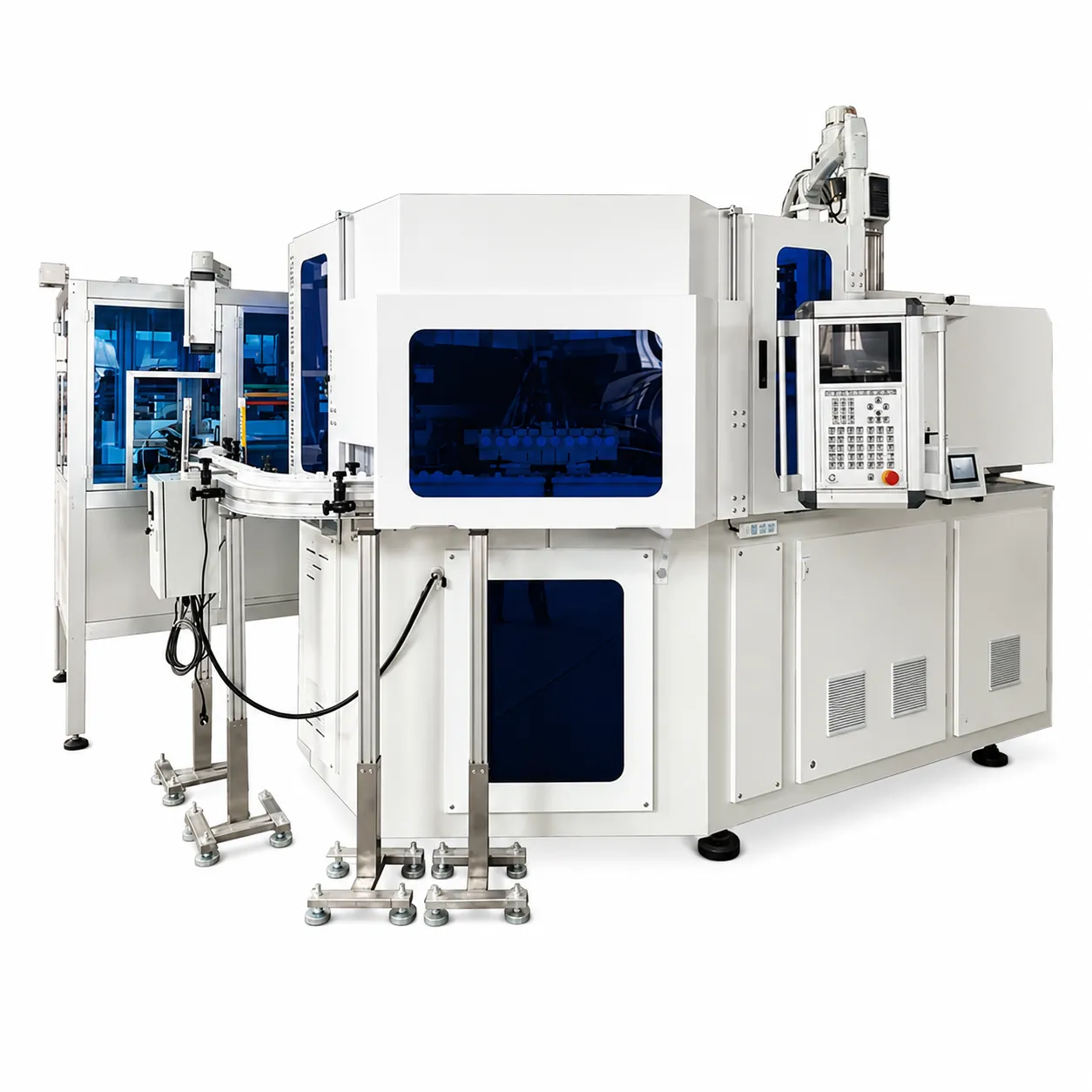
Technical Specifications
| Parameter | Specification |
|---|---|
| Injection System | |
| Screw Diameter | 45 / 50 mm |
| Screw L/D | 22:1 |
| Injection Weight | 280 / 360 g |
| Heating Power | 10.3 + 4 KW |
| Barrel Zones | 3+N |
| Injection Stroke | 200 mm |
| Clamping System | |
| Injection Clamping Force | 400 – 800 KN (Adjustable) |
| Injection Opening Stroke | 140 mm |
| Blow Clamping Force | 200 KN |
| Blow Opening Stroke | 140 mm |
| Drive System | |
| Drive Type | Fully Electric — All Servo Motors |
| Hydraulic Oil | None |
| Injection Servo Motor | 22 KW |
| Material Feeding Servo Motor | 18 KW |
| Clamping Servo Motor | 15 + 15 KW |
| Carriage Servo Motor | 1 KW |
| Ejector Servo Motor | 0.4 KW |
| Rotary Servo Motor | 2.9 KW |
| Mould | |
| Max Platen Size | 600 x 420 mm |
| Mould Thickness | 240 mm |
| Max Bottle Diameter | 120 mm |
| Max Bottle Height | 220 mm |
| Volume Range | 1 – 2000 ml |
| Stripping Stroke | 220 mm |
| Utilities | |
| Compressed Air | 0.8 – 1.2 MPa |
| Machine | |
| Dimensions (L×W×H) | 3.0 × 1.3 × 1.7 M |
| Net Weight | 6 T |
Max Cavity Reference
| Volume | 10 ml | 30 ml | 60 ml | 100 ml | 250 ml | 500 ml | 1000 ml |
|---|---|---|---|---|---|---|---|
| Max Cavities | 14 | 12 | 10 | 8 | 5 | 3 | 2 |
*All cavity counts are for reference only and depend on bottle shape, wall thickness, and mould configuration. Contact our team for a cavity assessment specific to your bottle design.
Overview
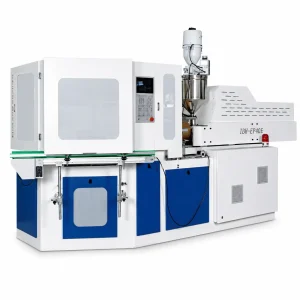
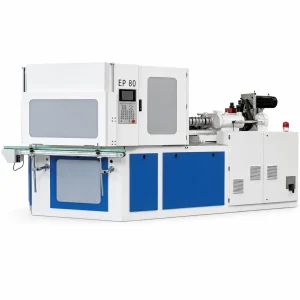
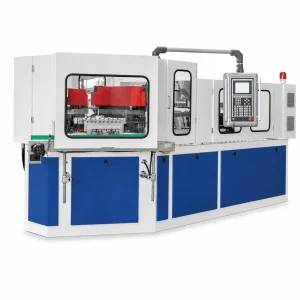
The EP-IBM60HE is the all-electric flagship of the Ever-Power EP-IBM series. Every hydraulic actuator is replaced by a dedicated servo motor, eliminating hydraulic oil from the machine entirely. The result is a machine with no oil contamination risk in the mould zone, a cycle speed approximately 20% faster than equivalent hydraulic IBM machines, and energy consumption roughly 30% lower per unit of output.
At 30 ml with a cycle time of 8.2 seconds, the EP-IBM60HE produces 105,000 bottles in a standard 24-hour shift, with a maximum of 115,000 bottles per day under optimised conditions. Energy consumption is approximately 12 kWh per hour — roughly 30% less than a comparable hydraulic machine. For pharmaceutical manufacturers operating under GMP or Brazilian BPF, the machine’s bottom-up design guarantees no lubricating oil above the mould zone at any point during operation, meeting hygiene requirements without additional enclosure infrastructure.
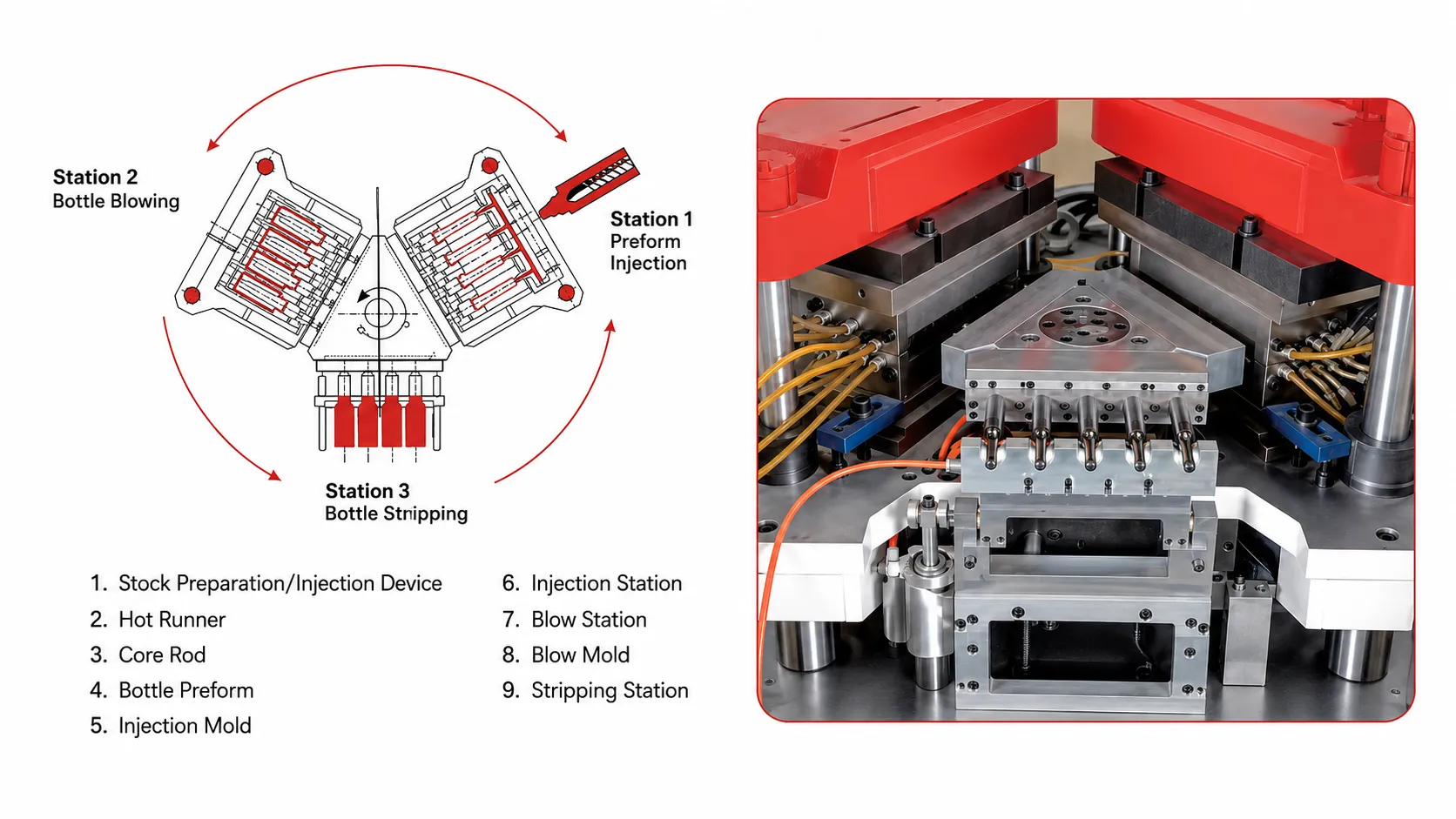
All-Electric Advantage — Six Servo Axes
Six independent servo-driven axes replace all hydraulic functions. Each axis is independently sized, tuned, and controlled by the machine PLC, delivering precision and repeatability that hydraulic valve arrangements cannot achieve.
Injection Servo — 22 KW
Electric cylinder injection delivers shot-weight repeatability tighter than hydraulic systems. No oil compressibility in the force path. No hydraulic cylinder seals to replace, no flow-control valves to service.
Feeding Servo — 18 KW
Controls screw rotation during plasticisation, maintaining consistent back-pressure for homogeneous melt. Critical for heat-sensitive resins including PCTG and high-clarity PS.
Clamping Servo — 15+15 KW
Two motors deliver adjustable clamping force from 40 to 80 tonnes via the control system, adapting to each mould design and protecting tooling from over-clamping.
Rotary Servo — 2.9 KW
Absolute encoder retains position through power cycles, eliminating homing routines. Sub-millimetre station-to-station repeatability every cycle.
Ejector Servo — 0.4 KW
Position-controlled deceleration on the stripping stroke prevents bottle deformation. Cleaner gate marks than hydraulic ejectors at end of stroke.
Carriage Servo — 1 KW
Programmable nozzle contact force for each mould configuration, eliminating the hydraulic surge that damages sprue bushings over time.
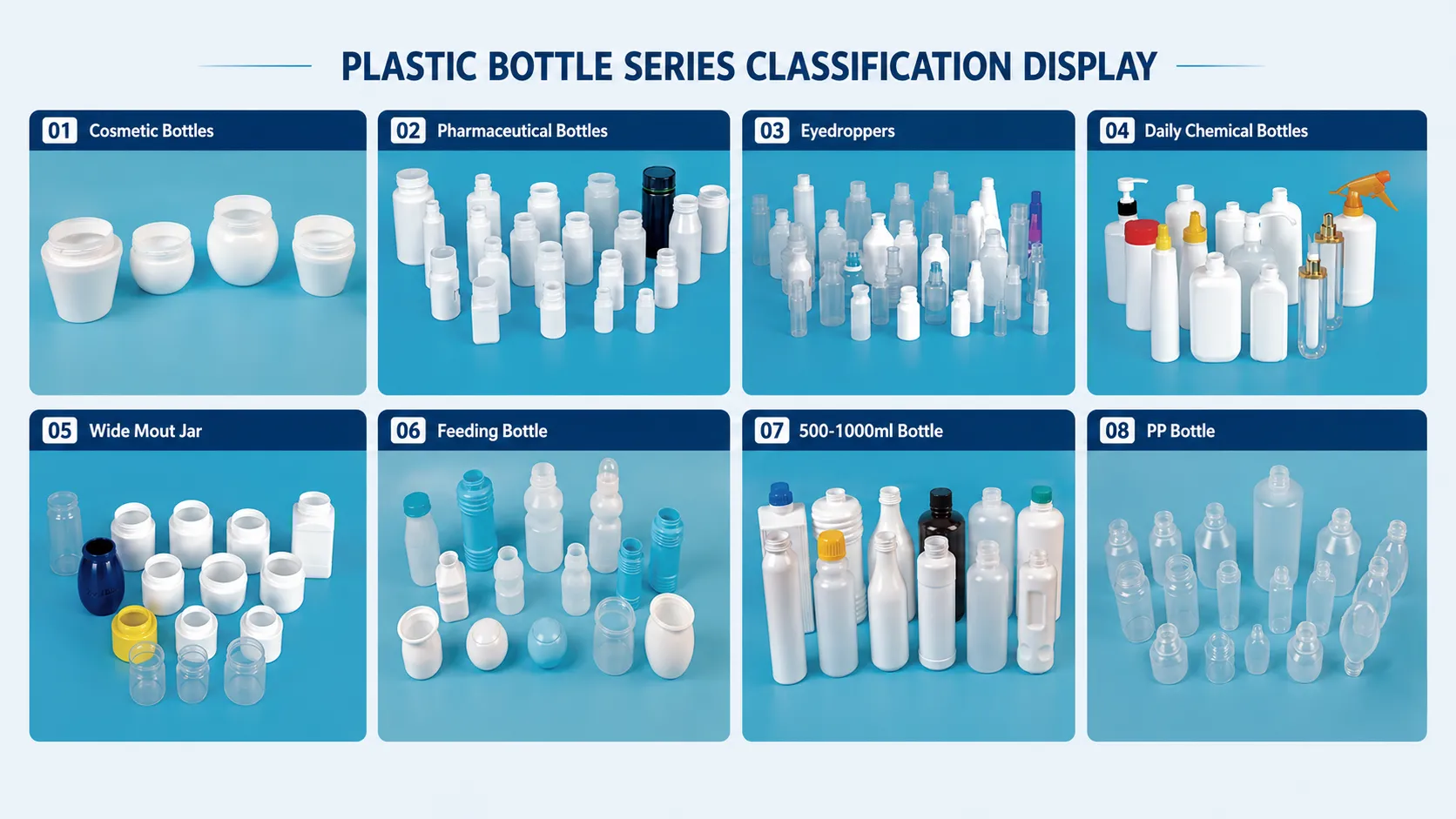
Application Industries
Pharmaceutical manufacturers operating under Anvisa BPF, EU GMP Annex 1, or FDA 21 CFR requirements choose the EP-IBM60HE because hydraulic oil represents a contamination vector that GMP frameworks require to be controlled. The EP-IBM60HE eliminates this vector at source: no oil above the mould zone, no contamination risk, no mitigation measures required. Premium cosmetic brands specify it for high-clarity PS and PCTG serum bottles, lotion containers, and roll-on packaging where surface perfection is brand-critical. High-volume small-format producers value its 14-cavity capacity at 10 ml and 8.2-second cycle time.
GMP Pharma
Eye-Drop Bottles
Premium Cosmetics
Healthcare Supplements
Oral Liquid Bottles
Reagent Vials
EP-IBM60HE vs Hydraulic IBM — Direct Comparison
| Parameter | EP-IBM60HE (All-Electric) | Hydraulic IBM (Industry Average) |
|---|---|---|
| Hydraulic oil in mould zone | None | Present throughout operation |
| GMP / BPF compliance | Fully meets requirements | Requires additional mitigation |
| Cycle time at 30 ml | 8.2 seconds | ~10 seconds |
| Daily output at 30 ml | Up to 115,000 bottles | ~85,000–90,000 bottles |
| Energy at 30 ml | ~12 kWh/hour | ~17 kWh/hour |
| Clamping force adjustment | 40–80 T continuously variable | Fixed at rated tonnage |
| Startup time | Immediate — no oil warm-up | Requires hydraulic warm-up |
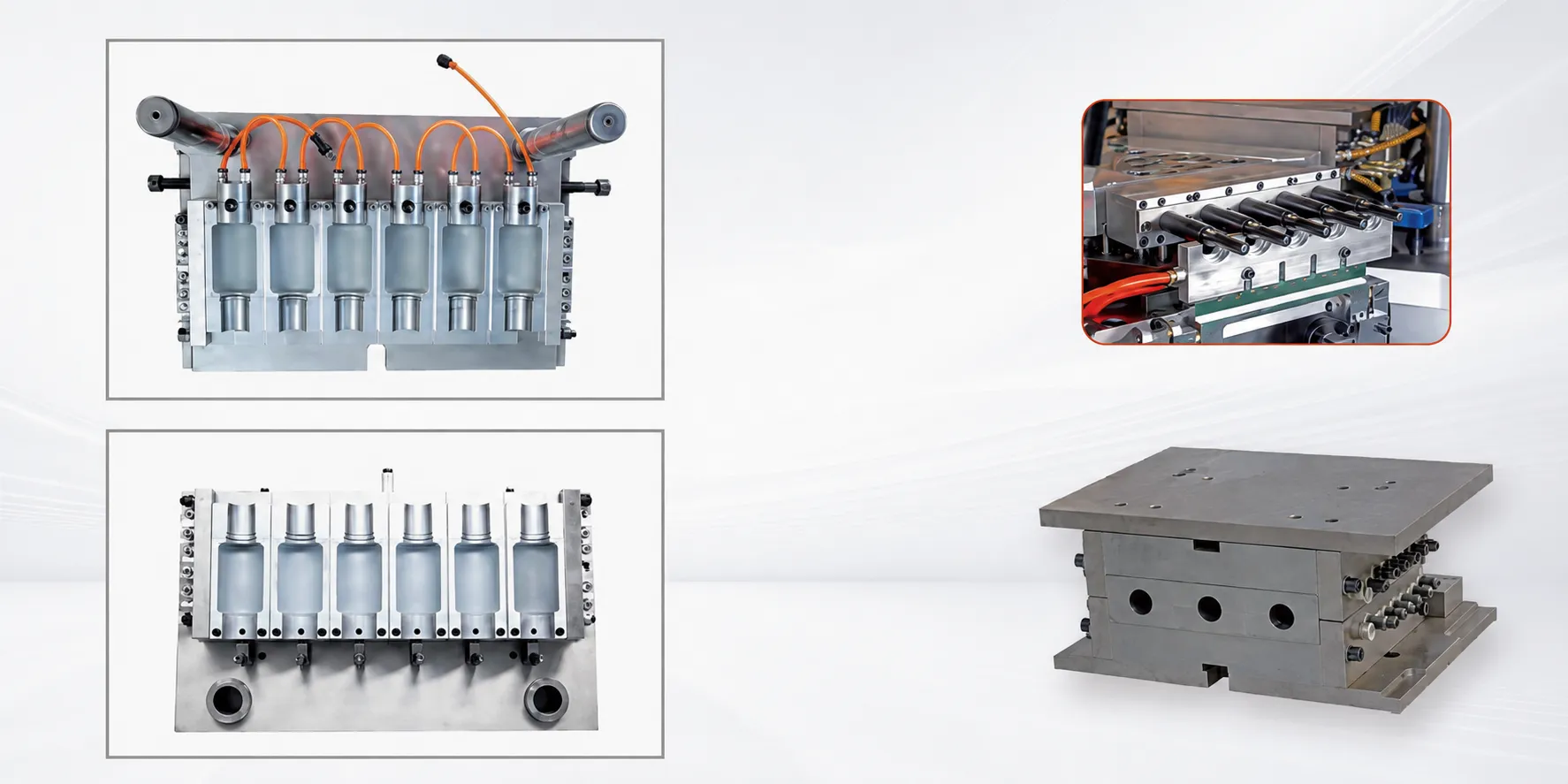
Mould System
Ever-Power supplies complete injection and blow mould tooling designed specifically for the EP-IBM60HE. Injection mould bodies are manufactured in 4Cr13 stainless steel or S136 alloy steel. For pharmaceutical customers, mould qualification reports and dimensional inspection certificates are available for IQ/OQ/PQ validation support. Blow moulds are available in steel or lightweight magnesium-aluminium alloy for rapid cooling cycles.
Production Line Integration
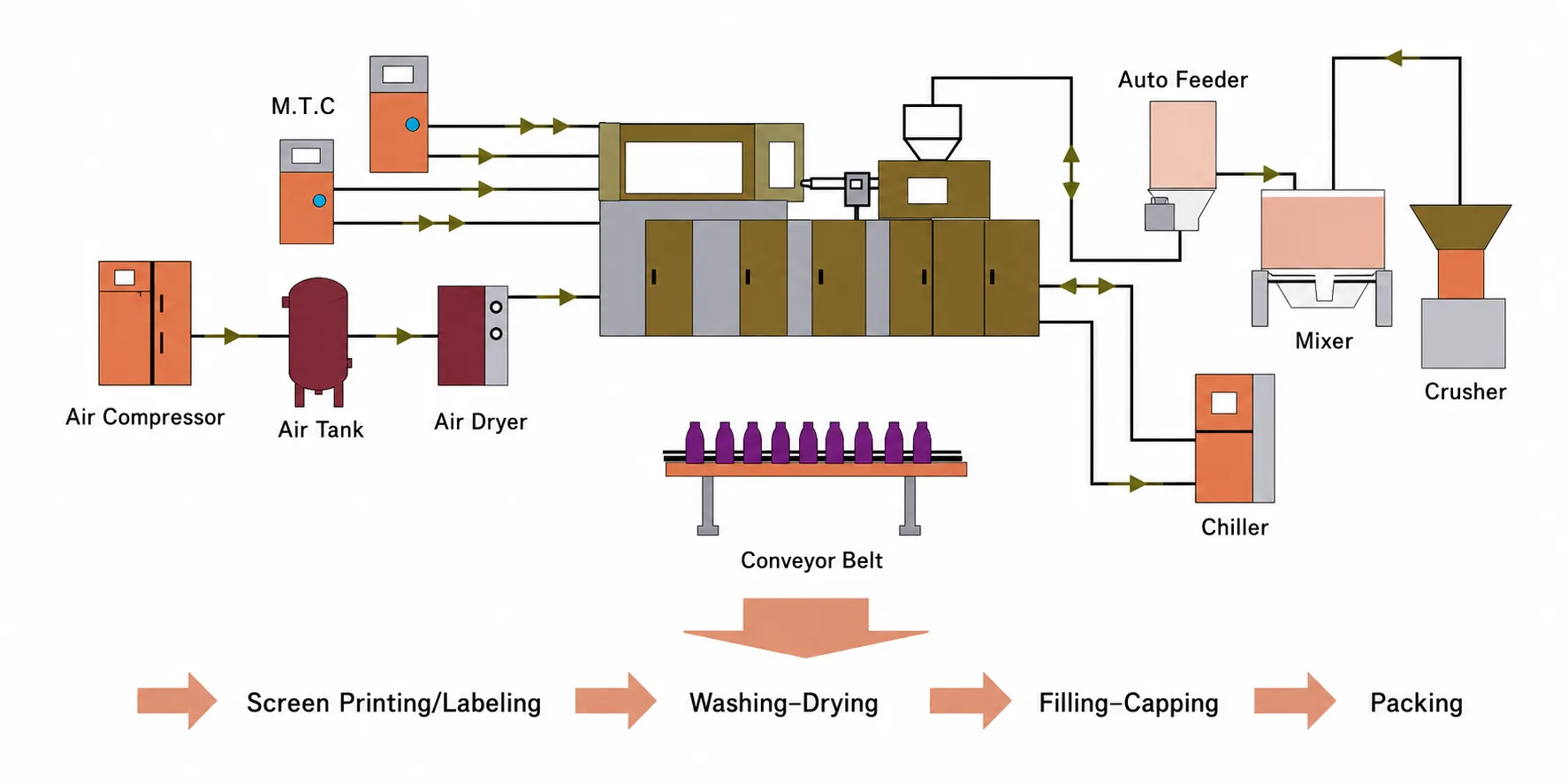
The EP-IBM60HE output conveyor connects inline to visual inspection systems (foreign-particle detection, underfill, base-defect checking), side-leak testers, labelling machines, and automatic packing equipment, enabling fully unattended lights-out operation. Ever-Power supplies the complete auxiliary package as a turnkey production line matched to the EP-IBM60HE output rate: mould temperature controller, industrial chiller, automatic material loader, and inline packing machine.
Certification & After-Sales
Every EP-IBM60HE carries CE marking and is factory-tested at full production speed before shipment. On-site installation, commissioning, and GMP-compatible installation qualification documentation are included. Our 24/7 technical hotline provides remote servo-system diagnostics and emergency support. Advanced operator training covering mould technology, servo-system operation, and process optimisation is available for technical and maintenance staff.
*All specifications are for reference only. Energy consumption figures are approximate at 30 ml under specific cycle conditions. Contact [email protected] for the current confirmed datasheet before finalising a purchase decision.
GMP Compliance in Depth — Why Oil-Free Matters for Pharmaceutical Packaging
Pharmaceutical manufacturers operating under GMP frameworks including EU GMP Annex 1, FDA 21 CFR Part 211, Brazilian ANVISA RDC 658, and equivalent national regulations are required to identify, assess, and control all contamination risks in their primary packaging production environment. Hydraulic oil represents a contamination vector that is present in every hydraulic IBM machine during operation: hydraulic fluid is circulated at pressure through cylinders located in close proximity to the mould zone, and any seal failure — however minor — can result in oil aerosol or droplets entering the bottle production environment. GMP risk assessments must document this contamination vector and implement mitigation measures, which typically include machine enclosures, oil-detection systems, and enhanced inspection of finished bottles.
The EP-IBM60HE eliminates this contamination vector at source. With no hydraulic oil anywhere in the machine, there is no hydraulic seal to fail and no oil aerosol to control. The GMP risk assessment for an EP-IBM60HE line does not include a hydraulic oil contamination scenario because hydraulic oil does not exist in the machine. This simplification of the contamination control regime is valuable both at initial GMP validation and at every subsequent periodic review, reducing the documentation burden and the risk of regulatory observations related to hydraulic oil contamination controls.
The EP-IBM60HE’s bottom-up mechanical design reinforces this advantage. The machine’s structure is arranged so that all lubricated mechanical components — drive motors, gearboxes, servo motor housings — are located below the mould zone level. Gravity ensures that any lubricant from these components, in the unlikely event of a seal failure, drains away from the mould zone rather than towards it. This is a structural contamination control measure that complements the elimination of hydraulic oil to provide a machine platform that meets pharmaceutical hygiene requirements by design, rather than by mitigation.
Total Cost of Ownership — Electric vs Hydraulic Over Five Years
The EP-IBM60HE carries a higher capital cost than a hydraulic IBM machine of equivalent output capacity. The total cost of ownership calculation over a five-year operating period consistently favours the EP-IBM60HE for manufacturers who operate the machine at high utilisation across two or three daily shifts. Three cost components drive this outcome: energy, maintenance, and GMP compliance infrastructure. On energy: at 30 ml production, the EP-IBM60HE consumes approximately 12 kWh per hour versus approximately 17 kWh for an equivalent hydraulic machine. At an industrial electricity tariff of US$0.10 per kWh and 7,000 operating hours per year, this 5 kWh per hour saving translates to US$3,500 per year in energy cost reduction per machine. Over five years, the cumulative energy saving is US$17,500 per machine — a meaningful contribution towards the EP-IBM60HE’s capital cost premium.
On maintenance: a hydraulic IBM machine requires periodic replacement of hydraulic cylinder seals, hydraulic pump servicing, hydraulic fluid analysis and replacement, and management of hydraulic oil disposal as a regulated waste stream. The EP-IBM60HE has no hydraulic components, eliminating this entire maintenance category. Annual hydraulic maintenance costs for a conventional IBM machine in continuous production typically range from US$2,000 to US$5,000 per year depending on machine age and utilisation; eliminating this cost adds US$10,000 to US$25,000 to the EP-IBM60HE’s five-year ownership advantage. The electric servo motors on the EP-IBM60HE have a mean time between failures significantly longer than hydraulic cylinders in equivalent service conditions, further reducing unplanned maintenance events.
On GMP compliance infrastructure: pharmaceutical manufacturers operating hydraulic IBM machines must implement contamination control measures for hydraulic oil, including machine enclosures, oil-detection inspection systems, and enhanced GMP risk assessment documentation. The EP-IBM60HE eliminates the requirement for these measures entirely. The cost of GMP compliance infrastructure for hydraulic oil contamination control — in capital, annual maintenance, and validation resource — is difficult to quantify precisely because it varies by facility and regulatory framework, but it consistently represents a cost that the EP-IBM60HE operator does not incur.
Ready to Go Electric? Talk to Our Engineering Team.
The EP-IBM60HE is built for manufacturers who demand GMP compliance, maximum daily output, and the lowest energy cost per bottle. Send us your bottle specification and we will return a complete production line quotation within 24 hours.