What causes off-center gates in PET blow molding? A Complete Diagnostic and Engineering Guide
In the hyper competitive, precision driven arena of global plastic packaging manufacturing, structural and visual perfection is not a luxury; it is the absolute baseline for commercial survival. When multinational beverage conglomerates, premium cosmetic brands, and advanced pharmaceutical enterprises evaluate the quality of a Polyethylene Terephthalate container, one specific defect instantly triggers catastrophic quality assurance failures and massive batch rejections: the off center gate. When packaging engineers and facility directors consult with the elite diagnostic division at Вечная Сила, the premier Brazilian Injection Stretch Blow Molding manufacturer dominating the international supply chain, resolving this specific anomaly is frequently their highest priority. The urgent question presented to our thermodynamic experts is universally consistent: What causes off-center gates in PET blow molding?
An off center gate, sometimes referred to as a swung base or misaligned sprue, occurs when the thick injection point at the bottom of the preform fails to anchor perfectly in the dead center of the blown bottle base. This is not merely a minor cosmetic blemish. A swung gate means that the polymer material has stretched unevenly across the circumference of the bottle. Consequently, one side of the container wall will be dangerously thin and structurally compromised, while the opposite side will retain an excessive, useless mass of thick plastic. This severe wall thickness discrepancy guarantees that the bottle will fail top load crush testing, burst under carbonation pressure, or warp disastrously on the high speed filling line. In this exhaustively detailed, highly authoritative engineering masterclass, we will completely deconstruct the complex physics behind gate misalignment. We will explore the critical intersections of pneumatic timing, thermodynamic heat distribution, mechanical stretch rod kinematics, and preform injection stability, demonstrating exactly how the Ever-Power machinery matrix empowers your facility to utterly eradicate this defect and achieve zero deviation manufacturing.
Phase One: The Kinematics of Biaxial Orientation and Base Anchoring
To successfully diagnose and permanently eliminate an off center gate, one must first possess a profound, molecular level understanding of the stretching physics occurring within the blow mold cavity. In the single stage ISBM process, a hot, pliable preform is transferred into the blow station. The mechanical stretch rod descends through the neck of the preform and makes physical contact with the internal center of the base gate.
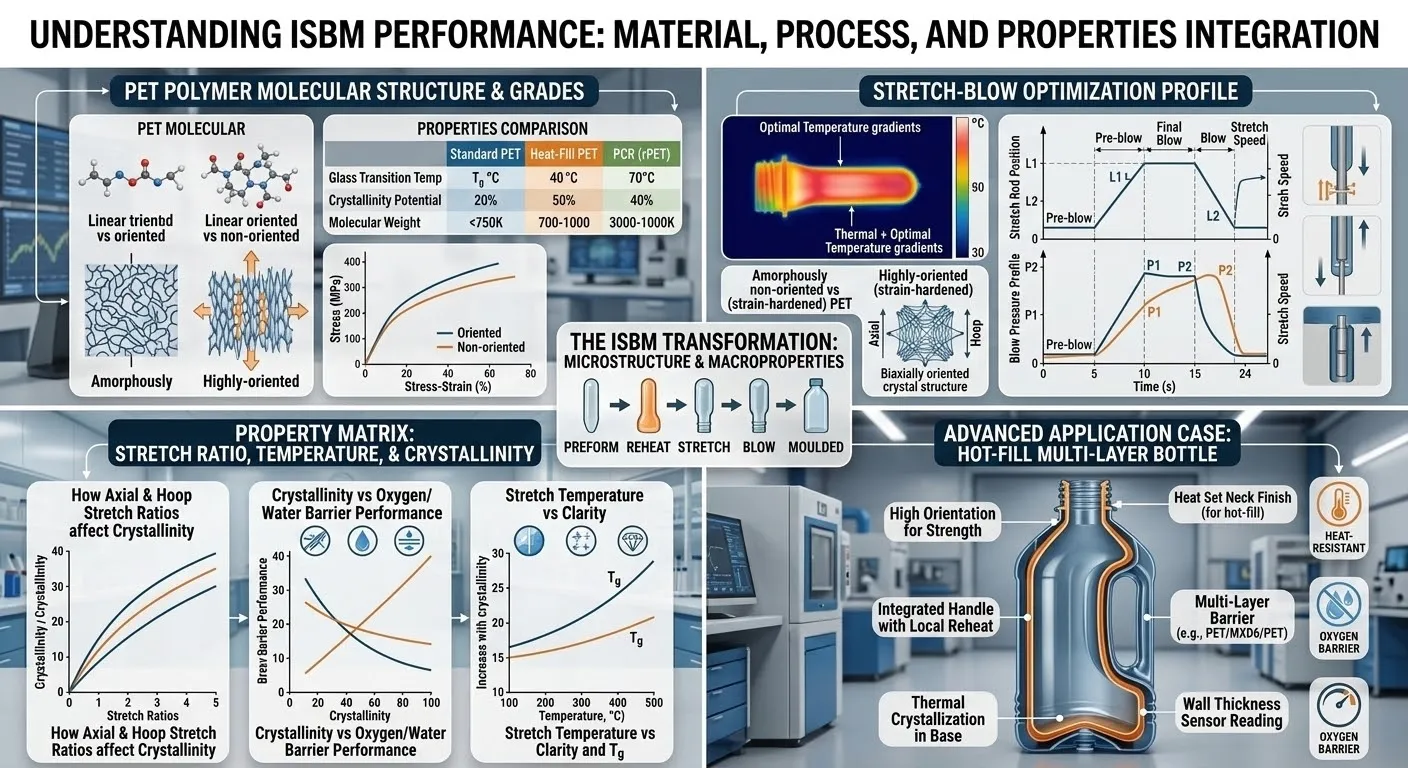
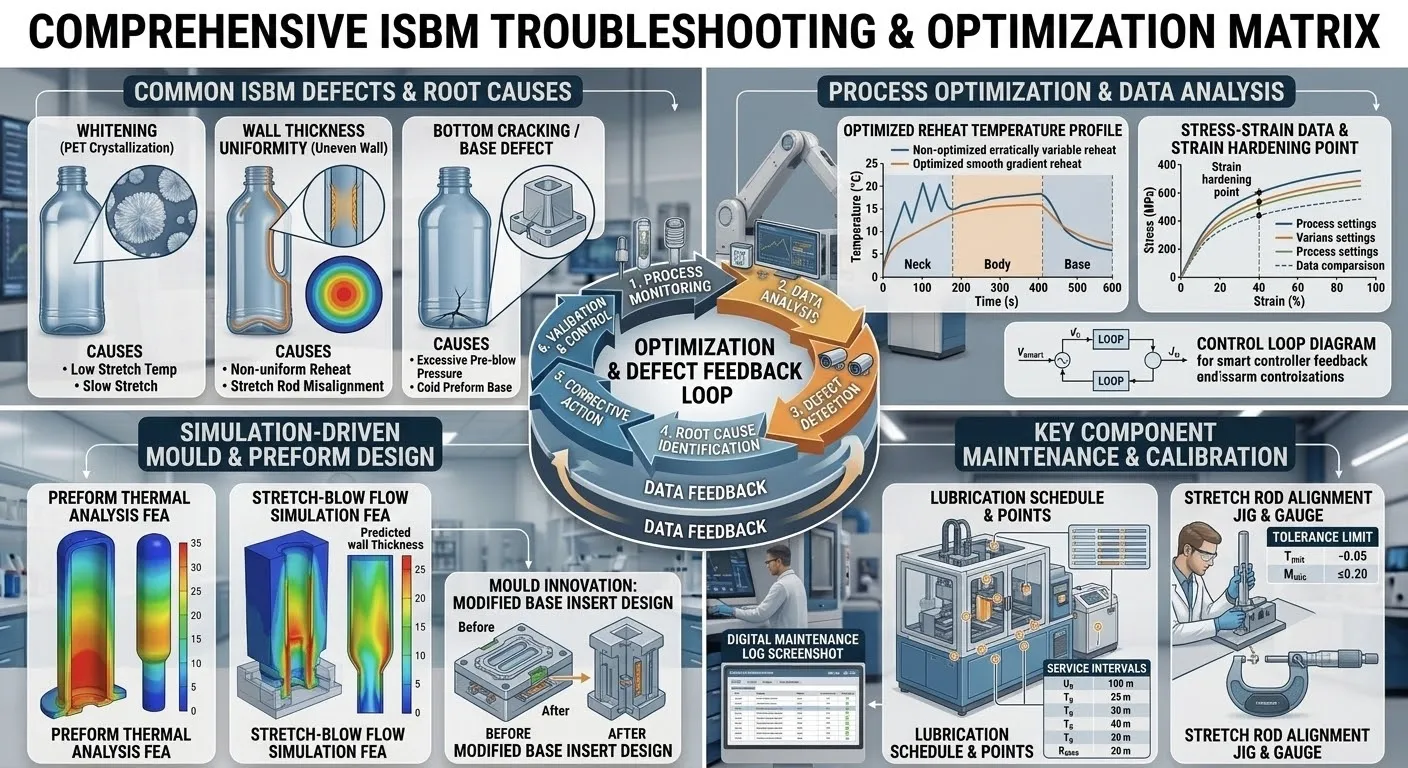
The primary objective of the stretch rod is to push the heavy, thick base of the preform directly down to the bottom insert of the mold cavity before the high pressure blow air aggressively inflates the container. The moment the stretch rod pins the gate to the mold base, the material is anchored. Once anchored, the high pressure air forces the side walls to expand radially, achieving perfectly uniform strain induced crystallization. However, if the gate deviates from the central axis before it is securely pinned to the base insert, the entire radial expansion becomes asymmetrical. The defect is the direct result of a physical battle between the descending stretch rod, the expanding pneumatic air, and the thermodynamic resistance of the polymer walls. When one of these three elements falls out of perfect synchronization, the gate swings.
Phase Two: The Pneumatic Culprit Pre-Blow Timing and Pressure
Statistically, the most frequent operational cause of an off center gate is the improper calibration of the pre blow pneumatic sequence. The blow molding phase is not a single, violent blast of air; it is a carefully choreographed two stage process involving a low pressure pre blow followed by a high pressure main blow.
Premature Pre-Blow Actuation
The pre blow is designed to introduce a gentle cushion of air into the preform, keeping the soft plastic from wrapping tightly around the descending stretch rod. However, if the pre blow valve opens a fraction of a millisecond too early before the stretch rod has physically contacted the base and begun its downward journey the internal pressure will cause the hot preform to balloon outward uncontrollably. As the preform expands randomly into free space, it loses its rigid vertical alignment. By the time the stretch rod finally reaches the bottom, the gate has already drifted off the central axis, resulting in a severely swung base.
Excessive Pre-Blow Pressure
Similarly, even if the timing is correct, if the pre blow pressure is set too high, the pneumatic force will overpower the mechanical force of the stretch rod. The aggressive air pressure will aggressively inflate the mid body of the preform, stretching the polymer too rapidly. Because the plastic naturally seeks the path of least resistance, any microscopic thermal imbalance will cause the ballooning plastic to shift sideways, dragging the heavy base gate entirely off center before the stretch rod can pin it down.
To completely eliminate these pneumatic inconsistencies, your facility must rely on machinery featuring ultra precise, lightning fast proportional air valves. Ever-Power equips our foundational single row platforms, such as the globally trusted EP-HGY150-V4 4-позиционная машина для литья под давлением и выдувного формования с растяжением, the highly robust EP-HGY200-V4 4-позиционная машина для литья под давлением и выдувного формования с растяжением, and the exceptionally powerful EP-HGY250-V4 4-позиционная машина для литья под давлением и выдувного формования с растяжением, with world class pneumatic circuitry. These systems guarantee that the pre blow delay timer and the proportional pressure regulators execute commands with microsecond accuracy, ensuring the stretch rod always maintains absolute directional dominance over the expanding polymer.
Phase Three: Thermodynamic Imbalances The Invisible Force
If the pneumatic timing is verified as perfect, yet the gate continues to swing, the diagnostic protocol must immediately pivot to thermal analysis. Polymer stretches exactly in proportion to its temperature. Hotter plastic is softer and stretches rapidly; colder plastic is stiffer and resists stretching.
Radial Temperature Discrepancies
The most insidious cause of an off center gate is a radial temperature imbalance around the circumference of the preform. If one side of the cylindrical preform is even two degrees warmer than the opposite side, disaster is guaranteed. During the blow phase, the hotter, softer side will yield and stretch instantly, while the cooler, stiffer side will resist. This asymmetrical yielding causes the expanding plastic bubble to skew heavily toward the hot side, forcefully dragging the heavy gate away from the center axis of the stretch rod.
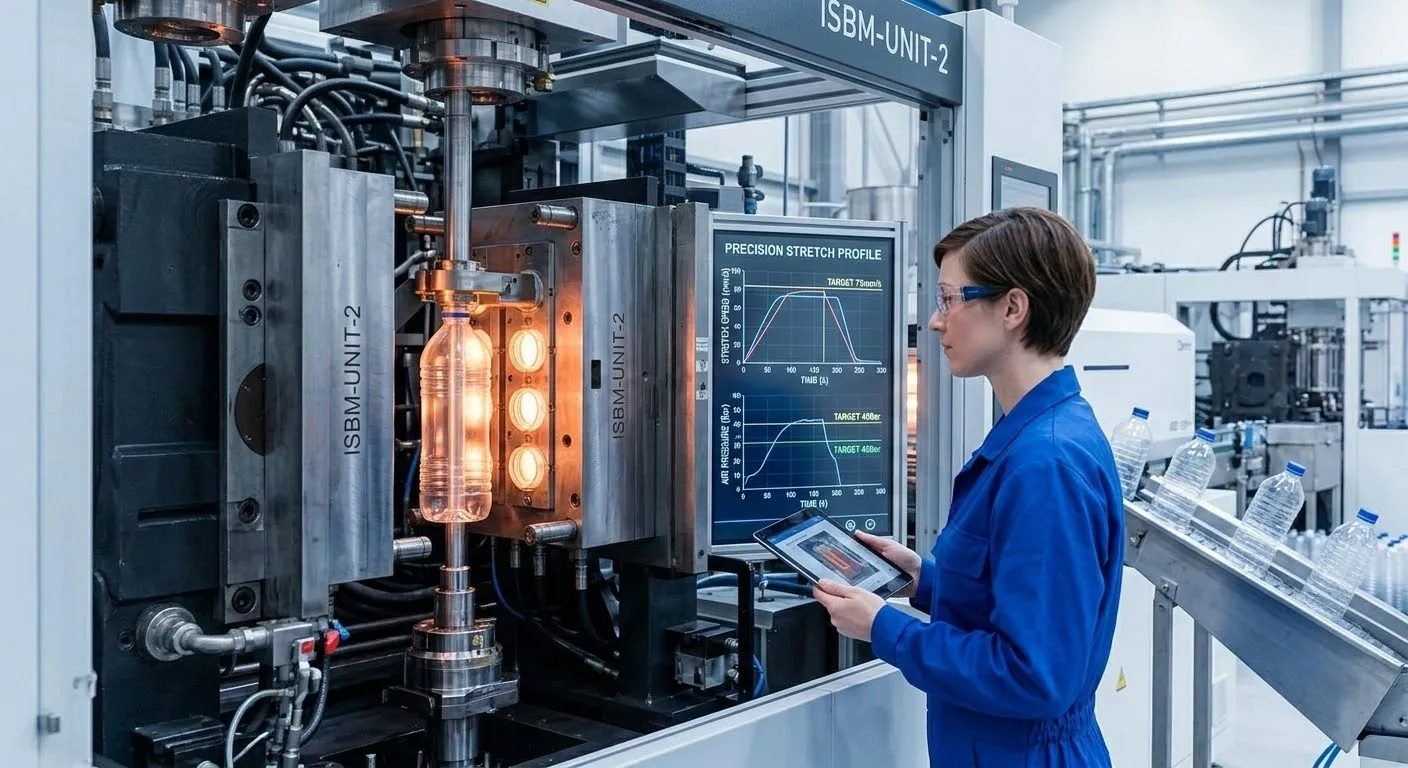
This radial imbalance is frequently caused by environmental drafts within the factory. If cold air from an open loading dock door or a poorly positioned air conditioning vent blows across the ISBM machine, it will cool one side of the hot preforms as they index from the conditioning station to the blow station. Maintaining a highly controlled, draft free environment around sensitive equipment is mandatory. Furthermore, utilizing highly compact, rapid transfer machinery like the EP-BPET-70V4 4-позиционная машина для литья под давлением и выдувного формования с растяжением и EP-BPET-125V4 4-позиционная машина для литья под давлением и выдувного формования с растяжением drastically minimizes the preform transit time, severely limiting the window of opportunity for environmental thermal degradation.
Vertical Profiling and Base Temperature
Additionally, if the absolute bottom of the preform the gate area itself is heated too aggressively in the conditioning station, the plastic surrounding the injection point becomes overly fluid. When the stretch rod makes contact, instead of pushing a solid, rigid piece of plastic downward, the rod simply punches through or dangerously deforms the overly soft gate, causing it to slip sideways off the tip of the rod. Operators must meticulously optimize the conditioning profile, ensuring the extreme base zone receives adequate cooling to remain structurally dense enough to securely anchor onto the stretch rod tip.
Phase Four: Preform Design and Injection Core Shift
A flawless blow molding process cannot rescue a fundamentally flawed preform. If the off center defect is highly consistent and isolated to specific cavities within a multi cavity mold, the root cause invariably lies within the primary injection phase.
Core shift is a devastating injection defect. It occurs when the extreme hydraulic pressure of the molten polymer rushing into the injection cavity forces the long, internal steel core pin to bend or deflect microscopically. When the core pin shifts, the resulting preform is manufactured with asymmetrical walls; one side is physically thicker and heavier than the opposite side. Just like a thermal imbalance, this physical mass imbalance guarantees asymmetrical stretching. The thin wall will yield instantly under blow pressure, pulling the gate completely off axis.
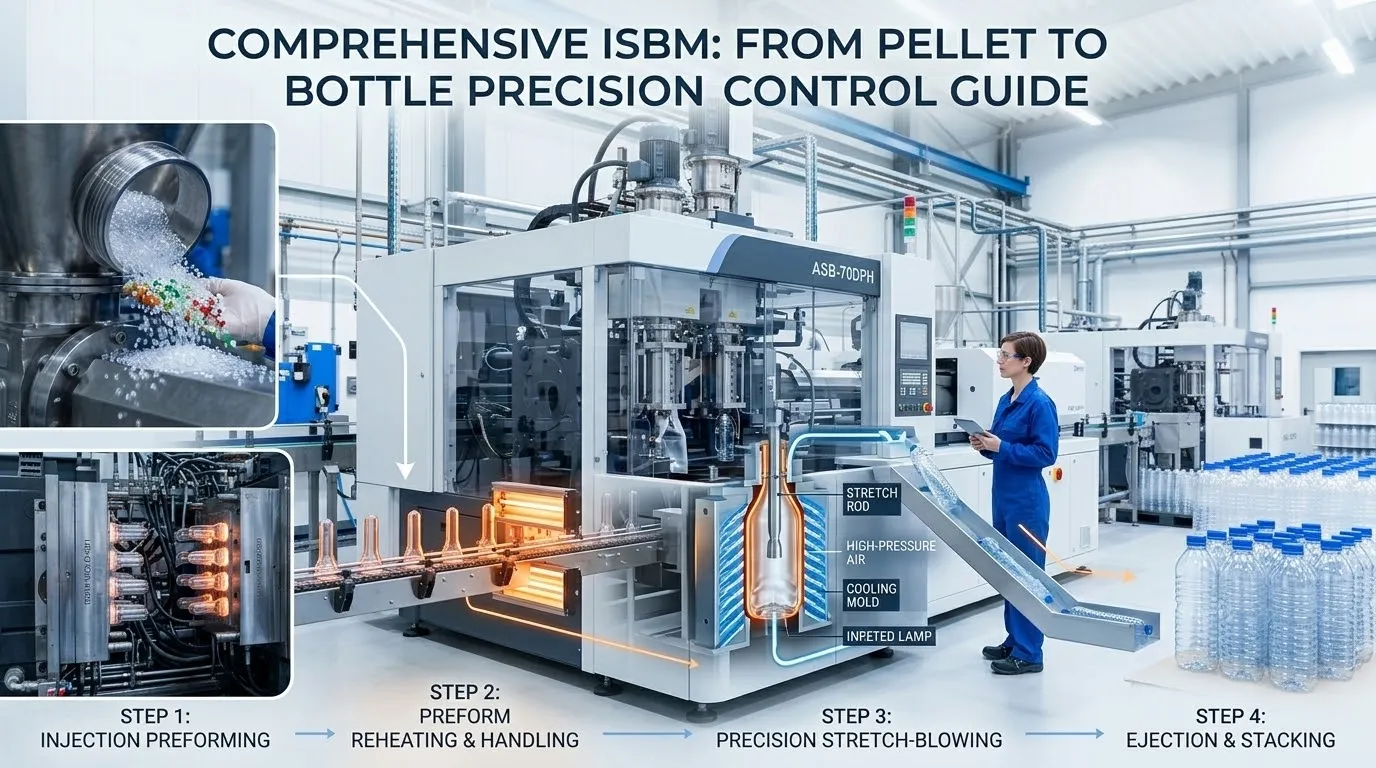
To completely eradicate injection core shift, your facility must deploy proprietary, hyper precision tooling housed within massively rigid machinery. Ever-Power operates an elite, vertically integrated tooling division manufacturing Изготовление на заказ одноэтапных литьевых форм методом выдувного формования с растяжением.. Our metallurgical engineers utilize premium Swedish steel to ensure absolute core pin rigidity. Furthermore, when producing massive, heavy walled preforms destined for five gallon bulk packaging, standard machines will flex under the injection pressure. To prevent this, we engineered the colossal EP-HGY650-V4 4-позиционная машина для литья под давлением и выдувного формования с растяжением. This heavy industrial behemoth provides the overwhelming structural tonnage required to lock the tooling in absolute dead center alignment, guaranteeing that every single massive preform is injected with mathematically perfect concentricity, thereby establishing the foundation for a flawless final container.
Phase Five: Mechanical Kinematics and Stretch Rod Misalignment
The most obvious, yet frequently overlooked, cause of a swung gate is pure mechanical misalignment. If the stretch rod itself is physically bent, or if the mounting block guiding the rods has vibrated out of perfect parallel alignment over thousands of production cycles, the rod will not descend through the exact dead center of the preform neck.
When a misaligned rod descends, it strikes the inside of the preform base off center. Before the air even begins to inflate the bottle, the mechanical rod has already forcefully pushed the gate to the side of the mold cavity. Regular, rigorous preventative maintenance using precision dial indicators is mandatory to verify stretch rod concentricity.
To fundamentally eliminate mechanical drifting and vibration induced misalignment, Ever-Power champions the transition to fully electric servo architectures. Traditional hydraulic machines suffer from low frequency vibrations and positional variations as fluid temperatures fluctuate. Our elite servo driven platforms, including the highly advanced EP-HGY150-V4-EV Полносервоприводная 4-позиционная машина для литья под давлением и выдувного формования с растяжением and the ultra clean EP-HGY50-V3-EV Полносервоприводная машина для литья под давлением и выдувного формования, deploy premium electromagnetic servo motors. These motors drive the stretch rods with terrifying, micro millimeter positional accuracy. This absolute, unyielding mechanical consistency guarantees that the stretch rod impacts the exact micrometer center of the base gate every single cycle, year after year, completely removing mechanical drifting from the defect equation.
Phase Six: The Complexities of Asymmetrical Designs
While troubleshooting cylindrical bottles follows standard physics, the packaging market increasingly demands wildly complex, asymmetrical geometries. When attempting to blow a deeply engraved, ultra flat flask or a container featuring a severely off center handle, the preform is forced to stretch vastly different distances across its circumference.
If an operator attempts to stretch an asymmetrical container using a standard uniform heating profile, the side requiring the longest stretch will pull the majority of the plastic mass toward it, violently dragging the base gate entirely off center in the process. To conquer these extreme geometric challenges, engineers must deploy deep radial heat profiling, intentionally creating extreme temperature differentials around the circumference of the preform to balance the stretching forces.
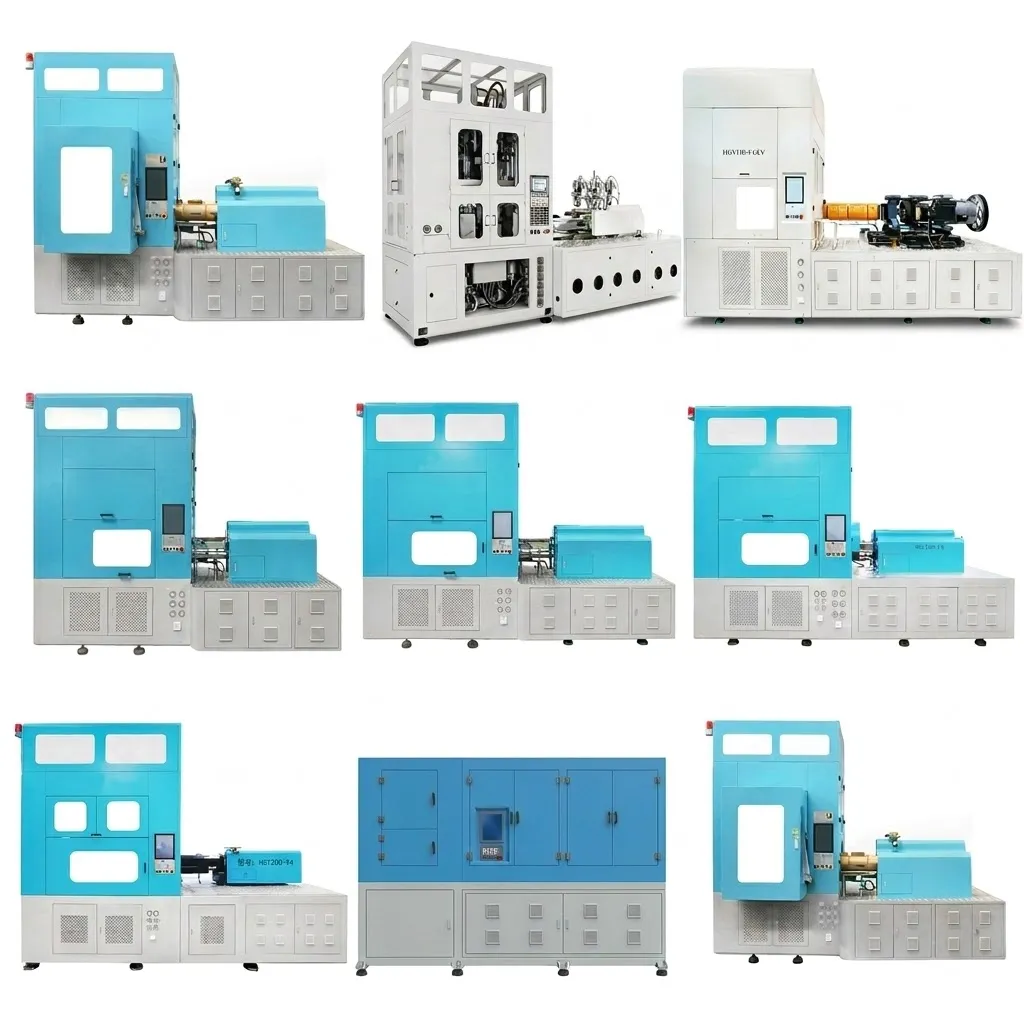
Executing profound radial profiling on standard machinery is incredibly difficult. To grant packaging engineers absolute, unbridled design freedom, Ever-Power engineered the ultimate architectural solution: the EP-HGYS280-V6 6-позиционная машина для литья под давлением и выдувного формования с растяжением. This unprecedented technological marvel shatters traditional design boundaries by incorporating six fully independent processing workstations. This expanded architecture provides multiple dedicated thermal conditioning zones, empowering operators to execute highly intricate, multi stage heat mapping. By slowly and methodically reshaping the thermal signature of the preform prior to blowing, this six station leviathan guarantees that even the most bizarre, highly asymmetrical designs maintain perfectly centered base gates and mathematically flawless wall thickness distribution.
Phase Seven: High Volume Stability and Double-Row Mastery
For multinational beverage corporations, maintaining perfect gate concentricity must be achieved while simultaneously hitting astronomical hourly output targets. Pushing standard single row machinery to its absolute physical speed limit often induces violent kinetic vibrations during the rotary transfer phase, which directly increases the probability of mechanical misalignment and subsequent gate swinging.
To shatter physical production ceilings while maintaining extreme precision, Ever-Power revolutionized the industry by perfecting the double row tooling architecture. Dominant high output platforms, such as the immensely powerful EP-HGY250-V4-B Двухрядная 4-позиционная машина для литья под давлением и выдувного формования с растяжением and the highly formidable EP-HGY200-V4-B 4-позиционная машина для литья под давлением и выдувного формования с растяжением, successfully inject and blow two parallel rows of containers simultaneously, effectively doubling the volumetric output per mechanical cycle. Because these double row machines produce twice as many bottles per cycle, factory managers can slightly decelerate the kinetic transfer speeds of the rotary table while still achieving astronomically higher hourly output. By slowing down the physical movements, the machine operates with vastly superior mechanical stability, fundamentally eliminating vibration induced transfer errors and guaranteeing perfectly centered gates across massive, high volume production runs.
Conversely, for high volume operations focusing on geometrically simple, symmetrical containers where thermodynamic drifting is less of a concern, stripping away unnecessary mechanical complexity yields massive dividends. The EP-BPET-94V3 3-позиционная машина для литья под давлением и выдувного формования с растяжением achieves this by completely removing the thermal conditioning station. Relying purely on the immaculate preservation of injection latent heat, this three station architecture drastically accelerates the preform transit time, leaving absolutely zero opportunity for environmental drafts to induce the radial thermal imbalances that cause swung gates.
Conclusion: Architecting Flawless Industrial Precision
Answering the critical inquiry What causes off-center gates in PET blow molding? transcends basic operational troubleshooting; it is the ultimate diagnostic test of a manufacturing facility’s engineering maturity. The successful eradication of swung bases requires a profound, highly analytical command over injection rheology, rigorous mechanical auditing, and masterful thermodynamic calibration. Attempting to solve this severe structural defect through blind trial and error adjustments on unverified, unstable machinery will inevitably lead to endless material scrap and catastrophic production delays.
As the paramount, universally recognized Brazilian ISBM manufacturing authority, Ever-Power provides the absolute turnkey solution for industrial perfection. We do not merely assemble steel frames and hydraulic pumps; we engineer comprehensive, deeply integrated manufacturing ecosystems. By combining our elite servo electric kinematic precision, our masterful manipulation of multi stage thermodynamic heat mapping, and our proprietary hyper rigid tooling architectures, we empower your supply chain to manufacture perfectly concentric, structurally invincible packaging containers that command absolute dominance in the global market.
Eradicate Production Defects and Secure Total Precision
Do not permit uncontrollable gate swinging, catastrophic wall thinning, and subsequent batch rejections to continuously erode your corporate profit margins and damage your brand integrity. Partner with the global engineering leader to deploy the most technologically advanced, highly stable Injection Stretch Blow Molding infrastructure available, and initiate an era of absolute zero defect manufacturing.
Are you fully prepared to execute a comprehensive technical audit of your current pneumatic strategies and mechanical alignment protocols? Visit our global corporate engineering headquarters at https://isbmmolding.com/, or immediately contact our elite diagnostic consulting team directly at [email protected] to secure bespoke thermodynamic equipment solutions and profound process optimization.