
ISBM Defect Diagnostics and Root Cause Analysis
What Causes Bubbles or Voids Inside ISBM Products?
A definitive diagnostic guide analyzing moisture-induced hydrolysis, entrapped air, thermal degradation, insufficient hold pressure, and mold venting deficiencies as the primary root causes of internal cavities and surface bubbles in injection stretch blow molded containers.

The Diagnostic Challenge of Internal Cavities in Transparent Containers
Bubbles and voids inside injection stretch blow molded products are among the most visually conspicuous and structurally damaging defects encountered in production. Unlike a subtle haze or a slight wall thickness variation that may escape casual inspection, a bubble or an internal void is immediately visible in a transparent PET container, appearing as a spherical or irregular cavity that scatters light and creates an obvious cosmetic defect. Beyond the aesthetic issue, these internal cavities represent a fundamental disruption of the polymer matrix. They act as stress concentrators that can initiate cracks under internal pressure or impact loading. They create thin spots in the container wall that compromise barrier properties. In severe cases, they can perforate the container, causing a complete loss of product containment. When bubbles or voids begin to appear in an ISBM production run, the root cause must be identified and eliminated with urgency. At Ever-Power, a globally recognized Brazilian ISBM manufacturer, our technical support teams have developed systematic diagnostic protocols for every type of bubble and void formation encountered on machines like the EP-HGY150-V4 4-Station Machine.
The causes of bubbles and voids in ISBM products are diverse, spanning the entire process from raw material preparation through injection molding to the stretch-blow phase. Moisture in the PET resin is the most common culprit, as the rapid vaporization of water during melting creates steam bubbles that become trapped in the melt and are carried into the preform. Entrapped air, introduced during the injection filling phase due to turbulent melt flow or inadequate mold venting, creates similar gas-filled cavities. Volatile degradation products from overheated or overly sheared polymer can nucleate bubbles, particularly in the hot runner or at the injection gate. Insufficient hold pressure or hold time during the injection phase allows the formation of shrinkage voids, internal cavities that form as the cooling plastic contracts without being replenished by additional melt. In the stretch-blow phase, pre-existing small bubbles in the preform are expanded to larger, more visible dimensions. This comprehensive diagnostic guide will catalog each of these root cause mechanisms, describe the characteristic appearance and location of the resulting bubbles and voids, and provide systematic corrective action protocols to eliminate them from production. We will reference specific machine parameters and mold design features that are critical to bubble prevention on platforms like the servo-driven EP-HGY150-V4-EV Full Servo Machine.
The ability to rapidly diagnose and correct bubble and void defects is a hallmark of a skilled ISBM process engineer. This guide provides the complete diagnostic toolkit to develop that skill.
Moisture-Induced Bubbles: The Most Common Culprit
Inadequately dried PET resin is the single most frequent cause of bubbles and voids in ISBM products, and the mechanism is a fundamental chemical and physical interaction between water and the molten polymer.
The Hydrolysis Mechanism and Steam Bubble Formation
Polyethylene terephthalate is profoundly hygroscopic, meaning it readily absorbs moisture from the surrounding air. When PET pellets containing residual moisture are introduced into the injection barrel at temperatures of 270 to 290 degrees Celsius, two damaging processes occur simultaneously. First, the water molecules react chemically with the ester linkages in the PET polymer backbone, severing the chains in a reaction called hydrolysis. This permanently reduces the intrinsic viscosity of the material. Second, the water rapidly vaporizes into steam. At the processing temperature, the volume expansion from liquid water to steam is approximately 1,600-fold. This explosive volume expansion creates bubbles of water vapor within the molten polymer. These steam bubbles, typically ranging from microscopic to several millimeters in diameter, become trapped in the viscous melt. They are carried through the hot runner and into the preform mold cavity. During the rapid quenching in the mold, the bubbles are frozen into the solidifying preform. They appear as spherical or slightly elongated cavities within the preform wall. When the preform is subsequently stretched in the blow station, these pre-existing bubbles are expanded, becoming even larger and more visible in the finished container. Moisture-induced bubbles are often distributed throughout the container, not concentrated in any single region, although they may be more prevalent in thicker sections where the cooling is slower and bubbles have more time to grow. The bubbles are typically clear and empty, not discolored, because they contain only water vapor. The diagnostic key is to examine the preforms directly. If bubbles are visible in the preforms as they exit the injection mold, moisture is the primary suspect. The corrective action is absolute: the resin drying system must be verified and corrected. The desiccant dryer must deliver air with a dew point of negative 40 degrees Celsius at the specified temperature for the specified time. The dryer’s desiccant beds must be regenerating properly, and the dryer filters must be clean. The dried resin must be protected from moisture re-absorption during conveyance to the machine hopper.
Diagnostic Verification and Corrective Drying Protocols
To confirm moisture as the root cause, a sample of the dried resin should be tested for moisture content using a Karl Fischer titrator or a moisture analyzer. The moisture content should be below 50 parts per million, and ideally below 30 ppm for critical applications. If the moisture content is above this threshold, the drying system requires immediate attention. The dryer temperature should be verified with a calibrated thermocouple at the drying hopper outlet. The dew point of the drying air should be measured with a portable dew point meter at the dryer outlet. If the dew point has risen above negative 30 degrees Celsius, the desiccant beds are likely saturated and require regeneration or replacement. The drying time must be sufficient. PET pellets typically require four to six hours of drying at 160 to 170 degrees Celsius to reach the target moisture level. If the throughput has been increased, the residence time in the drying hopper may no longer be adequate. The dried resin conveyance system must be purged with dry air to prevent moisture re-absorption. A simple diagnostic test for moisture-related bubbles is to purge a shot of melt from the barrel nozzle after the screw has been stationary for a few minutes. If the purged melt is foamy or contains visible bubbles, moisture is present. The corrective action is to stop production, verify and correct the drying system, purge the barrel of all moist material, and then restart. Continuing to run with moist resin will not only produce defective containers but will also permanently degrade the IV of the material remaining in the barrel, requiring extensive purging to restore melt quality. On machines like the EP-HGY200-V4, the barrel temperature and residence time should also be reviewed to ensure they are not contributing to moisture-related degradation.
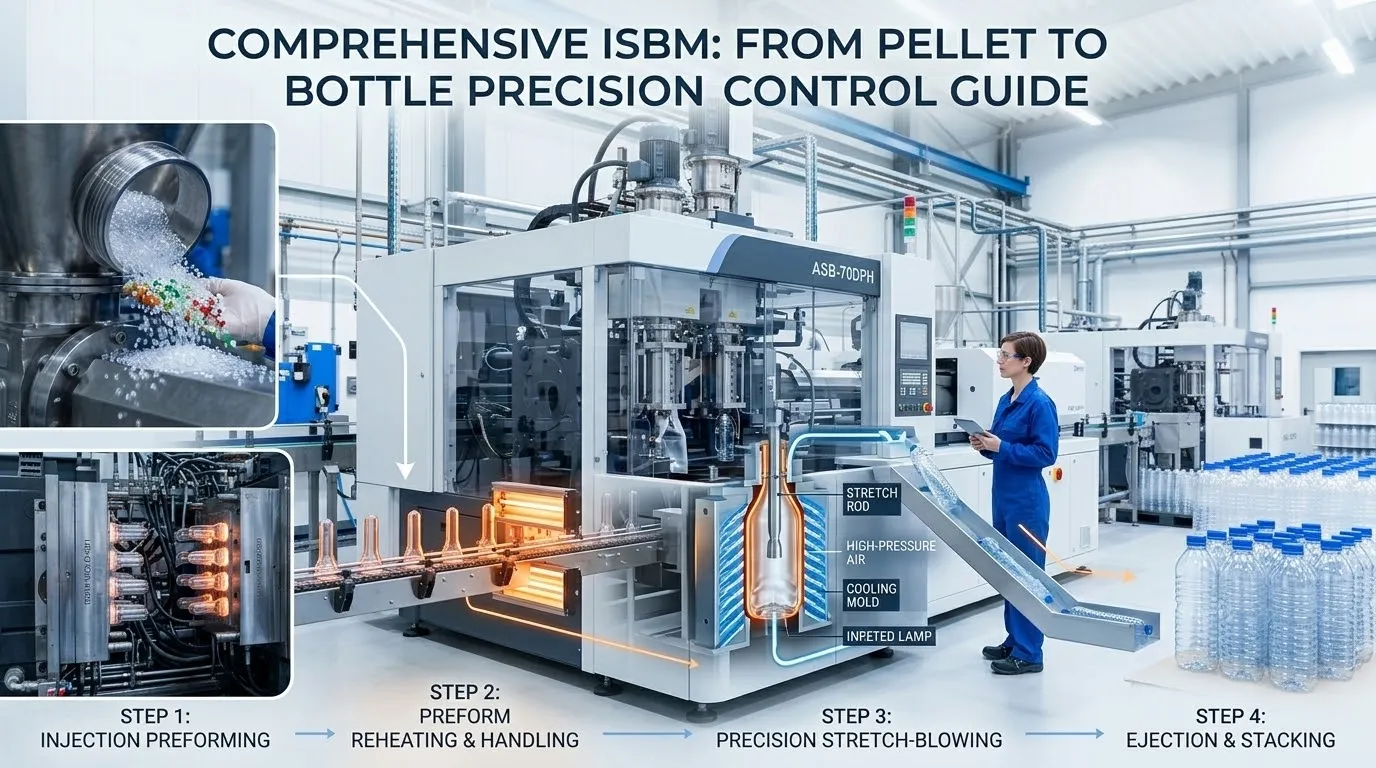
Entrapped Air, Shrinkage Voids, and Degradation Gas Bubbles
Beyond moisture, entrapped air during mold filling, volumetric shrinkage during cooling, and volatile degradation products from overheating can all create bubble and void defects.
💨Air Entrapment During Injection Mold Filling
As the molten PET is injected into the preform mold cavity, it must displace the air that initially occupies the cavity. In a properly designed and operated injection process, this air is pushed ahead of the advancing melt front and escapes through the mold parting line and through dedicated venting channels. However, if the injection speed is too high, the melt can jet into the cavity rather than forming a stable, progressive flow front. This jetting entraps air bubbles within the melt stream. Similarly, if the mold venting is inadequate, air cannot escape quickly enough and becomes compressed and trapped against the cavity walls, forming surface bubbles or blisters. Air entrapment bubbles are typically located near the gate, where the melt first enters the cavity, or at the end of the fill path, where the air is finally compressed. They are often irregular in shape rather than perfectly spherical. The corrective actions depend on the specific cause. If the injection speed is too high, it should be reduced, and a profiled injection speed may be used, starting slowly to establish a stable flow front and then accelerating to fill the bulk of the cavity. If the mold venting is inadequate, the mold parting line should be inspected and cleaned, and the venting channels should be verified to be clear and of the correct depth. For persistent air entrapment problems, the mold may need to be modified to add additional venting, or vacuum-assisted venting may be employed to actively evacuate air from the cavity before injection. The Custom One-Step Injection Stretch Blow Moulds from Ever-Power are designed with optimized venting systems that minimize air entrapment, but verification during process setup is essential.
📉Shrinkage Voids from Insufficient Hold Pressure and Degradation Gases
Shrinkage voids are internal cavities that form during the cooling and solidification of the preform. As the molten PET cools, its density increases, and its volume decreases. If the hold pressure applied after the cavity is filled is insufficient, or if the hold time is too short, additional melt cannot flow into the cavity to compensate for the volumetric shrinkage. The result is a vacuum void, typically located in the thickest section of the preform, often near the gate or in the center of a thick wall. Shrinkage voids are generally not perfectly spherical; they have irregular, angular shapes that reflect the pattern of solidification. They are a clear indicator that the hold pressure or hold time needs to be increased. The hold pressure should be set high enough to pack the cavity and compensate for shrinkage, typically 50 to 70 percent of the peak injection pressure. The hold time must be sufficient to allow the gate to freeze, preventing backflow of the melt after the hold pressure is released. If the gate is too large, it will freeze slowly, requiring an extended hold time. Thermal degradation of the polymer, caused by excessively high melt temperatures or prolonged residence time in the barrel, generates volatile decomposition products such as acetaldehyde and other low-molecular-weight compounds. These volatiles can nucleate as gas bubbles in the melt. Degradation bubbles appear in conjunction with other signs of overheating, such as yellowing of the preform and a noticeable acetaldehyde odor. The corrective action is to reduce barrel and hot runner temperatures, reduce screw RPM, and minimize residence time by matching shot size to barrel capacity. On the EP-HGY150-V4-EV, the precise injection control allows the hold pressure and hold time to be optimized with high accuracy to prevent shrinkage voids without over-packing the preform.
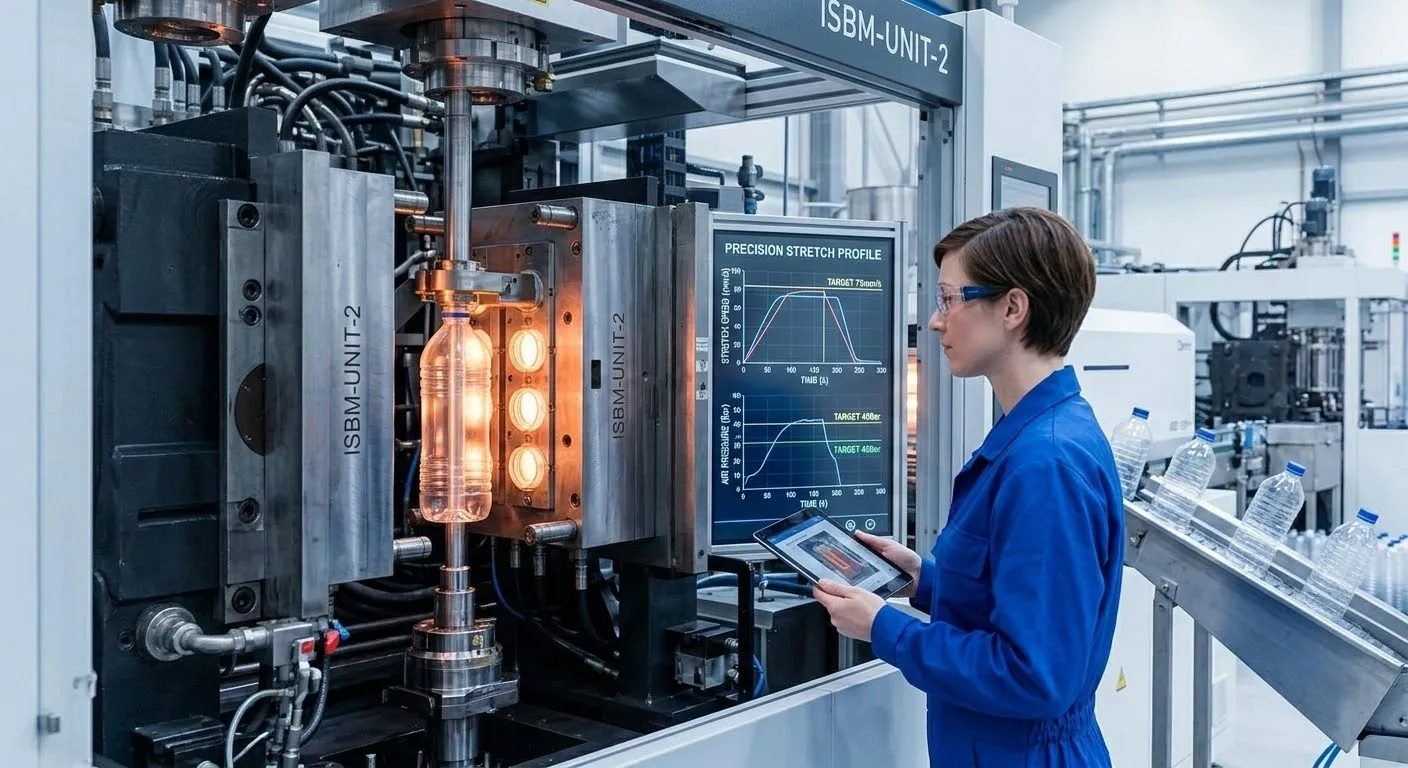
Bubble Expansion During Stretching and rPET-Specific Considerations
Bubbles formed in the preform are amplified during the stretch-blow phase, and recycled PET presents unique bubble formation challenges due to its material characteristics.
Amplification of Preform Bubbles During Biaxial Stretching
A small bubble or void that is present in the preform will be stretched and expanded during the stretch-blow phase. The bubble undergoes the same planar stretch ratio as the surrounding material. A bubble that is barely visible in the preform, perhaps a fraction of a millimeter in diameter, can become a highly visible, several-millimeter-diameter void in the finished container. This amplification effect means that even very small defects in the preform are unacceptable. The preform quality must be meticulously controlled. If bubbles are observed in the finished container but not in the preform, the preform inspection was insufficient. The preforms should be examined under magnification and in transmitted light to detect small bubbles. The location of the bubbles in the finished container provides clues to their origin. Bubbles that appear in the shoulder region were originally located in the upper body of the preform. Bubbles in the base region were originally near the preform gate. Mapping the bubble distribution helps identify whether the root cause is in the injection phase or if it is related to a specific region of the preform mold that may have a venting or cooling issue. For high-cavitation machines like the EP-HGY250-V4-B, it is essential to trace defective containers back to their specific cavity of origin, as a cavity-specific venting or cooling problem will produce bubbles in only a subset of the containers. Cavity-specific problems are resolved by cleaning or repairing the affected mold cavity rather than adjusting global machine parameters.
rPET-Specific Bubble Formation and Prevention
Post-consumer recycled PET is more prone to bubble formation than virgin resin for several reasons. The rPET may contain residual moisture that is more difficult to remove due to the variable flake size and the presence of contaminants that can trap moisture. The lower IV of rPET means that the melt has lower strength, and bubbles can grow more easily. The contaminants in rPET, including residual labels, adhesives, and barrier coatings, can volatilize at processing temperatures, creating gas bubbles. Preventing bubbles in rPET containers requires even more rigorous drying than virgin PET. The rPET should be sourced from a reputable supplier with documented washing and drying processes. Incoming rPET should be tested for moisture content before being introduced into the drying system. A slightly higher drying temperature or longer drying time may be necessary for rPET compared to virgin PET. The barrel temperatures for rPET should be slightly lower to minimize the volatilization of contaminants and to reduce the risk of thermal degradation. The servo-driven injection on the EP-HGY150-V4-EV provides the precise, repeatable injection control that helps maintain consistent melt quality and minimize bubble formation even with variable rPET feedstock. For applications demanding the highest clarity and freedom from bubbles with high rPET content, blending with virgin PET and optimizing the process parameters for the specific rPET lot are essential practices.
EP-HGY250-V4 and the compact EP-BPET-70V4 provide the process stability and precision necessary for consistent, bubble-free preform production. The integration of these machines with Ever-Power’s Custom One-Step Injection Stretch Blow Moulds ensures that the mold design, including venting and cooling, is optimized to minimize all sources of bubble and void formation from the outset.

Eliminate Bubbles and Voids Through Systematic Root Cause Diagnosis and Correction
Bubbles and voids in ISBM products are caused by identifiable and correctable root causes: moisture in the resin, entrapped air during mold filling, shrinkage during cooling with insufficient hold pressure, and volatile degradation products from overheating. Each cause produces bubbles with a characteristic appearance and location, and each has a specific corrective action. Moisture requires drying system verification and correction. Air entrapment requires injection speed profiling and mold venting optimization. Shrinkage voids require hold pressure and time adjustment. Degradation gases require barrel temperature reduction and residence time minimization. The bubbles are amplified during stretch-blow, making preform quality control essential. rPET presents additional challenges that require enhanced drying and process control. At Ever-Power, our advanced machinery platforms and integrated Custom One-Step Injection Stretch Blow Moulds are engineered to provide the precise process control and optimized mold design that prevent bubble and void formation, enabling the consistent production of flawless, high-clarity containers.