
ISBM-kvalitetssäkring och feldiagnostik
Vilka är de vanligaste kvalitetsfelen i ISBM-produktion och vad är deras orsaker?
Ett definitiv diagnostiskt uppslagsverk som katalogiserar de visuella signaturerna, grundorsaksmekanismerna och systematiska korrigerande åtgärder för varje vanligt förekommande defekt vid formsprutning och sträckformblåsning.
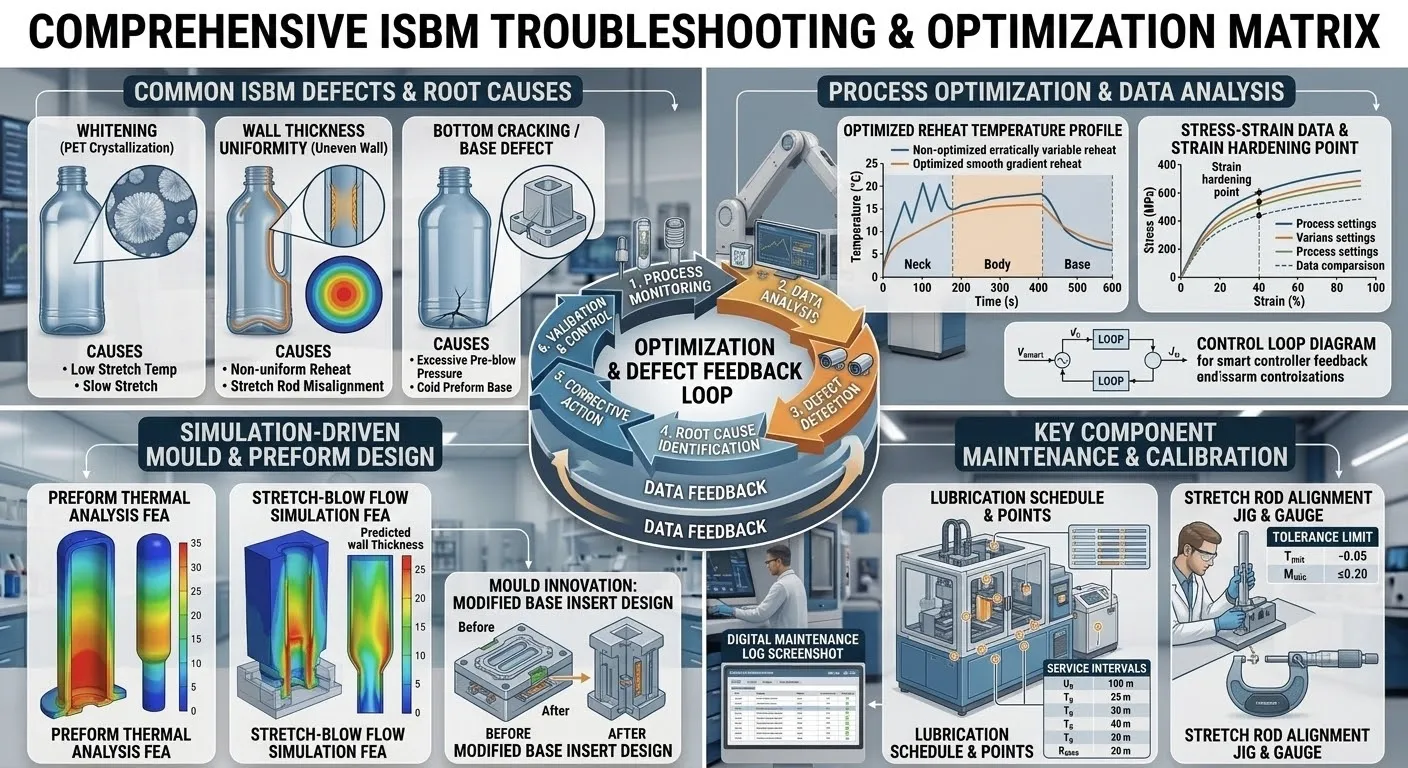
Det diagnostiska imperativet inom ISBM-tillverkning
I den krävande världen av formsprutning och sträckblåsning är kvalitetsfel inte bara enstaka irritationsmoment som ska korrigeras i förbigående. De är direkta, påtagliga manifestationer av termodynamiska obalanser, mekaniska feljusteringar eller materialnedbrytning som inträffar någonstans inom den komplexa produktionssekvensen med fyra stationer. En behållare som kommer ut ur formsprutningen med en mjölkaktig dis, en pärlemorskimrande glans, en ojämn väggtjocklek eller en förvrängd geometri skickar en tydlig diagnostisk signal. Förmågan att läsa den signalen, att spåra defekten tillbaka genom konditioneringsstationen, formsprutningsformen och varmkanalröret till dess specifika grundorsak, är den definierande kompetensen hos en ISBM-processingenjör. Ständig kraft, en ledande brasiliansk ISBM-tillverkare, har våra globala tekniska supportteam katalogiserat och analyserat tusentals defektincidenter inom alla tänkbara behållargeometrier och hartsformuleringar, vilket har byggt upp en omfattande diagnostisk kunskapsbas som ligger till grund för både vår maskindesign och våra kundutbildningsprogram.
De vanligaste kvalitetsfelen i ISBM-produktion kan i stort sett delas in i flera kategorier: optiska defekter som försämrar behållarens transparens och ytutseende, dimensionsdefekter som påverkar den geometriska noggrannheten och väggtjockleksfördelningen, strukturella defekter som påverkar den mekaniska integriteten och barriärprestanda, och processrelaterade defekter som härrör från materialhantering eller maskinfel. Varje defekt har en specifik visuell signatur, och varje signatur pekar på en specifik uppsättning potentiella orsaker som systematiskt kan undersökas och elimineras. Feldiagnos är fienden till effektiv felsökning. Att behandla en behållare som uppvisar termisk kristallisationsdis genom att sänka konditioneringstemperaturen skulle inte bara misslyckas med att lösa problemet utan skulle kunna introducera stressvitning, vilket förvärrar problemet. En exakt förståelse av orsak-verkan-sambanden är därför avgörande för effektiva korrigerande åtgärder på maskiner som... EP-HGY150-V4 4-stationsmaskin.
Detta uttömmande defektuppslagsverk kommer att katalogisera de vanligaste ISBM-kvalitetsdefekterna, analysera deras grundorsaker inom injektions-, konditionerings-, sträckblåsnings- och utstötningsstegen, och tillhandahålla systematiska diagnostiska vägar för deras lösning. Det är utformat för att vara en praktisk referens för kvalitetssäkringschefer, processingenjörer och maskinoperatörer som strävar efter att driva sina skrotnivåer mot noll och sin containerkvalitet mot perfektion.
Optiska defekter: Spänningsvitning, termisk dis och grindkristallinitet
Optiska defekter är den mest omedelbart synliga kategorin av ISBM-kvalitetsproblem, och de är den främsta orsaken till avslag i premiumförpackningsapplikationer.
Stressblekning och pärlemorskimrande: Kallsträckningsdefekten
Spänningsvitning, ofta kallat pärlemorskimrande, visar sig som en mjölkaktig, ogenomskinlig, lätt skimrande glans på behållarens yta. Om du drar en nagel över ett svårt drabbat område känns ytan mikroskopiskt grov. Grundorsaken är otvetydig: PET-materialet sträcktes medan det var för kallt. Polymerkedjorna saknade tillräcklig termisk rörlighet för att rulla ut och glida förbi varandra, så den applicerade mekaniska kraften slet isär matrisen på mikroskopisk nivå, vilket skapade miljontals nanohålrum som sprider ljus. Defekten är oftast lokaliserad i områden med hög töjning, såsom axeln, bashörnen eller kroppen på en platt-oval behållare. Den korrigerande åtgärden innebär att gradvis öka konditioneringskärltemperaturen i de drabbade zonerna, säkerställa att preformkärnan värms upp helt genom att ge tillräcklig konditioneringstid, och minska sträckstångens hastighet och förblåsningstrycket för att sänka topptöjningshastigheten. Om defekten kvarstår trots korrekt konditionering kan själva preformens design vara felaktig, där den lokala töjningsgraden överstiger den naturliga töjningsgränsen för den specifika PET-kvaliteten. I sådana fall måste preformen omdesignas med en tjockare vägg i det drabbade området. Maskiner som de EP-HGY150-V4-EV möjliggör exakt servokontroll över sträckparametrar för att undvika denna defekt.
Termisk kristallisationsdis och grindkristallinitet
Termisk dis är den termodynamiska motsatsen till stressvitning. Den presenterar sig som en tät, dimmig, slät grumlighet, ofta mest uttalad nära den tjockaste delen av behållarens bas runt injektionsporten. Grundorsaken är överdriven värme. Polymeren exponerades för tillräckligt höga temperaturer, under en tillräckligt lång tid, för att tillåta molekylkedjorna att spontant veckas till stora, organiserade sfärolitkristaller. Dessa sfäroliter, som är större än våglängden för synligt ljus, sprider ljus kraftigt och ger det dimmiga utseendet. Värmekällan kan vara injektionstrumman, varmkanalgrenröret, injektionsgjutningens kylsystem eller konditioneringsstationen. Diagnos innebär att spåra defekten bakåt. Om själva preformarna är disiga när de lämnar injektionsgjutningen är smälttemperaturen för hög eller så är formens kylning otillräcklig. Att minska temperaturen på trumman och varmkanalgrenröret, sänka skruvvarvtalet för att minska skjuvvärmen, öka formens kylvattenflöde och minska dess temperatur, samt förlänga kyltiden är de korrigerande åtgärderna. Specifikt för grindkristallinitet kan grindområdet i formsprutningsformen behöva en högkonduktiv beryllium-kopparinsats för att extrahera värme mer aggressivt. Anpassade enstegsinjektionsformar för sträckblåsning från Ever-Power har dessa avancerade kylfunktioner för att förhindra dis i porten.
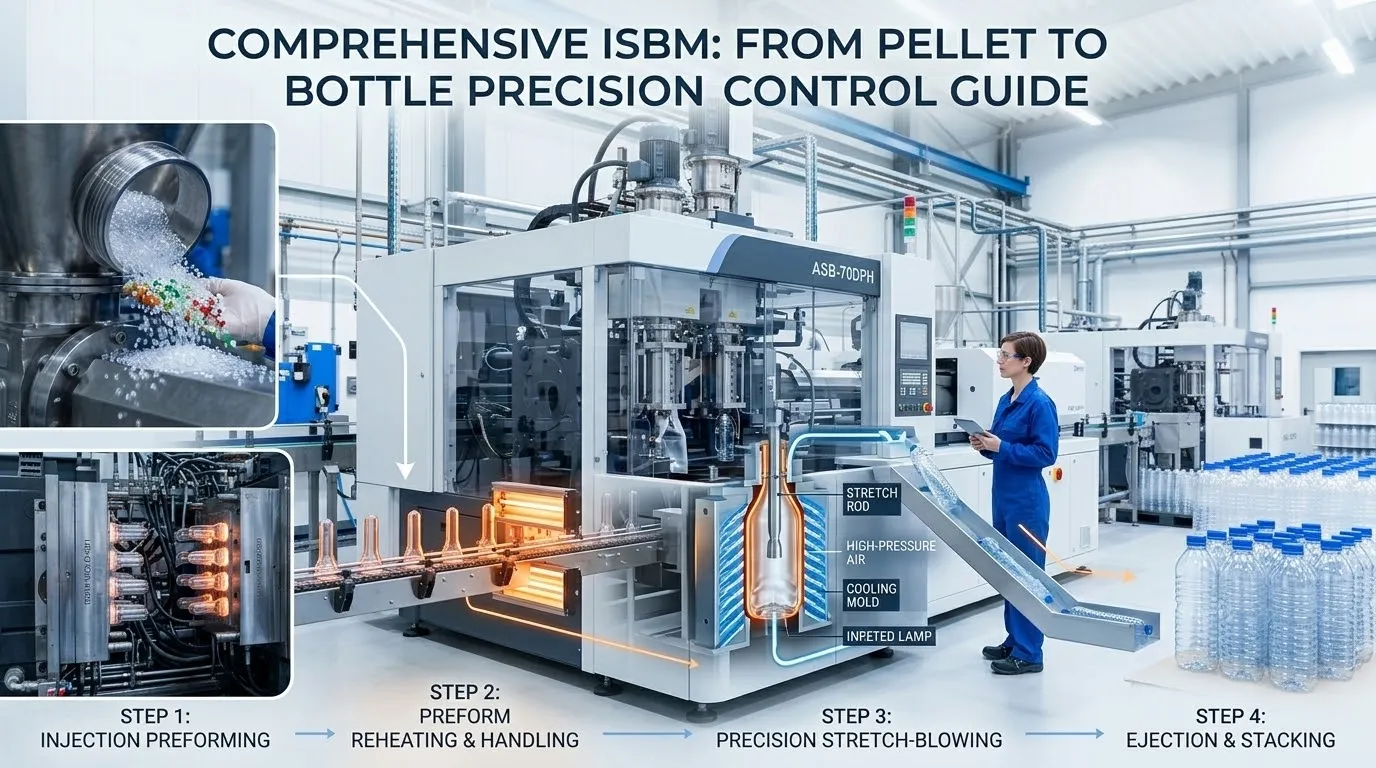
Dimensionsdefekter: Ojämn väggtjocklek, skevhet och geometrisk distorsion
Dimensionsdefekter äventyrar behållarens förmåga att utföra sin avsedda funktion, oavsett om det är att stå stabilt, motstå inre tryck eller passa korrekt på en påfyllningslinje.
📏Ojämn väggtjockleksfördelning
Ojämn väggtjocklek är den vanligaste dimensionsdefekten och manifesterar sig i flera mönster. En tung bas med en tunn kropp indikerar att sträckstången sträcks ut för långt eller för snabbt, vilket trycker för mycket material mot basen. En tunn skuldra med en tjock kropp indikerar att preformens skulderområde är för kallt, vilket motstår sträckning och gör att kroppen tunnas ut istället. Lokala tunna fläckar i kroppen på en platt-oval behållare indikerar att den omkretsmässiga temperaturprofilen för konditioneringen är felaktig, där vissa områden av preformen är för varma och sträcker sig överdrivet mycket. Den diagnostiska metoden är att sektionera behållaren och kartlägga väggtjockleken vid definierade höjder. Tjockleksdata jämförs med specifikationen, och avvikelsemönstret styr den korrigerande justeringen. En tung bas kräver att sträckstångens slaglängd minskas eller att dess nedstigning saktas ner. En tunn skuldra kräver att konditioneringstemperaturen i preformens skulderzon ökas. Tunna fläckar i asymmetriska behållare kräver justering av konditioneringen för att skapa en avsiktlig temperaturprofil som styr materialflödet. Maskiner med exakt zonkonditionering, såsom EP-HGYS280-V6, ge den kontroll som krävs för att korrigera dessa mönster.
🔵Warpage, Ovality och Rocker Bottom
Skevhet är en förvrängning av behållarens geometri efter utstötning, orsakad av kvarvarande inre spänningar som avslappnas ojämnt när behållaren svalnar till omgivningstemperatur. Grundorsaken är nästan alltid ojämn kylning, antingen i blåsformen eller efter utstötning. Om ena sidan av blåsformen är kallare än den andra, stelnar plasten på den sidan först medan den varmare sidan fortsätter att krympa, vilket drar behållaren ur form. En gungbotten, där basen inte är plan och flaskan gungar på en plan yta, orsakas ofta av ojämn kylning i formens basområde. Den korrigerande åtgärden innebär att verifiera vattenflödet och temperaturen i alla formens kylkretsar, vilket säkerställer jämn kylning över alla formhälfter. Blåsformens kyltid måste vara tillräcklig för att stabilisera behållaren före utstötning. Kylning efter utstötning, såsom en forcerad luftkylningstransportör, kan vara nödvändig för tjockväggiga behållare. Ovalitet, där en rund behållare blir äggformad, kan orsakas av att själva blåsformen är orund eller av att behållaren krymper ojämnt. Maskiner med hög kavitation som EP-HGY250-V4 kräver noggrann övervakning av formens kylbalans i alla håligheter för att förhindra problem med vridning.
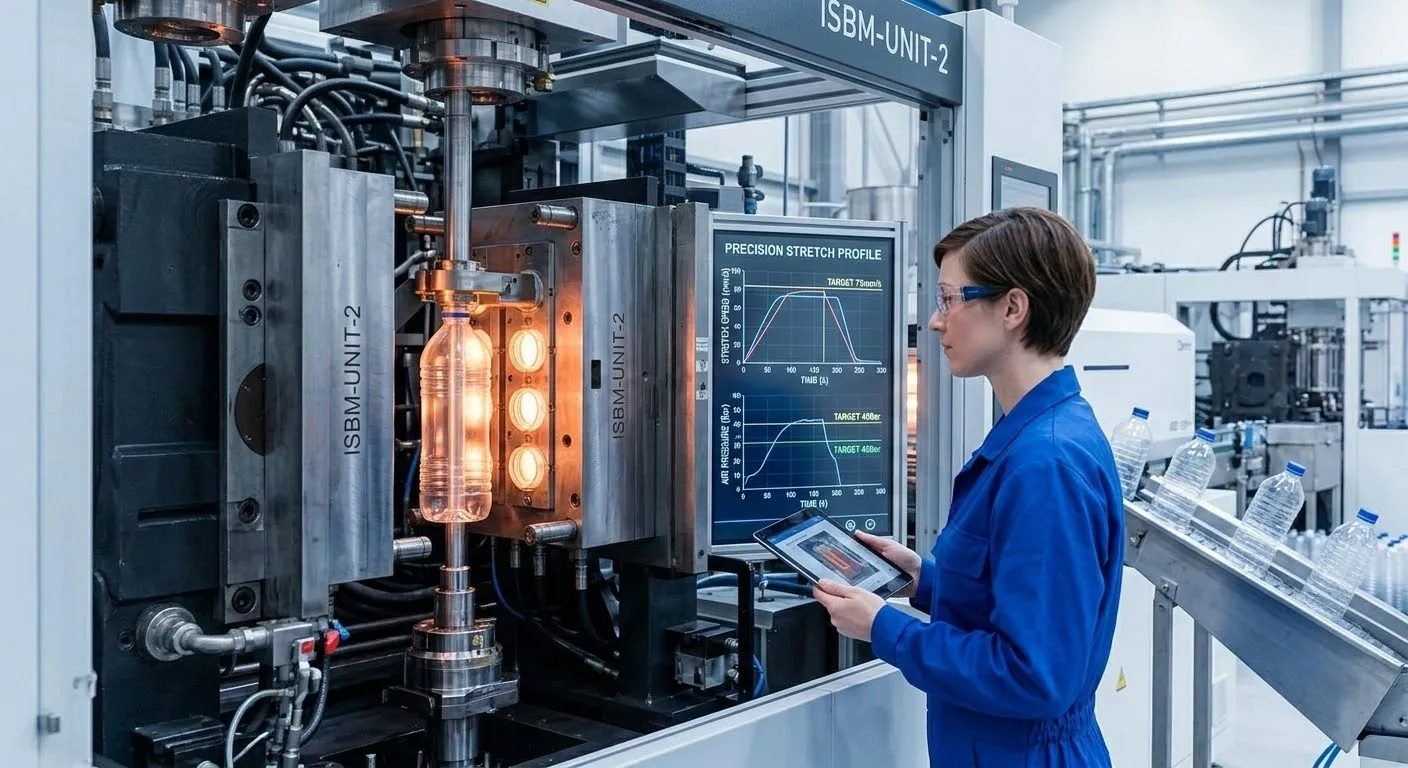
Ytfel, strukturella fel och materialrelaterade problem
Utöver optiska och dimensionella problem kan ISBM-produktion plågas av ytfel, strukturella integritetsfel och defekter som härrör från själva råmaterialet.
Svarta fläckar, ytgropar och flödesmärken
Svarta fläckar är små, mörka, ofta förkolnade partiklar som syns på eller strax under behållarens yta. De härrör från nedbruten polymer som har funnits i varmkanalrörets grenrör, cylinder eller munstycke under en längre tid vid hög temperatur. Polymeren förkolnas och bryts av i små fläckar som bäddas in i smältan. Förebyggande åtgärder kräver regelbunden rensning, att man undviker alltför höga smälttemperaturer och att man säkerställer att varmkanalrörets kanaler är strömlinjeformade utan stagnationszoner. Gropar eller gropar i ytan orsakas ofta av instängd luft mellan den uppblåsbara förformen och formväggen, en ventilationsbrist. Formen måste ha tillräckliga ventilationskanaler, och blåslufttrycket måste vara tillräckligt för att helt placera plasten mot formen. Flödesmärken, som visas som subtila vågiga linjer på behållarens yta, har sitt ursprung i injektionsfasen. De orsakas av att smältfronten kyls ner för tidigt när den fyller förformskaviteten, ett problem med att injektionshastigheten är för långsam eller att formen är för kall. Att öka injektionshastigheten och säkerställa att formtemperaturen ligger inom det rekommenderade intervallet är de korrigerande åtgärderna. EP-HGY200-V4 ger exakt kontroll av injektionshastigheten för att minska bildandet av flödesmärken.
Fallstötbrott, spänningssprickbildning och preformbrott
En behållare som inte klarar ett falltest, splittras eller spricker när den tappas från en specificerad höjd, lider av otillräcklig biaxiell orientering. Polymerkedjorna har inte riktats tillräckligt för att ge den sammankopplande styrka som motstår sprickutbredning. Grundorsaken är ofta att preformen sträcktes vid för låg temperatur, vilket minskade graden av töjningsinducerad kristallisation, eller att den plana sträckningsgraden var för låg, vilket inte lyckades orientera kedjorna tillräckligt. Miljömässiga spänningssprickbildning, där behållaren utvecklar fina sprickor när den utsätts för vissa kemikalier eller under ihållande inre tryck, är också en konsekvens av otillräcklig orientering och hög kvarvarande inre spänning. Preformbrott under sträck-blåsningsfasen är en katastrofal defekt där preformen spricker innan den är helt uppblåst. Det är vanligast med rPET, vars lägre inneboende viskositet minskar smältstyrka och förlängningstolerans. Orsakerna inkluderar för hög sträckningsgrad, för låg konditioneringstemperatur, för högt förblåsningstryck eller en förblåsning som aktiveras för tidigt innan sträckstången har styrt materialet. Servodrivna maskiner som EP-HGY150-V4-EV möjliggör skonsam, kontrollerad sträckning som minimerar risken för bristning, särskilt med återvunnet innehåll.
EP-BPET-125V4 och högpresterande EP-HGY250-V4-B ger precisionen och konsistensen för att bibehålla kvaliteten i varje hålrum.

Bemästra ISBM-feldiagnos för att uppnå nollfelsproduktion
De vanligaste kvalitetsfelen i ISBM-produktion, från spänningsblekning och termisk dis till ojämn väggtjocklek och fallskador, kan alla diagnostiseras genom sina distinkta visuella signaturer. Varje fel pekar på en specifik grundorsak i injektions-, konditionerings-, sträckblåsnings- eller materialförberedelsestegen. Genom att behärska de systematiska diagnostiska vägarna som beskrivs i den här guiden och utnyttja precisionskapaciteten hos avancerade Ever-Power-maskiner som... EP-HGY150-V4 och den EP-HGY150-V4-EV, tillverkare kan omvandla sina skrotnivåer och höja sin containerkvalitet till den nivå som krävs av världens mest kräsna varumärkesägare.