Combien coûte une machine de moulage par injection de 250 tonnes ?
A 250-ton injection moulding machine typically costs between USD 30,000 and USD 250,000 depending on drive system, manufacturer origin, and configuration options. However, buyers whose goal is producing finished PET or PP bottles should understand that a 250-ton standard injection moulding machine is not the correct equipment for bottle production. This guide covers 250-ton general IM machine pricing and explains why one-step ISBM machines — specified differently and priced differently — are the right choice for finished container production.
250-Ton General Injection Moulding Machine: Price Ranges
A 250-ton clamping force injection moulding machine sits in the mid-range of standard IM machine sizes. It is used for solid plastic parts requiring larger moulds or multiple cavities in engineering resins. Indicative prices by drive system and origin:
| Système d'entraînement | Origine | Indicative Price (USD) | Idéal pour |
|---|---|---|---|
| Hydraulic fixed-speed | Chine | USD 30,000–55,000 | General solid parts, low investment |
| servo-hydraulique | Chine | USD 45,000–90,000 | Energy saving, packaging, closures |
| servo-hydraulique | Taiwan / Korea | USD 70,000–130,000 | Higher precision, better support |
| Tout électrique | Japon | USD 120,000–200,000 | Medical, precision, cleanroom |
| Servo-hydraulique, haut de gamme | Europe | USD 170,000–250,000+ | Automotive, technical parts |
What a 250-Ton IM Machine Can and Cannot Produce
A 250-ton standard injection moulding machine can produce: large injection-moulded solid parts up to approximately 800–1,200 cm³ shot volume; multi-cavity moulds for smaller solid parts such as caps, closures, and medical device components; and PET or PP preforms for downstream two-step blow moulding. It cannot produce finished hollow bottles in one operation. A finished bottle requires a blow moulding step (stretch rod plus high-pressure air) that is not present in any standard injection moulding machine.
Buyers who want to produce finished PET bottles in-house without a separate preform inventory or a second blow moulding machine need a one-step ISBM machine — not a 250-ton standard injection moulding machine of any drive type or brand.
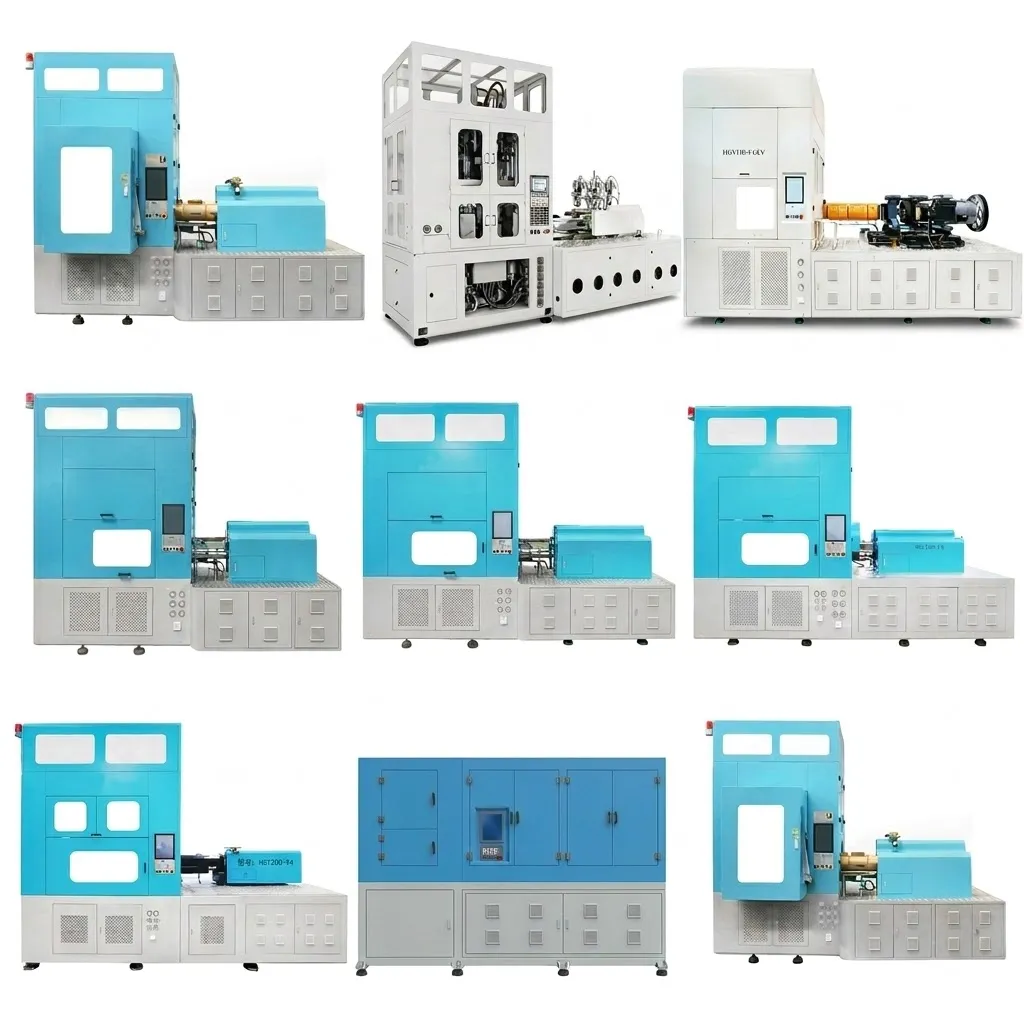
Finished containers produced by one-step ISBM machines — no intermediate preform storage, no second machine required.
ISBM Machine Pricing: The Right Scale for Bottle Production
One-step ISBM machines are specified in kN of injection clamping force, not in tonnes, because ISBM preform moulds are compact and require much lower clamping forces than large solid-part injection moulds. The equivalent of a “250-ton” injection moulding machine in ISBM terms would be approximately 25 kN — far below the range of any commercial ISBM machine. The largest ISBM machines in the EP-HGY range use 400 kN (approximately 40 tonnes) of injection clamping force.
| EP-HGY Model | Injection Clamp | Gamme de conteneurs | Conduire |
|---|---|---|---|
| EP-HGY50-V3-EV | 50 kN (≈ 5 ton) | 30–500 ml | servo complet |
| EP-HGY150-V4 | 150 kN (≈ 15 ton) | 100 ml–2 L | servo-hydraulique |
| EP-HGY200-V4 | 200 kN (≈ 20 ton) | 200 ml–3 L | servo-hydraulique |
| EP-HGY250-V4 | 250 kN (≈ 25 ton) | 500 ml–5 L | servo-hydraulique |
| EP-HGY650-V4 | 400 kN (≈ 40 ton) | 2–10 L | servo-hydraulique |
Total Investment for a One-Step ISBM Production Line
For buyers transitioning from purchasing containers to in-house ISBM production, the total investment required goes beyond the machine purchase price. A complete production line for one container format requires:
- ISBM machine — USD 50,000–350,000 depending on clamp force and drive system
- Custom mould set — USD 12,000–100,000 for preform mould, blow mould, and stretch rod
- High-pressure compressor — USD 8,000–25,000 for blow air at 25–40 bar
- Desiccant dryer — USD 4,000–12,000 for PET resin drying to below 50 ppm moisture
- Refroidisseur — USD 5,000–15,000 for blow mould cooling water at 8–12 °C
The mould set and ancillaries are one-time investments per container format. Additional bottle formats on the same machine require only a new mould set (USD 12,000–100,000) rather than a new machine, making the incremental cost of adding formats much lower than the initial installation investment.
Make vs Buy: When Does ISBM Investment Pay Off?
The financial case for in-house ISBM production rests on the difference between the purchased container price and the in-house production cost. Purchased container prices from a packaging supplier include the supplier’s machine amortisation, mould depreciation, resin cost, energy, labour, overhead, and margin. In-house production eliminates the supplier’s margin and overhead, typically reducing the per-bottle cost by 20–40% at commercial production volumes.
For most pharmaceutical, cosmetic, and food packaging applications, in-house ISBM production becomes financially superior to purchasing containers at annual volumes above 500,000–1,000,000 bottles per format. Below this volume, the mould depreciation and machine amortisation per bottle makes in-house production more expensive than purchasing. Ever-Power’s sales team can prepare a make-vs-buy analysis for your specific bottle format and production volume as part of the pre-sale consultation process.
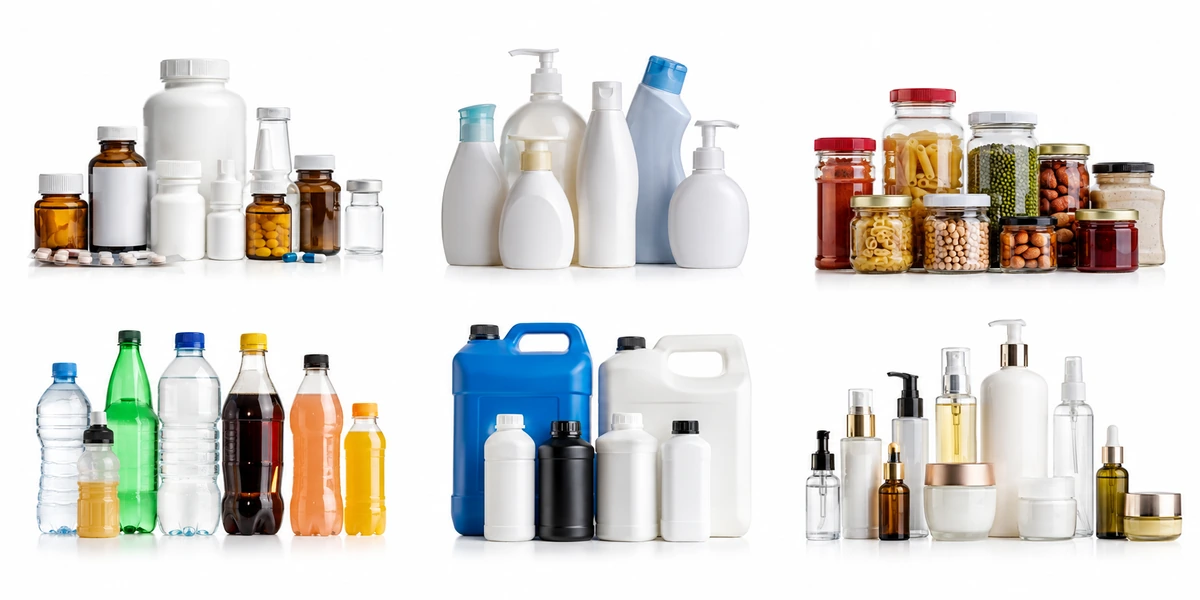
Application sectors served by Ever-Power ISBM machines — from pharmaceutical vials to industrial containers, all produced in-house from resin pellets.
Ready to evaluate in-house ISBM production for your container?
Ever-Power can prepare a make-vs-buy cost comparison for your specific bottle format and production volume. Send us your current purchased container price, annual volume, and bottle specification to get started.
Explorez l'intégralité EP-HGY ISBM machine range, or review options de moules personnalisés for your container format and cavity count.
Foire aux questions
Is there a 250-ton ISBM machine?
Not in standard industry terminology. ISBM machines are specified in kN of injection clamping force, not in tonnes. The EP-HGY250-V4, for example, has 250 kN of injection clamping force — approximately 25 tonnes — and is used for containers from 500 ml to 5 litres. This is very different from a 250-ton (2,500 kN) general injection moulding machine for solid parts. The two machines operate at very different scales and serve completely different applications.
What is the lead time for a new ISBM machine from Ever-Power?
Standard EP-HGY machines have a manufacturing lead time of 90–150 days from order to factory acceptance test. Custom configurations or high-specification machines may take longer. Mould manufacture typically runs in parallel and completes within the same window. Budget an additional 2–4 weeks for ocean freight and 1–2 weeks for on-site installation and commissioning. Total time from order to production-ready: approximately 5–7 months for most installations.
Can I finance an ISBM machine purchase?
Yes. ISBM machine purchases are commonly financed through equipment leasing, trade finance (documentary letters of credit), or export credit facilities. Payment terms from Ever-Power are typically structured as 30–40% deposit at order, 30–40% at factory acceptance test, and the balance before or at shipment. For buyers using trade finance instruments, Ever-Power can provide the documentation required by most commercial banks and export credit agencies. Contact our sales team to discuss financing arrangements applicable to your country and transaction size.
Ancillary Equipment Investment: Often Underestimated
First-time ISBM machine buyers frequently underestimate the total ancillary investment required to make a machine production-ready. The machine purchase price is the largest single line item, but the ancillaries — high-pressure compressor, desiccant dryer, chiller, and installation materials — are not optional and must be budgeted before the investment decision is made. A machine that sits on the production floor without a functioning high-pressure air supply or without adequate PET resin drying cannot produce acceptable bottles regardless of its technical capability.
The high-pressure compressor is often the most underestimated ancillary. ISBM machines require blow air at 25–40 bar, which is well above the capacity of standard factory compressed air systems (typically 6–10 bar). A dedicated high-pressure booster compressor rated for the machine’s peak air consumption during the blow step is a mandatory ancillary item. Sizing the compressor correctly requires knowing the machine’s blow air volume per cycle, the cycle speed, and the number of cavities — data that Ever-Power provides in the technical specification sheet for each EP-HGY model. Installing an undersized compressor is a common and expensive mistake that limits machine output and causes blow pressure instability, producing defective bottles at high scrap rates until the compressor is replaced.
Resin Cost and Its Impact on Container Production Economics
Beyond machine and mould investment, the largest ongoing variable cost in ISBM production is resin. PET resin price fluctuates with crude oil prices and regional supply conditions, typically ranging from USD 0.90–1.50 per kilogram depending on market conditions and volume. The container resin cost per bottle is the product of the bottle weight and the resin price: a 500 ml PET water bottle weighing 10 grams at a resin price of USD 1.20/kg has a resin cost of USD 0.012 per bottle. For a 1-litre edible oil bottle weighing 28 grams, the resin cost at the same price is USD 0.034 per bottle.
One-step ISBM’s material efficiency advantage over alternative container production methods — lower bottle weight per unit volume due to biaxial orientation — translates directly into lower resin cost per bottle. A 500 ml ISBM-produced PET water bottle weighing 10 grams uses 30–50% less resin than an equivalent unoriented injection-moulded or EBM-produced container. At 1 million bottles per year and a resin cost saving of USD 0.005–0.010 per bottle, the annual resin saving from ISBM’s light-weighting advantage is USD 5,000–10,000 — a saving that compounds across the machine’s operating life and contributes meaningfully to the total cost of ownership advantage of in-house ISBM production.