
ISBM Preform Engineering and Process Mathematics
How Is Stretch Ratio Calculated in Injection Stretch Blow Molding?
A definitive engineering guide to the mathematical formulas, geometric principles, and material science considerations that govern axial, radial, and planar stretch ratio calculations for optimized preform design and container performance.
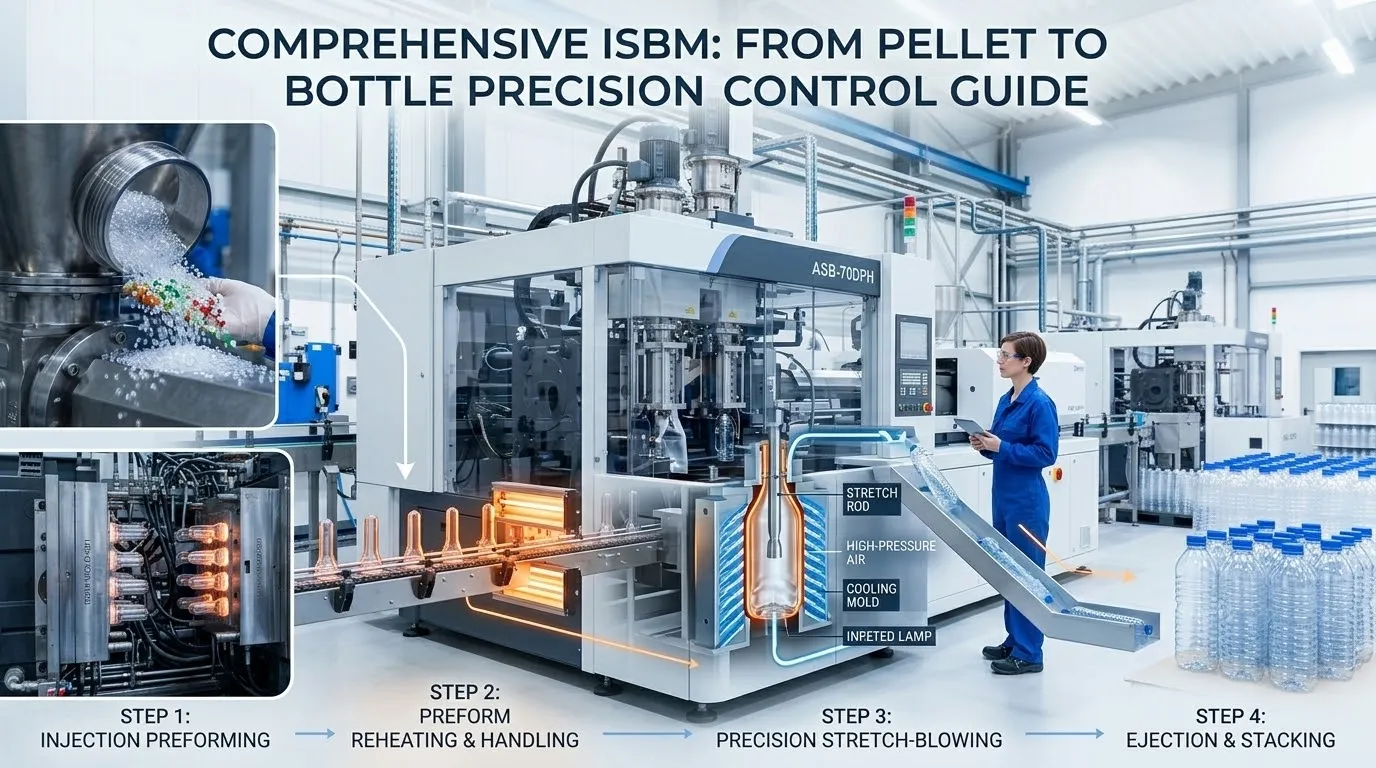
The Mathematical Foundation of Preform and Container Design
The stretch ratio is the single most important calculated parameter in the entire injection stretch blow molding process. It is the fundamental geometric relationship that connects the preform design to the final container dimensions. It dictates whether the container can be successfully manufactured at all. If the calculated stretch ratio exceeds the natural stretch limit of the polymer, the preform will tear during the stretch-blow phase, producing stress whitening and scrap. If the stretch ratio is too low, the container will lack the biaxial orientation necessary for adequate strength, creep resistance, and gas barrier performance. The calculation of the stretch ratio is therefore not a casual arithmetic exercise. It is a rigorous engineering calculation that must be performed accurately and understood deeply by every preform designer, mold engineer, and process development specialist involved in ISBM production. At 永恒之力, a globally recognized Brazilian ISBM manufacturer, the calculation of stretch ratios is embedded in our mold design and process engineering workflow, ensuring that every preform we produce is geometrically optimized for flawless container production on machines like the EP-HGY150-V4 四工位机床.
Stretch ratio calculation in ISBM involves three interrelated geometric parameters: the axial stretch ratio, the radial stretch ratio, and the planar stretch ratio. Each is calculated from specific dimensions of the preform and the final container. The axial stretch ratio quantifies how much the preform is elongated along its length by the stretch rod. The radial stretch ratio quantifies how much the preform is expanded in diameter by the blow air. The planar stretch ratio, the product of the axial and radial ratios, represents the total biaxial deformation experienced by the polymer and is the key parameter that correlates with the degree of molecular orientation and the resulting container properties. This comprehensive engineering guide will derive each of these ratios, explain how they are calculated from preform and container geometry, discuss the natural stretch limits of common ISBM materials including PET, rPET, and PP, and demonstrate how stretch ratio calculations are used in practice to design optimized preforms and troubleshoot production problems. We will reference advanced machinery like the servo-driven EP-HGY150-V4-EV全伺服机 to illustrate how stretch ratio targets are achieved through precise control of the stretch rod and blow air.
Mastery of stretch ratio calculation is the gateway to preform design competence. This guide provides the complete mathematical framework and practical application knowledge to achieve that mastery.
The Axial Stretch Ratio: Elongation Along the Preform Length
The axial stretch ratio quantifies the degree to which the preform is elongated by the mechanical stretch rod during the stretch-blow phase.
The Axial Stretch Ratio Formula and Its Geometric Basis
The axial stretch ratio is defined as the length of the final container divided by the effective stretchable length of the preform. Expressed as a formula: Axial Stretch Ratio equals Lc divided by Lp, where Lc is the length of the container body below the neck finish, measured along the sidewall from the base of the neck to the center of the container base, and Lp is the length of the preform body below the neck finish that is available for stretching. Critically, the neck finish of the preform is not included in the stretchable length because it is clamped and held rigid during the stretch-blow process and does not undergo any stretching. The preform length used in the calculation must also account for any un-stretched material at the base that is pinned by the stretch rod. The calculation of Lc and Lp must be performed consistently along the same geometric path. For a simple cylindrical container, Lc is simply the height of the cylindrical body plus the height of the shoulder and base regions measured along the container profile. For a complex, contoured container, Lc is the length of the path along the container surface from the base of the neck to the center of the base. This path length can be determined from the CAD model of the container. A typical axial stretch ratio for a standard 500ml PET water bottle ranges from 2.5 to 3.5, meaning the preform is elongated to two and a half to three and a half times its original length. The stretch rod stroke length on the machine is set to achieve this elongation. On servo-driven machines like the EP-HGY150-V4-EV, the stretch rod end position is programmable and can be set with micron-level precision to achieve the exact target axial stretch ratio for the specific container design.
Practical Considerations in Axial Stretch Ratio Calculation
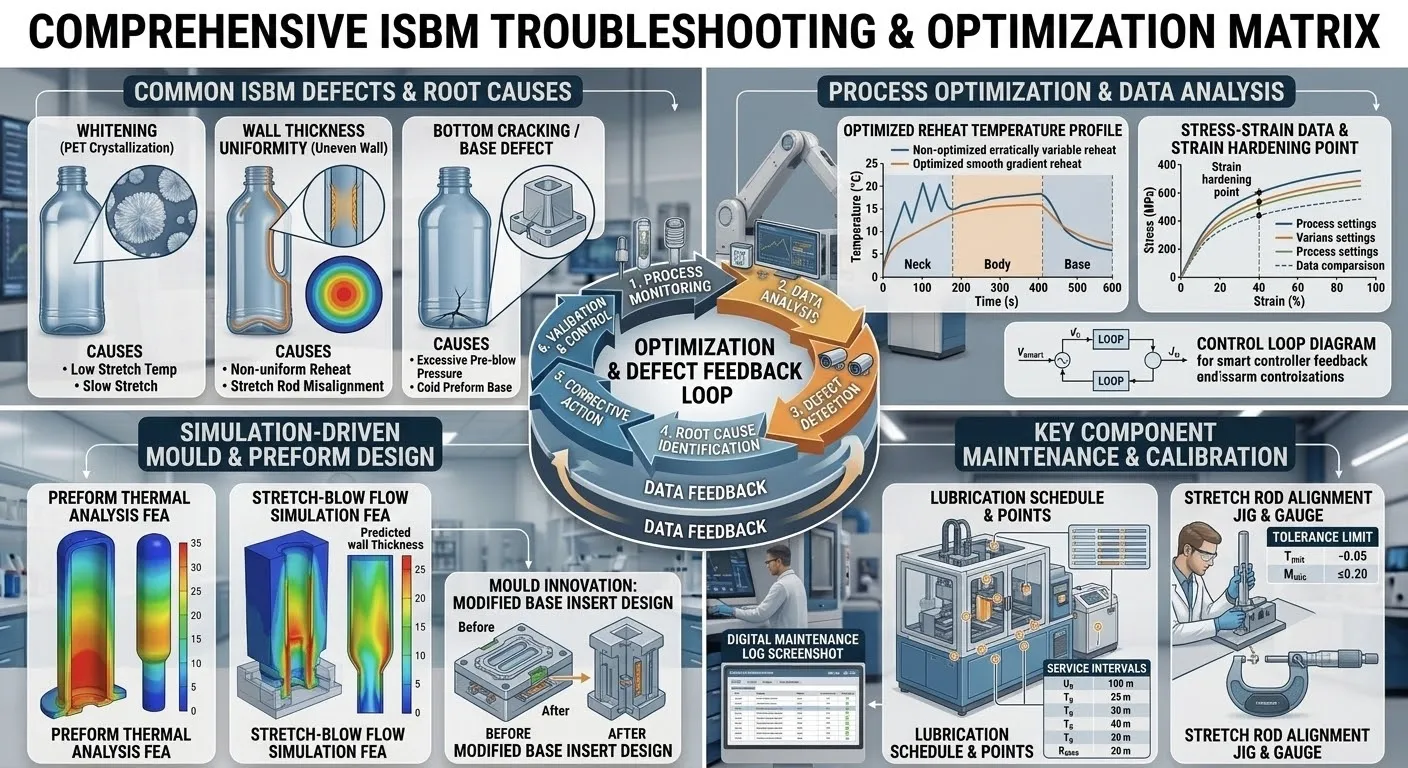
In practice, the calculation of the axial stretch ratio must account for several real-world complexities. The preform does not stretch uniformly along its entire length. The shoulder region of the container, where the diameter transitions from the neck to the body, experiences a combination of axial elongation and radial expansion. The base region, where the stretch rod pins the material, experiences complex compressive and tensile strains. The effective preform length used in the axial ratio calculation is often adjusted based on finite element simulation results that predict the actual material deformation. Furthermore, the stretch rod does not necessarily push the preform to the full depth of the container. The pre-blow air initiates radial expansion before the rod reaches its full stroke, and the final blow air completes the inflation. The actual axial elongation experienced by any given material element depends on its initial position on the preform. Finite element analysis is the standard engineering tool for mapping the local axial stretch ratio across the entire container surface. This local stretch ratio data is essential for identifying regions where the stretch ratio exceeds the material’s natural limit, potentially causing stress whitening. Preform designers use this simulation data to iterate the preform geometry until the maximum local stretch ratio is within the safe range for the chosen polymer. The 定制一步注塑拉伸吹塑模具 from Ever-Power are designed with stretch ratio calculations as a foundational step in the mold engineering process.
The Radial Stretch Ratio: Expansion in the Hoop Direction
The radial stretch ratio quantifies the degree to which the preform is expanded in diameter by the blow air, and it is essential for achieving uniform hoop strength in the container wall.
🔵The Radial Stretch Ratio Formula and Diameter-Based Calculation
The radial stretch ratio is defined as the maximum internal diameter of the final container divided by the internal diameter of the preform body. Expressed as a formula: Radial Stretch Ratio equals Dc divided by Dp, where Dc is the maximum internal diameter of the container body, and Dp is the internal diameter of the preform body at the corresponding axial position. For a container with a varying diameter, such as a contoured bottle with a waist, the radial stretch ratio will vary at different heights. The preform designer must calculate the radial stretch ratio at multiple heights along the container and ensure that the maximum value does not exceed the material’s limit. For a typical 500ml PET water bottle with a body diameter of 65 millimeters and a preform internal diameter of 22 millimeters, the radial stretch ratio is approximately 2.95. This means the preform is expanded to nearly three times its original diameter. The radial stretch ratio is the primary driver of hoop strength in the container. Higher radial stretch ratios produce greater molecular orientation in the hoop direction, increasing the container’s resistance to internal pressure. However, the radial stretch ratio cannot be increased arbitrarily. The material has a natural radial stretch limit, beyond which it will tear. The radial stretch ratio also interacts with the axial stretch ratio. A preform that is extensively stretched axially will have a thinner wall and a smaller effective diameter when it begins radial expansion, affecting the local radial stretch ratio. These interactions are why finite element simulation is indispensable for accurate stretch ratio analysis, particularly for complex container geometries.
🔬Radial Stretch Ratio Variations in Non-Cylindrical Containers
For containers that are not simple cylinders, the radial stretch ratio calculation becomes more nuanced. A flat-oval container has a major axis diameter and a minor axis diameter. The radial stretch ratio in the direction of the flat faces will be significantly higher than in the direction of the curved edges. This differential stretch is the root cause of the wall thickness non-uniformity and stress whitening challenges that plague oval container production. The preform designer must calculate the radial stretch ratio in the worst-case direction, the direction requiring the greatest expansion, and ensure it is within the material’s limit. The preform conditioning can then be adjusted to create a circumferential temperature profile that compensates for the differential stretch, as discussed in our guide on complex shape production. The servo-driven stretch rod and programmable pneumatic control of the EP-HGY150-V4-EV enable precise control over the stretching dynamics, but the preform geometry and the resulting stretch ratios must be fundamentally correct for the container shape. The radial stretch ratio calculation is the quantitative basis for making these critical design decisions.

The Planar Stretch Ratio: Total Biaxial Deformation and Material Limits
The planar stretch ratio is the product of the axial and radial stretch ratios, representing the total biaxial deformation, and it is the key parameter that must be kept within the natural stretch limit of the specific polymer.
📊Calculating and Interpreting the Planar Stretch Ratio
The planar stretch ratio is calculated simply as: Planar Stretch Ratio equals Axial Stretch Ratio multiplied by Radial Stretch Ratio. For a typical 500ml PET water bottle with an axial stretch ratio of 3.0 and a radial stretch ratio of 3.0, the planar stretch ratio is 9.0. This value represents the total area expansion that the polymer has undergone. A planar stretch ratio of 9.0 means that a unit area of preform material has been stretched to cover nine times its original area. The planar stretch ratio is the parameter that most directly correlates with the degree of strain-induced crystallization and the resulting mechanical and barrier properties of the container. Higher planar stretch ratios produce higher crystallinity, greater strength, and better barrier performance, up to a point. Beyond the natural stretch ratio limit of the polymer, further stretching causes micro-voiding, stress whitening, and a catastrophic loss of mechanical properties. For standard bottle-grade virgin PET, the natural planar stretch ratio limit is typically in the range of 12 to 14. Exceeding this limit, particularly if the preform temperature is below the optimal range, will reliably produce pearlescence and scrap. The preform designer must calculate the planar stretch ratio and ensure that the maximum value, typically occurring in the shoulder or the base corners, is comfortably below the natural limit for the chosen material.
♻️Material-Specific Natural Stretch Ratio Limits: PET, rPET, and PP
The natural stretch ratio limit is not a universal constant. It varies significantly with the polymer type and grade. Standard bottle-grade virgin PET with an intrinsic viscosity of 0.80 dL/g can typically be stretched to a planar ratio of 12 to 14 before the onset of stress whitening. Higher-IV PET grades, such as 0.84 dL/g, can withstand slightly higher ratios. Post-consumer recycled PET, with its lower and more variable IV, typically has a reduced natural stretch limit of approximately 9 to 11 planar ratio. This reduction is a critical consideration when designing preforms for high-rPET-content containers. The preform must be designed with a larger starting diameter or a shorter length to reduce the required stretch ratio, which may increase the preform weight. Polypropylene, used for hot-fill ISBM containers, has a significantly lower natural stretch limit than PET, typically 6 to 8 planar stretch ratio. PP preforms must therefore be designed with proportionally larger diameters and shorter lengths compared to PET preforms for equivalent container sizes. The calculation of stretch ratios is not complete until the designer has verified that the calculated values are within the specific material’s limits. This verification is a standard step in the preform design process at Ever-Power, ensuring that the preforms produced for machines like the EP-BPET-125V4 are geometrically compatible with the chosen resin.

Practical Application of Stretch Ratio Calculations in Preform Design and Troubleshooting
Stretch ratio calculations are not merely academic exercises. They are directly applied in preform design and production troubleshooting to achieve container quality and process efficiency.
Using Stretch Ratio Calculations in Preform Design
The preform design workflow typically begins with the container geometry from the customer. The preform designer selects a target planar stretch ratio that is appropriate for the material and the container’s performance requirements. For a standard PET water bottle, a target planar ratio of 9 to 10 is typical. The designer then determines the preform body diameter and length that will achieve this planar ratio when the preform is inflated into the blow mold cavity. The preform internal diameter is calculated by dividing the container body internal diameter by the desired radial stretch ratio. The preform body length is calculated by dividing the container body path length by the desired axial stretch ratio. These initial dimensions are then refined through finite element simulation. The simulation predicts the local stretch ratios across the entire container surface. If any local region exceeds the material’s natural stretch limit, the preform geometry is adjusted. The axial thickness profile of the preform is also designed concurrently, providing thicker material in regions that will undergo higher stretch to maintain uniform final wall thickness. This iterative design process, using stretch ratio calculations as the guiding metric, is a core service provided by the mold engineering team at 永恒之力.
Troubleshooting with Stretch Ratio Analysis
When a production line experiences persistent stress whitening in a specific region of a container, the stretch ratio is one of the first diagnostic parameters to investigate. The preform and container dimensions are measured, and the local stretch ratio in the affected region is calculated. If the calculated ratio exceeds the material’s natural limit, the root cause is identified. The corrective action may involve modifying the preform geometry to reduce the stretch ratio in that region, which could mean increasing the preform body diameter or adjusting the preform body length. It may also involve adjusting the process parameters. The stretch rod stroke could be reduced to decrease the axial stretch ratio. The pre-blow timing could be adjusted to alter the sequence of axial and radial stretching, potentially reducing the peak local stretch ratio. The servo-driven stretch rod and programmable pneumatics of the EP-HGY150-V4-EV provide the process control necessary to implement these corrective actions with precision. However, the stretch ratio calculation provides the quantitative diagnosis that guides the corrective action. Without this calculation, troubleshooting is reduced to guesswork. With it, the engineer can make targeted, effective adjustments that resolve the defect at its geometric root cause.
EP-HGY250-V4 和高输出 EP-HGY250-V4-B are designed with the mechanical precision to deliver the stretch ratios calculated during the preform design phase, ensuring that the container produced matches the container designed. The integration of calculated stretch ratios into the machine setup, through the programmable stretch rod and blow air parameters, is a standard operating procedure in optimized ISBM production.

Master Stretch Ratio Calculation to Engineer Flawless Preforms and Containers
The calculation of stretch ratios in injection stretch blow molding, the axial ratio from preform and container lengths, the radial ratio from preform and container diameters, and the planar ratio as their product, is the mathematical foundation upon which successful preform design and container production are built. These ratios quantify the deformation that the polymer will experience, and they must be maintained within the natural stretch limits of the specific material to avoid defects and achieve the required container performance. By mastering these calculations and leveraging the simulation tools and precision machinery available from 永恒之力, including the servo-driven EP-HGY150-V4-EV and custom-engineered 定制一步注塑拉伸吹塑模具, preform designers and process engineers can create optimized preforms that produce containers of uncompromising quality, strength, and consistency.