Cách khắc phục hiện tượng chai PET bị trắng/mờ trong quy trình ISBM? Một bài học chuyên sâu về kỹ thuật.
Trong bối cảnh cạnh tranh khốc liệt toàn cầu của bao bì nhựa cao cấp, sự hoàn hảo về mặt hình ảnh không phải là một thứ xa xỉ; đó là một tiêu chuẩn tuyệt đối không thể thỏa hiệp. Đối với các thương hiệu mỹ phẩm, các tập đoàn dược phẩm và các công ty đồ uống cao cấp, bao bì chính là đại sứ thầm lặng tối thượng của sản phẩm bên trong. Khi người tiêu dùng chọn mua một loại serum cao cấp hoặc một chai nước khoáng trong suốt, họ mong muốn nhìn thấy một chiếc hộp có độ trong suốt hoàn hảo, rực rỡ như thủy tinh được đánh bóng. Quy trình ép phun kéo giãn thổi khuôn là công nghệ sản xuất duy nhất có khả năng mang lại độ sáng bóng quang học đặc biệt này. Tuy nhiên, để đạt được và duy trì sự hoàn hảo này đòi hỏi sự thành thạo tuyệt đối về nhiệt động lực học của polymer. Ever-PowerLà một nhà sản xuất ISBM lâu đời của Brazil và là một chuyên gia toàn cầu trong lĩnh vực xử lý polymer, câu hỏi quan trọng nhất về đảm bảo chất lượng mà các kỹ sư chẩn đoán của chúng tôi nhận được là: Làm thế nào để khắc phục hiện tượng chai PET bị trắng và mờ trong quá trình sản xuất ISBM?
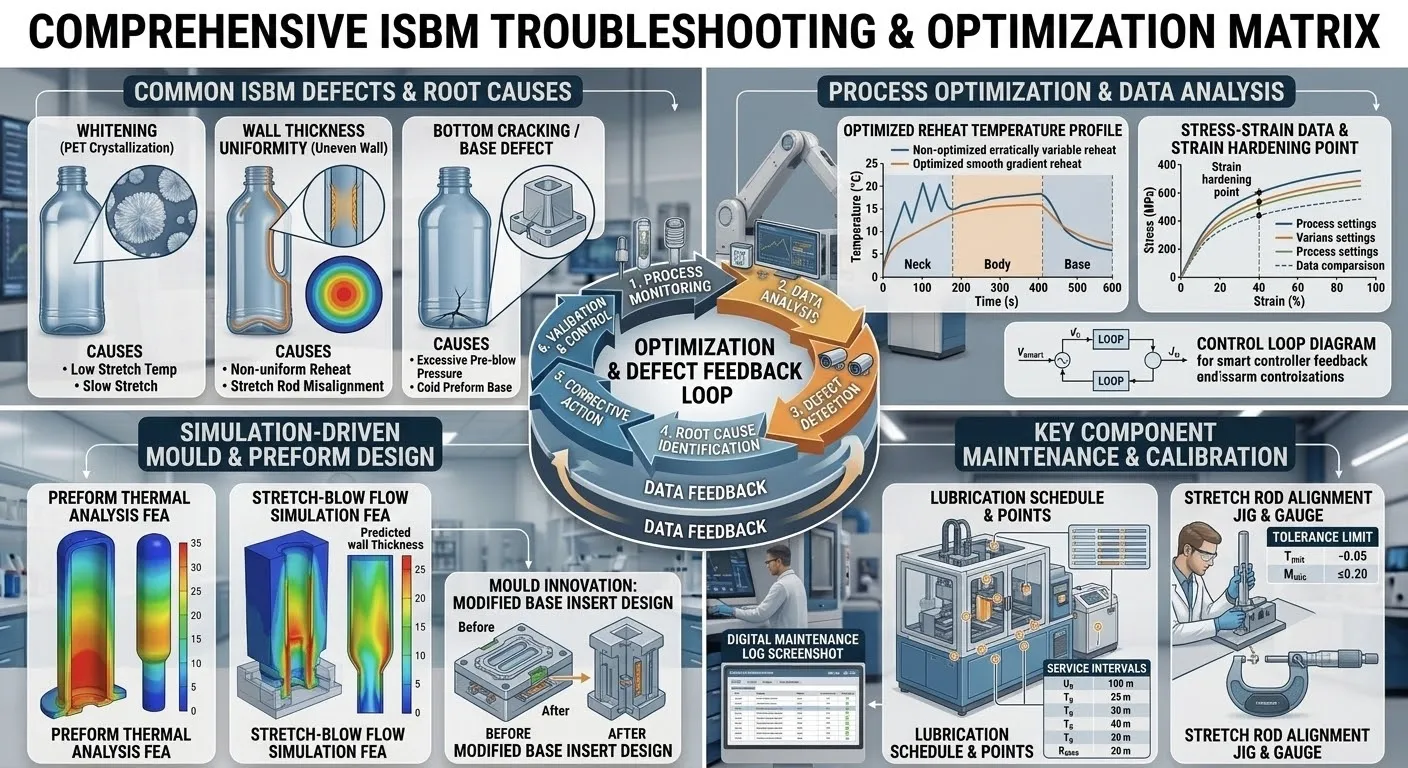
Khi nhựa Polyethylene Terephthalate (PET) nguyên chất đột nhiên xuất hiện từ khuôn thổi với vẻ ngoài mờ đục, trắng sữa hoặc ánh ngọc trai, sự hoảng loạn là điều dễ hiểu trong nhà máy. Hiện tượng trắng đục này không chỉ đơn thuần là một khuyết điểm về mặt thẩm mỹ; đó là một sự hỏng hóc cấu trúc nghiêm trọng cho thấy tính toàn vẹn phân tử của ma trận polymer đã bị tổn hại nghiêm trọng. Chai bị mờ đục sẽ bị giảm khả năng chống va đập, giảm khả năng chắn khí và cuối cùng bị bộ phận kiểm soát chất lượng của công ty loại bỏ. Trong luận văn kỹ thuật chuyên sâu và chi tiết này, chúng tôi sẽ phân tích triệt để nguyên nhân gốc rễ của hiện tượng trắng đục PET. Chúng tôi sẽ chia khuyết điểm này thành hai loại nhiệt động học riêng biệt—trắng đục do ứng suất và kết tinh nhiệt—và cung cấp cho các nhà quản lý nhà máy của bạn một bản kế hoạch chẩn đoán toàn diện, từng bước để loại bỏ những khuyết điểm này và khôi phục độ trong suốt quang học tuyệt đối cho dây chuyền sản xuất của bạn.
Khoa học nền tảng: Vật lý polyme của Polyethylene Terephthalate
Để khắc phục thành công hiện tượng chai PET bị trắng trong ISBM, trước tiên cần phải hiểu sâu sắc cách thức hoạt động của Polyethylene Terephthalate ở cấp độ phân tử dưới các điều kiện nhiệt và động năng khác nhau. PET là một loại polymer nhiệt dẻo bán tinh thể. Độ trong suốt quang học và độ bền cấu trúc của nó hoàn toàn được quyết định bởi trạng thái hình thái của các chuỗi phân tử.
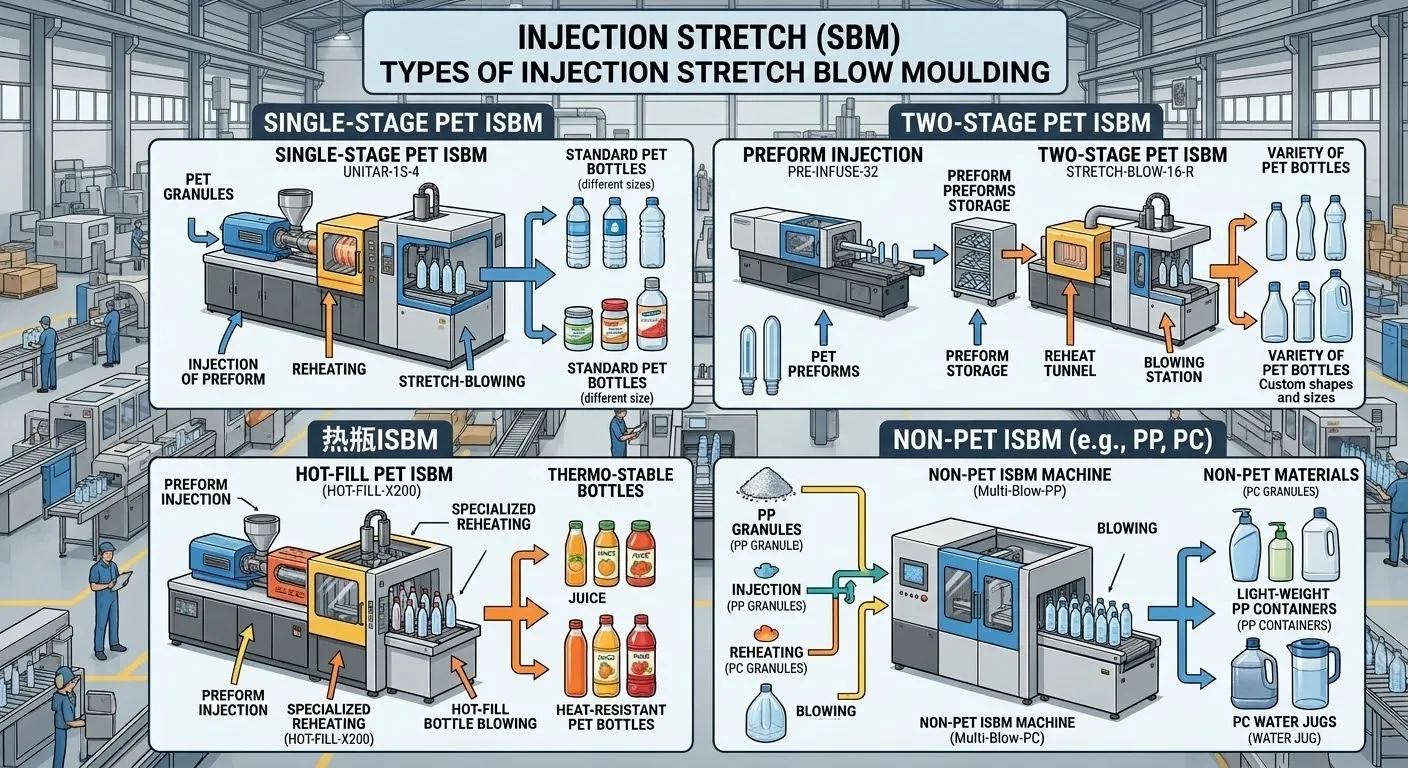
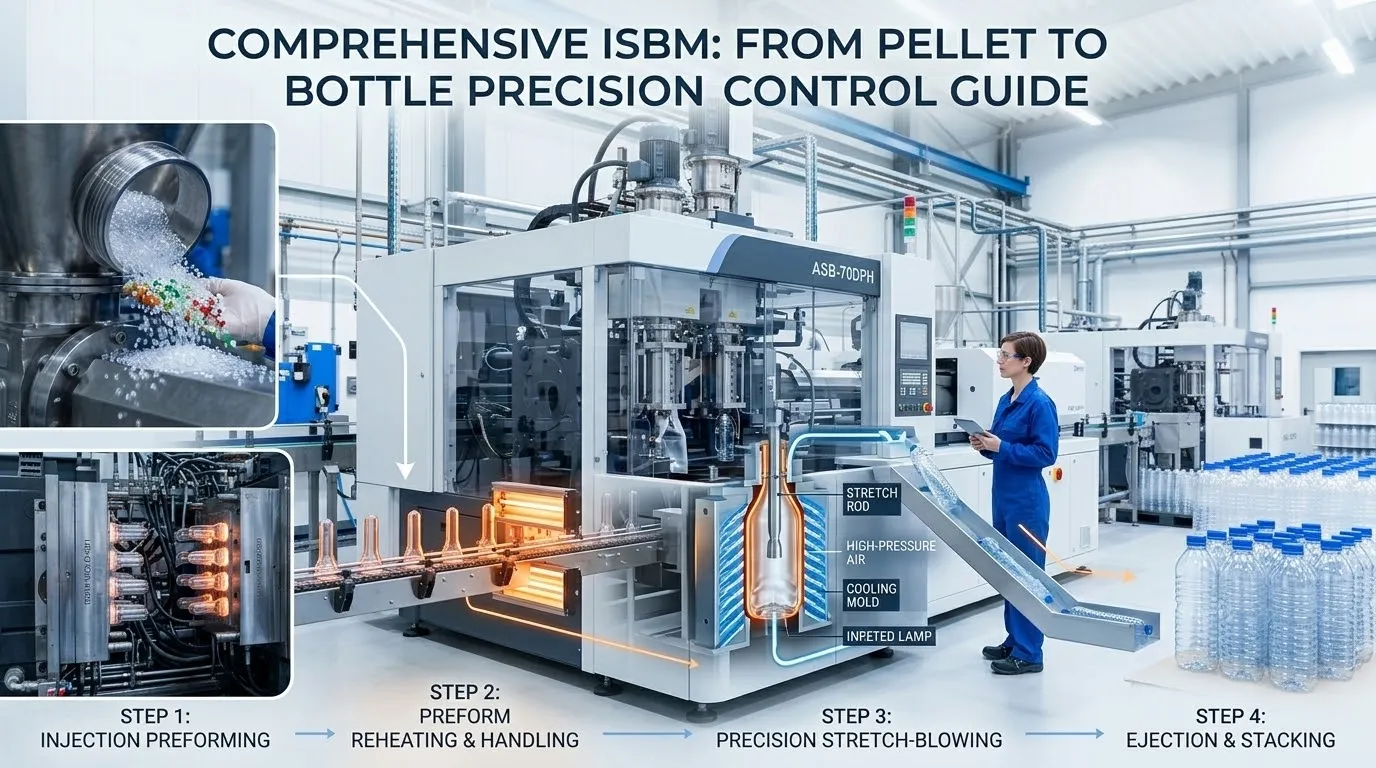
Khi các hạt PET thô được nung chảy bên trong thùng phun của một máy móc hạng nặng như máy của chúng tôi, Máy ép phun kéo giãn thổi 4 trạm EP-HGY150-V4Các chuỗi phân tử trở thành một khối hỗn loạn, rối rắm và có tính lỏng cao. Khi nhựa nóng chảy này được bơm vào khoang thép lạnh của khuôn định hình, nó sẽ được làm nguội nhanh chóng. Quá trình làm nguội đột ngột và mạnh mẽ này làm đông cứng các chuỗi polymer ở trạng thái rối rắm, không có trật tự trước khi chúng kịp gấp lại thành cấu trúc tinh thể có trật tự. Trạng thái này được gọi là PET vô định hình. PET vô định hình có độ trong suốt cao vì không có các ranh giới tinh thể lớn để tán xạ ánh sáng đi qua, nhưng nó thiếu độ bền vật lý cực cao cần thiết cho bao bì hiệu suất cao.
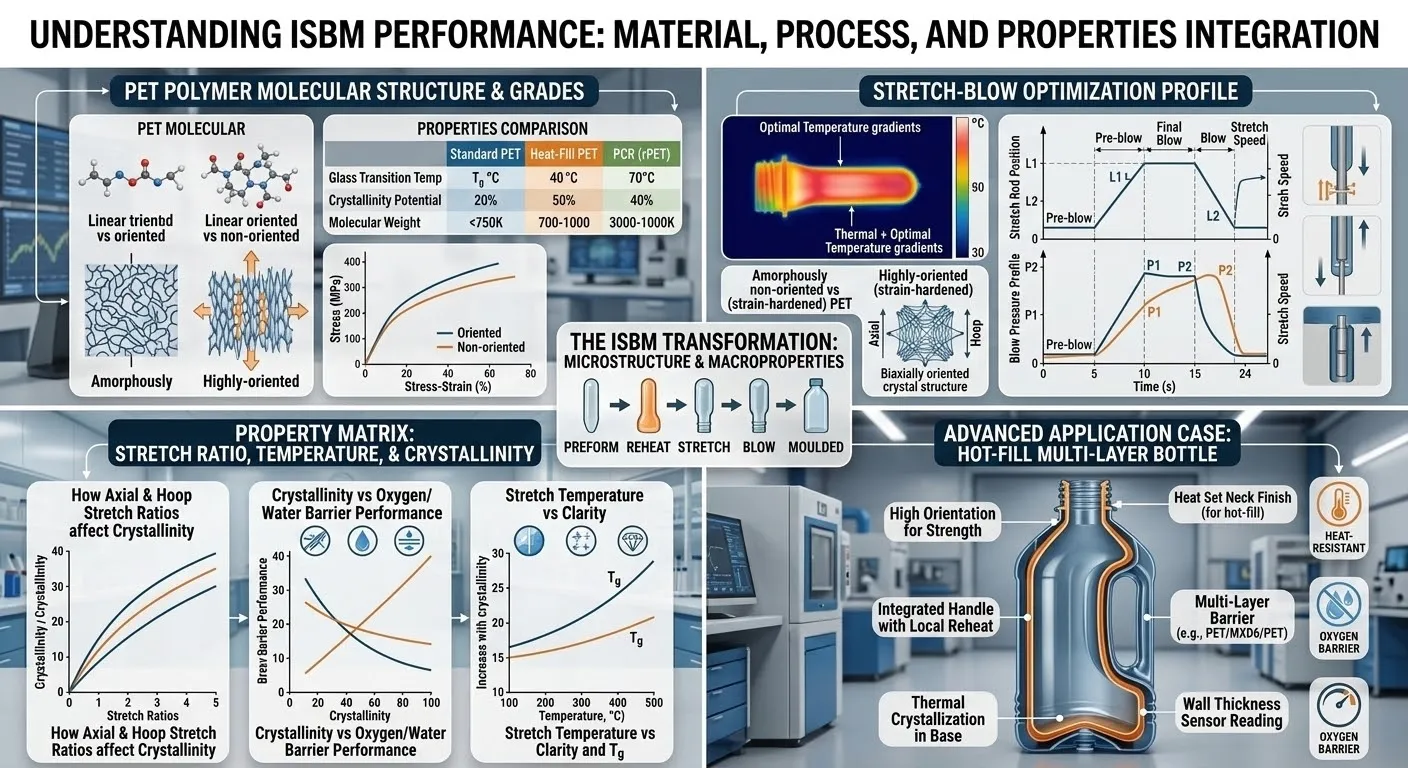
Điều kỳ diệu của quy trình ISBM nằm ở sự kết tinh do biến dạng gây ra. Khi phôi vô định hình được xử lý nhiệt đến nhiệt độ chuyển pha thủy tinh chính xác và sau đó được kéo giãn bằng thanh cơ học và không khí áp suất cao, các chuỗi phân tử rối rắm bị buộc phải sắp xếp thẳng hàng song song với hướng kéo giãn. Điều này tạo ra một mạng lưới phân tử được tổ chức cao và đan xen chặt chẽ. Bởi vì các tinh thể hình thành trong quá trình kéo giãn nhanh này có kích thước vô cùng nhỏ - nhỏ hơn bước sóng của ánh sáng nhìn thấy - vật liệu vẫn trong suốt tuyệt vời trong khi độ bền kéo tăng lên theo cấp số nhân. Hiện tượng trắng đục và mờ xảy ra khi quá trình cân bằng nhiệt động học tinh tế này bị gián đoạn, khiến polyme bị rách cơ học hoặc kết tinh không đúng cách.
Chẩn đoán bằng hình ảnh: Nhận diện hai dạng khác nhau của hiện tượng sương mù
Sai lầm nghiêm trọng nhất mà người vận hành máy chưa được đào tạo có thể mắc phải là xử lý tất cả các chai bị đục bằng cùng một biện pháp khắc phục. Hiện tượng chai PET bị trắng xuất hiện trong hai trường hợp nhiệt động học hoàn toàn trái ngược nhau: hoặc quá lạnh hoặc quá nóng. Khắc phục vấn đề quá lạnh bằng dung dịch làm mát sẽ ngay lập tức gây ra sự cố sản xuất nghiêm trọng. Trước khi điều chỉnh bất kỳ nút nào trên giao diện người máy, kỹ thuật viên phải chẩn đoán trực quan và bằng xúc giác bản chất cụ thể của lỗi.
Hiện tượng A: Hiện tượng trắng do căng thẳng (ánh ngọc trai)
Hiện tượng bạc màu do ứng suất, thường được gọi trong ngành công nghiệp bao bì là hiện tượng ánh ngọc trai, xảy ra khi vật liệu PET bị kéo giãn vượt quá giới hạn đàn hồi tự nhiên của nó trong điều kiện nhiệt độ quá thấp. Về mặt thị giác, khuyết điểm này biểu hiện dưới dạng một lớp màng mờ đục, ánh ngọc trai, thường phản chiếu ánh sáng với màu bạc hơi óng ánh. Nếu bạn dùng móng tay vuốt nhẹ lên vùng bị bạc màu do ứng suất nghiêm trọng, bề mặt chai sẽ cảm thấy hơi thô ráp, sần sùi hoặc xốp. Độ thô ráp này thực chất là sự tách lớp vi mô; lực động học cực lớn của thanh kéo giãn và luồng khí thổi đã xé toạc ma trận polymer cứng và lạnh ở cấp độ vi mô, tạo ra hàng triệu lỗ nhỏ li ti làm tán xạ ánh sáng và khiến nhựa chuyển sang màu trắng.
Hiện tượng B: Kết tinh nhiệt (Hiện tượng mờ do nhiệt)
Ngược lại, kết tinh nhiệt là một khuyết tật do nhiệt gây ra. Nó xảy ra khi PET vô định hình tiếp xúc với năng lượng nhiệt quá mức trong thời gian dài, cho phép các chuỗi phân tử đủ linh động để tự gấp lại thành các cấu trúc tinh thể hình cầu lớn, có trật tự cao, được gọi là spherulites. Những spherulites này lớn hơn nhiều so với bước sóng của ánh sáng nhìn thấy. Khi ánh sáng chiếu vào chúng, nó bị tán xạ mạnh, dẫn đến vẻ ngoài dày đặc, mờ đục, giống như sương mù. Không giống như hiện tượng trắng do ứng suất, hiện tượng mờ do nhiệt hoàn toàn mịn khi chạm vào. Bề mặt chai vẫn được đánh bóng cao, nhưng bản thân nhựa trông giống như thủy tinh mờ. Khuyết tật này thường xuất hiện nhất gần cổng phun ở đáy chai hoặc xung quanh các phần dày nhất của cổ chai.
Chẩn đoán chuyên sâu: Giải quyết tình trạng bạc trắng do căng thẳng (ánh ngọc trai)
Khi nhóm đảm bảo chất lượng của bạn phát hiện ra dấu hiệu mờ đục, sần sùi của hiện tượng bạc màu do ứng suất, kết luận chẩn đoán ngay lập tức là chắc chắn: nhựa quá lạnh khi được kéo giãn. Tuy nhiên, việc xác định phôi bị lạnh chỉ là bước đầu tiên; bạn phải xác định chính xác lý do tại sao nhiệt độ lại giảm xuống dưới mức tối ưu trong quá trình xử lý.
1. Phân tích trạm điều hòa nhiệt
Trong thiết bị ISBM một giai đoạn, trạm xử lý nhiệt là nơi chính để giải quyết hiện tượng bạc màu do ứng suất. Nếu chai có hiện tượng bạc màu do ứng suất đồng đều trên toàn bộ thân chai, thì nhiệt độ tổng thể của nồi xử lý nhiệt được đặt quá thấp, hoặc thời gian làm mát trong khoang ép phun quá dài, làm mất đi quá nhiều nhiệt lượng trước khi phôi chai đến giai đoạn xử lý nhiệt.
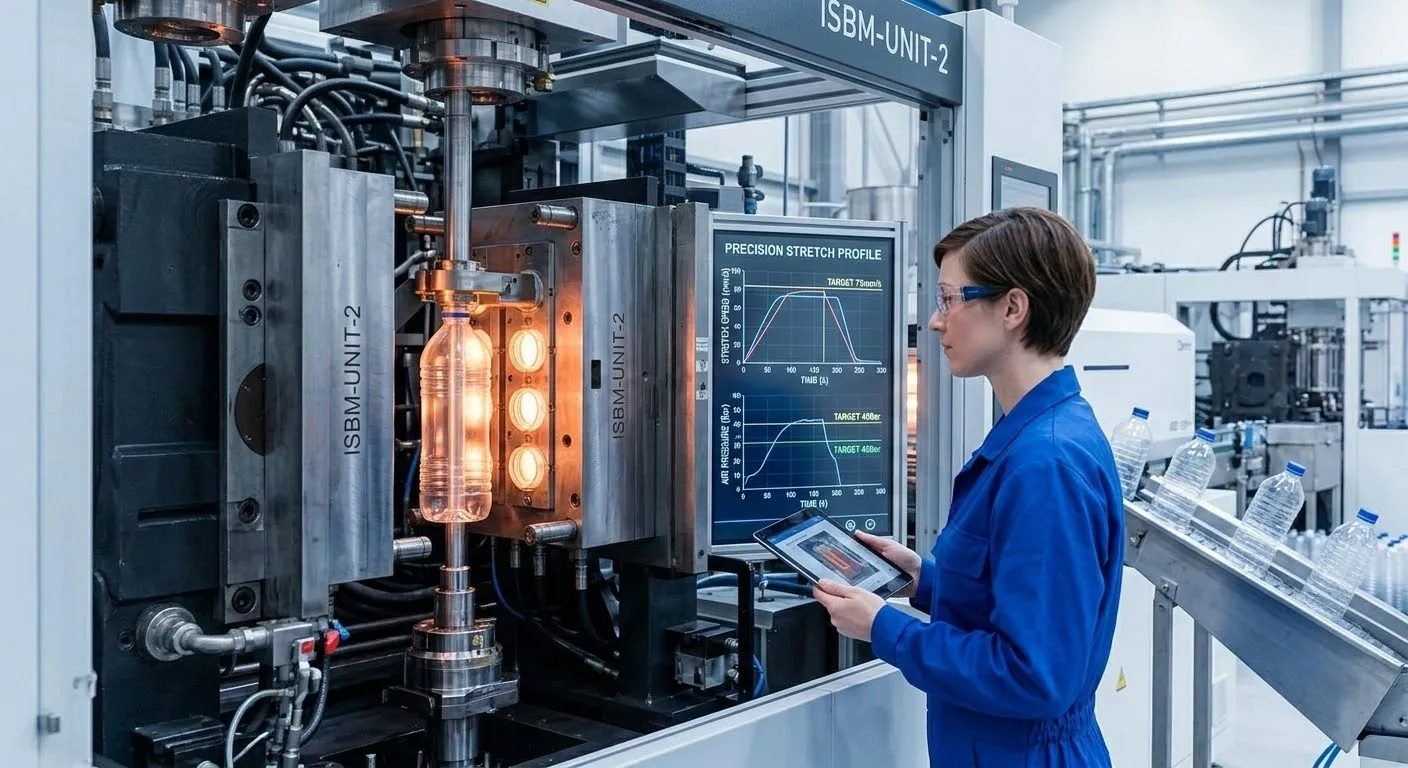
Để giải quyết vấn đề này trên các nền tảng có tính linh hoạt cao như... Máy ép phun kéo giãn thổi 4 trạm EP-BPET-125V4 hoặc loại nhỏ gọn Máy ép phun kéo giãn thổi 4 trạm EP-BPET-70V4Các kỹ thuật viên phải tăng dần điểm đặt nhiệt độ của chất lỏng tuần hoàn qua các nồi điều chỉnh. Điều quan trọng là phải thực hiện các điều chỉnh này một cách có kiểm soát chặt chẽ, tăng từng độ một, cho phép khối lượng nhiệt động học của các dụng cụ thép nặng ổn định trong vài chu kỳ máy trước khi đánh giá mẻ chai tiếp theo.
2. Hiệu ứng ánh ngọc trai cục bộ và các hình dạng cực đoan hình học
Hiện tượng bạc màu do ứng suất thường không đồng đều; nó xuất hiện theo từng dải cục bộ. Ví dụ, một chai có thể hoàn toàn trong suốt ở phần vai nhưng lại bị óng ánh nhiều ở phần đáy. Điều này cho thấy sự mất cân bằng nhiệt độ. Vật liệu ở vùng đáy bị kéo giãn vượt quá giới hạn cho phép của nhiệt độ cục bộ. Trong trường hợp này, kỹ thuật viên phải điều chỉnh các vùng gia nhiệt cụ thể tương ứng với đáy của sản phẩm.
Đối với các thiết kế thùng chứa phức tạp, bất đối xứng đòi hỏi sự xử lý vật liệu chuyên sâu, việc giải quyết hiện tượng ánh ngọc trai cục bộ cần đến máy móc tiên tiến. Công nghệ mang tính cách mạng này đã tạo ra bước đột phá. Máy ép phun kéo giãn thổi 6 trạm EP-HGYS280-V6 Hệ thống này cung cấp hai trạm làm việc điều chỉnh nhiệt hoàn toàn độc lập. Kiến trúc này cho phép các kỹ sư thực hiện quá trình ngâm nhiệt nhiều giai đoạn chậm rãi, nhẹ nhàng nâng cao nhiệt độ của các vùng cụ thể trên phôi để đảm bảo chúng hoàn toàn mềm dẻo trước khi chịu tác động mạnh của giai đoạn thổi giãn.
3. Thời điểm đóng mở van khí nén và hiện tượng bất thường trước khi đóng mở van
Nếu hồ sơ nhiệt được xác nhận là hoàn hảo, nhưng hiện tượng trắng do ứng suất vẫn tiếp diễn, nguyên nhân gốc rễ chắc chắn nằm ở thời điểm hoạt động của trạm thổi khí. Giai đoạn thổi sơ bộ là một luồng khí áp suất thấp được thiết kế để nhẹ nhàng kéo nhựa ra khỏi thanh kéo đang đi xuống. Nếu áp suất thổi sơ bộ được đặt quá cao, hoặc nếu van hoạt động sớm hơn một phần nhỏ của mili giây, nhựa sẽ phồng lên mạnh mẽ trước khi thanh kéo có thể giữ chặt nó vào đáy khuôn.
Sự giãn nở sớm này làm kéo giãn nhựa với tốc độ cực nhanh trước khi nó được định vị chắc chắn, vượt quá giới hạn tỷ lệ giãn tự nhiên của polyme và gây ra hiện tượng loang màu nghiêm trọng ở vùng vai và giữa thân. Để khắc phục điều này, kỹ thuật viên phải truy cập vào giao diện HMI của máy và làm chậm một chút thời điểm bắt đầu bộ hẹn giờ thổi sơ bộ, hoặc giảm áp suất khí thổi sơ bộ thông qua các bộ điều chỉnh tỷ lệ, cho phép thanh kéo giãn cơ học điều khiển sự hạ xuống ban đầu của vật liệu.
Chẩn đoán chuyên sâu: Khắc phục hiện tượng kết tinh nhiệt (mờ do nhiệt)
Khi kết quả chẩn đoán cho thấy bề mặt mịn, đặc và mờ đục, kết luận kỹ thuật hoàn toàn trái ngược với hiện tượng ánh ngọc trai: polyme đã bị xử lý bằng năng lượng nhiệt quá mức. Khắc phục hiện tượng mờ đục do nhiệt đòi hỏi phải giảm nhiệt một cách có hệ thống trong toàn bộ quy trình sản xuất, bắt đầu từ giai đoạn nóng chảy ban đầu.
1. Kiểm tra giai đoạn hóa dẻo bằng phương pháp ép phun
Nếu phôi nhựa ra khỏi buồng ép phun đã có màu hơi trắng đục, thì lớp mờ này đã bị nung chảy vào nhựa trước khi đến trạm thổi. Điều này chỉ ra trực tiếp vấn đề ở thùng ép phun và hệ thống dẫn nhiệt. Nguyên nhân chính là do nhiệt độ nóng chảy quá cao. Nếu các dải gia nhiệt của thùng ép được đặt cao hơn 20 độ so với điểm nóng chảy tối ưu của loại PET cụ thể, các chuỗi polymer sẽ bắt đầu bị phân hủy và kết tinh tự phát.
Người vận hành phải ngay lập tức giảm nhiệt độ cài đặt trên tất cả các vùng thùng và vòi phun dẫn nhiệt. Hơn nữa, tốc độ quay cao của trục vít phun có thể tạo ra ma sát bên trong rất lớn, được gọi là nhiệt cắt. Giảm tốc độ quay của trục vít sẽ làm giảm tải nhiệt vô hình này, giữ được độ trong suốt vô định hình của chất nóng chảy. Đối với các ứng dụng công nghiệp quy mô lớn yêu cầu khối lượng phun khổng lồ, chẳng hạn như các hệ thống khổng lồ... Máy ép phun kéo giãn thổi 4 trạm EP-HGY650-V4Việc kiểm soát chính xác nhiệt lượng tỏa ra từ quá trình cắt là rất quan trọng để ngăn ngừa sự xuống cấp do nhiệt trong các tải trọng phôi nặng.
2. Tối ưu hóa hiệu quả làm mát khuôn ép phun
Nguyên nhân phổ biến nhất gây ra hiện tượng mờ do nhiệt là do quá trình làm nguội không đầy đủ bên trong khoang khuôn ép phun. Nếu nhựa nóng chảy không được đông cứng nhanh chóng thành trạng thái vô định hình, nó sẽ nguội chậm, cho phép hình thành các tinh thể hình cầu lớn. Điều này biểu hiện dưới dạng sương mù dày đặc, đặc biệt là xung quanh cửa phun ở đáy phôi, đây là khu vực dày nhất và nóng nhất của khối nhựa.
Để khắc phục điều này, các kỹ thuật viên trước tiên phải kiểm tra chức năng của các thiết bị làm lạnh nước công nghiệp. Đảm bảo rằng nước đi vào khuôn ép phun đủ lạnh, thông thường từ sáu đến mười độ C, và áp suất nước đủ cao để đảm bảo dòng chảy xoáy qua các kênh làm mát siêu nhỏ. Nếu nước làm mát được kiểm tra đạt yêu cầu, người vận hành phải tăng thời gian làm mát trên giao diện HMI của máy, buộc phôi phải được kẹp chặt bên trong khoang thép lạnh thêm một hoặc hai giây để loại bỏ hoàn toàn nhiệt lượng còn lại ở lõi.
3. Nguy hiểm của nhiệt lượng tỏa ra khi động cơ không hoạt động và gió lùa xung quanh
Trong các máy một giai đoạn, phôi được vận chuyển khi còn nóng. Nếu máy dừng lại vì một lỗi nhỏ, các phôi nóng nằm im trong kẹp chuyển sẽ từ từ bị nung nóng trong không khí xung quanh, ngay lập tức tạo ra hiện tượng mờ do nhiệt. Bất kỳ phôi nào bị chậm trễ trong quá trình vận chuyển đều phải bị loại bỏ. Ngoài ra, luồng gió mạnh trong nhà máy có thể khiến một mặt của phôi nóng nguội nhanh trong khi mặt kia vẫn nóng. Mặt nóng, giữ lại nhiệt lượng quá mức, sau đó sẽ bị giãn quá dễ dàng trong khuôn thổi, trở nên quá mỏng và có khả năng tạo ra hiện tượng mờ do tốc độ làm nguội không đều. Việc duy trì môi trường được kiểm soát nhiệt độ và không có gió lùa xung quanh các thiết bị nhạy cảm như thiết kế tinh gọn của chúng tôi là rất quan trọng. Máy ép phun kéo giãn thổi 3 trạm EP-BPET-94V3 Điều này vô cùng quan trọng để đảm bảo tính nhất quán tuyệt đối.
Những thủ phạm vô hình: Sự nhiễm bẩn do độ ẩm và quá trình thủy phân
Thỉnh thoảng, một cơ sở sẽ gặp phải tình trạng chai bị đục nghiêm trọng, nhưng tất cả các thông số nhiệt động học—nhiệt độ nóng chảy, lưu lượng nước làm mát và hồ sơ điều kiện—đều nằm trong giới hạn cho phép. Khi loại trừ nguyên nhân do nhiệt và lạnh, quy trình chẩn đoán phải ngay lập tức chuyển sang kiểm tra sự nhiễm bẩn vật liệu, cụ thể là sự suy thoái do độ ẩm.

Polyethylene Terephthalate (PET) có khả năng hút ẩm rất cao. Nó hoạt động như một miếng bọt biển, hấp thụ các phân tử nước từ không khí xung quanh nhà máy. Nếu hạt PET không được khử nước triệt để trước khi đưa vào thùng ép phun, sự kết hợp giữa nhiệt độ cực cao và nước bị giữ lại sẽ khởi phát một phản ứng hóa học tàn phá gọi là thủy phân. Thủy phân tấn công trực tiếp vào cấu trúc polymer, phá vỡ các chuỗi phân tử dài thành các đoạn nhỏ hơn, bị phân mảnh. Điều này làm giảm mạnh độ nhớt nội tại (IV) của nhựa.
Nhựa có chỉ số IV thấp sẽ mất đi tính toàn vẹn cấu trúc. Nó chảy quá dễ dàng, bắt chước các triệu chứng của nhựa quá nhiệt, và mất khả năng kết tinh do biến dạng một cách sạch sẽ. Kết quả là một hộp đựng yếu, giòn, bị mờ đục dai dẳng mà không thể loại bỏ bằng các thông số máy móc. Để ngăn chặn sự cố nghiêm trọng này, các cơ sở phải sử dụng máy sấy hút ẩm tiên tiến, đảm bảo nhựa được nung ở nhiệt độ cao trong môi trường có điểm sương âm 40 độ trong vài giờ trước khi xử lý.
Thử thách rPET: Giải quyết vấn đề mờ đục do nhựa tái chế
Khi các quy định toàn cầu về tính bền vững thúc đẩy việc sử dụng rộng rãi PET tái chế sau tiêu dùng (rPET), hiện tượng chai bị mờ đục không rõ nguyên nhân đã gia tăng chóng mặt trong toàn ngành. Khắc phục sự cố rPET đòi hỏi trình độ kỹ thuật hoàn toàn khác biệt vì bản thân nguyên liệu thô vốn không ổn định.
Các mảnh nhựa tái chế là một hỗn hợp hỗn độn của các chuỗi phân tử có độ dài khác nhau, được thu thập từ hàng triệu chai nhựa riêng lẻ. Điều này khiến độ nhớt khi nóng chảy biến động mạnh. Hơn nữa, các tạp chất siêu nhỏ và chất tạo màu còn sót lại trong rPET làm thay đổi tính chất hấp thụ nhiệt của nó. Một máy sử dụng hỗn hợp 50% rPET sẽ gặp phải những thay đổi đột ngột, trong đó các phôi hấp thụ quá nhiều nhiệt ẩn và trở nên mờ đục, hoặc phản xạ nhiệt và bị bạc màu do ứng suất, dường như một cách ngẫu nhiên.
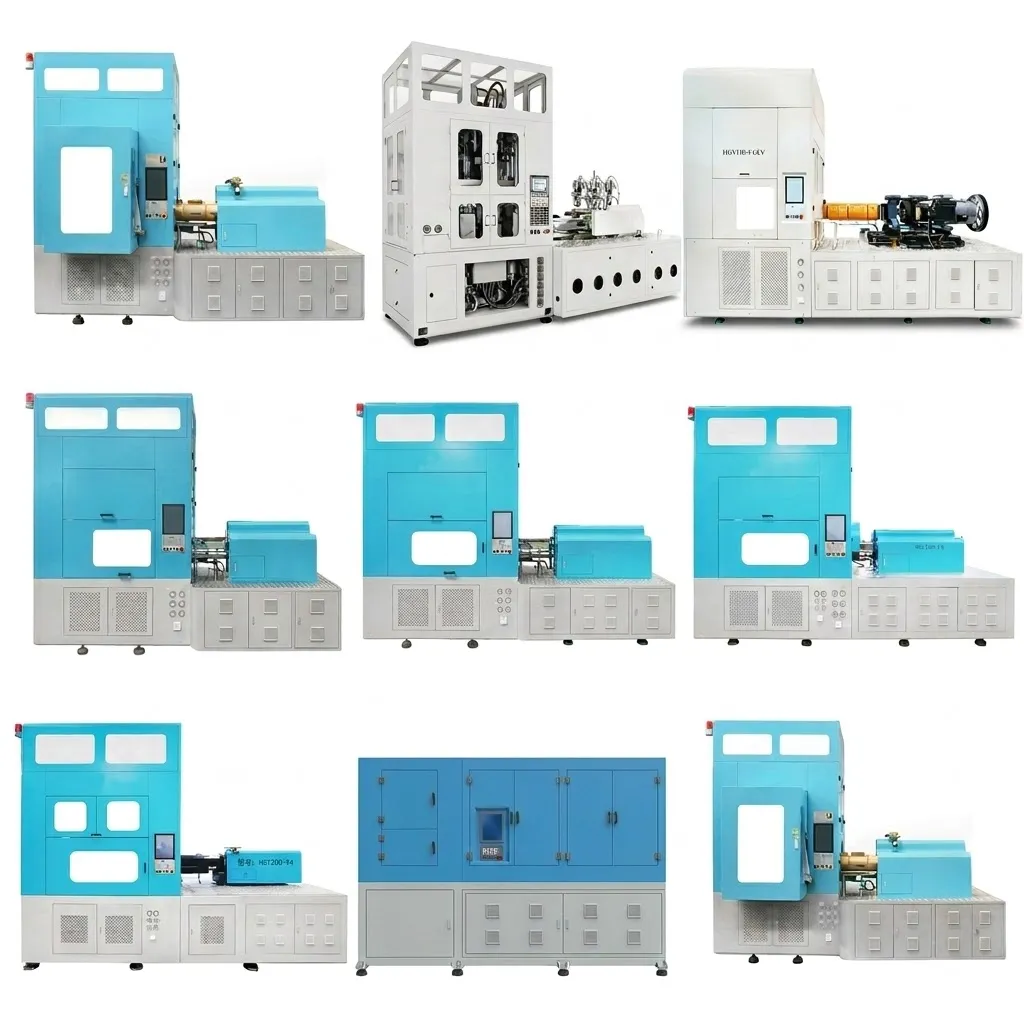
Việc thuần hóa rPET đòi hỏi hệ thống tự động hóa tinh vi, có khả năng phản hồi cao. Ever-Power đã thiết kế các nền tảng hoàn toàn bằng điện của chúng tôi, chẳng hạn như... Máy ép phun kéo giãn thổi khuôn 4 trạm EP-HGY150-V4-EV điều khiển hoàn toàn bằng servo và Máy ép phun kéo giãn thổi khuôn servo toàn phần EP-HGY50-V3-EVĐặc biệt hữu ích cho những môi trường hỗn loạn này. Các bộ phận phun điều khiển bằng servo thực hiện các phép tính vòng kín trong mili giây, điều chỉnh áp suất phun ngay lập tức để bù lại sự giảm độ nhớt của rPET. Điều này đảm bảo mật độ phôi hoàn hảo và loại bỏ các điểm yếu về cấu trúc gây ra hiện tượng mờ đục trong giai đoạn thổi.
Khắc phục sự cố mở rộng quy mô sản xuất khối lượng lớn
Khi sản xuất số lượng lớn chai nước ngọt có ga hoặc các thùng chứa hóa chất gia dụng cỡ lớn, việc chẩn đoán hiện tượng mờ đục trở nên khó khăn hơn gấp bội do số lượng khoang rỗng quá nhiều. Nếu một cơ sở đang vận hành hệ thống sản xuất hai hàng đột phá của chúng tôi, chẳng hạn như... Máy ép phun kéo giãn thổi hai hàng 4 trạm EP-HGY250-V4-B hoặc Máy ép phun kéo giãn thổi 4 trạm EP-HGY200-V4-BHọ đang sản xuất hàng chục chai mỗi chu kỳ. Nếu chỉ có hai trong số ba mươi hai khuôn có hiện tượng mờ do nhiệt nghiêm trọng, thì vấn đề không phải là các thông số máy tổng thể; mà là do lỗi dụng cụ cục bộ.
Trong môi trường có nhiều bọt khí, hiện tượng mờ đục cục bộ thường cho thấy kênh làm mát bị tắc nghẽn bên trong khoang khuôn ép phun cụ thể. Nếu một mảnh cặn khoáng nhỏ li ti từ máy làm lạnh nước làm tắc nghẽn các đường làm mát phù hợp của khoang số bảy, thì phôi đó sẽ không được làm nguội đúng cách, vẫn nóng và kết tinh thành một lớp mờ đục trong khi 31 chai còn lại vẫn hoàn toàn trong suốt. Kỹ thuật viên phải xác định chính xác vị trí xuất phát của chai bị lỗi, tháo khuôn và thực hiện quá trình tẩy cặn bằng sóng siêu âm mạnh mẽ để khôi phục lại sự lưu thông chất lỏng.
Đối với các hoạt động tốc độ cao tiêu chuẩn sử dụng các nền tảng một hàng mạnh mẽ như... Máy ép phun kéo giãn thổi 4 trạm EP-HGY250-V4 hoặc Máy ép phun kéo giãn thổi 4 trạm EP-HGY200-V4Việc kiểm tra sự cân bằng hoàn hảo của hệ thống dẫn nhiệt nhựa cũng vô cùng quan trọng. Nếu các phần tử gia nhiệt của hệ thống bị hỏng, chúng có thể cung cấp nhựa lạnh hơn cho các khoang bên ngoài, dẫn đến hiện tượng trắng hóa cục bộ ở các cạnh của khối khuôn trong khi các khoang trung tâm hoạt động hoàn hảo.
Sự tích hợp then chốt của các công cụ độc quyền
Biện pháp bảo vệ tối ưu chống lại các khuyết tật nhiệt động học là đảm bảo sự tích hợp hoàn hảo giữa máy chính và khuôn thổi kéo giãn ép phun. Việc sử dụng dụng cụ giá rẻ, của bên thứ ba trên máy hiệu suất cao là nguyên nhân hàng đầu gây ra hiện tượng mờ và ánh ngọc trai liên tục trong toàn ngành. Các nhà sản xuất khuôn mẫu thông thường thiếu kiến thức chuyên sâu về khả năng truyền nhiệt của máy, dẫn đến tắc nghẽn làm mát và sự xuống cấp vật liệu nghiêm trọng.
Để đảm bảo chất lượng quang học hoàn hảo tuyệt đối ngay từ ngày đầu sản xuất, Ever-Power thiết kế, gia công và thử nghiệm tất cả các bộ phận. Khuôn thổi kéo giãn phun một bước tùy chỉnh Hoàn toàn được thực hiện nội bộ. Các nhà khoa học về polymer của chúng tôi thiết kế các ống dẫn nhiệt để giảm thiểu nhiệt ma sát, thiết kế các kênh làm mát phù hợp cực kỳ hiệu quả để ngăn ngừa sự kết tinh nhiệt và đánh bóng các khoang thổi đến độ bóng như gương tuyệt đối để đảm bảo tính thẩm mỹ như thủy tinh mà các thương hiệu cao cấp yêu cầu được thực hiện một cách hoàn hảo.
Loại bỏ lỗi sản xuất và thống lĩnh thị trường của bạn
Đừng để hiện tượng mờ đục không rõ nguyên nhân và hiện tượng bạc màu do ứng suất nghiêm trọng phá hủy giá trị thương hiệu và làm tăng tỷ lệ phế phẩm nguyên liệu của bạn. Hãy hợp tác với một chuyên gia kỹ thuật hàng đầu có khả năng thiết kế một hệ sinh thái sản xuất nhiệt động học hoàn hảo, không lỗi.
Bạn đã sẵn sàng tiến hành kiểm toán kỹ thuật toàn diện cơ sở vật chất của mình và triển khai cơ sở hạ tầng ISBM tiên tiến nhất thế giới chưa? Hãy ghé thăm trụ sở kỹ thuật toàn cầu của chúng tôi tại... https://isbmmolding.com/ hoặc liên hệ trực tiếp với đội ngũ tư vấn mua sắm ưu tú của chúng tôi tại [email protected] để đảm bảo tương lai công nghiệp của bạn.