
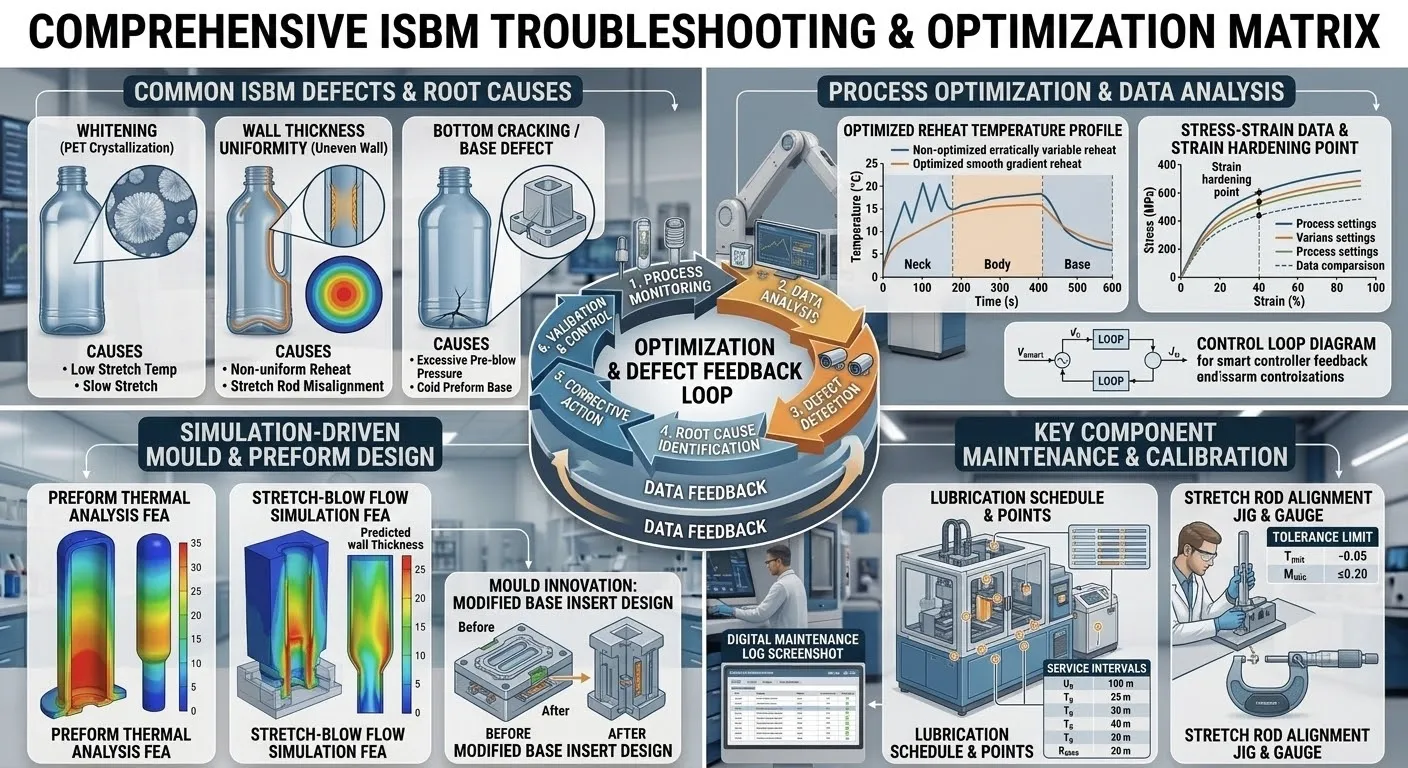
What causes uneven wall thickness in blow molding and how to fix it?
In the highly rigorous discipline of plastic container manufacturing, achieving absolute structural perfection is not merely an aesthetic goal; it is a fundamental engineering mandate. For supply chain executives, packaging engineers, and quality assurance directors, discovering dimensional irregularities during a production run is a critical emergency. Chief among these manufacturing defects is poor material distribution. When global enterprise clients approach the engineering department at Вічна Сила, a premier Brazilian ISBM manufacturer, their primary concern is frequently focused on diagnostic problem solving. The most common and impactful question we receive is: What causes uneven wall thickness in blow molding and how to fix it?
Uneven material distribution is a catastrophic failure in the Injection Stretch Blow Molding process. A container with thin, compromised walls will inevitably fail crucial industry performance metrics. It will buckle under standard top load pressure during warehouse stacking, violently burst during carbonated filling operations, or rupture during drop impact testing, leading to severe product loss and immense damage to brand reputation. In this deeply exhaustive, highly technical dissertation, we will deconstruct the thermodynamic, mechanical, and pneumatic root causes of blow molding defects. We will provide a masterclass in ISBM troubleshooting, offering precise, actionable methodologies to resolve uneven wall thickness and stabilize your high volume production lines.
The Physics of Material Distribution in ISBM
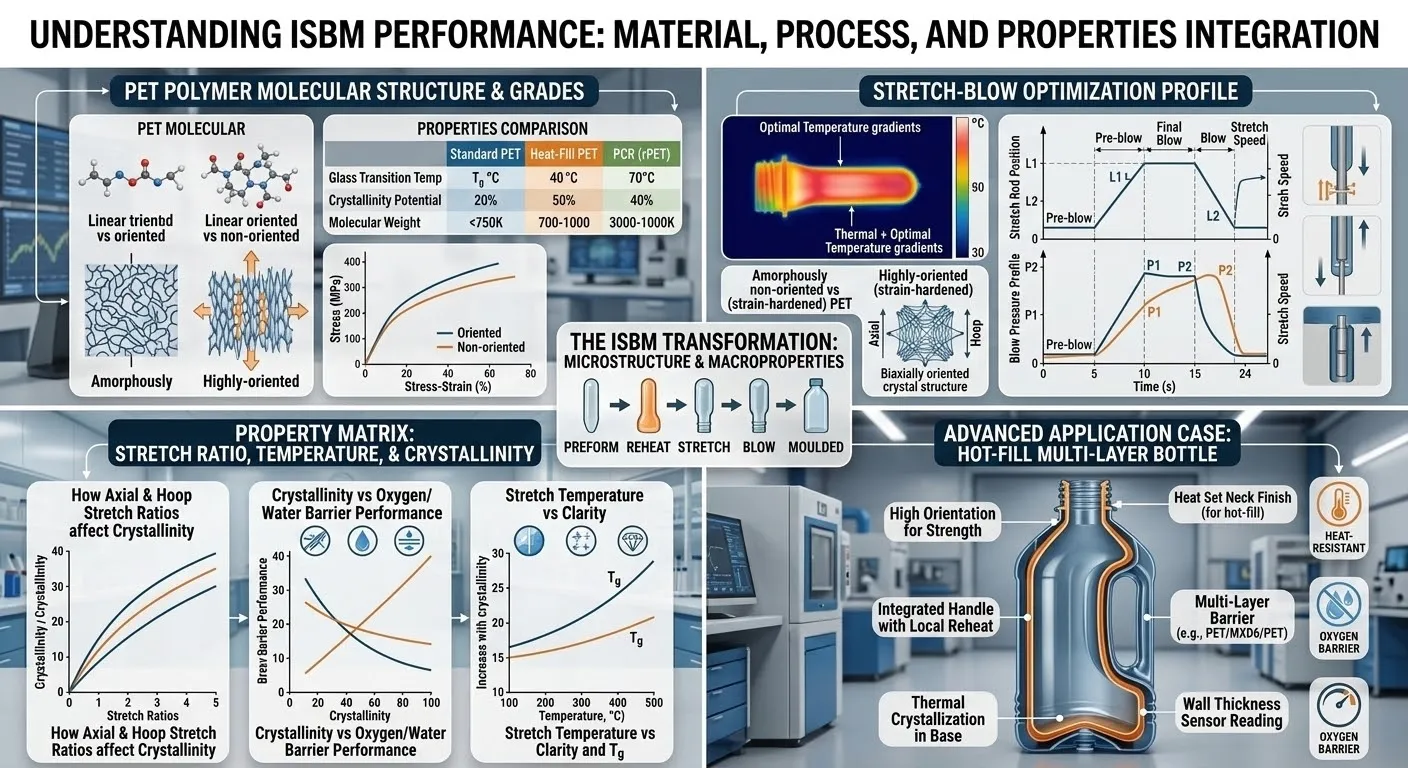
Before we can accurately diagnose what causes uneven wall thickness in blow molding and how to fix it, we must establish a rigorous understanding of how polymer behaves during the stretch blow phase. The process of transforming a thick, dense preform into a thin walled container relies on the precise manipulation of strain induced crystallization. The plastic must be heated to a highly specific glass transition temperature, making it pliable but not entirely molten.
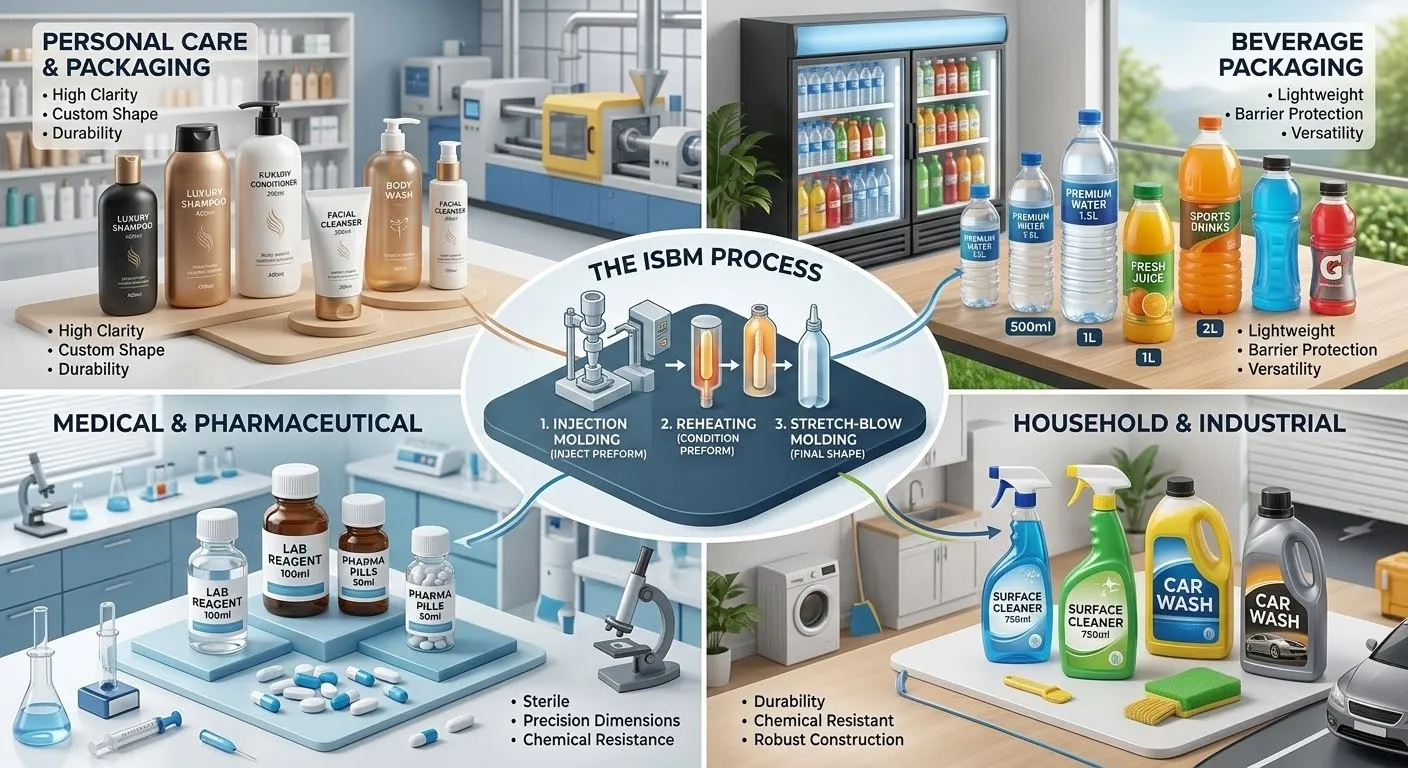
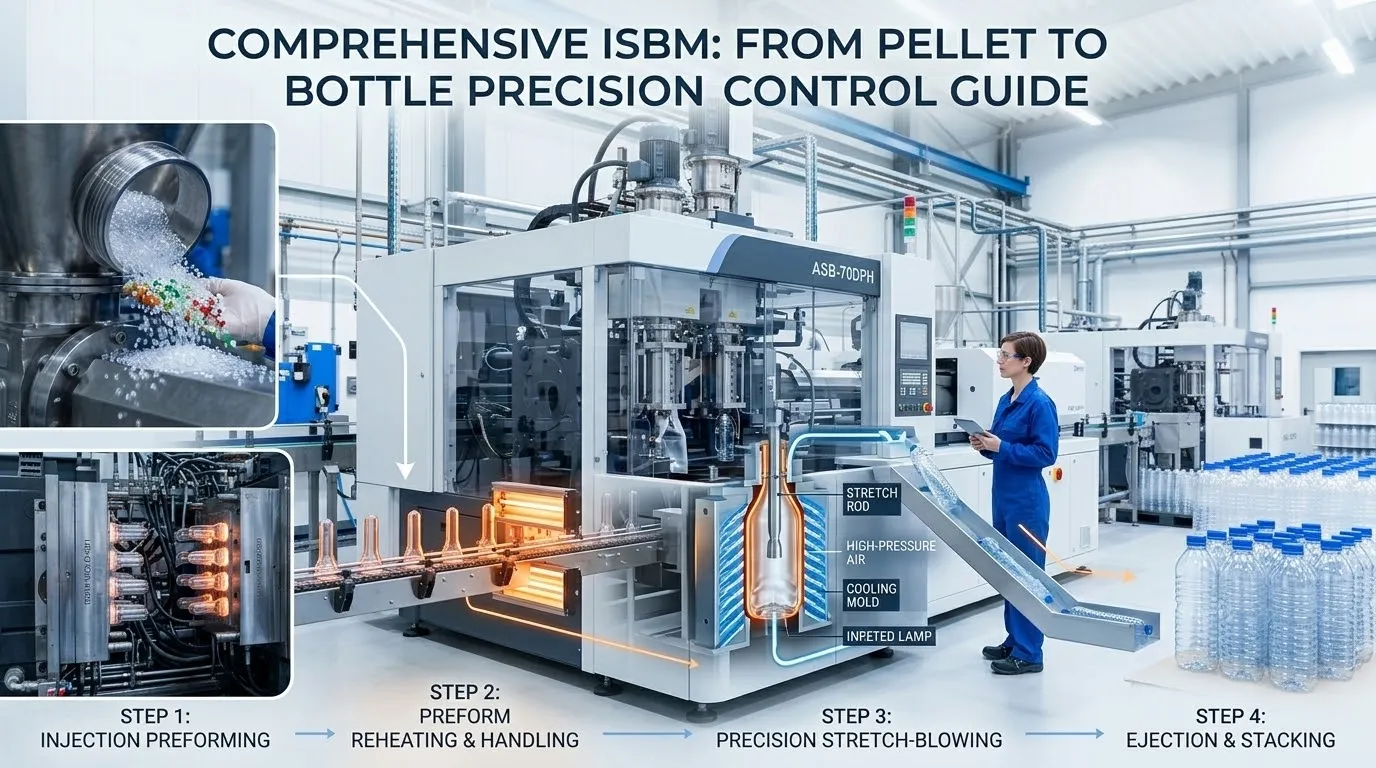
Once at this critical temperature, the mechanical stretch rod descends, pushing the material axially toward the base of the mold. Simultaneously, low pressure pre-blow air expands the material radially. Finally, high pressure blowing air forces the polymer against the chilled mold walls, freezing the biaxially oriented molecular structure in place. If the thermal profile is perfectly balanced, the stretch rod is perfectly centered, and the pneumatic timing is flawless, the plastic will stretch uniformly, resulting in symmetrical wall thickness across the entire body of the container. If any single variable deviates even marginally, the plastic will follow the path of least resistance, flowing excessively into one area while starving another.
Root Cause Analysis Phase One: Thermodynamic Inconsistencies
The most frequent culprit behind uneven wall thickness solutions lies within the thermal conditioning of the preform. Polymer stretching is entirely dictated by heat. Hot plastic stretches significantly easier and faster than cold plastic. If the temperature profile across the circumference or the length of the preform is asymmetrical, the resulting container will inherently possess asymmetrical wall thickness.
1. Asymmetrical Circumferential Heating
If one side of the preform is hotter than the opposite side, the hotter side will balloon outward rapidly the moment the pre-blow pressure is applied. This causes the cooler side to remain thick and heavy, while the hotter side stretches dangerously thin. In two stage systems, this is typically caused by a failure in the preform rotation mechanism. If the preform stutters or stops rotating as it passes through the infrared oven, the side facing the quartz lamps will bake, while the shadow side remains rigid. In single stage systems, this defect can occur if the conditioning pots are misaligned or if there is a massive ambient air draft cooling one side of the machine.
2. Incorrect Vertical Temperature Profiling
Containers with complex shapes require distinct vertical temperature zones. For example, to push material into the wide shoulders of a flat bottle, the upper body of the preform must be hotter than the base. If the entire preform is heated uniformly without a profile, the material will pool at the bottom, creating a massive, thick base and dangerously thin, fragile shoulders. Diagnosing ISBM wall thickness control issues requires engineers to constantly analyze sectional weights and adjust the power output of individual horizontal heating lamps or conditioning zones accordingly.
Root Cause Analysis Phase Two: Mechanical Malfunctions
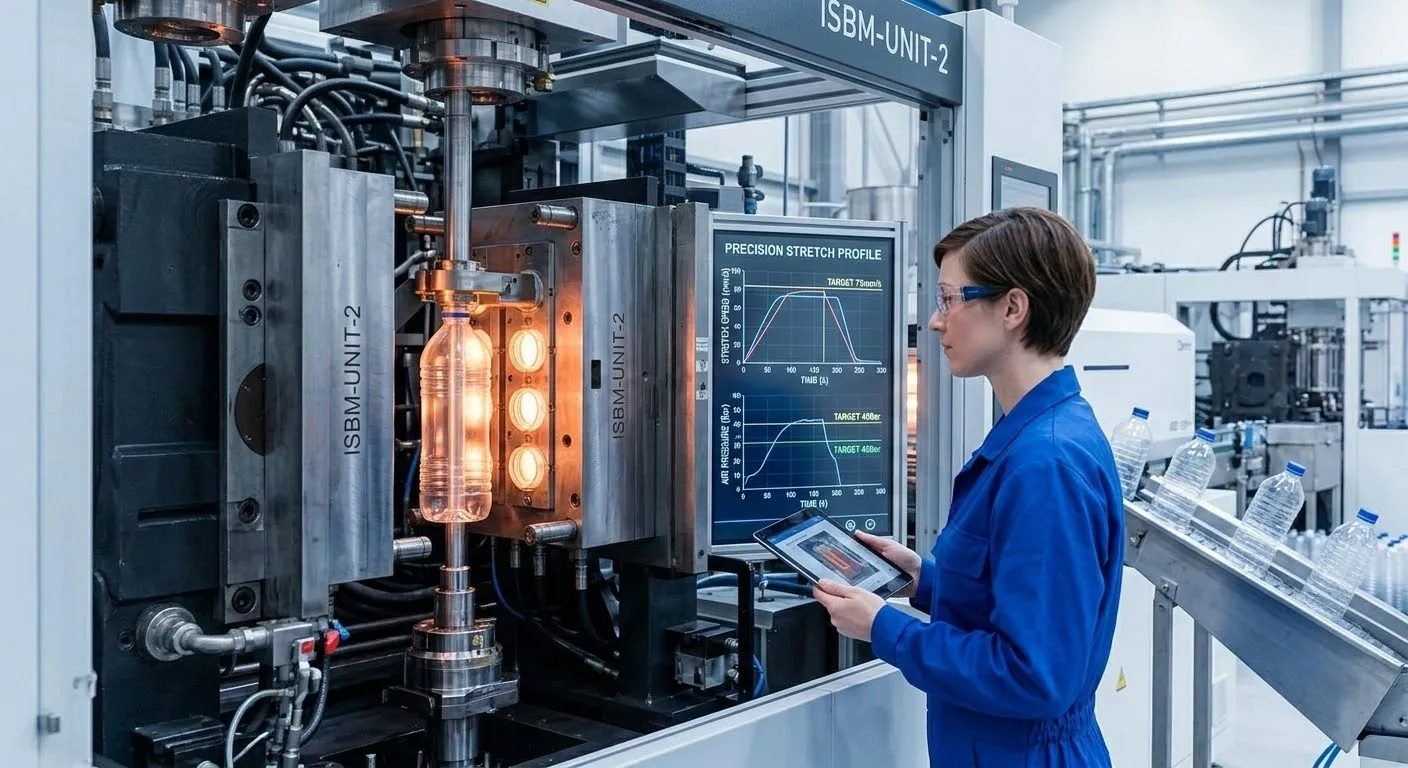
When attempting to determine what causes uneven wall thickness in blow molding and how to fix it, mechanical alignment is the next critical frontier. The stretching machinery operates at terrifying velocities, and micro-millimeter deviations in alignment will absolutely destroy material distribution.
1. Stretch Rod Eccentricity
The stretch rod must descend precisely down the absolute dead center of the preform. If the stretch rod is bent, worn, or mechanically misaligned with the center axis of the blow mold cavity, it will push the hot plastic off to one side. This causes the injection gate (the small nub at the bottom of the preform) to move off center in the final bottle base. When the gate is off center, one side of the bottle body is guaranteed to be significantly thinner than the other. Repairing stretch rod misalignment is mandatory for restoring production stability.
2. Blow Mold and Base Insert Misalignment
The heavy steel or aluminum halves of the blow mold must clamp together with perfect symmetry, and the base insert must elevate to the exact required height. If the mold halves shift due to worn guide pins, or if the base insert is slightly tilted, the internal geometry of the cavity is distorted. The plastic will stretch unevenly to fill this distorted space, resulting in severe wall thickness disparities, particularly near the base radius of the container.
Root Cause Analysis Phase Three: Pneumatic Timing and Pressure
The pneumatic system controls the high velocity air that actually forms the bottle. If the timing or the pressure of this air delivery is compromised, the material distribution will fail entirely. This is a highly complex aspect of injection stretch blow molding troubleshooting.
1. Pre-Blow Pressure and Timing Failures
The pre-blow phase is a low pressure burst of air designed to gently pull the hot plastic away from the descending stretch rod, preventing the material from sticking to the metal and pooling at the base. If the pre-blow pressure is too high, or if the valve opens a fraction of a second too early, the plastic will balloon outward violently and uncontrollably before the stretch rod can pin it to the base. This results in heavy, thick shoulders and dangerously thin, weak bases. Conversely, if the pre-blow is too late or too low, the material wraps around the stretch rod, resulting in thick bases and thin shoulders.
2. Main Blow Valve Delays
The high pressure main blow forces the material against the cold mold walls to freeze the shape. If the main blow valve is sluggish or sticky due to poor maintenance or pneumatic line leaks, the plastic will continue to stretch haphazardly inside the mold cavity for an extra millisecond before the high pressure forces it to stop. This lack of crisp, instantaneous high pressure delivery causes wild fluctuations in wall thickness across different production cavities.
Root Cause Analysis Phase Four: The Injection Molded Preform
It is critical to acknowledge that sometimes, the blow molding machine is functioning perfectly, but the initial preform is fundamentally flawed. If you are experiencing blow molding defects, you must scrutinize the injection phase.
1. Core Shift During Injection
During the high pressure injection of molten polymer, the core pin inside the injection mold can physically bend or shift if the injection pressure is too aggressive or the tooling is worn. If the core pin shifts, the resulting preform will have uneven wall thickness from the very beginning. One side of the preform will be thick, and the other side will be thin. When this defective preform is transferred to the blow station, the thin side will heat up faster and stretch easier, compounding the error and resulting in a completely deformed, unsymmetrical bottle.
2. Intrinsic Viscosity Degradation
If the raw polymer resin is not thoroughly dried before melting, or if it is subjected to excessive shear heat in the injection barrel, the molecular chains will break down, lowering the intrinsic viscosity of the material. A material with low viscosity behaves inconsistently during the stretch blow phase. It flows too easily and responds unpredictably to pneumatic pressure, making it virtually impossible to maintain consistent wall thickness distribution across a continuous production run.
Mastering the Fix: Comprehensive Troubleshooting Methodologies
Understanding what causes uneven wall thickness in blow molding and how to fix it requires a highly systematic, scientific approach to machine calibration. You cannot simply guess; you must rely on rigorous data analysis and precise engineering adjustments.
Step 1: Execute Sectional Weight Analysis
The very first step in solving uneven material distribution is to quantify the problem. Use a hot wire cutter to slice the defective bottle into distinct horizontal sections: the neck, the shoulder, the body panel, and the base. Weigh each section on a highly calibrated analytical scale and compare the results against your approved engineering specifications. If the base is overwhelmingly heavy while the body is underweight, your problem is localized to vertical material movement. If the weights match the specification but the bottle feels weak on one specific side, your problem is circumferential.
Step 2: Isolate the Heating Profile
If the sectional analysis reveals heavy shoulders and a thin base, the upper portion of the preform is stretching too easily. Decrease the power percentage of the heating lamps or conditioning zones targeting the neck and shoulder area, while simultaneously increasing the heat penetrating the lower body and base. Make these adjustments in very small increments, allowing the machine to stabilize for several cycles before taking another sample to evaluate the ISBM wall thickness control.
Step 3: Calibrate Pneumatic Timers
If adjusting the heat profile fails to resolve the issue, you must manipulate the pneumatics. If the gate is off center and the bottle exhibits heavy shoulders, delay the onset of the pre-blow timer by a fraction of a second. This allows the stretch rod to descend further into the preform and secure the plastic before expansion begins. Additionally, slightly reduce the pre-blow air pressure to slow down the rate of radial expansion, granting the stretch rod more control over the vertical material distribution.
Step 4: Execute Mechanical Audits
If thermodynamic and pneumatic adjustments prove futile, immediately shut down the blow station and perform a comprehensive mechanical audit. Utilize precision dial indicators to verify the absolute concentricity of the stretch rods. Ensure that the stretch rods are completely straight and that they strike the exact dead center of the base insert when fully extended. Replace any worn guide bushings, damaged air valves, or misaligned mold locking mechanisms immediately.
How Ever-Power Machinery Eliminates Wall Thickness Variations
The ultimate solution to overcoming blow molding defects is to upgrade your manufacturing infrastructure with machinery designed specifically to prevent these deviations. As an elite Brazilian ISBM manufacturer, Ever-Power engineers our platforms with highly advanced, closed loop control systems that guarantee absolute dimensional stability.
Advanced Platforms for Medical and Cleanroom Environments
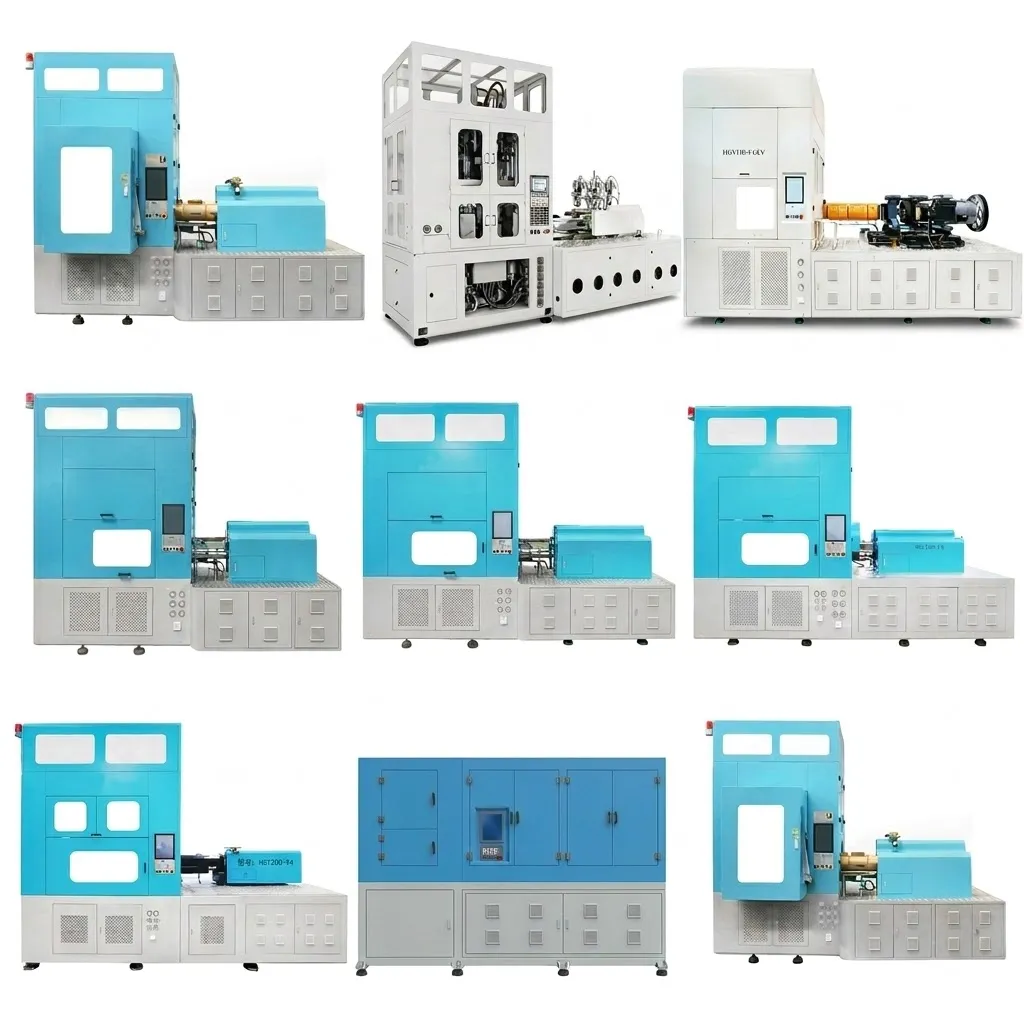
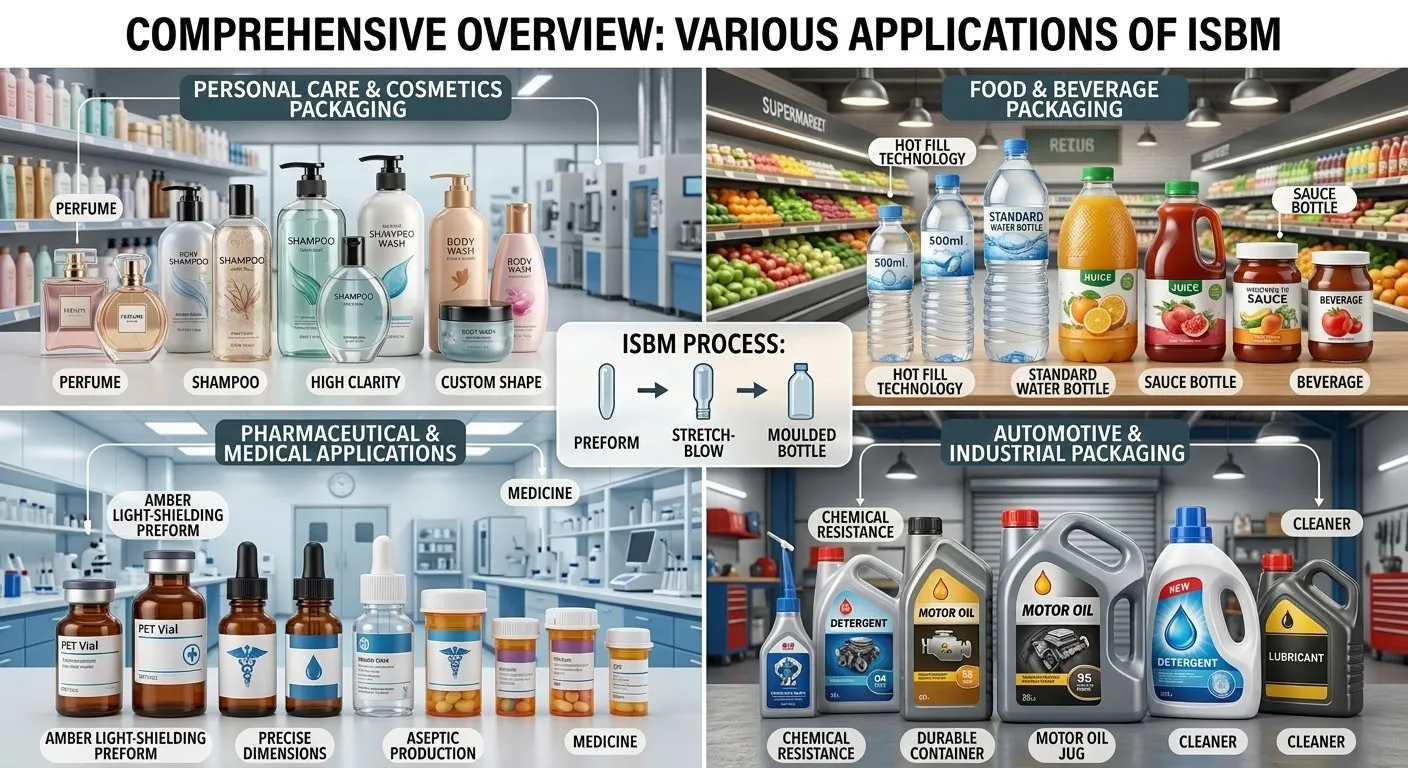
For the pharmaceutical and luxury cosmetic sectors, where micro-millimeter wall thickness variations can lead to catastrophic seal failures or unacceptable visual distortions, we provide unparalleled precision with our fully electric servo platforms. The Повністю сервоприводна 4-станційна машина для лиття під тиском та розтягування EP-HGY150-V4-EV і дуже компактний Повністю серво-литтяна машина для видувного формування з розтягуванням EP-HGY50-V3-EV utilize highly advanced electric servo motors to drive the injection core, the stretch rods, and the mold clamping mechanisms. Servo motors provide absolute, repeatable positional accuracy, entirely eliminating the erratic mechanical drifting associated with aging hydraulic cylinders, ensuring perfect concentricity and flawless material distribution on every single cycle.
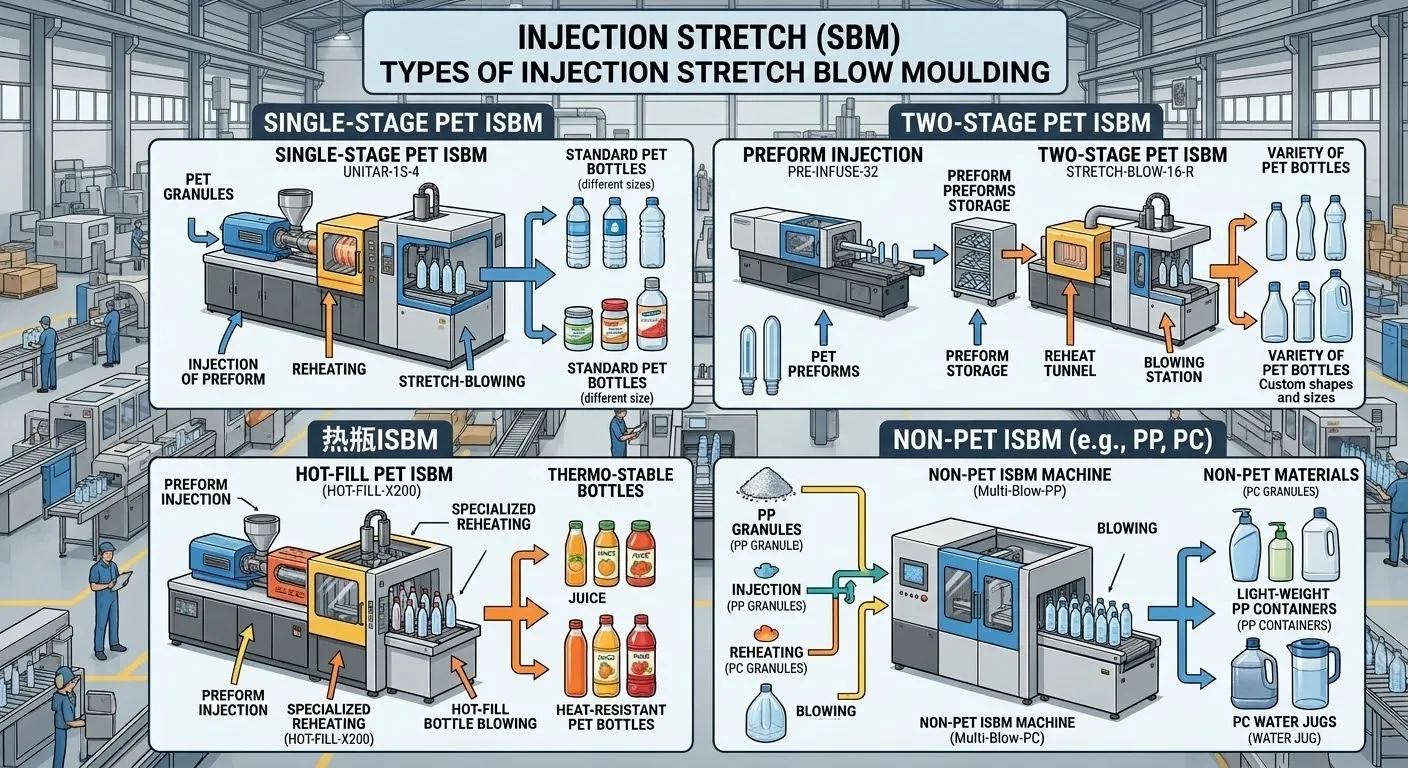
For premium cosmetic brands requiring custom geometric shapes that normally induce uneven wall thickness, we provide the ultimate thermodynamic control. Our 4-станційна машина для лиття під тиском з розтягуванням EP-BPET-125V4, alongside the 3-станційна машина для лиття під тиском та розтягування EP-BPET-94V3 і 4-станційна машина для лиття під тиском з розтягуванням EP-BPET-70V4, feature immensely powerful thermal conditioning stations. Furthermore, we design and manufacture Спеціальні форми для видування з розтягуванням під одним кроком that are meticulously engineered to compensate for asymmetrical stretching, guaranteeing heavy, glass like walls without any thin structural vulnerabilities.
High Volume Industrial and Beverage Solutions
When producing massive volumes of carbonated beverage bottles or large household chemical containers, maintaining consistent wall thickness across multiple mold cavities is extremely difficult. To solve this, Ever-Power deployed heavy duty, high tonnage machinery designed for absolute stability under continuous stress.
For immense wide mouth food jars or heavy industrial containers, the colossal 4-станційна машина для лиття під тиском з розтягуванням EP-HGY650-V4 provides the immense injection pressure required to prevent core shift during the molding of massive preforms. If a container geometry is so extreme that standard thermal profiling cannot resolve uneven wall thickness, we offer the revolutionary 6-станційна машина для лиття під тиском EP-HGYS280-V6. This extraordinary platform introduces additional workstations, allowing packaging engineers to execute complex, multi stage thermal conditioning, slowly manipulating the plastic to ensure perfect distribution across the most bizarre asymmetrical shapes.
For high velocity beverage production, where maintaining consistent wall thickness is vital for lightweighting economics, our double row architecture is the definitive solution. The Дворядна 4-станційна машина для лиття під тиском з розтягуванням EP-HGY250-V4-B і 4-станційна машина для лиття під тиском та розтягування EP-HGY200-V4-B effectively double machine cavitation while maintaining immense clamping rigidity, preventing mold shift and ensuring perfectly symmetrical bottles. For standard high speed operations, the single row 4-станційна машина для лиття під тиском з розтягуванням EP-HGY250-V4 і 4-станційна машина для лиття під тиском та розтягування EP-HGY200-V4, alongside the highly reliable 4-станційна машина для лиття під тиском з розтягуванням EP-HGY150-V4, provide the robust hydraulic power necessary to dominate the commodity packaging sector without sacrificing structural quality.
Fortifying Your Manufacturing Future
Discovering what causes uneven wall thickness in blow molding and how to fix it is the ultimate test of a manufacturing facility’s engineering competence. It requires a profound understanding of polymer thermodynamics, rigorous mechanical auditing, and masterful pneumatic calibration. By applying the systematic troubleshooting methodologies detailed in this guide, factory floor managers can rapidly diagnose root causes, eliminate blow molding defects, and restore production stability.
However, the most effective strategy for managing uneven material distribution is to prevent it from occurring entirely. By partnering with an elite manufacturing authority, you ensure your production lines are equipped with the most precise, stable, and technologically advanced machinery available on the global market.
Resolve Your Blow Molding Defects Today
Do not allow dimensional inconsistencies to compromise your brand integrity, inflate your raw material costs, or disrupt your supply chain. Leverage the supreme engineering capabilities of Ever-Power to achieve absolute structural perfection in every container you produce.
Are you ready to optimize your factory floor and eliminate packaging failures? Visit our corporate engineering hub at https://isbmmolding.com/ or contact our elite technical troubleshooting team directly at [email protected] to architect a flawless manufacturing solution.