How to test the quality of ISBM PET bottles? The Ultimate Engineering Guide to Zero-Defect Quality Control
In the hyper competitive, fiercely unforgiving arena of high end global plastic packaging manufacturing, successfully transforming raw Polyethylene Terephthalate polymer resin into a visually stunning and structurally indestructible container is merely the initial phase of industrial production. The true gauntlet, and the absolute defining factor that determines whether a packaging enterprise secures lucrative contracts from multinational fast moving consumer goods conglomerates, elite pharmaceutical corporations, and luxury cosmetic brands, lies entirely in its ruthless mastery over quality assurance. The moment a PET bottle is ejected from the conveyor belt of an Injection Stretch Blow Molding machine, it must be fully prepared to survive the brutal realities of the commercial world: the violent kinetic impacts of high speed filling lines, the relentless vibrations of thousands of miles of logistical transit, and the uncompromising aesthetic expectations of the final retail consumer. As the dominant Brazilian ISBM manufacturing titan projecting elite engineering infrastructure across South America and the entire globe, the quality control consortium at Вічна Сила executes the most draconian physical and chemical testing protocols in the industry on a daily basis. Within this exhaustively detailed, highly authoritative engineering masterclass, we will completely deconstruct the critical inquiry: How to test the quality of ISBM PET bottles?
Testing the quality of an ISBM PET bottle is profoundly more complex than simply utilizing a pair of digital calipers to verify a few external dimensions. It encompasses a highly sophisticated, multi disciplinary scientific framework that merges polymer rheology, fracture mechanics, optical physics, and macromolecular gas barrier theory. Even a microscopic, micrometer level deviation in wall thickness distribution, or the most minuscule drift in material crystallization, can cause a container to suffer catastrophic buckling failure during top load crush testing, or literally explode under the internal pressure of carbonated beverages. Throughout this ultimate manufacturing guide, we will deeply explore the industry’s most authoritative destructive and non destructive testing protocols. We will dissect exactly how elite packaging engineers utilize forensic testing data to reverse engineer and optimize the thermodynamic and kinetic parameters of the ISBM equipment. Furthermore, we will demonstrate precisely how the Ever-Power full servo machinery matrix empowers your facility to eradicate defects at their mechanical root, granting you the absolute industrial supremacy to manufacture flawlessly certified, inspection free containers.
Phase One: Non-Destructive Verification of Dimensional and Geometric Perfection
The absolute first line of defense in any rigorous quality control protocol is the verification of flawless geometric dimensional accuracy. The manufactured bottle must integrate perfectly with the automated gripping mechanisms of high speed filling lines, and the neck finish must achieve a one hundred percent hermetic seal with the applied closure. Any loss of dimensional control in these critical zones will precipitate catastrophic line stoppages or massive product leakage during transit.
1. Micrometer Precision Measurement of the Neck Finish and Sealing Surface
In the single stage ISBM process, the entire neck finish is completely formed during the initial injection molding phase and undergoes absolutely no physical deformation during the subsequent stretch blow molding phase. Consequently, the microscopic precision of the injection mold directly dictates the ultimate fate of the neck finish. Elite quality assurance engineers deploy highly advanced, non contact Optical Comparators and Coordinate Measuring Machines to meticulously scan the internal diameter, external diameter, thread depth, and, most critically, the top sealing surface of the container.
If the optical testing reveals severe ovality out of roundness or dimensional shrinkage in the neck finish, this diagnostic data immediately points to critically inadequate injection cooling time or a massive loss of injection holding pressure. To fundamentally eradicate these geometric flaws from existence, Ever-Power manufactures all of our proprietary Спеціальні форми для видування з розтягуванням під одним кроком entirely in house. Our elite tooling metallurgists utilize specialized, ultra high hardness tool steels and engineer incredibly aggressive conformal water cooling channels. This guarantees that the neck finish not only resists microscopic expansion under extreme injection pressures but also freezes into its permanent, mathematically perfect circular geometry within milliseconds, ensuring every single ejected bottle achieves a micrometer perfect seal.
2. Ultrasonic Wall Thickness Distribution Mapping
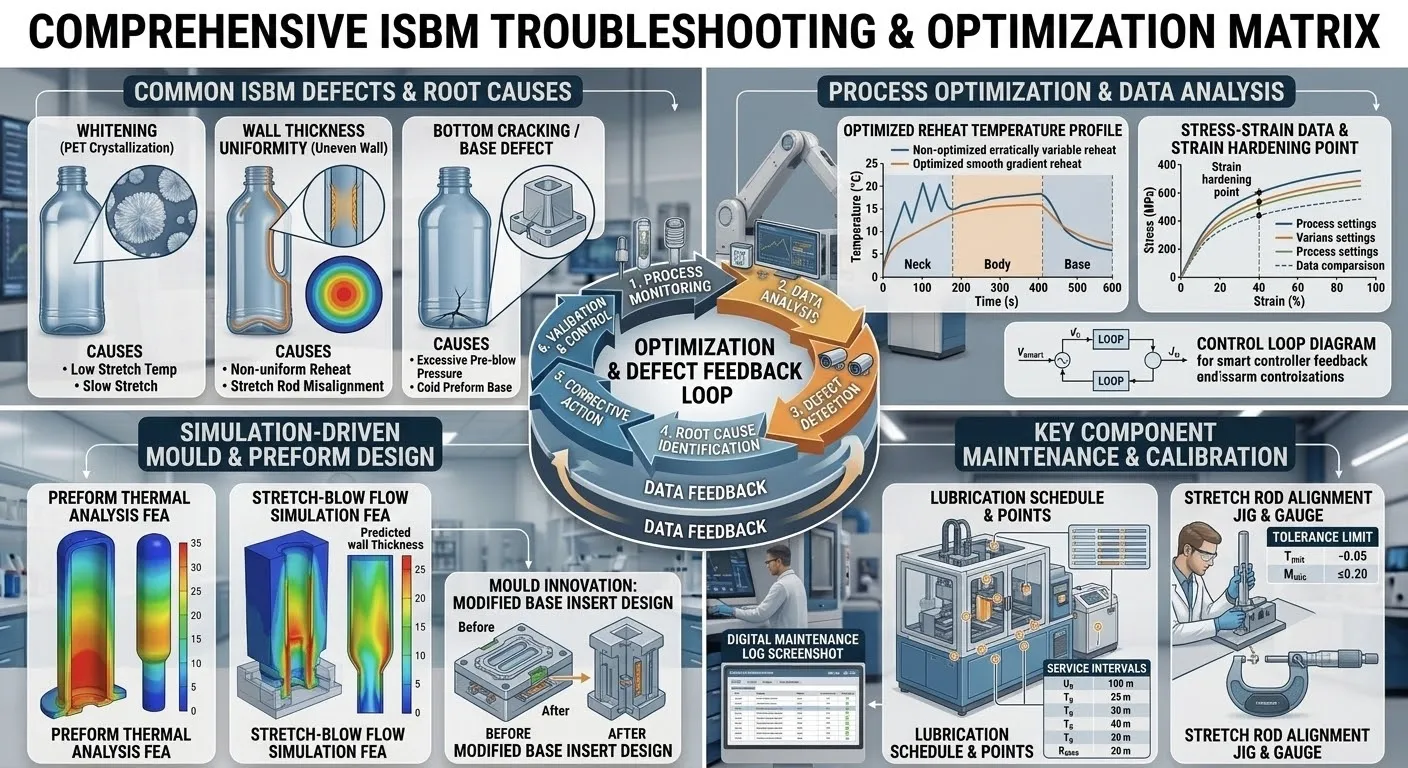
The perfectly uniform distribution of plastic wall thickness across the entire body of the container is the absolute lifeblood of physical strength. If the stretch blow molding process executes unevenly, one side of the bottle will remain dangerously thick while the opposite side will stretch paper thin. Traditional destructive cut and measure methods are inherently flawed, ruining the sample and consuming massive amounts of labor time. Modern QA laboratories universally rely on Hall Effect Ultrasonic Thickness Gauges. The inspector drops a small magnetic steel ball bearing into the empty bottle and guides it across all critical zones using an external magnetic probe. By emitting ultrasonic waves and calculating the reflection return time, the probe instantly generates a highly precise, three dimensional topographical map of the container’s entire wall thickness.
If this topographical map exposes severe unilateral thinning, it directly exposes a fatal flaw in the machine’s mechanical alignment or thermodynamic distribution. To guarantee absolute, uncompromising wall thickness uniformity, immense mechanical clamping rigidity is entirely non negotiable. Our universally revered heavy industrial workhorses, such as the formidable 4-станційна машина для лиття під тиском з розтягуванням EP-HGY250-V4 and the highly robust 4-станційна машина для лиття під тиском та розтягування EP-HGY200-V4, possess massive, stress relieved cast iron platens. This impenetrable structural architecture completely eliminates injection core shift, ensuring the preform is born with absolute mathematical concentricity, thereby establishing the flawless foundation required for perfectly even biaxial stretching.
Phase Two: Destructive Testing of Fracture Mechanics and Kinetic Strength
When containers are filled with dense liquid products and stacked on wooden pallets in massive distribution warehouses, they are subjected to crushing vertical forces equivalent to dozens of times their own empty weight. Furthermore, they must possess the kinetic resilience to survive accidental freefalls from retail shelving without shattering. Destructive physical testing is the ultimate, brutal tribunal that verifies a container’s true survival capabilities.
1. Top-Load Crush Resistance Evaluation
The top load test simulates the immense gravitational pressure exacted upon the bottom tier of bottles during warehouse pallet stacking. An empty, unsealed bottle is placed beneath the heavy metallic compression platen of a Universal Testing Machine, such as an Instron. The machine applies a relentless, constant downward force until the physical structure of the bottle suffers irreversible, catastrophic buckling deformation. The integrated software records the exact maximum peak force measured in Newtons or Kilograms Force at the exact millisecond of structural collapse.
A failure in top load strength is invariably caused by an inadequate volume of plastic distributed to the shoulder or mid body sections, or a failure to achieve optimal strain induced crystallization due to flawed heating profiles. To manufacture containers exhibiting dominant, industry leading top load strength particularly during aggressive lightweighting campaigns a highly sophisticated thermodynamic conditioning station is paramount. Elite four station platforms like the 4-станційна машина для лиття під тиском з розтягуванням EP-BPET-125V4 empower engineers to utilize advanced PID temperature controllers to execute incredibly granular, localized heating of the preform. This capability allows the machine to precisely flow the maximum amount of polymer material directly into the structural spine of the bottle, achieving astronomical physical strength utilizing the absolute minimum volume of raw resin.
2. Vertical Freefall Drop Impact Testing
The drop impact test is the most visceral and direct method for evaluating whether a container will suffer brittle fracture when subjected to severe kinetic shock. The sample bottles are filled to their nominal capacity with water frequently chilled to near freezing temperatures to simulate the most unforgiving, brittle environmental conditions. They are then loaded into an automated drop testing apparatus and subjected to freefall impacts from standardized heights typically ranging from 1.2 to 1.5 meters striking a solid concrete impact anvil at various controlled angles, including flat base drops, side impacts, and extreme closure drops.
If the bottle shatters like fragile glass upon impact rather than elastically deforming to absorb the kinetic energy, this forensic evidence strongly indicates that the polymer endured severe thermal degradation or extreme shear stress within the injection barrel, violently severing the long molecular chains of the PET resin and causing a plummet in Intrinsic Viscosity. To entirely prevent this molecular destruction, Ever-Power heavy industrial machines, such as the colossal 4-станційна машина для лиття під тиском з розтягуванням EP-HGY650-V4 engineered specifically for massive bulk chemical and water jugs, are equipped with hyper optimized, low shear injection screws. This masterful fluid dynamic design melts immense polymer payloads with incredible gentleness, perfectly preserving the original molecular chain length of the PET and endowing the final container with indestructible, shock absorbing tenacity.
Phase Three: The Ultimate Tribunal of Optical Physics and Visual Aesthetics
Within the elite echelons of luxury cosmetic packaging, premium fragrances, and high end spirits, passing physical strength tests is merely the minimum requirement for entry; the true premium value is derived entirely from the container’s optical brilliance. A premium PET bottle must exhibit the scintillating, flawless transparency of the finest crystal glass. The most microscopic visual aberration will immediately annihilate the brand’s luxury positioning.
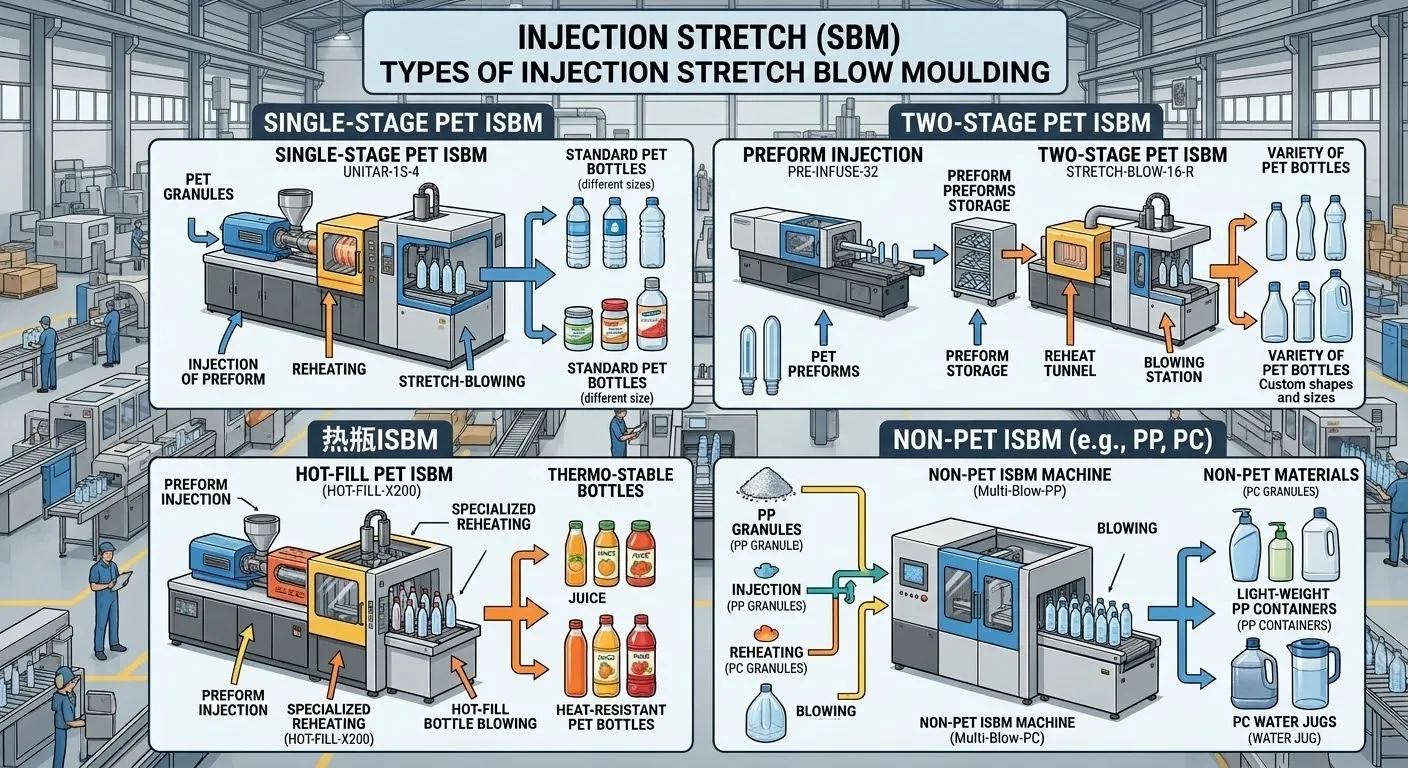
1. Birefringence and Crystallinity Analysis under Polarized Light
Elite quality inspectors routinely place sectioned samples of the blown bottles into a Polariscope an advanced optical inspection instrument utilizing cross polarized light. Under these polarized frequencies, any zone within the bottle wall that experienced uneven biaxial stretching, or any area harboring massive, dangerous residual internal stress, will instantly illuminate with violently vibrant, multi colored birefringence fringe patterns. If the exterior surface of the bottle exhibits a cloudy, milky opaqueness known as thermal haze, or a rough, microscopic tearing known as stress whitening pearlescence, it is undeniable proof that the machine’s entire thermodynamic conditioning system has spiraled completely out of control.
To utterly eradicate these optical disasters, the temperature control of the hot runner manifold and the conditioning pots must be hyper accurate to fractions of a single degree Celsius. For the production of highly sensitive, ultra clear ophthalmic dropper bottles or premium laboratory diagnostic vials, we mandate the deployment of the hyper compact, fully servo driven Повністю серво-литтяна машина для видувного формування з розтягуванням EP-HGY50-V3-EV. This elite platform flawlessly marries top tier thermocouple sensory technology with a vibration free, lightning fast servo transfer system. This guarantees that the tiny, highly vulnerable preforms dissipate absolutely zero latent heat during transit, ensuring flawless biaxial orientation within the blow cavity and yielding containers with breathtaking, crystalline optical purity.
2. High-Magnification Inspection of the Base Gate Vestige
The injection gate located at the absolute center of the bottle’s base is structurally the most vulnerable and aesthetically the most critical point of the entire container. Advanced quality control protocols demand high magnification microscopic inspection of this gate vestige. If the gate features a long, protruding plastic sprue, sharp jagged burrs, or exhibits severe white crystallization, it is not only visually repulsive but will directly cause the container to wobble or fall over while traveling at high velocities on automated filling lines.
This specific aesthetic defect is the hallmark signature of obsolete cold runner molds or severely degraded hot runner valve pins. The Ever-Power tooling manufacturing center exclusively integrates ultra premium, pneumatically driven valve gate hot runner systems into all our molds. At the exact microsecond the injection phase terminates, a razor sharp, hardened steel pin strikes forward to violently seal the nozzle orifice shut. This ensures that every single container born from an Ever-Power mold bears only a microscopic, nearly invisible circular witness mark on its base, reflecting the absolute zenith of industrial aesthetic perfection.
Phase Four: Extreme Chemical Defense Barrier and Environmental Stress Cracking (ESCR) Testing
When containers are engineered to hold highly pressurized carbonated beverages, vitamin fortified oxygen sensitive juices, or aggressively reactive household chemical detergents, the testing parameters must descend into the microscopic realm of molecular permeation and aggressive chemical corrosion.
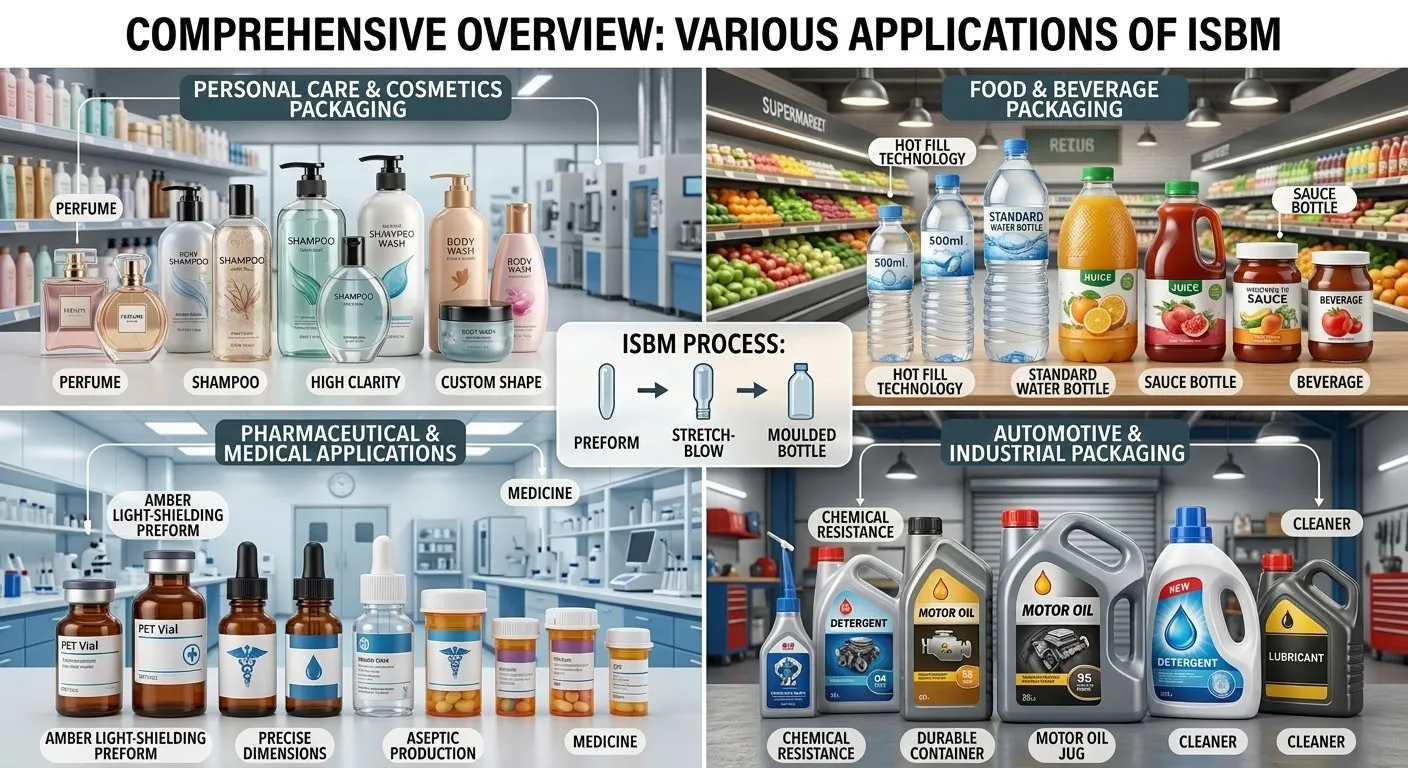
1. Environmental Stress Cracking Resistance (ESCR)
Environmental Stress Cracking is the most lethal and unpredictable defect that plagues carbonated soft drink bottles, particularly during peak summer distribution. The high pressure carbon dioxide violently forces the bottle outward, placing immense mechanical stress on the complex petaloid base structure. If this highly stressed base comes into contact with conveyor line lubricants, or even alkaline hand sanitizers transferred from a consumer’s hands, the caustic chemicals rapidly attack the highly stressed polymer molecular chains, causing the bottom of the bottle to catastrophically rupture and explode.
Within the QA laboratory, forensic engineers aggressively spray the bases of pressurized sample bottles with highly caustic surfactants such as concentrated sodium hydroxide solutions and subsequently place them into high temperature incubation chambers to drastically accelerate the aging process, meticulously recording the exact time to failure. The only engineering pathway to vastly improve ESCR performance is deploying extreme machine cooling capacity to suppress base thermal crystallization, combined with ultra high pressure blow air to maximize the biaxial orientation of the petaloid feet. Ever-Power’s high volume production mainstays, like the 4-станційна машина для лиття під тиском з розтягуванням EP-HGY150-V4, are heavily fortified with massive chilled water circulation manifolds and rapid exhaust pneumatic valves, providing carbonated beverage bases with impenetrable structural armor.
2. Gas Transmission Rate Analysis (OTR and CO2TR)
For premium food and beverage packaging demanding extended shelf life, accurately measuring the velocity at which oxygen permeates into the bottle Oxygen Transmission Rate or carbon dioxide escapes Carbon Dioxide Transmission Rate is the paramount testing metric. Quality inspectors utilize ultra high precision gas permeation analyzers, such as MOCON instruments, sealing the sample bottles within the testing chamber and continuously measuring the microscopic trace amounts of gas molecules penetrating the plastic barrier over specified time intervals.
To aggressively slash gas transmission rates, packaging facilities must either push the PET density to its absolute physical limits through extreme thermodynamic optimization, or they must integrate physical defense layers via co injected barrier resins like EVOH. If your corporate strategy involves avoiding complex multi layer hardware and instead relying on active oxygen scavenging additives mixed into the raw resin, maximizing machine efficiency to reduce thermal degradation of these additives is critical. Our 3-станційна машина для лиття під тиском та розтягування EP-BPET-94V3 delivers the perfect, highly streamlined manufacturing solution. By completely removing the thermal conditioning station, this three station architecture massively compresses the total molding cycle time, drastically reducing the duration the polymer spends at melting temperatures, thereby perfectly preserving the chemical efficacy of sensitive barrier additives.
Phase Five: The Ultimate Consistency Challenge in High-Volume Double-Row Platforms
Producing one or two flawless prototype samples on a boutique laboratory machine is an elementary task; the true, unforgiving industrial crucible is guaranteeing that the ten thousandth bottle ejected from the machine is absolutely, mathematically identical in quality to the very first bottle, while the machine is vomiting out tens of thousands of units per hour. This consistency challenge is exponentially magnified on the massive Double-Row equipment heavily favored by multinational beverage conglomerates.
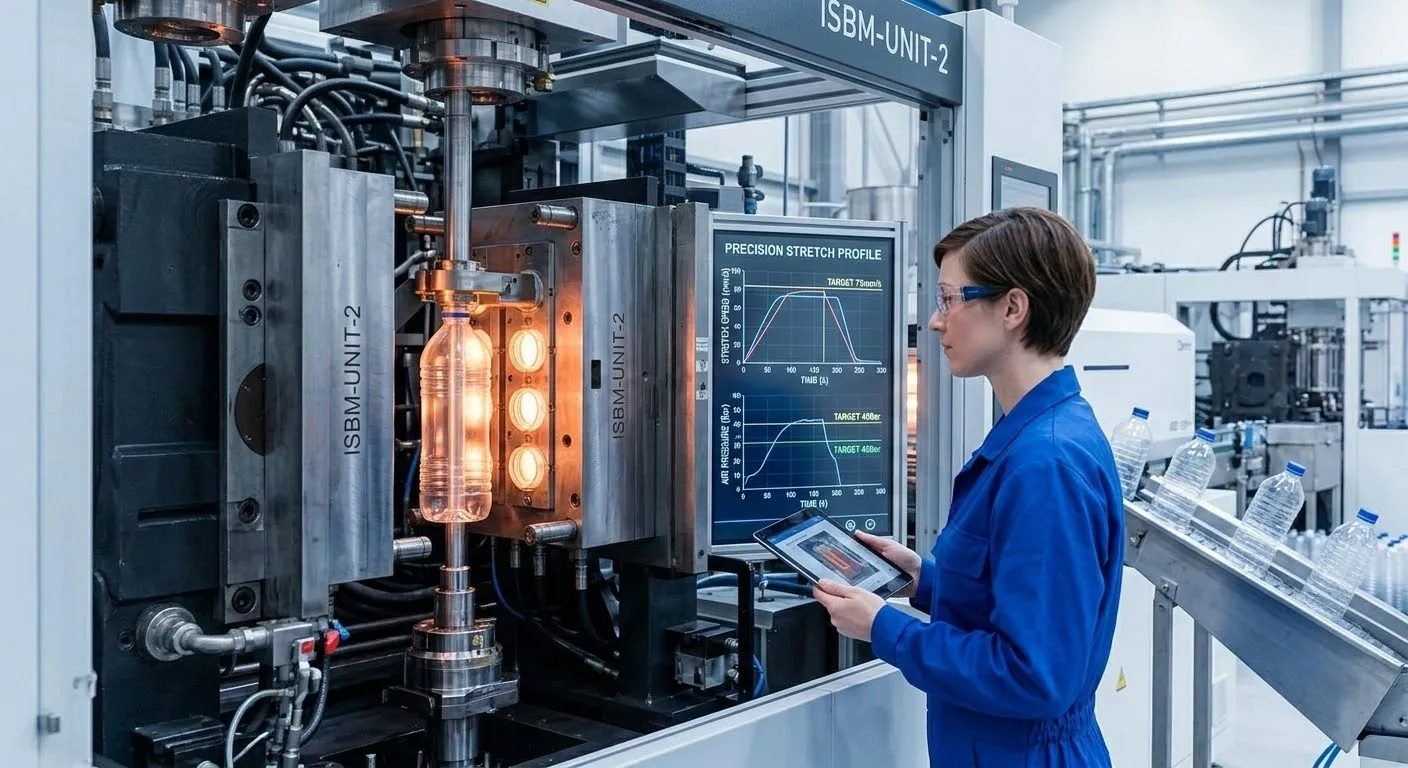
Within an immense double row mold, the dozens of cavities situated in the front row and the dozens of cavities in the back row are located at vastly different physical distances from the primary injection melt source and the chilled water headers. This architectural reality naturally invites catastrophic thermodynamic and fluid dynamic imbalances. If left unmitigated, testing data will inevitably reveal a terrifying reality: the bottles produced in the front row are heavy and perfectly clear, while the bottles in the back row are dangerously light and suffering from severe stress whitening due to heat loss. To utterly crush this mass manufacturing inconsistency, Ever-Power’s double row dreadnoughts such as the Дворядна 4-станційна машина для лиття під тиском з розтягуванням EP-HGY250-V4-B і 4-станційна машина для лиття під тиском та розтягування EP-HGY200-V4-B are equipped with staggeringly massive, mathematically balanced hot runner manifold systems. Furthermore, they feature highly advanced thermal conditioning arrays that allow operators to independently manipulate the temperature profiles of the front and back rows. This extreme level of control allows these high volume leviathans to generate Statistical Process Control reports exhibiting incredibly low standard deviations, completely eliminating a global brand’s paralyzing fear of massive product recalls.
Phase Six: Bespoke Testing Protocols for Extreme Asymmetrical Geometries
The relentless pursuit of extreme retail shelf appeal by modern industrial designers has spawned a massive influx of wildly asymmetrical, highly exaggerated container geometries, featuring deep off center handle indentations or severely flattened, flask like profiles. For these highly irregular shapes, traditional quality control testing apparatuses are often rendered completely useless, necessitating the deployment of highly customized 3D laser scanning technology and localized, destructive tensile yield testing.
The fundamental manufacturing nightmare associated with these extreme shapes is that the specific side of the bottle forced to stretch the furthest physical distance inevitably becomes the fatal structural weak point. If your QA laboratory reports continuously flag catastrophic failures in these extreme expansion zones, you must immediately deploy heavy engineering artillery capable of profound thermodynamic intervention. Ever-Power’s ultimate pinnacle of engineering artistry, the 6-станційна машина для лиття під тиском EP-HGYS280-V6, was conceived precisely to annihilate these geometric impossibilities. Its revolutionary six station architecture incorporates two entirely independent, highly complex thermal conditioning zones. This grants elite engineers the power to sculpt the thermal signature of the preform with the precision of an artist, executing extreme, multi stage asymmetrical heat profiling to conquer weak points that are physically impossible to resolve on a standard four station machine, ensuring that even the most insane design blueprints can achieve a flawless, one hundred percent production yield.
Phase Seven: The Absolute Reign of Full-Servo Architecture over Quality Consistency
The ultimate objective of forensic quality testing is not merely to identify and quarantine defective products; it is to forge an unbreakable, infinitely stable production line that simply never produces a defect in the first place. On aging, traditional hydraulic machinery, microscopic fluctuations in hydraulic oil viscosity caused by simple day and night ambient temperature shifts result in severe millisecond delays in transfer arm velocities and clamping pressures. This underlying mechanical instability is the absolute root cause of chaotic, inconsistent quality testing results within a single production batch.
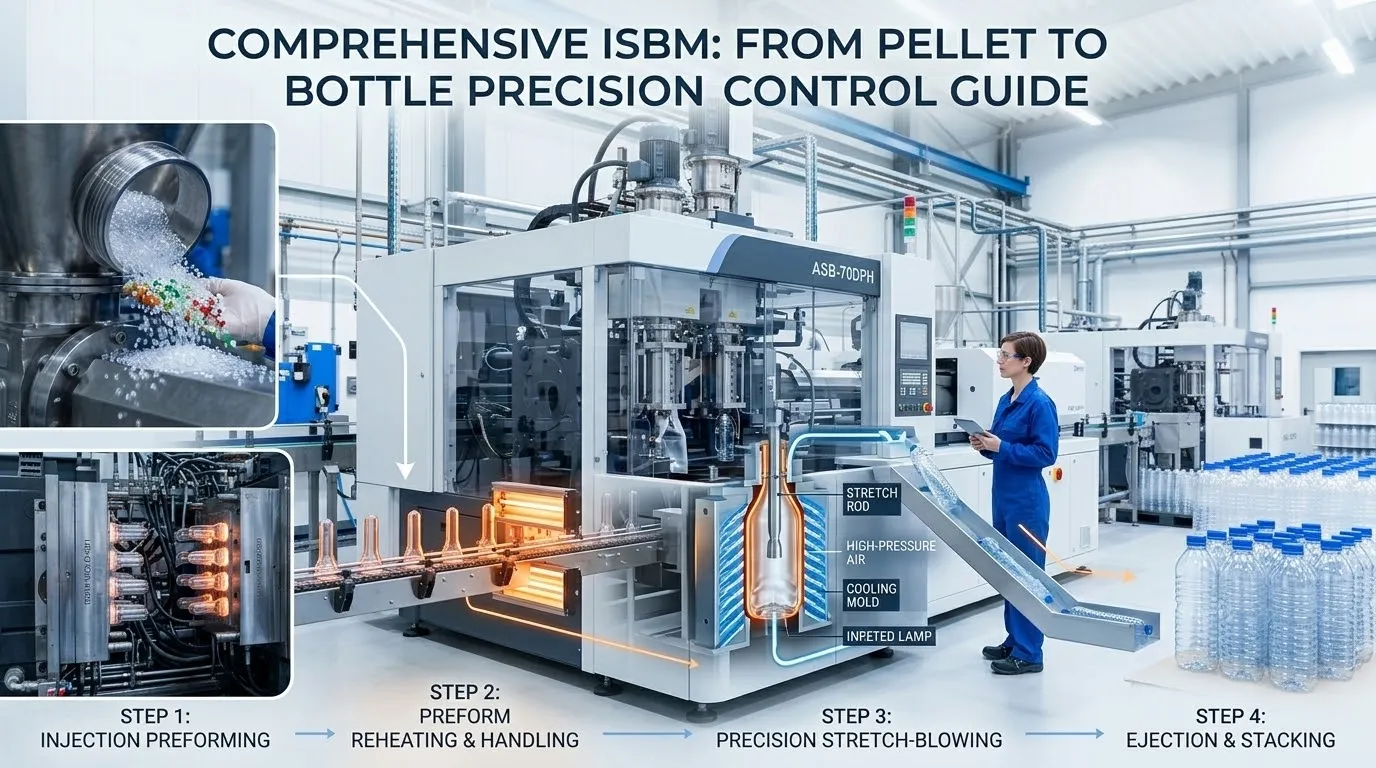
To ruthlessly eradicate this mechanical randomness from the factory floor, Ever-Power strongly mandates that elite manufacturing enterprises transition entirely to Full Servo architectures. Our fiercely proud flagship, the Повністю сервоприводна 4-станційна машина для лиття під тиском та розтягування EP-HGY150-V4-EV, surrenders control of every single core mechanical movement to ultra precise electromagnetic servo motors. These servo systems are entirely immune to thermal fluid drift and mechanical fatigue, executing the one millionth cycle with the exact same terrifying, sub millimeter precision as the very first cycle. This almost miraculous level of kinetic consistency allows quality assurance departments to drastically slash the frequency of expensive destructive testing, saving immense amounts of operational capital while simultaneously granting factory directors the absolute peace of mind that comes with true manufacturing supremacy.
Conclusion: Defining Standards Through Testing, Achieving Perfection Through Engineering
Comprehensively answering How to test the quality of ISBM PET bottles goes far beyond simply listing an inventory of wildly expensive laboratory equipment; it represents the highest manifestation of respect for the brutal physics of industrial manufacturing. Every single failed destructive test, every shattered bottle, and every cloudy preform is the machine sending a desperate, silent SOS signal to the engineering team. Only those elite consortiums possessing profound mastery over polymer rheology, coupled with world class equipment calibration capabilities, can accurately decipher these distress signals and translate them into surgical parameter corrections.
As the undisputed ISBM manufacturing titan dominating the Americas and projecting elite engineering technology across the globe, Ever-Power fundamentally refuses to rely on operational luck. We intimately understand that no amount of rigorous testing protocols can ever salvage a container born from a structurally weak, cheaply manufactured machine. This is exactly why we ruthlessly integrate unparalleled clamping rigidity, elite valve gate hot runners, drift proof full servo kinematics, and hyper complex thermodynamic conditioning systems into every single steel behemoth we produce. When you align your enterprise with the Ever-Power machinery ecosystem, you are not merely purchasing a high speed production line; you are investing in an impenetrable, inspection free fortress capable of shrugging off the most unforgiving global quality audits.
Annihilate Scrap Rates and Resurrect Your Brand Supremacy
You can no longer permit chronic drop test failures, cloudy optical haze, and wildly uncontrollable wall thickness dimensions to hemorrhage your client contracts and destroy your raw material budgets. Form an unbreakable alliance with the globally recognized leader in precision ISBM engineering. Inject our advanced manufacturing engines possessing absolute physical consistency directly into your production lines, and initiate a glorious new era of zero return, inspection free delivery.
Are you fully prepared to subject your current production yield and quality control infrastructure to the most profound, multi dimensional industrial audit? Immediately access our global corporate headquarters hub at https://isbmmolding.com/, or directly intercept our elite testing and engineering diagnostic team right now at [email protected] to secure your bespoke, zero defect equipment deployment and comprehensive quality optimization blueprint.