
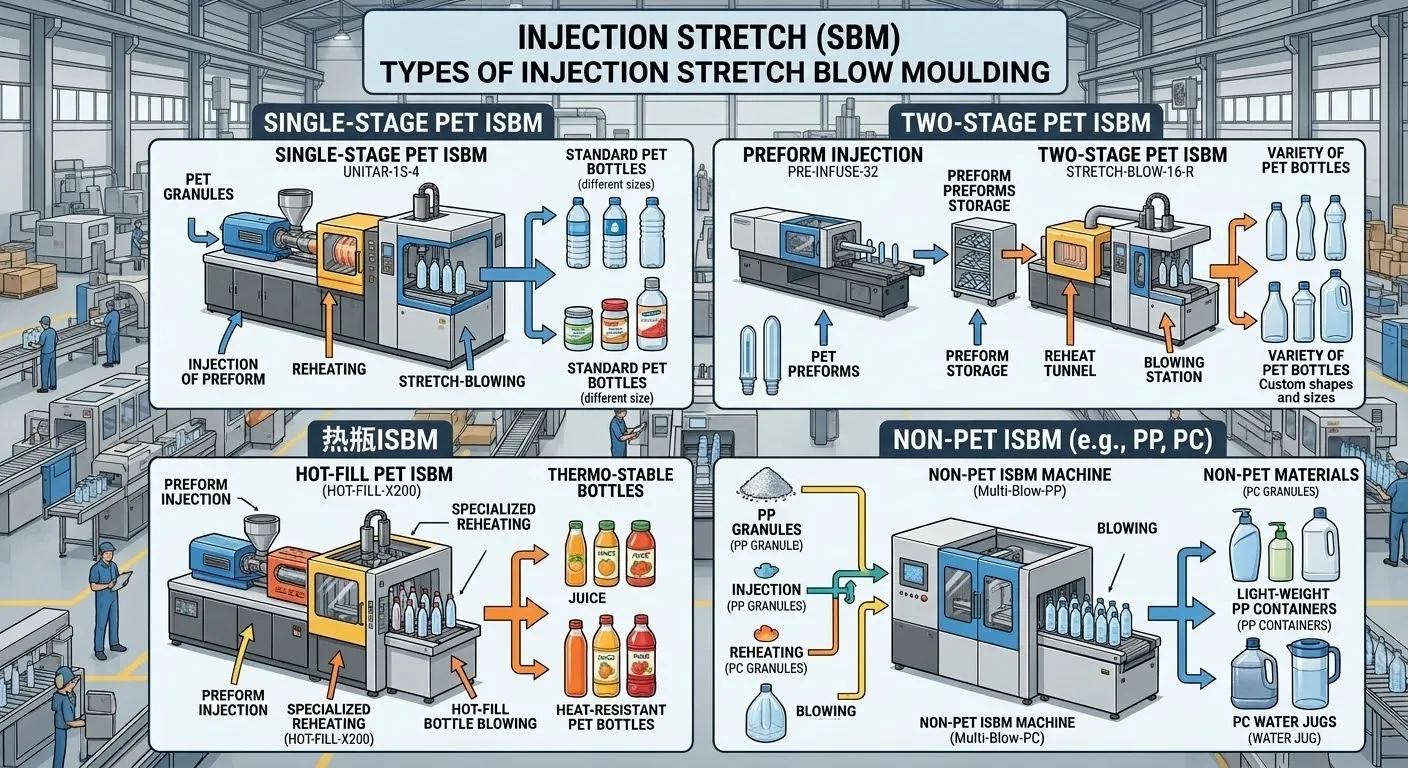
When evaluating a one-step injection stretch blow moulding machine, the single most consequential specification is the number of stations. Station count determines which container geometries the machine can produce, which materials it can process reliably, how much energy it consumes per cycle, and ultimately whether it will generate acceptable yield on the containers you actually intend to run.
This is not a question with a universal answer. A cosmetic manufacturer producing standard round PETG jars and a pharmaceutical company running wide-mouth PP containers have fundamentally different requirements. Choosing the wrong configuration leads to high rejection rates, excessive energy costs, or a machine that cannot physically produce the containers your customers need.
This guide provides a structured technical comparison of 3-station and 4-station ISBM machine architectures, drawing on Ever-Power’s engineering experience across both configurations in markets ranging from Australia and Germany to Brazil, South Korea, and the Middle East.
The Fundamental Difference Between 3 and 4 Stations
Both machine types are classified as one-step ISBM — but the internal station layout determines everything that follows
Container Geometry: What Each Configuration Can and Cannot Produce
The relationship between preform temperature uniformity and container shape is the key technical differentiator between the two architectures
When a PET or PETG preform is stretched and blown, the material flows preferentially toward the hotter zones of the preform wall. In a perfectly cylindrical preform at a perfectly uniform temperature, this produces a cylindrical bottle with consistent wall thickness around the circumference. The 3-station machine handles this scenario very well.
The problem arises with non-round containers. An oval shampoo bottle requires the material on the narrow faces to stretch further than the material on the broad faces. If the preform is at a uniform temperature, the material at the corners — which must travel the greatest distance — will arrive thinner than the broad face panels. This produces bottles that fail drop-impact testing because the corner walls are below the minimum structural thickness.
The 4-station machine’s conditioning station solves this by selectively heating the corner zones of the preform more than the broad face zones before blowing. The additional heat softens the corner material, making it flow more readily into the sharp mould edges. The result is a container with consistent wall thickness and structural integrity around the entire perimeter — something a 3-station machine cannot achieve with complex shapes regardless of how the injection parameters are adjusted.
| Container Type | 3-Station | 4-Station | Notes |
|---|---|---|---|
| Standard cylindrical round bottles | ✓ | ✓ | 3-station is more energy efficient for this category |
| Oval and flat personal care bottles | ✗ | ✓ | Requires differential heating to achieve even wall distribution |
| Heavy-wall cosmetic jars (glass-like) | ✗ | ✓ | Thick preforms require extended conditioning time for uniform distribution |
| Wide-mouth food jars (peanut butter, honey) | ~ | ✓ | 3-station possible for simple round wide-mouth; 4-station preferred for quality |
| Pharmaceutical vials and eye drop bottles | ✓ | ✓ | Round cylindrical shapes suit 3-station; 4-station for complex pharmaceutical forms |
| Asymmetrical perfume flacons | ✗ | ✓ | Complex asymmetric geometry requires full conditioning control |
| Infant nursing bottles (Tritan / PP) | ✗ | ✓ | Tritan and PP require precise thermal conditioning beyond 3-station residual heat capability |
Which Materials Each Configuration Can Process
Resin processing windows and temperature sensitivity directly determine which machine architecture is required
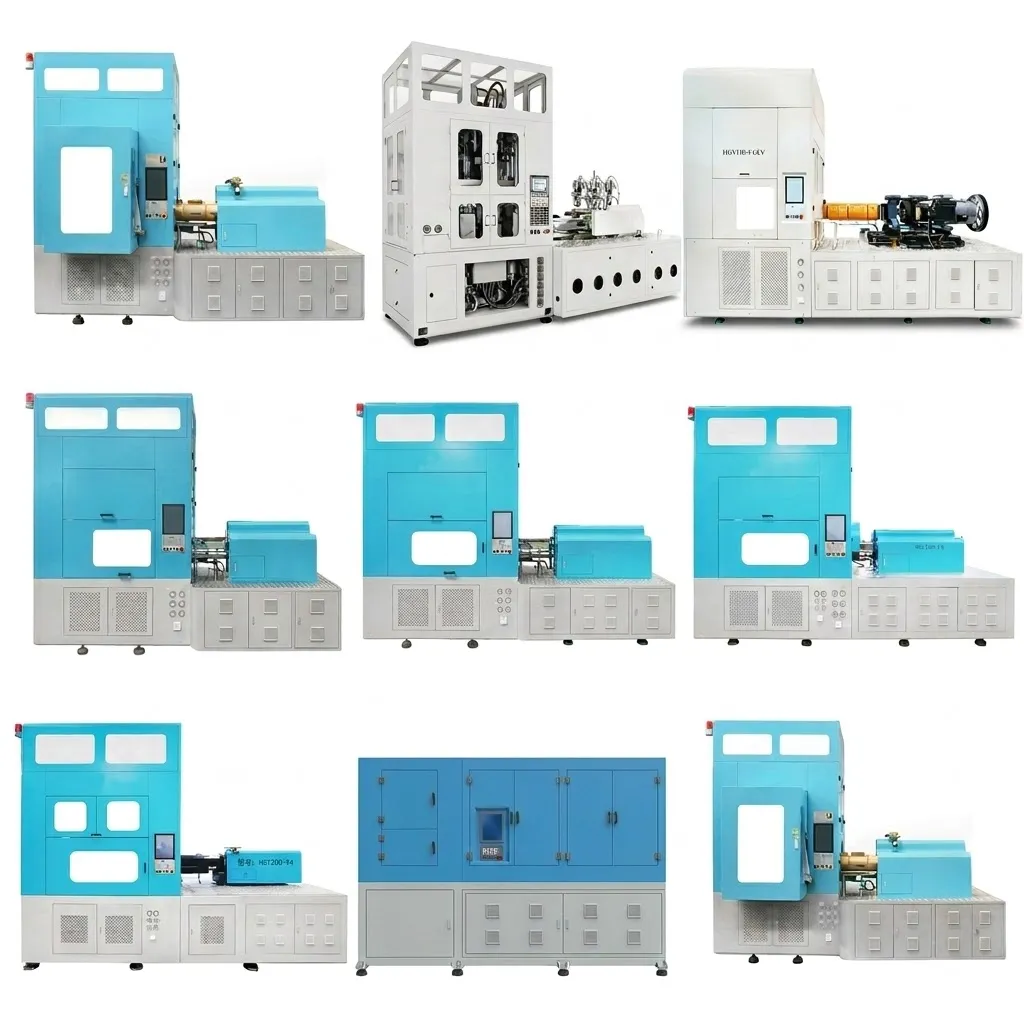
PET has a relatively wide blow temperature window of 95 to 115 degrees Celsius and tolerates minor temperature non-uniformity without producing visible defects in cylindrical containers. This is why PET round bottles are the natural domain of 3-station ISBM — the residual injection heat is generally sufficient to keep the preform within the blow window throughout the transfer from injection station to blow station.
PETG has a narrower window and is more sensitive to surface cooling during transfer. On a 3-station machine, the outer skin of a PETG preform can cool below the ideal blow temperature in the time it takes to index from injection to blow, particularly in facilities operating at lower ambient temperatures. A 4-station conditioning station can restore and equalise the preform temperature before blowing.
Tritan, Polypropylene, and Polycarbonate each have significantly narrower processing windows and higher sensitivity to temperature variation. Processing these materials on a 3-station machine typically results in high rejection rates from stress whitening, uneven wall distribution, or incomplete bottle formation. The 4-station architecture is essentially mandatory for reliable Tritan and PP output.
Cycle Time and Energy Consumption Compared
Understanding the energy and productivity trade-offs between the two configurations
The 3-station machine has an inherent energy efficiency advantage for containers it can produce. With no conditioning station, the cycle is shorter, and the energy invested in heating the preform during injection is used directly in blowing without any intermediate thermal management. For a manufacturer running standard round PET containers at high volume, the 3-station machine will deliver the lowest cost per bottle.
The 4-station machine adds cycle time due to the conditioning index. However, this is partially offset by the fact that the conditioning station also serves as a thermal buffer — the preform can be held at a precisely controlled temperature for longer, which can actually reduce the occurrence of blow-related defects and the associated scrap cost. In production environments where reject rates on complex containers exceed 5 to 10 percent on a 3-station machine, switching to a 4-station often improves net output despite the nominally longer cycle.
Both configurations benefit significantly from full servo drive systems. The Ever-Power EP-HGY50-V3-EV (3-station full servo) and EP-HGY150-V4-EV (4-station full servo) each achieve 30 to 40 percent energy savings over equivalent hydraulic machines, as servo motors consume energy only when actively producing motion rather than running a hydraulic pump continuously.
Typical cycle time for a 30 to 50 gram PET preform producing a 250 to 500 ml round bottle on a single-cavity 3-station machine. Multi-cavity moulds multiply output at the same cycle time.
Conditioning station adds 2 to 4 seconds per cycle for complex shapes. Net effective output per hour often equals or exceeds the 3-station result on those containers due to substantially reduced rejection rates.
Measured energy reduction on Ever-Power full servo machines versus continuous-run hydraulic ISBM machines under standard factory test conditions. Applies to both 3-station and 4-station servo models.
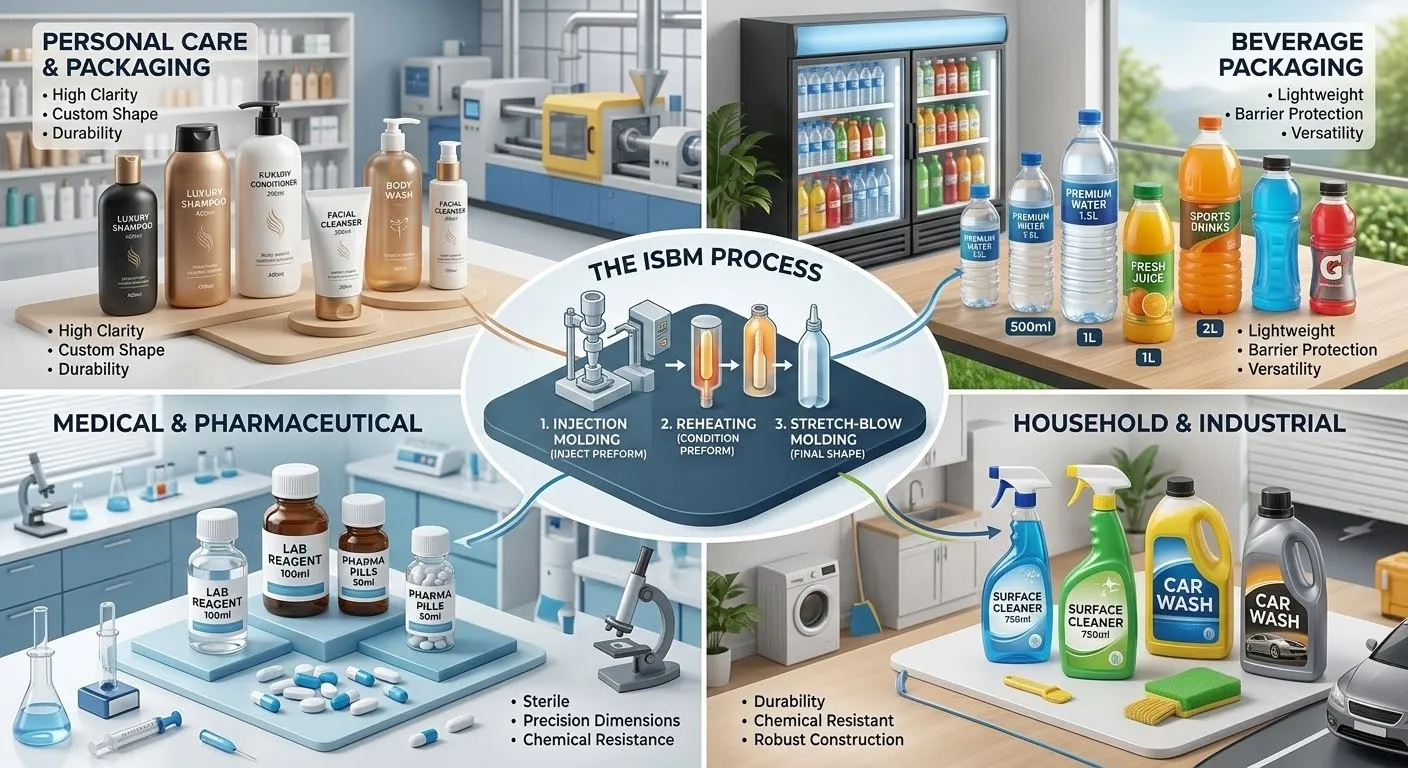
Available Models by Configuration
Ever-Power offers a comprehensive range of both 3-station and 4-station ISBM machines across clamping force classes from 50 KN to 400 KN
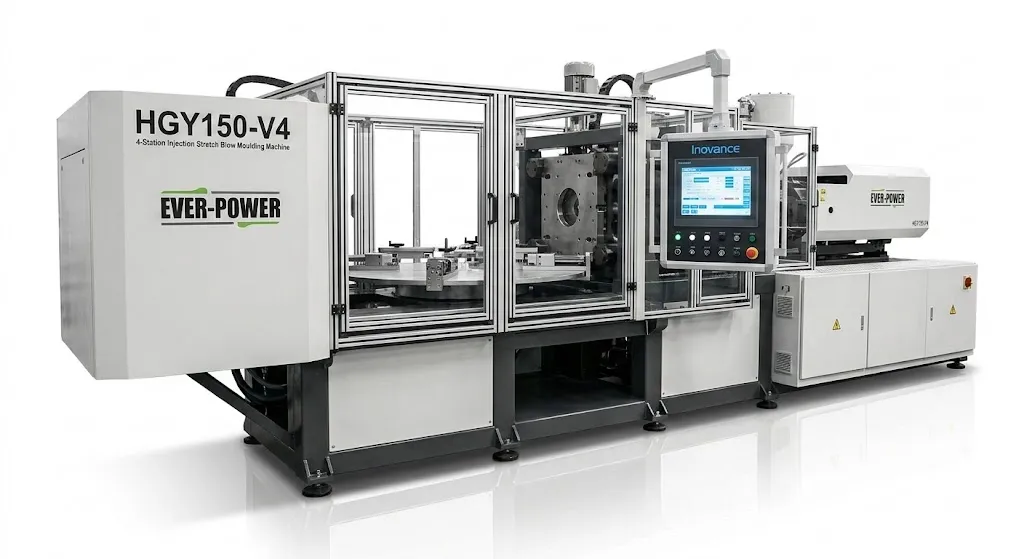
EP-HGY150-V4 — 4-station machine with dedicated preform temperature conditioning station.
How to Choose the Right Configuration for Your Production
A structured decision framework based on container type, material, and production scale
Not Sure Which Configuration Fits Your Requirements?
Send us your container drawings, production volume targets, and material specifications. Our senior engineers will evaluate the requirements and recommend the exact machine configuration and clamping force class within 24 hours — at no charge.
Frequently Asked Questions
Technical comparisons and performance data cited in this article are based on Ever-Power engineering specifications and factory test results. Container capability assessments reflect general industry experience across both machine configurations. For application-specific advice, contact [email protected] or visit our contact page.