소재 선택은 가스 및 습기 차단 성능에 어떤 영향을 미칠까요?

Polymer Science and Permeation Engineering

소재 선택은 가스 및 습기 차단 성능에 어떤 영향을 미칠까요?

A definitive polymer science guide analyzing the intrinsic permeability of PET, PP, PEN, and barrier-enhanced resins, the influence of crystallinity and orientation on permeation, and the engineering strategies for achieving target gas and water vapor transmission rates in ISBM containers.

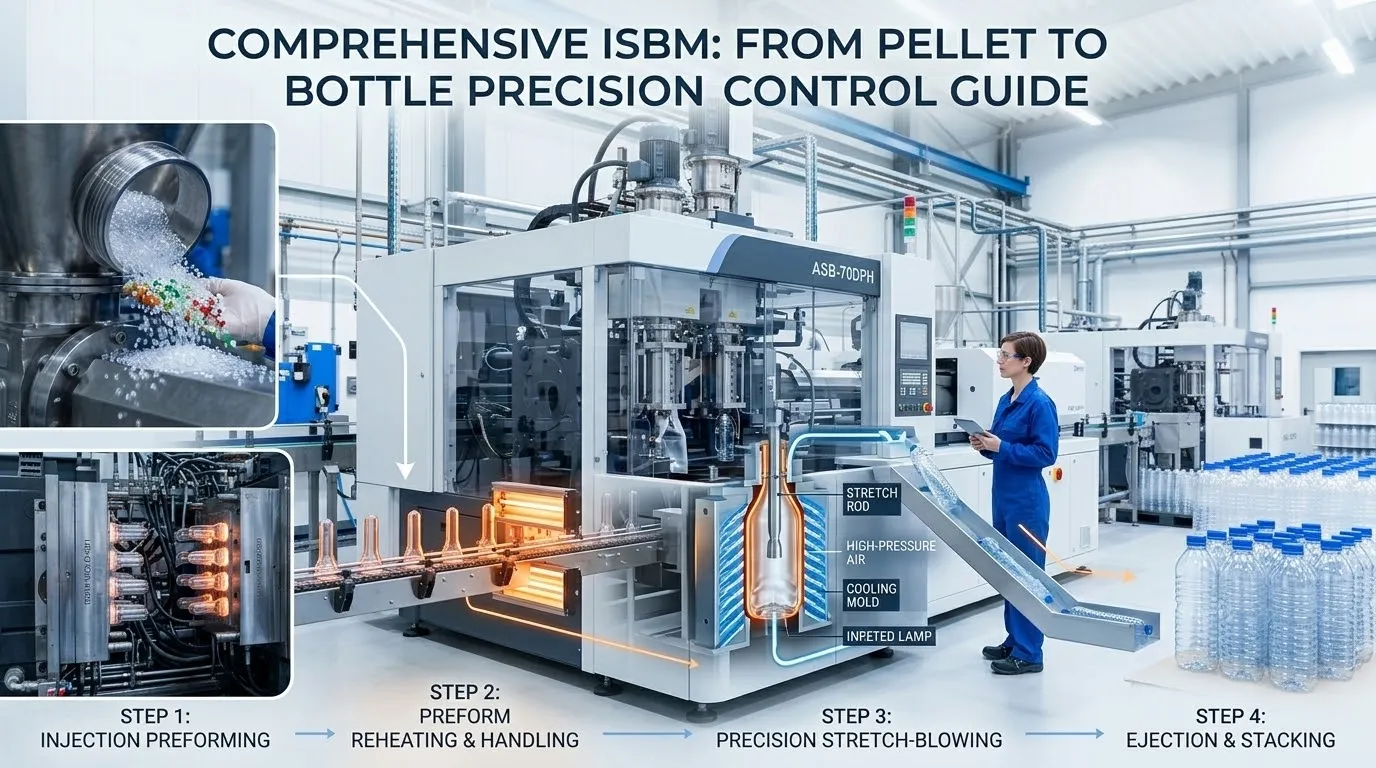
폴리머 펠릿에서 완제품 병까지의 정밀 관리 가이드

Permeation Physics and the Strategic Role of Material Selection

The barrier performance of an injection stretch blow molded container, its ability to prevent the ingress of oxygen and moisture and the egress of carbon dioxide, is not a single fixed property. It is the product of a complex interplay between the intrinsic permeability of the polymer material, the degree of crystallinity and molecular orientation imparted by the ISBM process, the thickness of the container wall, and the presence of any additional barrier layers or additives. Among these factors, the selection of the base polymer material is the most fundamental, establishing the baseline permeability from which all other factors deviate. A container molded from polypropylene will have an inherently different water vapor barrier than one molded from PET. A container molded from polyethylene naphthalate will have an inherently different oxygen barrier. Understanding how material selection impacts gas and moisture barrier performance is therefore essential knowledge for packaging engineers and product designers seeking to match the container to the protection requirements of the product. At 에버파워, a globally recognized Brazilian ISBM manufacturer capable of processing over 20 resin types, we support our customers in selecting the optimal material for their barrier requirements and in processing that material to maximize its inherent barrier potential on platforms like the EP-HGY150-V4 4스테이션 장비.

The physics of permeation through a polymer involves three sequential steps: the permeant molecule must first dissolve into the polymer surface, then diffuse through the polymer matrix driven by a concentration gradient, and finally desorb from the opposite surface. The overall permeability coefficient is the product of the solubility coefficient and the diffusion coefficient. Both of these fundamental parameters are determined by the chemical structure of the polymer. Polar polymers like PET and PEN have a higher affinity for polar permeants like water vapor, leading to higher moisture permeability, but their relatively stiff chain structures result in lower gas diffusion rates. Non-polar polymers like polypropylene have a lower affinity for water vapor, leading to excellent moisture barrier properties, but their more flexible chains and lower glass transition temperature result in higher gas diffusion rates. The ISBM process adds another critical dimension to barrier performance. The biaxial stretching orients the polymer chains and induces strain-induced crystallization, both of which reduce the free volume available for diffusion and create a more tortuous path for permeant molecules. This process-induced barrier enhancement is material-dependent. PET, which undergoes extensive strain-induced crystallization, experiences a significant barrier improvement from stretching. PP, which crystallizes more readily from the melt, experiences a less dramatic orientation-induced barrier improvement. This comprehensive engineering guide will analyze the intrinsic barrier properties of each major ISBM-compatible polymer, explain how the ISBM process modifies those properties, and provide the framework for selecting the material and process conditions that achieve the target barrier performance for any given application.

Material selection is the foundational decision in barrier package design. This guide provides the complete polymer science framework to inform that decision with confidence and precision.

PET and PEN: The Polyester Barrier Baseline and Its Enhancement

Polyethylene terephthalate and its higher-performance cousin, polyethylene naphthalate, form the polyester foundation of the ISBM barrier landscape.

🧬

Intrinsic Permeability of Amorphous Versus Oriented PET

Amorphous PET, as it exists in a rapidly quenched but as yet unstretched preform, has a relatively high permeability to both oxygen and carbon dioxide. The random, disordered arrangement of polymer chains provides ample free volume through which small gas molecules can diffuse. The oxygen permeability of amorphous PET is approximately 8 to 10 cc-mil per 100 square inches per day per atmosphere. When this amorphous PET is biaxially stretched during the ISBM process, two barrier-enhancing mechanisms occur simultaneously. First, the polymer chains become aligned in the plane of the container wall, reducing the free volume and forcing permeant molecules to follow a more tortuous diffusion path. Second, strain-induced crystallization creates impermeable crystalline domains that act as physical barriers, further increasing the tortuosity of the diffusion path. The combined effect is a reduction in oxygen permeability by a factor of 2 to 4. An oriented PET container typically exhibits an oxygen permeability of 2 to 4 cc-mil per 100 square inches per day per atmosphere. The carbon dioxide permeability of PET is approximately 15 to 20 times higher than its oxygen permeability, a factor that is critical for carbonated beverage applications. The water vapor transmission rate of PET is moderate, typically around 2 to 4 grams-mil per 100 square inches per day. PET is not an exceptional moisture barrier, and for products requiring very low moisture ingress, additional barrier layers or alternative materials may be necessary. The degree of barrier improvement from orientation is directly related to the stretch ratio. Higher stretch ratios produce greater chain alignment and higher crystallinity, resulting in lower permeability. The servo-driven stretch rod on the EP-HGY150-V4-EV allows the stretch ratio to be precisely controlled to achieve the target barrier performance for the specific container design.

🛡️

PEN and PET/PEN Blends for Superior Barrier Applications

Polyethylene naphthalate is a polyester similar to PET but with a naphthalene ring replacing the benzene ring in the polymer backbone. This structural difference has a profound impact on barrier properties. The naphthalene ring is more rigid and planar than the benzene ring, resulting in a polymer chain that is stiffer and packs more densely. The oxygen permeability of PEN is approximately 4 to 5 times lower than that of PET, making it an attractive option for applications requiring extended shelf life for oxygen-sensitive products, such as beer, wine, and vitamin-enhanced beverages. PEN also has a higher glass transition temperature and a higher melting point than PET, providing better thermal resistance. However, PEN is significantly more expensive than PET and has a slower crystallization rate, which affects its processing in ISBM. To balance cost and performance, PET and PEN can be blended. A 10 to 20 percent PEN blend in PET provides a measurable improvement in barrier properties without the full cost premium of pure PEN. The two polymers are compatible and can be processed on standard ISBM equipment, though the processing temperatures must be adjusted to accommodate the higher melting point of the PEN component. For the ultimate in barrier performance from a polyester material, multilayer structures combining PET with a high-barrier core layer, as discussed in our barrier materials guide, offer the best combination of performance and economics. The EP-HGY650-V4 with its precise multi-zone temperature control is well-suited to processing these demanding polyester materials at commercial volumes.

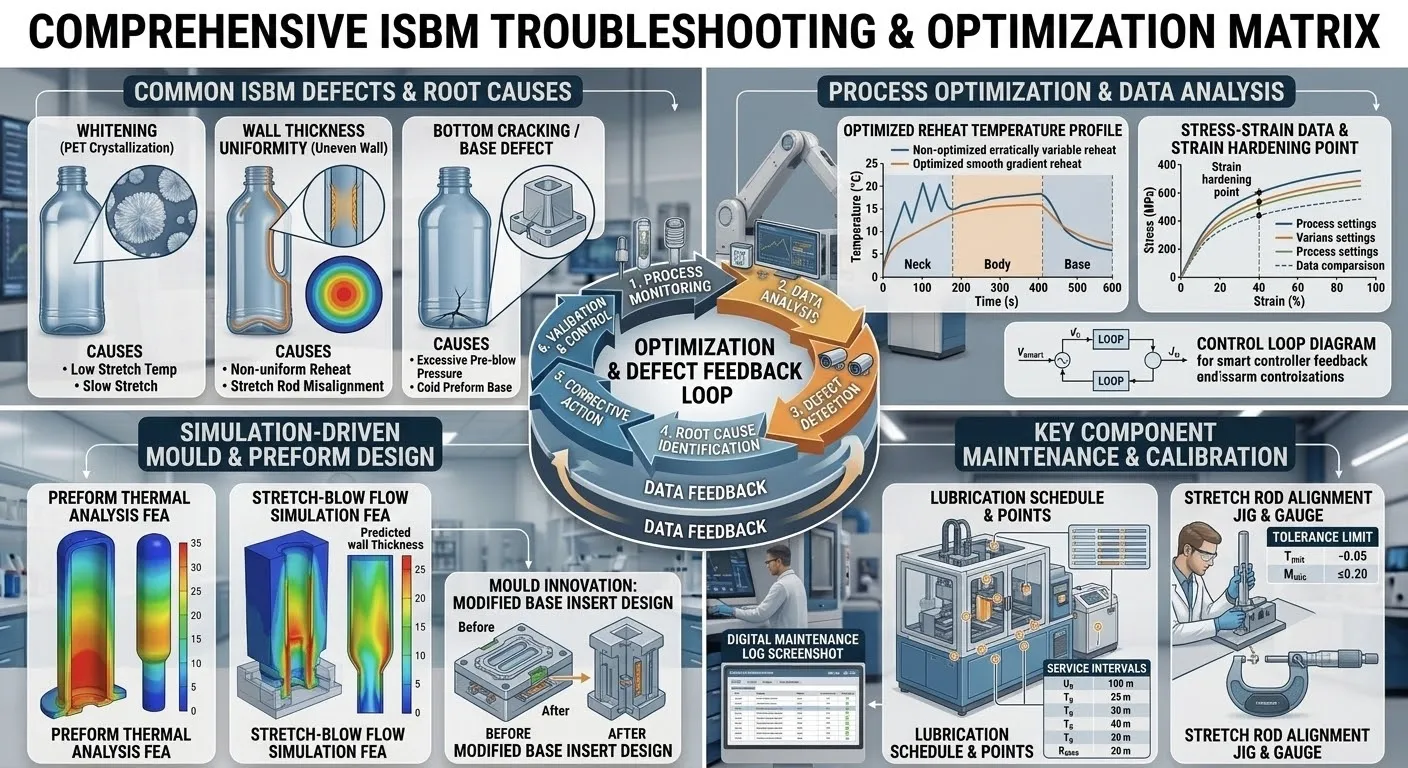
종합적인 ISBM 문제 해결 및 최적화 매트릭스

Polypropylene: The Superior Moisture Barrier for Hot-Fill Applications

Polypropylene offers a distinctly different barrier profile from PET, with excellent moisture barrier properties but higher gas permeability, making it the material of choice for specific application domains.

💧The Water Vapor Barrier Advantage of Polypropylene

Polypropylene is a non-polar, hydrophobic polymer. The absence of polar groups in its molecular structure means that water molecules, which are highly polar, have a very low solubility in the polymer matrix. This translates into an exceptionally low water vapor transmission rate. The WVTR of PP is approximately 0.3 to 0.5 grams-mil per 100 square inches per day, roughly 5 to 10 times lower than that of PET. This makes PP an excellent choice for products that are highly sensitive to moisture gain or loss. Dry pharmaceutical powders, effervescent tablets, and moisture-sensitive food products benefit from PP’s superior moisture barrier. However, this advantage comes with a trade-off in gas barrier performance. The oxygen permeability of PP is approximately 150 to 200 cc-mil per 100 square inches per day per atmosphere, which is 30 to 50 times higher than oriented PET. PP is therefore unsuitable for products requiring an oxygen barrier, such as carbonated beverages or oxygen-sensitive foods, unless it is combined with an oxygen barrier layer in a multilayer structure or used for products with a short shelf life that do not require oxygen protection. The ISBM process improves the barrier properties of PP through biaxial orientation, but the improvement is less dramatic than for PET because PP crystallizes more readily from the melt and has a higher baseline crystallinity. Clarified PP grades, which use nucleating agents to create a finer crystalline morphology, can improve both the optical clarity and the barrier properties of ISBM PP containers. The EP-HGYS280-V6 with its extended thermal conditioning provides the precise temperature control necessary for processing clarified PP grades and achieving the desired crystalline morphology.

🌡️Barrier Property Retention After Hot-Fill and Retort Processing

A critical advantage of PP for barrier applications is its ability to retain its barrier properties after exposure to elevated temperatures during hot-fill and retort processing. PET containers exposed to hot-fill temperatures above approximately 75 degrees Celsius will undergo thermal relaxation of the oriented structure, losing some of the strain-induced crystallinity and orientation that provide their barrier properties. PP, with its higher melting point and its ability to be processed at higher temperatures, can withstand hot-fill temperatures of 85 to 95 degrees Celsius and even retort sterilization at 121 degrees Celsius without significant loss of barrier performance. This thermal stability makes PP the material of choice for shelf-stable food and beverage products that require both a moisture barrier and the ability to be hot-filled or retorted. For these applications, the preform and container design must be optimized to achieve the maximum possible orientation and crystallinity from the ISBM process, as these factors directly influence the barrier properties. The stretch ratio, conditioning temperature, and blow mold cooling must all be precisely controlled. The EP-HGY200-V4 provides the process control necessary to consistently achieve the target orientation and barrier properties in PP containers, even at high production rates. For applications requiring both the moisture barrier of PP and an oxygen barrier, multilayer structures combining PP with an EVOH or nylon oxygen barrier layer can be produced on co-injection equipped machines, combining the best properties of both materials.

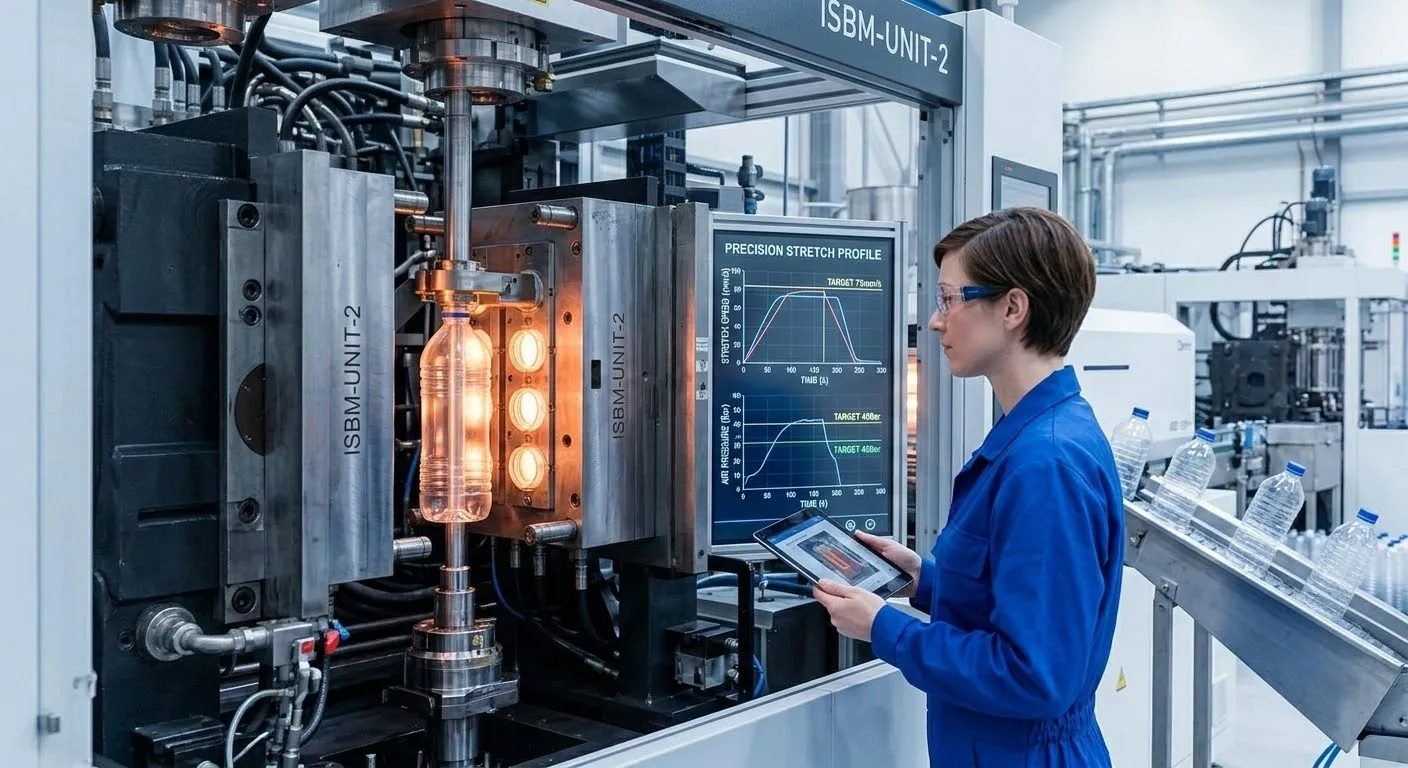
첨단 ISBM 제조 시설 바닥

Advanced Barrier Technologies and rPET Barrier Considerations

Beyond the intrinsic barrier properties of the base polymer, active and passive barrier technologies, as well as the impact of recycled content, significantly influence the final barrier performance of the ISBM container.

⚛️

Oxygen Scavengers and Active Barrier Systems

Active barrier technologies go beyond the passive diffusion barrier of the polymer itself. Oxygen scavengers are reactive compounds that are either blended into the container wall or incorporated into a dedicated layer. These scavengers chemically react with oxygen molecules as they attempt to permeate through the wall, consuming them and preventing them from reaching the product. Common oxygen scavenger chemistries include oxidizable polymers, such as polybutadiene, combined with a transition metal catalyst, typically cobalt. The scavenger remains dormant until the container is filled and sealed, at which point the reaction is initiated by the moisture from the product. The scavenger can reduce the effective oxygen transmission rate of the container to near zero for a defined period, known as the scavenging capacity. Once the capacity is exhausted, the passive barrier of the polymer becomes the sole protection. The selection of the scavenger chemistry and the loading level must be matched to the expected oxygen exposure over the product’s shelf life. Oxygen scavengers can be incorporated into monolayer PET containers, allowing them to be produced on standard single-extruder ISBM machines. However, for maximum efficiency, the scavenger is often placed in a dedicated layer of a multilayer structure, where it is positioned to intercept oxygen before it reaches the inner, product-contact layer. The EP-HGY150-V4 can be configured for monolayer oxygen scavenger processing, providing an accessible entry point into active barrier packaging.

♻️

Impact of rPET Content on Barrier Performance

The incorporation of post-consumer recycled PET into ISBM containers has implications for barrier performance that must be understood and managed. rPET typically has a lower intrinsic viscosity and a broader molecular weight distribution than virgin PET. When stretched under the same conditions, rPET may achieve a slightly lower degree of strain-induced crystallinity and orientation than virgin PET. This can result in a small reduction in barrier performance, typically a 5 to 15 percent increase in permeability for containers with high rPET content compared to equivalent virgin PET containers. The degradation products and residual contaminants in rPET can also influence barrier properties. Some contaminants may act as plasticizers, increasing the free volume and the diffusion rate. Others may act as nucleating agents, potentially increasing crystallinity. The net effect on barrier performance depends on the specific rPET source and the processing conditions. To maintain barrier performance with rPET, several strategies can be employed. The stretch ratio can be slightly increased, within the limits of the rPET’s reduced natural stretch capability, to compensate for the lower orientation. A slightly higher percentage of virgin PET can be blended with the rPET to stabilize the overall barrier properties. For the most demanding barrier applications, a dedicated barrier layer can be incorporated, decoupling the barrier function from the rPET content of the structural layers. The adaptive servo control of the EP-HGY150-V4-EV helps compensate for rPET variability, ensuring consistent preform quality that is the foundation for consistent barrier performance. Rigorous barrier testing of containers produced from each rPET lot is an essential quality control practice for operations using high recycled content.

EP-HGY250-V4 및 고출력 EP-HGY250-V4-B provide the throughput and consistency necessary for high-volume barrier container production. The integration of these machines with Ever-Power’s 맞춤형 원스텝 사출 스트레치 블로우 금형 ensures that the mold tooling is optimized for the specific flow and cooling requirements of the chosen barrier material system.

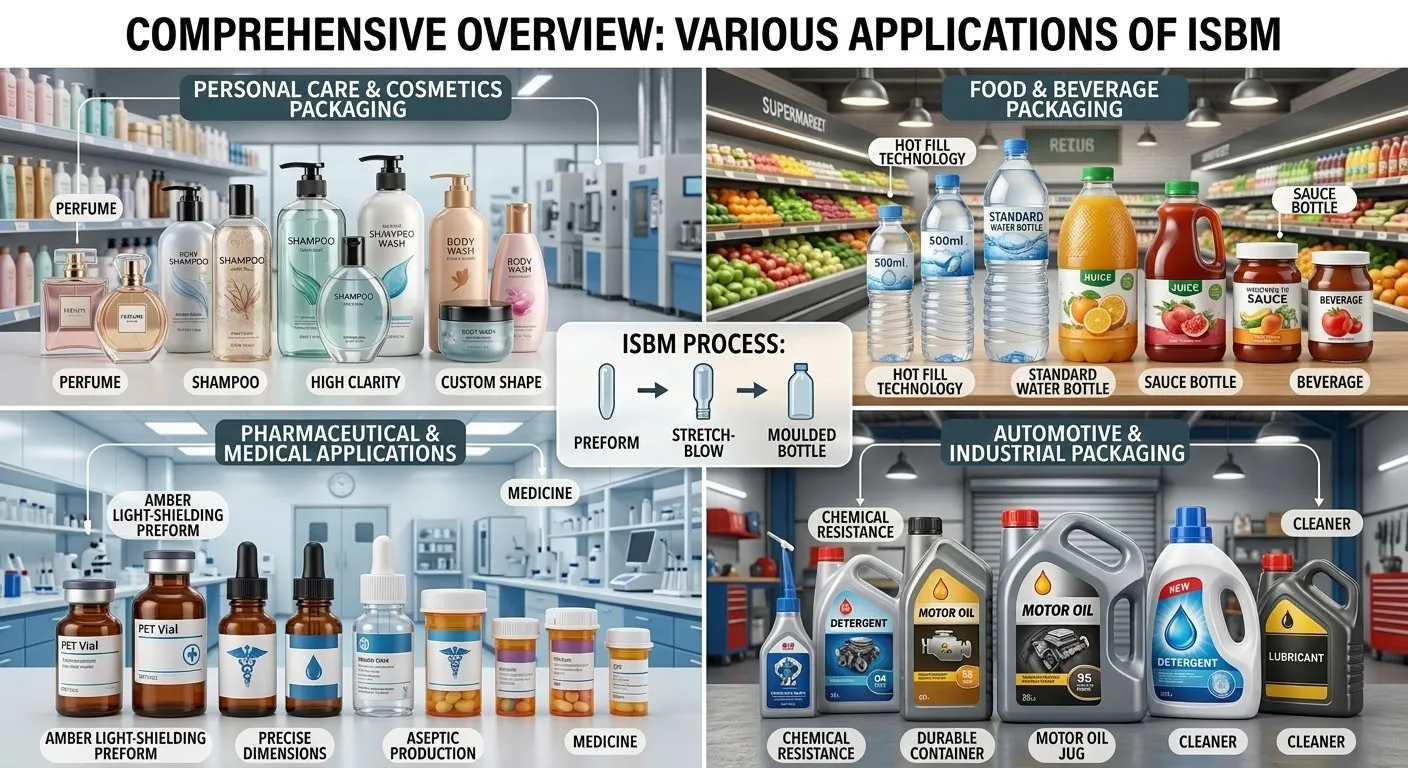
고급 틈새 포장 응용 분야 및 보조 구성

Engineer Optimal Barrier Performance Through Informed Material Selection

Material selection impacts gas and moisture barrier performance in ISBM containers through the intrinsic permeability of the chosen polymer, the degree of barrier enhancement achieved through biaxial orientation and strain-induced crystallization, and the integration of active and passive barrier technologies. PET provides a balanced combination of oxygen, carbon dioxide, and moisture barrier that is further enhanced by the ISBM process. PEN offers superior oxygen barrier for demanding applications. PP excels as a moisture barrier and retains its properties after high-temperature processing. Active barrier technologies like oxygen scavengers can reduce effective oxygen transmission to near zero. rPET presents additional barrier considerations that require process adaptation and rigorous quality control. At 에버파워, our advanced machinery platforms, capable of processing over 20 resin types, and our integrated 맞춤형 원스텝 사출 스트레치 블로우 금형 provide the material flexibility, process precision, and production scalability to deliver optimized barrier performance for every application.

태그: