Can ISBM process bioplastics like PLA? The Ultimate Engineering Guide to Eco-Friendly Polymer Manufacturing
Amidst the profound environmental paradigm shift sweeping through the global plastic packaging industry, traditional petrochemical based polymers are facing unprecedented regulatory scrutiny and intense consumer pushback. Multinational fast moving consumer goods conglomerates, elite cosmetic brands, and forward thinking life science enterprises are aggressively searching for sustainable material alternatives with extreme urgency. In this relentless green material revolution, Polylactic Acid, universally known as PLA, has emerged as the absolute superstar of the bioplastics sector, revered for its renewable plant based origins typically corn starch or sugar cane and its highly desirable industrial compostability. However, when corporate brand directors attempt to transition this eco friendly material into rigid containers demanding supreme optical transparency and indestructible physical strength, a terrifying engineering challenge immediately surfaces. As the undisputed Injection Stretch Blow Molding manufacturing titan dominating South America and projecting elite infrastructure across the global supply chain, the senior rheology and thermodynamic engineering division at कभी-पावर daily confronts the defining question of the sustainable packaging era: Can ISBM process bioplastics like PLA?
From a strictly analytical, high level engineering perspective, the definitive answer is an absolute yes. Single stage Injection Stretch Blow Molding technology is not merely capable of processing PLA; due to its unique latent heat preservation mechanics, it is arguably the most ideal manufacturing methodology for achieving the extreme biaxial orientation and crystalline transparency that PLA packaging demands. Nevertheless, this confirmation arrives with a severe, uncompromising technical caveat. PLA is absolutely not a simple, plug and play replacement for traditional Polyethylene Terephthalate. It possesses a terrifyingly narrow thermodynamic processing window, an extreme vulnerability to shear degradation, and a notoriously problematic low melt strength. Attempting to process PLA on cheap, unverified machinery lacking profound thermodynamic optimization guarantees an endless nightmare of catastrophic failures: severely yellowed preforms, brittle shattering within the blow mold cavity, uncontrollable wall thickness deviations, and devastating thermal haze crystallization. In this exhaustively detailed, highly authoritative industrial manufacturing masterclass, we will completely deconstruct the molecular level challenges of processing PLA bioplastics within the ISBM ecosystem. We will deeply analyze every critical phase from intense resin desiccation and low shear plasticization to navigating the microscopic thermal window of biaxial stretching demonstrating precisely how the Ever-Power machinery matrix empowers your facility to conquer bioplastics and absolutely dominate the future of green packaging.
Phase One: The Rheological Battlefield and PLA Melt Management
To authentically master the injection stretch blow molding of PLA, one must first acquire a profound understanding of its unique macromolecular rheology, which differs drastically from conventional PET. Polylactic Acid is an exceptionally heat sensitive and shear sensitive polymer. Within the heated injection barrel of the molding machine, as the PLA resin transitions into a molten state, its melt viscosity plummets precipitously with even the slightest elevation in thermal energy. This signifies that a microscopic temperature fluctuation can cause the molten PLA to instantly transition from a highly viscous, controllable fluid into an erratic, watery liquid.
This violent rheological instability introduces catastrophic risks during the primary injection phase. If the barrel temperature drifts too high, the resulting watery PLA melt will uncontrollably hemorrhage across the mold parting lines under high injection pressure, generating severe mechanical flash and potentially bleeding backward over the injection screw check ring. Conversely, if the temperature is dialed slightly too low in an attempt to maintain viscosity, the massive shear stress generated by the rotating screw will brutally sever the long molecular chains of the Polylactic Acid. This induces severe mechanical degradation, resulting in a blown container that is microscopically brittle and guaranteed to shatter violently upon impact during drop testing.
Flawlessly navigating this rheological minefield requires the deployment of heavy industrial machinery equipped with absolute temperature precision and specialized low shear plasticization capabilities. For manufacturing high capacity bioplastic packaging, the Ever-Power heavy armored flagship, the EP-HGY650-V4 4-स्टेशन इंजेक्शन स्ट्रेच ब्लो मोल्डिंग मशीन, exhibits absolute domination. This colossal platform is equipped with an advanced, fluid dynamically optimized low shear injection screw and features highly granular, multi zone PID closed loop temperature controllers. This architecture ensures that massive payloads of sensitive PLA resin are melted with extreme gentleness and perfect thermal uniformity, flawlessly preserving the fragile molecular chain integrity and establishing an indestructible foundation for the subsequent stretch blow molding sequence.
Phase Two: Extreme Hygroscopicity and Pre-Injection Survival Protocols
The most lethal, invisible assassin of Polylactic Acid during the ISBM process is atmospheric moisture. Similar to PET, PLA is profoundly hygroscopic, eagerly absorbing water molecules directly from the ambient factory air. However, PLA is monumentally more vulnerable to moisture induced hydrolysis. If the residual moisture content within the raw PLA resin pellets exceeds a strict threshold of two hundred and fifty parts per million before entering the injection barrel, a catastrophic chemical reaction occurs the moment the material reaches melting temperatures. The trapped water molecules act as microscopic chemical scissors, frantically chopping the primary polymer backbone of the Polylactic Acid into fragmented, useless chains.
A PLA melt that has suffered severe hydrolysis will experience a total collapse in melt viscosity, and its Intrinsic Viscosity will plummet to catastrophic depths. The resulting preforms and blown containers will not only exhibit a sickly, yellowish hue and severe optical cloudiness, but they will be structurally as fragile as thin ice. Therefore, before introducing PLA into any automated production environment, the facility must deploy world class, desiccant wheel dehumidifying drying networks. The dew point of the drying air must be ruthlessly maintained below negative forty degrees Celsius, and the resin must be baked within a highly specific temperature range for several uninterrupted hours. This extreme preliminary material desiccation is the absolute baseline survival protocol, ensuring that all subsequent thermodynamic machine parameters can function without being instantly sabotaged by molecular degradation.
Phase Three: Hot Runner Manifolds The Microscopic Dead Zone Crisis
Within the elite echelons of zero waste packaging manufacturing, hot runner technology is an absolute requirement. However, when processing sensitive bioplastics, the hot runner system rapidly transforms into a terrifying thermodynamic hazard zone. PLA possesses exceptionally poor thermal stability; if the molten polymer remains trapped at high temperatures for an extended residence time, it rapidly undergoes severe thermal degradation, carbonization, and scorching, emitting acrid odors and producing an unacceptable yellow discoloration.
If the internal architecture of the hot runner mold features any fluid dynamic dead zones, sharp corners, or unpolished microscopic crevices, the flowing PLA melt will stagnate in those specific areas, continuously baking until it solidifies into black, carbonized debris. These degraded carbon particles will subsequently be flushed into the preform cavities during later injection cycles, causing disastrous visual contamination and massive batch rejections. To utterly eradicate this fatal defect, the Ever-Power tooling manufacturing center, headquartered in Brazil, engineers highly specialized कस्टम वन-स्टेप इंजेक्शन स्ट्रेच ब्लो मोल्ड्स explicitly tailored for bioplastic processing. Our elite rheology engineers utilize advanced computational fluid dynamics to design hyper streamlined, aerospace grade hot runner manifolds featuring micrometer level internal mirror polishing. This uncompromising design philosophy absolutely minimizes shear stress and guarantees a highly agile, instantaneous melt flush rate, ensuring the heat sensitive PLA navigates the complex delivery network at maximum velocity to arrive safely within the injection cavity.
Phase Four: The Art of Conditioning in a Microscopic Thermodynamic Window
The ultimate answer to whether ISBM can process bioplastics like PLA lies entirely within the capabilities of the machine’s thermal conditioning station. The fundamental physics of transforming an amorphous, rigid injection preform into a high strength, crystalline transparent container dictate that the stretching process must occur precisely between the polymer’s glass transition temperature and its cold crystallization temperature. Polylactic Acid possesses a remarkably low glass transition temperature typically hovering dangerously low between fifty five and sixty degrees Celsius, which is substantially lower than the standard seventy five degrees Celsius required for conventional PET. Furthermore, the total viable processing window for PLA is terrifyingly narrow, often allowing a margin of error of merely two to three degrees Celsius.
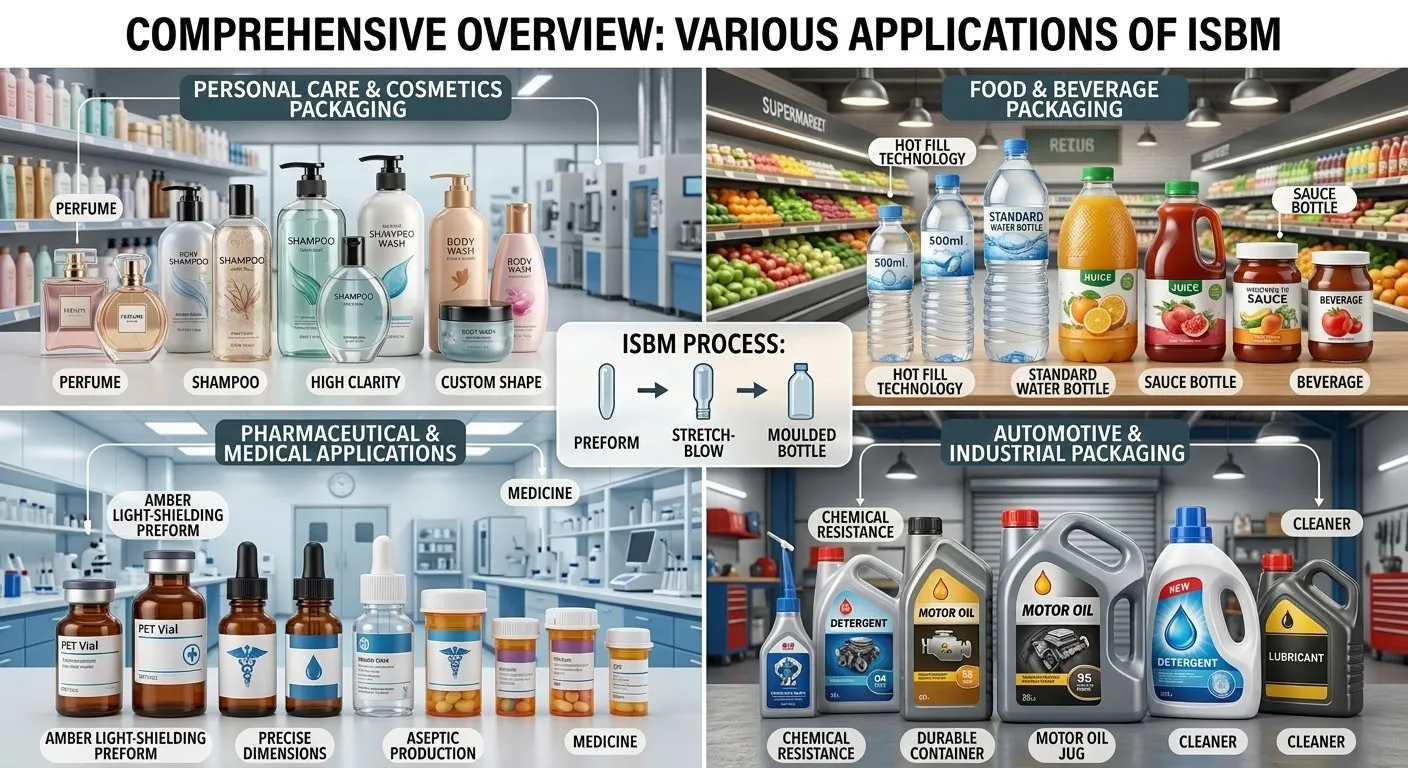
If a PLA preform enters the stretch blow mold even slightly below this extreme thermal threshold, the polymer reveals its inherently brittle nature, shattering into microscopic fragments the instant the mechanical stretch rod impacts the base gate. Conversely, if the thermal profile drifts slightly too high, the aggressive strain induced crystallization properties of PLA will instantly spiral out of control. The molecular chains will spontaneously fold into massive spherulite structures, blanketing the entire bottle in a thick, opaque white thermal haze, completely destroying the premium transparent aesthetic that brand owners demand.
Surviving this thermodynamic tightrope walk requires machinery possessing absolute, god like temperature control capabilities. Our globally revered industrial platforms, such as the highly versatile EP-HGY150-V4 4-स्टेशन इंजेक्शन स्ट्रेच ब्लो मोल्डिंग मशीन and the immensely robust EP-HGY200-V4 4-स्टेशन इंजेक्शन स्ट्रेच ब्लो मोल्डिंग मशीन, are equipped with the industry’s most advanced conditioning pot architectures. Empowered by highly sensitive, independent fluid temperature control units, operators can execute incredibly granular axial and radial thermal profiling on the fragile PLA preform. By meticulously guiding the dissipation of low temperature latent heat, Ever-Power machinery securely locks this notoriously difficult bioplastic into the exact, micrometer perfect thermal sweet spot required for flawless biaxial orientation.
Phase Five: Conquering PLA Brittleness The Absolute Supremacy of Full-Servo Kinematics
Even if the thermodynamic heating profile is calibrated to absolute perfection, the slightest kinetic hesitation during the mechanical execution phase will instantly annihilate a PLA container. The molecular chains of Polylactic Acid exhibit significant rigidity, resulting in an exceptionally rapid strain hardening rate during the stretching phase. Legacy hydraulic machinery inevitably suffers from microscopic delays and velocity fluctuations during preform transfer, mold clamping, and stretch rod actuation due to shifting hydraulic fluid temperatures. While standard PET might possess the thermal tolerance to forgive these delays, the hyper sensitive PLA will not. A delay of mere milliseconds during the rotary transfer process allows the vital latent heat to dissipate into the factory air, causing the preform to instantly plummet out of the processing window. Similarly, a minor stutter in the descending stretch rod will brutally tear the fragile preform base apart.
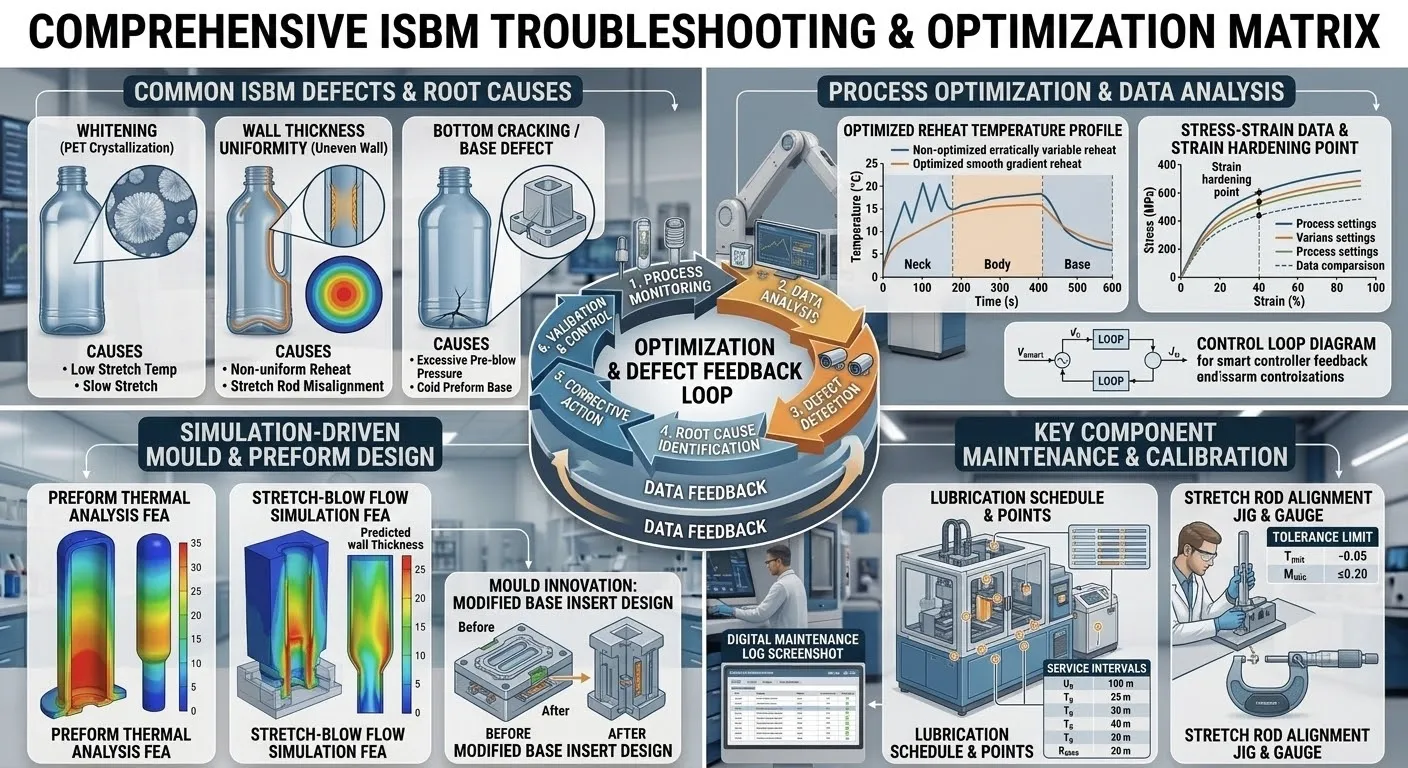
To ruthlessly eradicate this mechanical randomness from the factory floor, packaging enterprises determined to achieve maximum bioplastic yield rates must pivot entirely to Full Servo electric architectures. Ever-Power’s pioneering masterpieces, including the highly advanced EP-HGY150-V4-EV फुल सर्वो 4-स्टेशन इंजेक्शन स्ट्रेच ब्लो मोल्डिंग मशीन and the ultra compact EP-HGY50-V3-EV फुल सर्वो इंजेक्शन स्ट्रेच ब्लो मोल्डिंग मशीन designed explicitly for high precision eco friendly cosmetic and medical packaging, surrender all critical kinetic axes to elite electromagnetic servo motors. These fully enclosed servo systems completely ignore environmental temperature fluctuations, executing pre programmed stretch velocities and blow timings with terrifying, microsecond accuracy. This absolute, unyielding mechanical consistency guarantees that the PLA molecular matrix is stretched and aligned with perfect mathematical uniformity, totally eliminating the risk of brittle fracture and bestowing the final bioplastic container with astonishing drop impact resilience and brilliant optical luster.
Phase Six: Extreme Asymmetrical Design The Six-Station Engineering Miracle
As premium eco friendly brands relentlessly pursue maximum retail shelf differentiation, industrial designers are introducing wildly exaggerated, highly asymmetrical bioplastic container geometries featuring severely off center handles or extremely flattened, flask like profiles. Because the natural extensibility of PLA is vastly inferior to that of traditional petrochemical plastics, attempting to stretch PLA into these highly unbalanced shapes on a standard four station machine is an exercise in thermodynamic futility, guaranteeing massive blowout rates and catastrophic wall thinning.
To obliterate these geometric barriers and grant packaging engineers absolute design freedom, Ever-Power engineered a monument of industrial history: the EP-HGYS280-V6 6-स्टेशन इंजेक्शन स्ट्रेच ब्लो मोल्डिंग मशीन. This unprecedented six station behemoth integrates two completely independent thermal conditioning workstations. This unique architectural expansion provides thermodynamic engineers with surgical precision, allowing them to execute incredibly deep, multi stage asymmetrical heat mapping known as Radial Profiling directly onto the fragile PLA preform. By meticulously and methodically reshaping the thermal circumference of the preform at extremely low temperatures, this machine ensures that even the most insanely complex, asymmetrical bioplastic designs achieve mathematically flawless wall thickness distribution, transforming the wildest green design blueprints into high volume commercial reality.
Phase Seven: Massive Capacity and Double-Row Thermodynamic Equilibrium
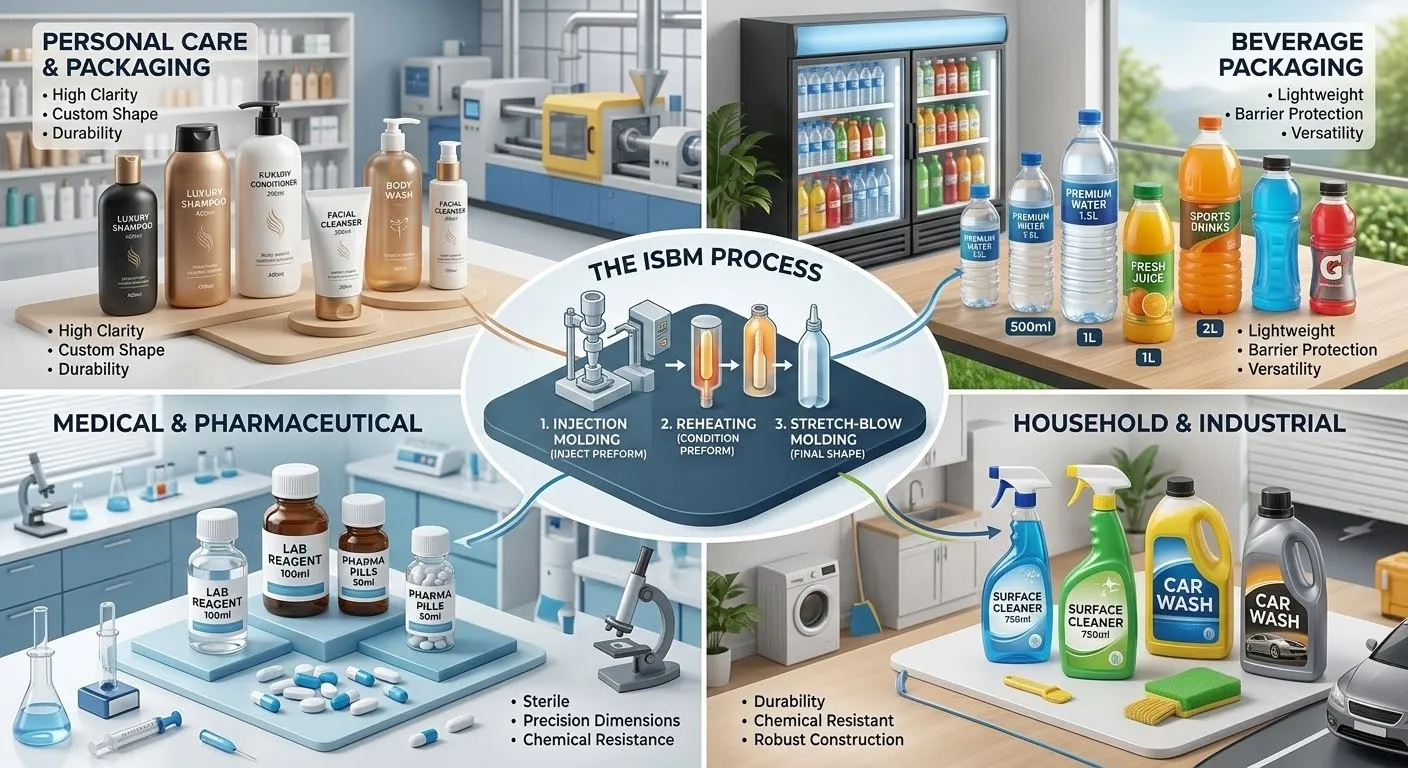
When massive multinational beverage corporations and hyper scale retailers make the strategic decision to transition their flagship product lines entirely to compostable PLA, they require astronomical, factory shattering production throughput. To satisfy this insatiable demand for green capacity, the output velocity of standard single row equipment rapidly hits a hard physical ceiling. Ever-Power decisively shattered this bioplastic mass production bottleneck by introducing our revolutionary Double-Row machinery matrix.
Deploying our industrial capacity monsters, such as the EP-HGY250-V4-B डबल-रो 4-स्टेशन इंजेक्शन स्ट्रेच ब्लो मोल्डिंग मशीन or the highly dominant EP-HGY200-V4-B 4-स्टेशन इंजेक्शन स्ट्रेच ब्लो मोल्डिंग मशीन, empowers a facility to simultaneously inject and stretch blow two parallel rows of PLA containers within a single mechanical cycle. However, maintaining the terrifyingly narrow PLA processing temperature across the massive network of a double row mold presents an abyssal thermodynamic challenge. To conquer this, we equip our double row platforms with phenomenally balanced, high end hot runner manifolds and highly granular, independent front and rear row temperature control arrays. This absolute closed loop thermal management guarantees that the PLA melt across dozens of cavities behaves with absolute physical uniformity during transfer and blowing, utterly eradicating the risk of batch rejections caused by localized temperature drifts during mass volume production.
Phase Eight: Agile Manufacturing and Minimalist Green Strategies
For emerging green startups aiming to disrupt the traditional packaging market, agility is paramount. They frequently require the capability to rapidly transition between producing various sizes of eco friendly PLA bottles on a single machine to satisfy highly fragmented niche markets. This business model dictates that the ISBM platform must possess extreme mold changeover flexibility and operational agility.
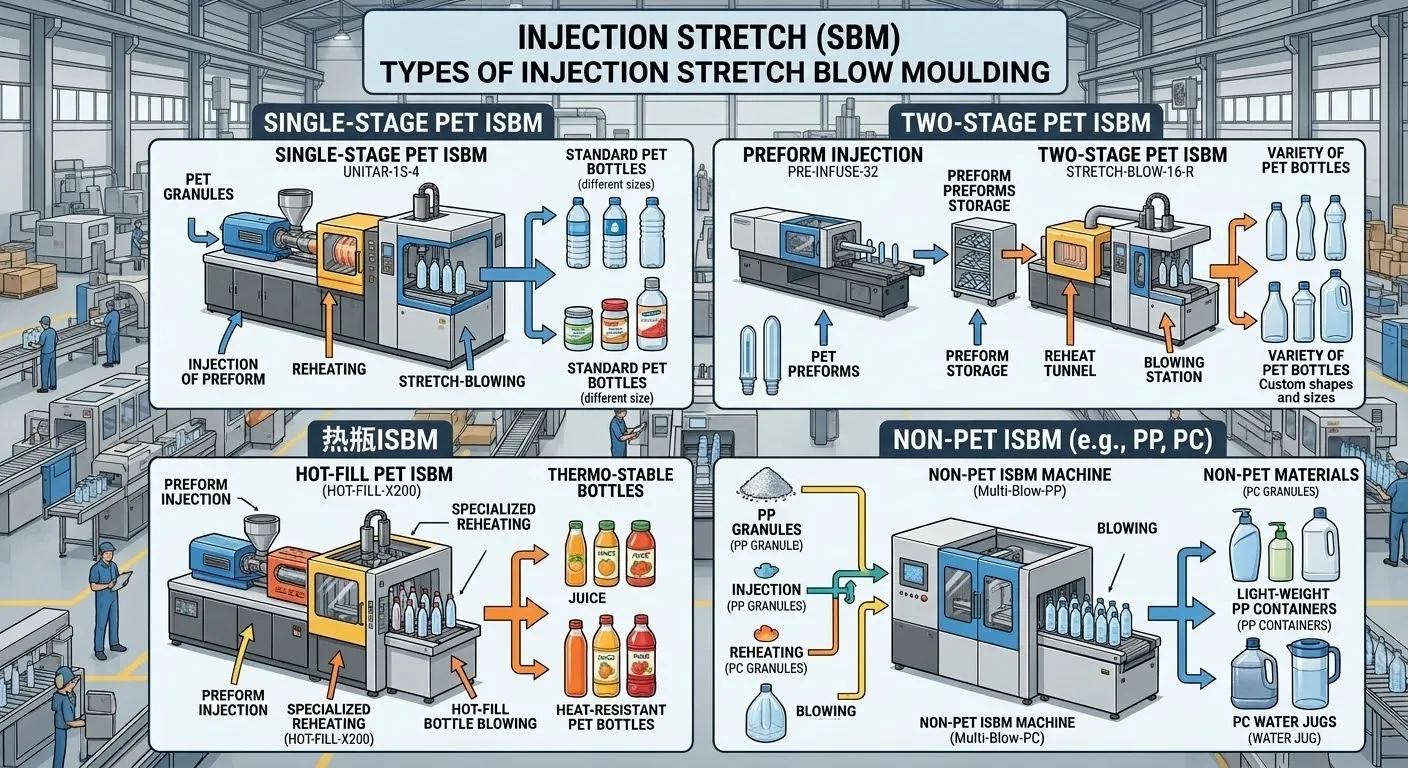
Ever-Power’s highly celebrated, multi functional foundational platforms, such as the ईपी-बीपीईटी-125वी4 4-स्टेशन इंजेक्शन स्ट्रेच ब्लो मोल्डिंग मशीन and the ultra compact ईपी-बीपीईटी-70वी4 4-स्टेशन इंजेक्शन स्ट्रेच ब्लो मोल्डिंग मशीन, feature exceptionally open mold installation envelopes and intelligent digital recipe storage systems, drastically compressing the machine downtime associated with complex tooling changeovers.
Furthermore, if your specific product line consists exclusively of geometrically basic, highly symmetrical cylindrical PLA bottles an aggressive blue ocean strategy prioritizing ultimate cost efficiency we offer the minimalist masterpiece of engineering: the ईपी-बीपीईटी-94वी3 3-स्टेशन इंजेक्शन स्ट्रेच ब्लो मोल्डिंग मशीन. By audaciously eliminating the thermal conditioning station entirely, this three station architecture not only massively lowers the initial capital procurement barrier but also, through impeccably designed injection cooling water channels, perfectly preserves the exact required injection latent heat. This minimalist design drastically accelerates the PLA molding cycle and minimizes the duration the polymer spends at dangerous high temperatures, yielding premium, basic eco friendly containers with unimaginable industrial efficiency.
Conclusion: Command Thermodynamics, Dominate the Green Future
Profoundly exploring Can ISBM process bioplastics like PLA is absolutely not a mere academic discussion; it is the ultimate strategic blueprint dictating how a packaging corporation will seize supreme industrial dominance during this irreversible global transition toward eco friendly manufacturing. PLA a notoriously fragile, hyper sensitive, and incredibly difficult to tame biopolymer serves as the ultimate crucible testing whether an equipment manufacturer truly possesses deep rheological expertise and cutting edge thermodynamic control capabilities. Attempting to process Polylactic Acid on cheap, technologically obsolete machinery with crude control tolerances is an absolute guarantee of a manufacturing nightmare plagued by endless scrap generation and catastrophic downtime.
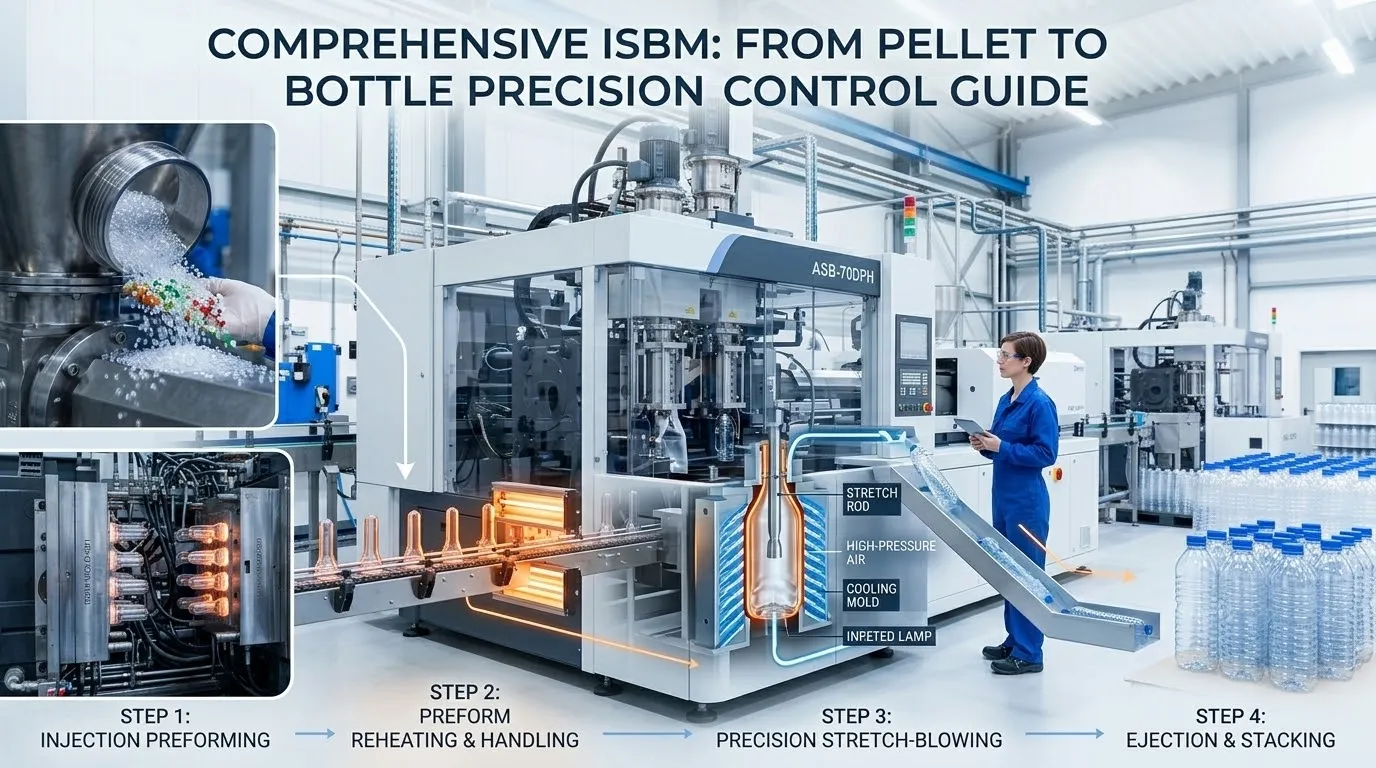
As the universally recognized ISBM manufacturing titan projecting absolute engineering authority from Brazil across the entire global green supply chain, Ever-Power fundamentally refuses to compromise with physical limitations. We relentlessly inject extreme low shear plasticization technology, hyper precise servo electromagnetic kinematics, advanced independent thermal conditioning architecture, and absolute zero dead zone custom tooling directly into the core of every single mechanical juggernaut we produce. When you deploy the Ever-Power equipment ecosystem onto your factory floor, you acquire far more than a simple production line; you acquire an unstoppable super system engineered to completely ignore the volatile temperaments of PLA material, relentlessly printing high margin, green packaging profits with a one hundred percent pristine yield rate.
Reconstruct Your Sustainable Manufacturing Empire Today
Do not allow technologically obsolete control systems, catastrophic thermal degradation, and skyrocketing rejection rates to block your highly lucrative expansion into the premium bioplastic packaging sector. Form an ironclad alliance with the globally acknowledged leader in precision engineering and sustainable manufacturing. Deploy the Ever-Power ISBM machinery matrix equipped with absolute physical consistency and extreme thermodynamic accuracy directly into your cleanroom facilities, and initiate a glorious new era of zero defect, hyper accelerated green manufacturing.
Are you fully prepared to execute a profoundly deep, industrial grade thermodynamic audit of your current bioplastic production strategy? Immediately access our global corporate engineering headquarters at https://isbmmolding.com/, or directly intercept our elite macromolecular material engineering team right now at [email protected] to secure your bespoke, ultimate PLA equipment deployment and process strategy blueprint.