How to reduce scrap rate in the ISBM process? The Ultimate Engineering Guide to Zero-Defect Manufacturing
In the fiercely competitive, high volume landscape of global plastic packaging, true industrial supremacy is not merely defined by the speed at which a machine can produce containers. It is defined by the efficiency with which a facility can convert raw polymer resin into sellable, flawless inventory. The silent assassin of corporate profitability is the scrap rate. Every single defective bottle represents wasted electrical energy, consumed machine cycle time, squandered manual labor, and degraded raw materials. When multinational fast moving consumer goods brands and elite packaging entrepreneurs consult with the advanced engineering division at Poder eterno, an authoritative and globally recognized Brazilian ISBM manufacturer, the dialogue immediately centers on thermodynamic stability and mechanical precision. The most vital operational question we address to secure their Return on Investment is: How to reduce scrap rate in the ISBM process?
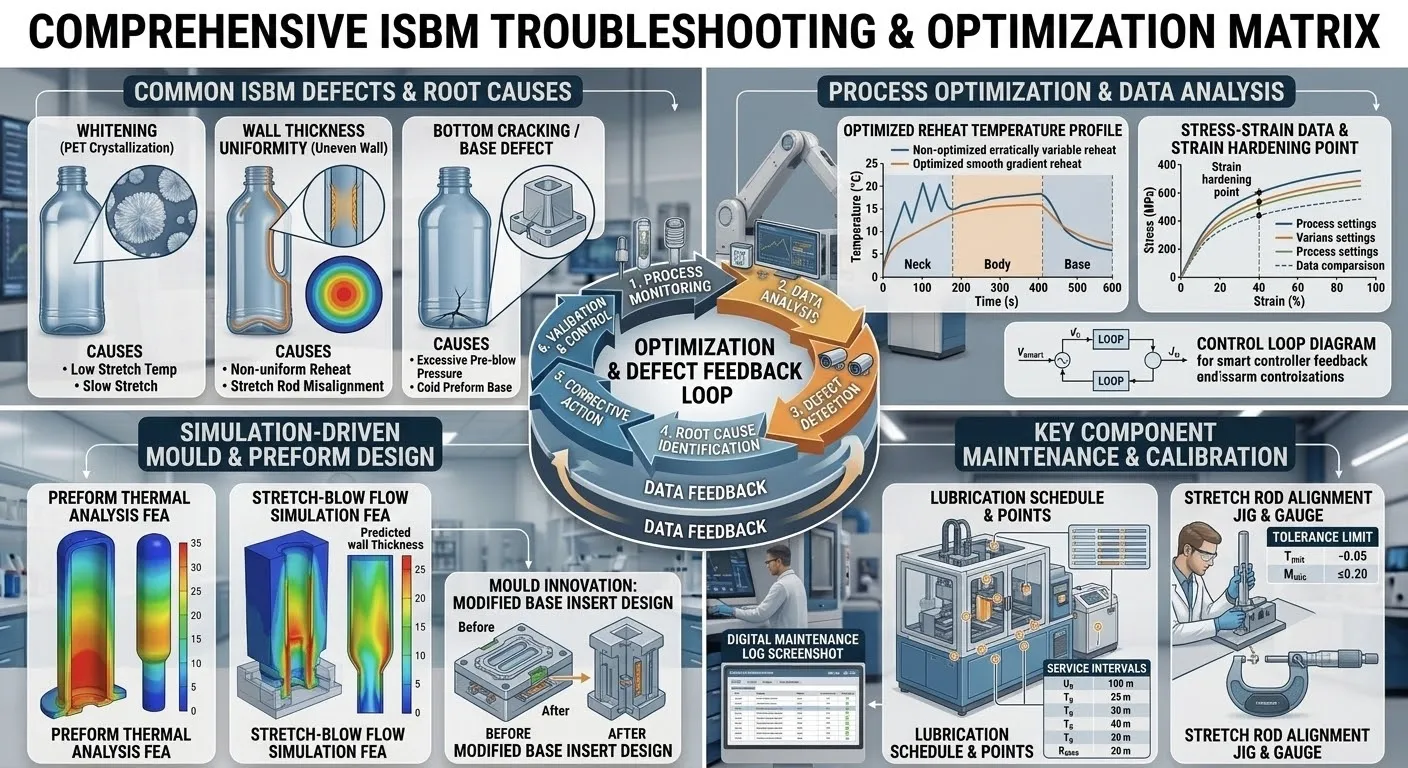
Achieving a near zero scrap rate in Injection Stretch Blow Molding is an immensely complex engineering endeavor. The ISBM process is a highly volatile symphony of extreme thermodynamic heat, immense hydraulic or servo electric clamping forces, and high pressure pneumatic expansion. A microscopic deviation in any single parameter will trigger a cascading failure, resulting in containers plagued by visual haze, severe pearlescence, uneven wall thickness, or catastrophic structural ruptures. In this exhaustively detailed, highly technical manufacturing guide, we will completely deconstruct the root causes of ISBM defects. We will analyze the physics of polymer degradation, dissect the critical importance of mechanical alignment, and demonstrate how deploying the elite Ever-Power machinery portfolio guarantees that your facility operates with absolute, uncompromising perfection.
Phase One: Mastering Polymer Preparation and Hydration Defense
The battle against high scrap rates begins long before the plastic ever enters the injection barrel. The vast majority of injection stretch blow molding applications utilize Polyethylene Terephthalate (PET). This specific polymer is profoundly hygroscopic, meaning it actively pulls moisture molecules from the ambient factory air deep into its crystalline structure. If a facility attempts to process wet PET resin, the entire manufacturing cycle is instantly doomed to failure.
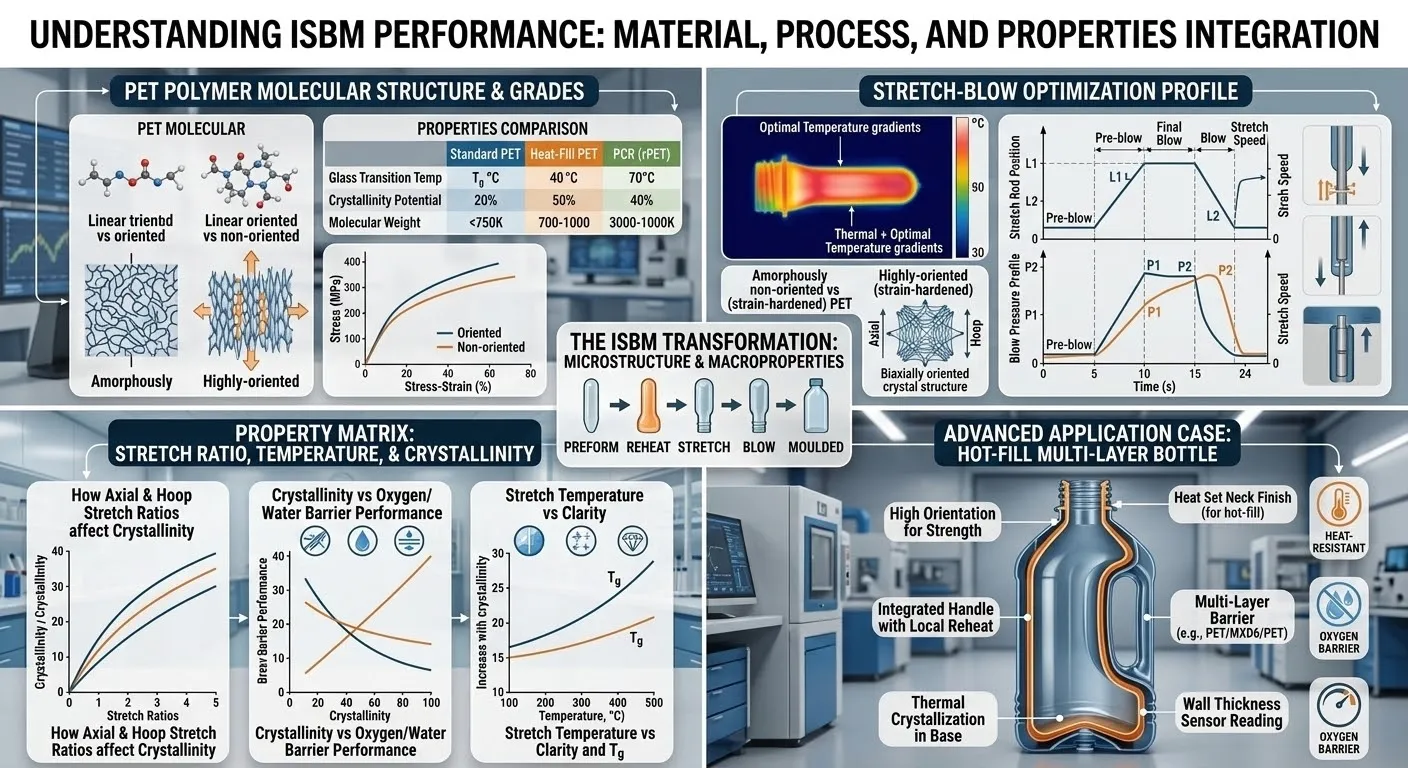
When moisture laden PET is subjected to the extreme heat of the injection barrel, a devastating chemical reaction called hydrolysis occurs. Hydrolysis literally severs the long polymer molecular chains, drastically lowering the Intrinsic Viscosity of the melt. This degraded plastic flows erratically, preventing the injection mold from filling symmetrically. Furthermore, the resulting preforms lose their capacity for proper strain induced crystallization, inevitably blowing into brittle, hazy containers that will shatter under standard top load testing. To eliminate this primary source of scrap, your facility must deploy advanced desiccant dehumidifying dryers, ensuring the resin is baked at high temperatures in an environment with a severe negative dew point for several hours before processing.
Phase Two: Eradicating Injection Defects
The injection station is the foundational epicenter of the ISBM process. If the preform is flawed, the final bottle will be fundamentally defective. Understanding how to reduce scrap rate in the ISBM process requires a masterful command over injection thermodynamics and melt flow control.
Conquering Short Shots and Flash
A short shot occurs when the molten polymer fails to completely fill the injection cavity, resulting in a preform with a missing or malformed neck thread. Conversely, flash occurs when excessive pressure forces the plastic to bleed out between the parting lines of the mold plates. Both defects render the preform entirely useless.
These errors are primarily caused by erratic injection pressure or an imbalanced hot runner manifold. To solve this, you must rely on machinery with supreme injection stability. For massive, thick walled preforms destined for bulk edible oil or heavy water cooler jugs, Ever-Power engineered the colossal Máquina de moldeo por inyección, estirado y soplado de 4 estaciones EP-HGY650-V4. This heavy industrial platform provides the immense hydraulic injection tonnage required to push dense polymer masses without experiencing core shift or pressure drop offs.
The Threat of Acetaldehyde and Thermal Degradation
If the temperature of the injection barrel is set too high, or if the screw rotation speed generates excessive shear heat, the PET will begin to thermally degrade. This degradation releases high levels of Acetaldehyde, which alters the taste of packaged mineral water, and it turns the preform an unacceptable yellowish hue. Operators must meticulously step down the thermal profile of the barrel zones until the exact optimal melting point is achieved. Utilizing machines with highly precise, closed loop temperature controllers is mandatory to prevent this invisible source of scrap.
Phase Three: Thermodynamic Profiling and the Conditioning Station
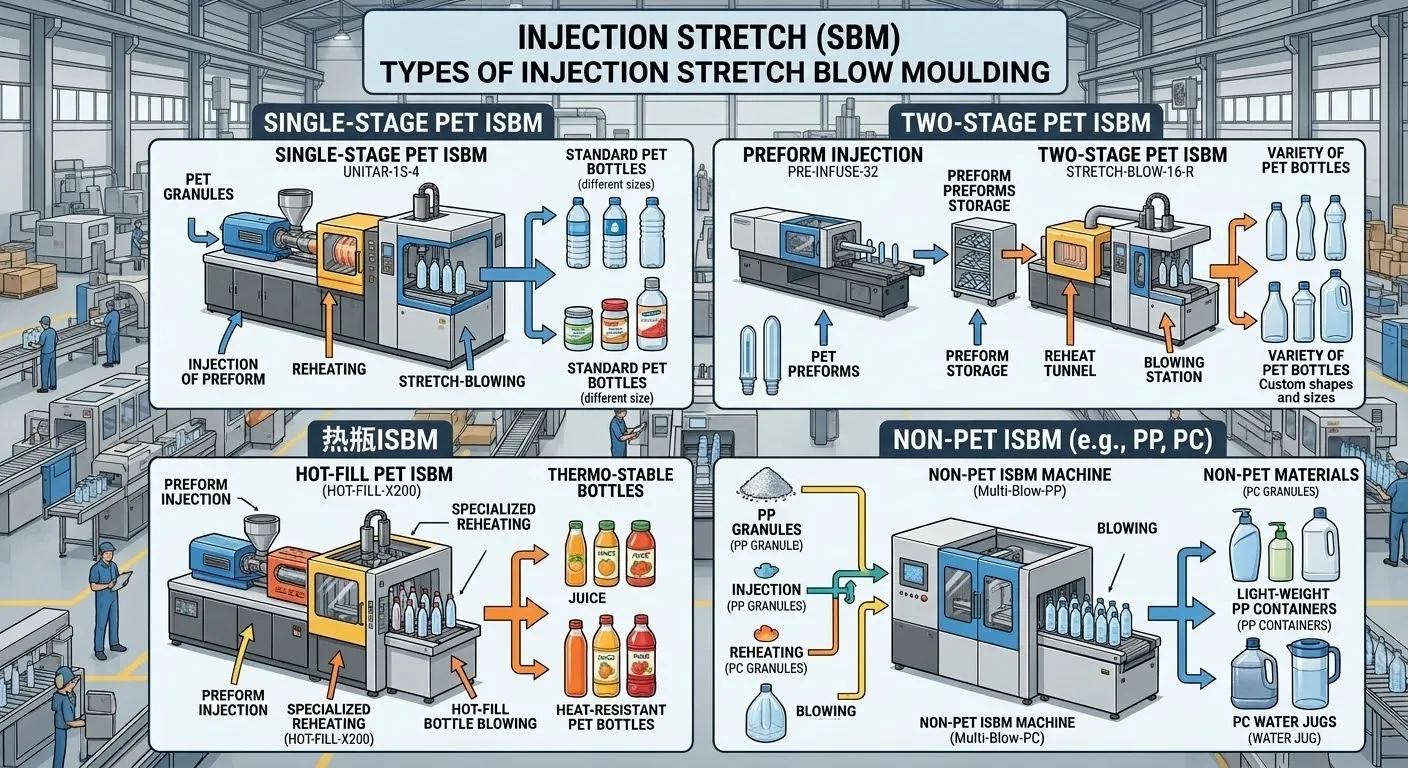
The single stage ISBM process is vastly superior to two stage processes because it actively utilizes the latent heat remaining in the preform immediately after injection. However, managing this latent heat is the most intricate thermodynamic challenge in the entire factory. If the temperature distribution is incorrect, the blow phase will generate catastrophic visual defects.
Resolving Stress Whitening (Pearlescence)
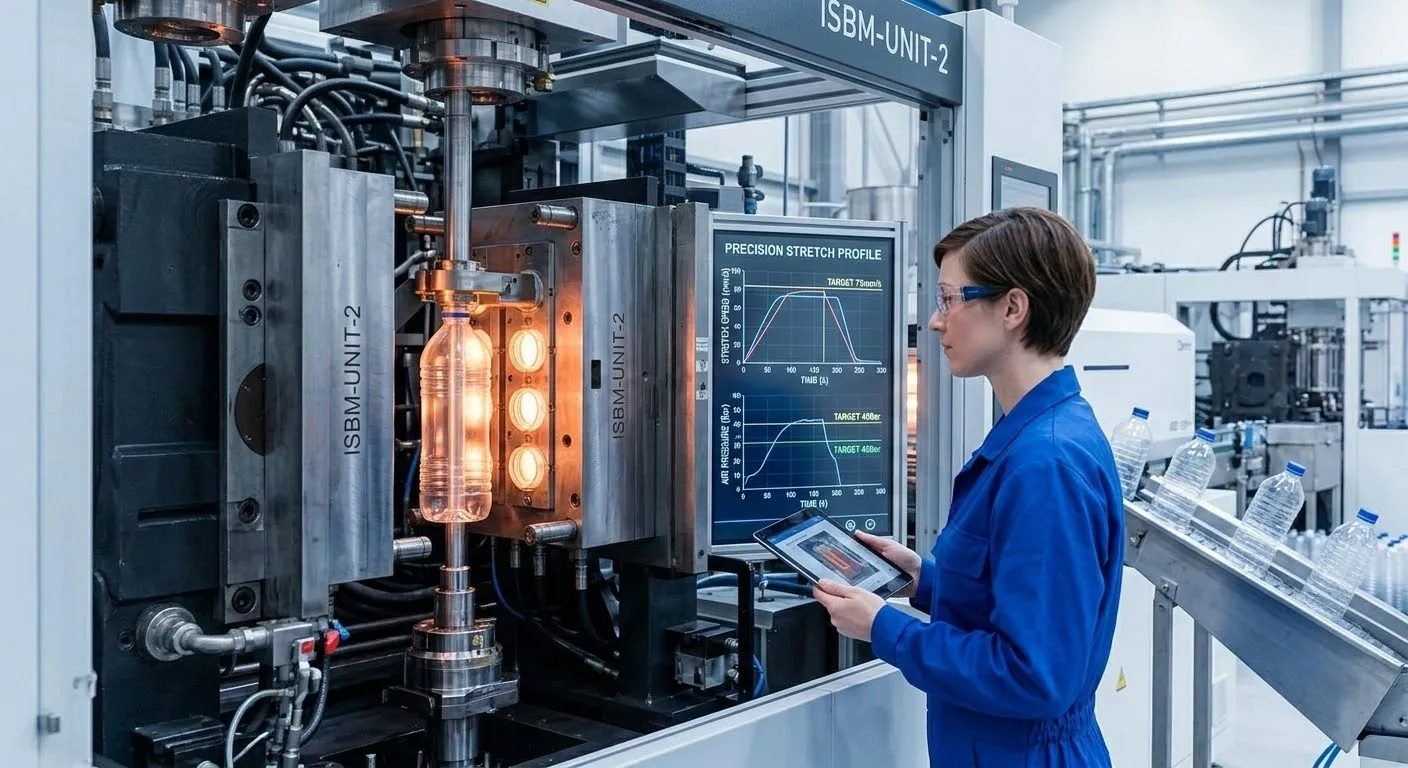
If a bottle emerges with a rough, milky, pearlescent haze, the plastic was stretched while it was too cold. The massive physical force of the stretch rod literally tore the cold polymer matrix apart on a microscopic level. To eliminate this scrap, technicians must increase the temperature of the fluid circulating through the conditioning pots, or decrease the injection cooling timer to allow more latent heat to survive the transfer phase. For complex cosmetic jars that require immaculate thermal balancing, highly agile platforms like the Máquina de moldeo por inyección, estirado y soplado de 4 estaciones EP-BPET-125V4 and the ultra compact Máquina de moldeo por inyección, estirado y soplado de 4 estaciones EP-BPET-70V4 provide the ultimate, granular control over specific preform heating zones.
Conquering Thermal Crystallization (Heat Haze)
Conversely, if the bottle exhibits a smooth, foggy appearance particularly near the base gate the plastic was too hot. Excessive thermal energy allows the polymer chains to fold into large spherulitic crystals that scatter light. To resolve this, operators must aggressively drop the conditioning temperatures or increase the flow of chilled water through the injection mold to extract more heat. For highly streamlined operations producing standard cylindrical containers, the Máquina de moldeo por inyección, estirado y soplado de 3 estaciones EP-BPET-94V3 eliminates the conditioning station entirely. By masterfully engineering the injection tooling to retain the exact required amount of latent heat, this three station machine drastically reduces the complexity of thermal troubleshooting and minimizes the potential for heat related scrap.
Extreme Asymmetry and the Six-Station Solution
Industrial designers frequently demand radically asymmetrical bottle shapes, such as off center handle containers or severely flattened trigger sprays. Forcing these extreme geometries on standard machines inevitably results in blown out corners and unacceptably thin walls, leading to massive scrap rates. To solve the impossible, Ever-Power created the Máquina de moldeo por inyección, estirado y soplado de 6 estaciones EP-HGYS280-V6. Featuring six independent workstations, this architectural marvel allows engineers to execute multi stage, highly localized heat profiling. By selectively softening the specific quadrant of the preform that must stretch the furthest, this machine guarantees flawless wall distribution on designs that competing machines simply cannot produce without generating endless scrap.
Phase Four: Mechanical Alignment and Servo-Electric Supremacy
Even if your thermodynamic profiling is absolute perfection, minor mechanical deviations will instantly destroy the final product. The stretch blow molding phase relies on the absolute dead center descent of the mechanical stretch rod. If the rod is slightly bent, or if the pneumatic cylinders are misaligned, the rod will strike the inside of the preform off center. This pushes the heavy base gate of the preform to the side of the mold, guaranteeing that one wall of the bottle will be dangerously thin and structurally compromised.
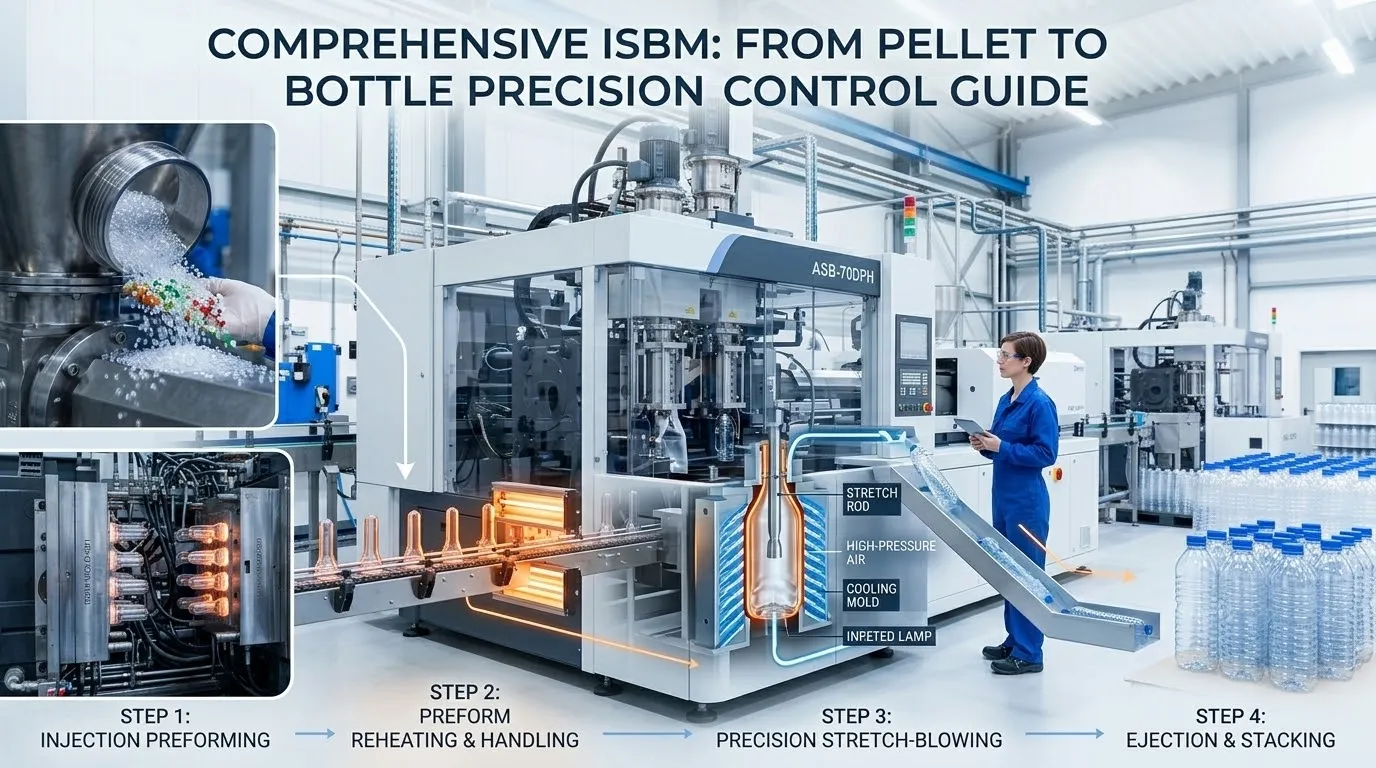
Traditional hydraulic machines are susceptible to microscopic mechanical drifting as the hydraulic oil temperature fluctuates throughout a long production shift. This drifting causes inconsistent stretching and rising scrap rates. To completely eradicate this mechanical instability, Ever-Power champions fully electric, servo driven automation. Our elite platforms, including the Máquina de moldeo por inyección, estirado y soplado de 4 estaciones con servomotor EP-HGY150-V4-EV y la altamente ágil Máquina de moldeo por inyección y soplado con servomotor EP-HGY50-V3-EV, utilize premium electromagnetic servo motors. These drives deliver absolute, unyielding micro millimeter positional accuracy. By completely eliminating hydraulic drifting, the stretch rods descend perfectly on center every single cycle, ensuring flawless wall thickness distribution and crushing scrap rates down to absolute zero.
Phase Five: Precision Pneumatics and Blow Timing
The pneumatic system controls the violent rush of compressed air that ultimately forms the bottle against the mold cavity. Mastering the timing of this air is critical. The process involves a low pressure pre blow followed by a high pressure main blow.
If the pre blow pressure is too high, or if the valve opens a millisecond too early, the hot plastic will balloon outward aggressively before the mechanical stretch rod can pin it to the base insert. This uncontrolled expansion results in heavy, thick shoulders and dangerously thin, weak bases. Conversely, if the main blow valve is sluggish due to poor maintenance or internal moisture damage, the plastic will stretch haphazardly before the high pressure forces it against the chilled walls, causing wild fluctuations in volumetric capacity and severe optical distortions. To maintain perfection across standard industrial production runs, highly reliable pneumatic circuitry is mandatory. Ever-Power equips our foundational single row platforms, such as the Máquina de moldeo por inyección, estirado y soplado de 4 estaciones EP-HGY250-V4, the exceptionally versatile Máquina de moldeo por inyección, estirado y soplado de 4 estaciones EP-HGY200-V4, and the globally trusted Máquina de moldeo por inyección, estirado y soplado de 4 estaciones EP-HGY150-V4, with premium, lightning fast proportional air valves. This guarantees crisp, instantaneous pneumatic delivery, ensuring identical bottle formation cycle after cycle.
High Volume Economics: The Double-Row Stability Advantage
For multinational beverage conglomerates, scrap rate optimization must be balanced with extreme high speed output. Pushing a standard single row machine to its absolute physical speed limit often induces violent kinetic vibrations, which directly increases the probability of mechanical misalignment and subsequent scrap generation.
Ever-Power solved this paradox by perfecting the double row tooling architecture. Platforms such as the Máquina de moldeo por inyección, estirado y soplado de doble hilera y 4 estaciones EP-HGY250-V4-B y el Máquina de moldeo por inyección, estirado y soplado de 4 estaciones EP-HGY200-V4-B effectively double the cavitation of the mold. Because these machines produce twice as many bottles per single mechanical cycle, factory managers can slightly decelerate the kinetic transfer speeds of the rotary table while still achieving astronomically higher hourly output. By slowing down the physical movements, the machine operates with vastly superior mechanical stability, fundamentally eliminating vibration induced alignment errors and safeguarding your massive production runs from unexpected scrap spikes.
The Foundation of Perfection: Proprietary Tooling Integration
The ultimate defense against scrap generation is ensuring absolute, flawless integration between the ISBM machine and the mold. Utilizing cheap, third party tooling on a high performance machine is the leading cause of perpetual production defects across the global industry. Generic mold makers lack the intimate engineering knowledge of the machine’s thermal transfer capabilities and mechanical kinematics.
To guarantee absolute optical and structural perfection from the very first day of installation, Ever-Power designs, machines, and relentlessly tests all Moldes de inyección-soplado y estirado personalizados en un solo paso strictly in house. Our thermodynamic engineers utilize advanced fluid dynamic computational software to design heavily optimized hot runner manifolds that minimize shear heat degradation. We engineer highly aggressive, conformal water cooling channels within the injection cavities to ensure rapid, uniform quenching, preventing thermal crystallization before the plastic even reaches the blow station. This turnkey, vertically integrated approach completely eliminates the variables that lead to scrap generation.
Architect Your Zero-Defect Manufacturing Strategy
Understanding how to reduce scrap rate in the ISBM process is the ultimate testament to a manufacturing facility’s operational maturity. It requires a profound, highly analytical understanding of polymer thermodynamics, rigorous mechanical auditing, and masterful pneumatic calibration. Attempting to solve complex optical and structural defects through trial and error guesswork on unverified, inferior machinery will bankrupt a production facility.
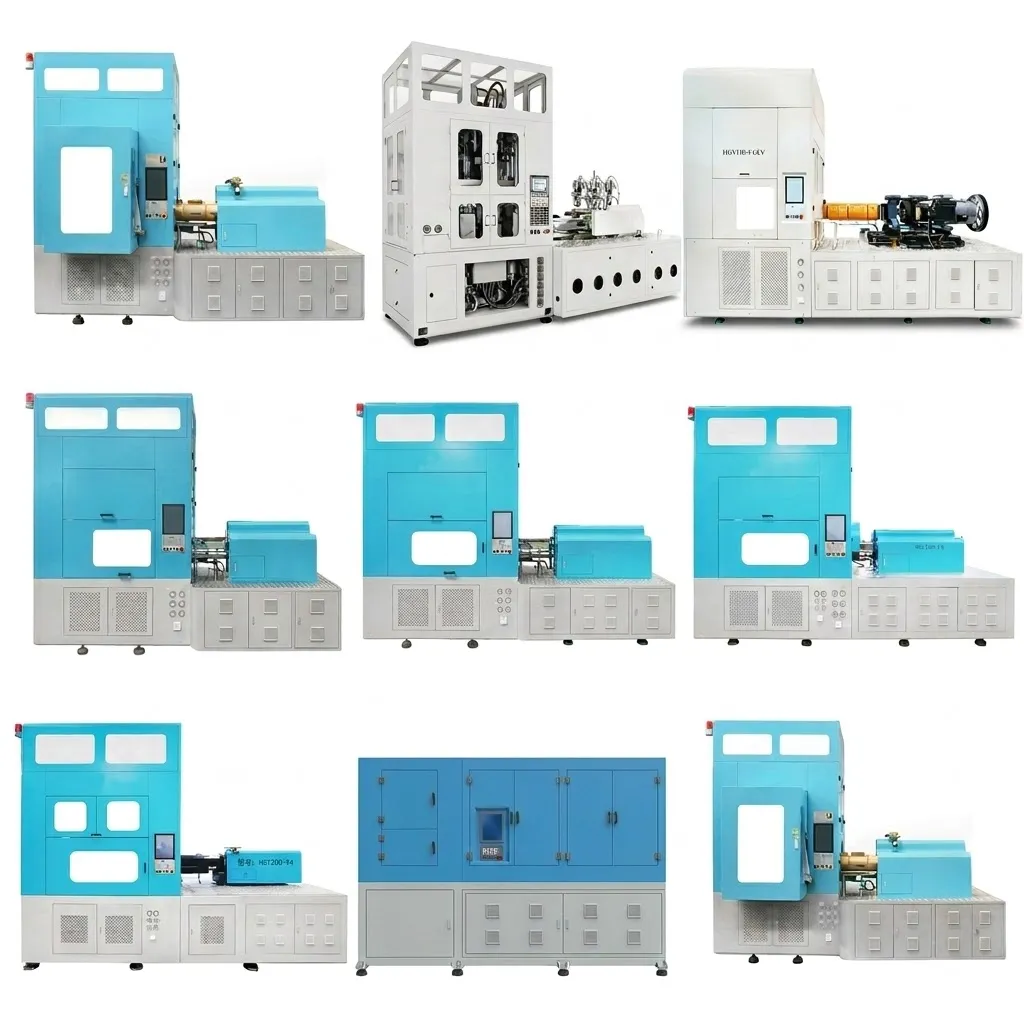
As the paramount ISBM manufacturing authority physically headquartered in Brazil and dominating the global landscape, Ever-Power provides the absolute solution for industrial perfection. We do not merely assemble steel and circuits; we engineer comprehensive, deeply integrated manufacturing ecosystems. By combining our elite servo electric technologies, our masterful manipulation of thermodynamic latent heat, and our proprietary conformal tooling, we empower your supply chain to execute massive volume production with absolute zero defect precision.
Eradicate Production Defects and Maximize Corporate Profitability
Do not allow unexplainable haze, catastrophic stress whitening, and erratic wall thickness to destroy your brand equity and artificially inflate your raw material expenditures. Partner with the global engineering leader to deploy the most technologically advanced, highly stable Injection Stretch Blow Molding infrastructure available.
Are you prepared to initiate a comprehensive technical audit of your facility and deploy a zero defect manufacturing strategy? Visit our global corporate engineering headquarters at https://isbmmolding.com/, or immediately contact our elite procurement consulting team directly at [email protected] para asegurar su futuro industrial.