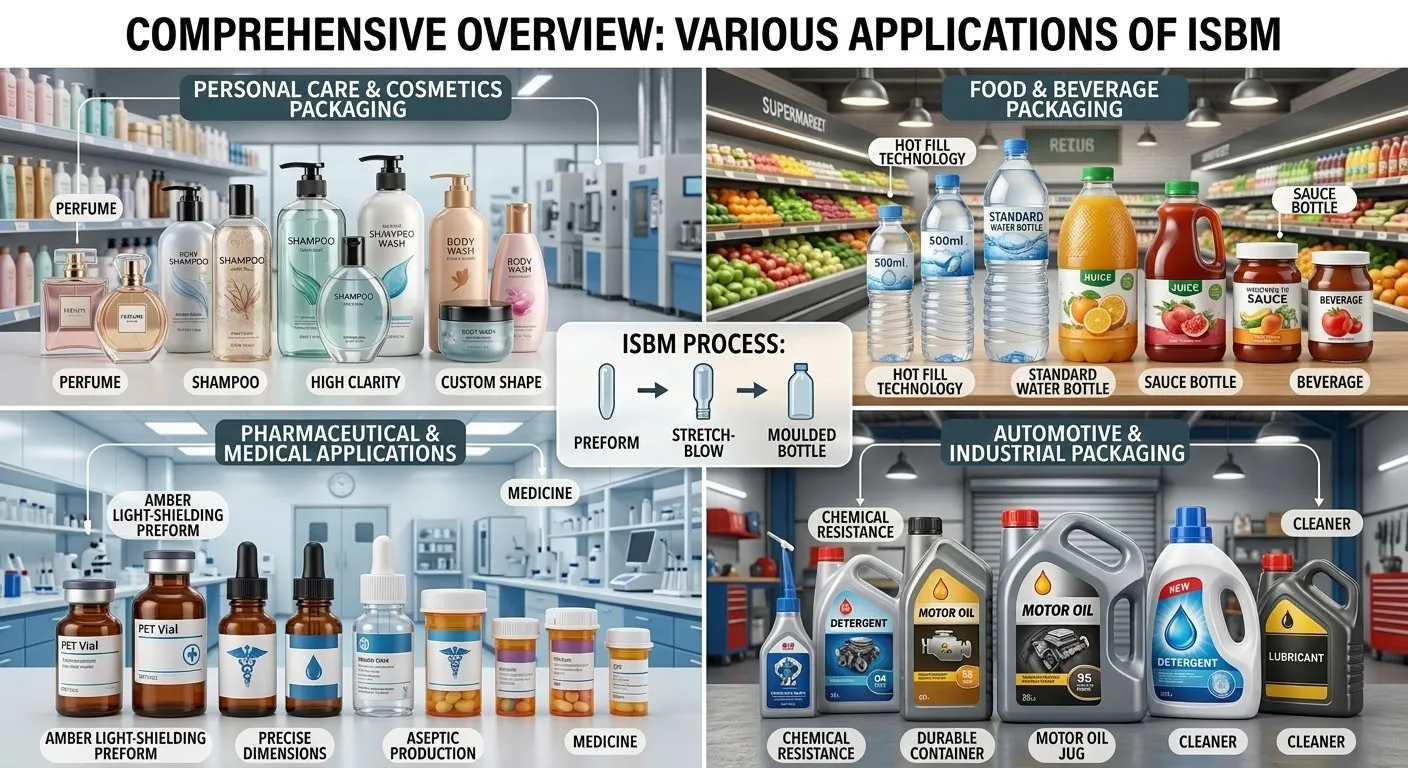
In the highly advanced sector of modern plastic packaging manufacturing, the sophistication of your machinery is only half of the equation. The raw polymer resin you select dictates the fundamental capabilities, structural integrity, and commercial viability of your final container. Whether you are launching a luxury cosmetic line, a high-volume carbonated beverage, or a critical pharmaceutical product, the foundational question remains the same. As a highly authoritative Brazilian ISBM manufacturer, the engineering team at Ever-Power is frequently approached by global supply chain directors asking: Which materials are typically used in the ISBM process?
Selecting the correct polymer is far more complex than simply reading a technical specification sheet. Different plastic materials exhibit radically different rheological properties and thermodynamic behaviors when subjected to the intense heating, mechanical stretching, and high-pressure blowing stages of Injection Stretch Blow Molding. The resin you choose will absolutely dictate the optical transparency, the gas barrier performance, the thermal resistance, and the ultimate production cost of your packaging. In this exhaustive, highly technical engineering guide, we will analyze the core materials dominating the stretch blow molding landscape, empowering you to make strategic, data-driven decisions for your next major packaging project.
The Undisputed Industry Standard: Polyethylene Terephthalate (PET)
When discussing which materials are typically used in the ISBM process, Polyethylene Terephthalate, universally known as PET, is the absolute sovereign. It is no exaggeration to state that the entire modern stretch blow molding industry was built upon the unique molecular characteristics of this specific polyester resin. Its ability to undergo extreme physical transformation during the biaxial orientation phase makes it the gold standard for global beverage, personal care, and medical packaging.
The Core Advantages of Processing PET:
- Exceptional Optical Clarity and Gloss
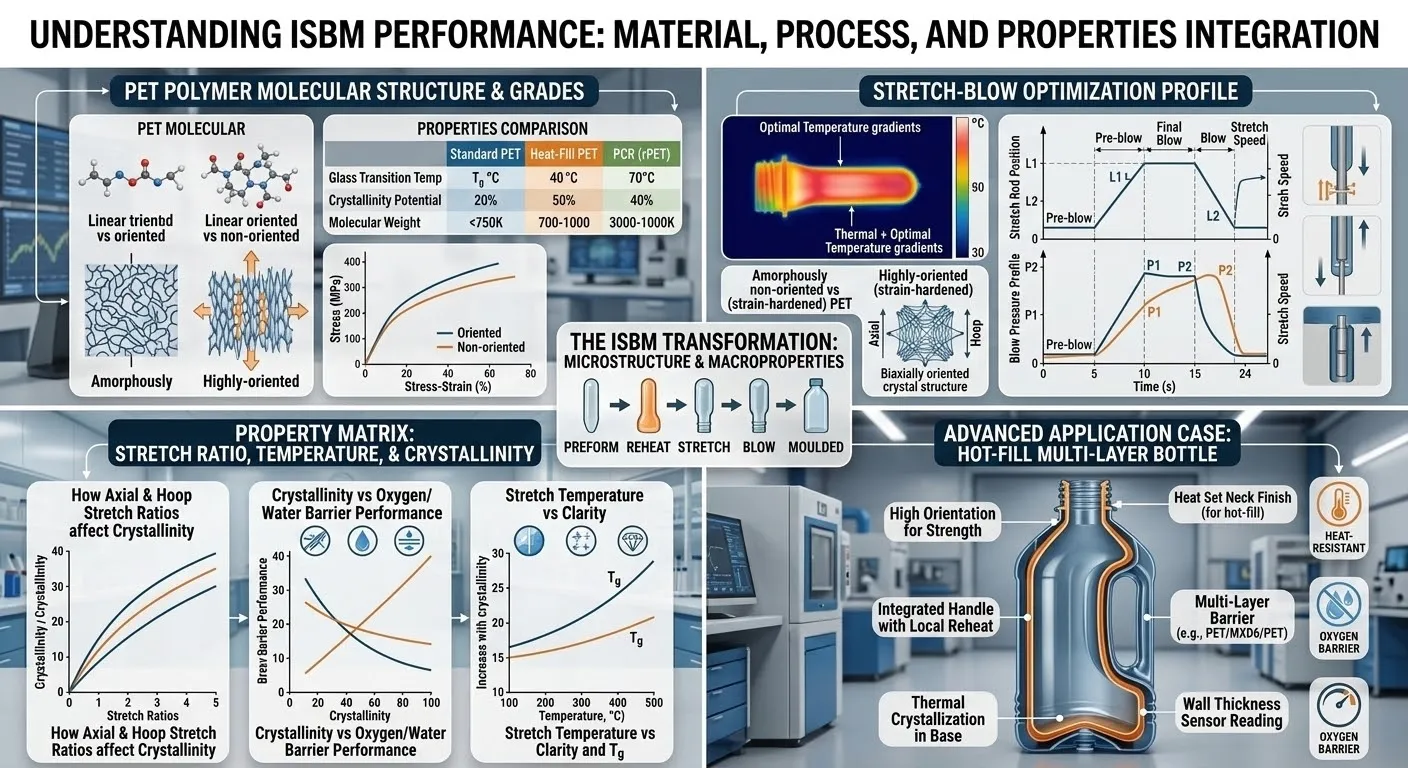
Unoriented PET cools into an amorphous, highly transparent state. When reheated to its precise glass transition temperature and stretched bidirectionally within an ISBM machine, the polymer chains undergo strain-induced crystallization. This microscopic alignment drastically reduces light refraction, granting the final container a brilliant, glass-like clarity that is essential for premium retail shelf appeal. - Massive Tensile Strength and Lightweighting Potential
The biaxial orientation weaves the molecules into a tight, interlocking matrix. This exponentially increases the drop-impact resistance and top-load strength of the bottle. Because the material becomes so strong, packaging engineers can aggressively reduce the wall thickness of the container. This practice, known as lightweighting, saves thousands of tons of raw material costs while maintaining total structural integrity. - Superior Gas Barrier Performance
The densely packed molecular structure forms a formidable physical barrier against gas permeation. This prevents the escape of carbon dioxide from sparkling beverages and completely blocks ambient oxygen from entering and spoiling sensitive juices or edible oils, significantly extending the product shelf life.
The Engineering Challenges of Processing PET:
Despite its dominance, PET is highly unforgiving if not handled correctly. It is a profoundly hygroscopic material, meaning it rapidly absorbs moisture from the ambient atmosphere. Before entering the injection barrel, PET resin pellets must undergo aggressive desiccant drying to bring moisture levels below forty parts per million. If processed while wet, the intense heat and shear forces inside the injection screw will trigger a chemical reaction called hydrolysis. This literally breaks the polymer chains apart, destroying the intrinsic viscosity of the plastic and resulting in brittle bottles that will catastrophically shatter under pressure. At Ever-Power, our Brazilian manufacturing facilities utilize state-of-the-art closed-loop drying systems to guarantee absolute material perfection.
The High-Heat Specialist: Polypropylene (PP)
As consumer demands evolve, the limitations of standard PET become apparent, specifically regarding thermal resistance. This introduces the second major pillar in the ISBM material library: Polypropylene, commonly referred to as PP. Processing highly clarified PP via stretch blow molding is a remarkably advanced engineering feat that sets elite manufacturers apart from the competition.
Why Specify Polypropylene for ISBM Packaging?
The primary motivation for utilizing PP is its exceptional heat deflection temperature. Standard PET containers will warp, shrink, and deform if filled with liquids exceeding seventy degrees Celsius. Conversely, ISBM containers molded from PP can easily withstand hot-filling applications, making them mandatory for products like concentrated sauces, pasteurized fruit juices, or medical intravenous solutions that must be sterilized via high-pressure steam autoclaves. Additionally, PP has the lowest density of all commodity plastics, offering unique lightweighting economics, and it provides an inherently superior moisture vapor barrier compared to PET, preventing product dehydration.
Conquering the Narrow Processing Window of PP:
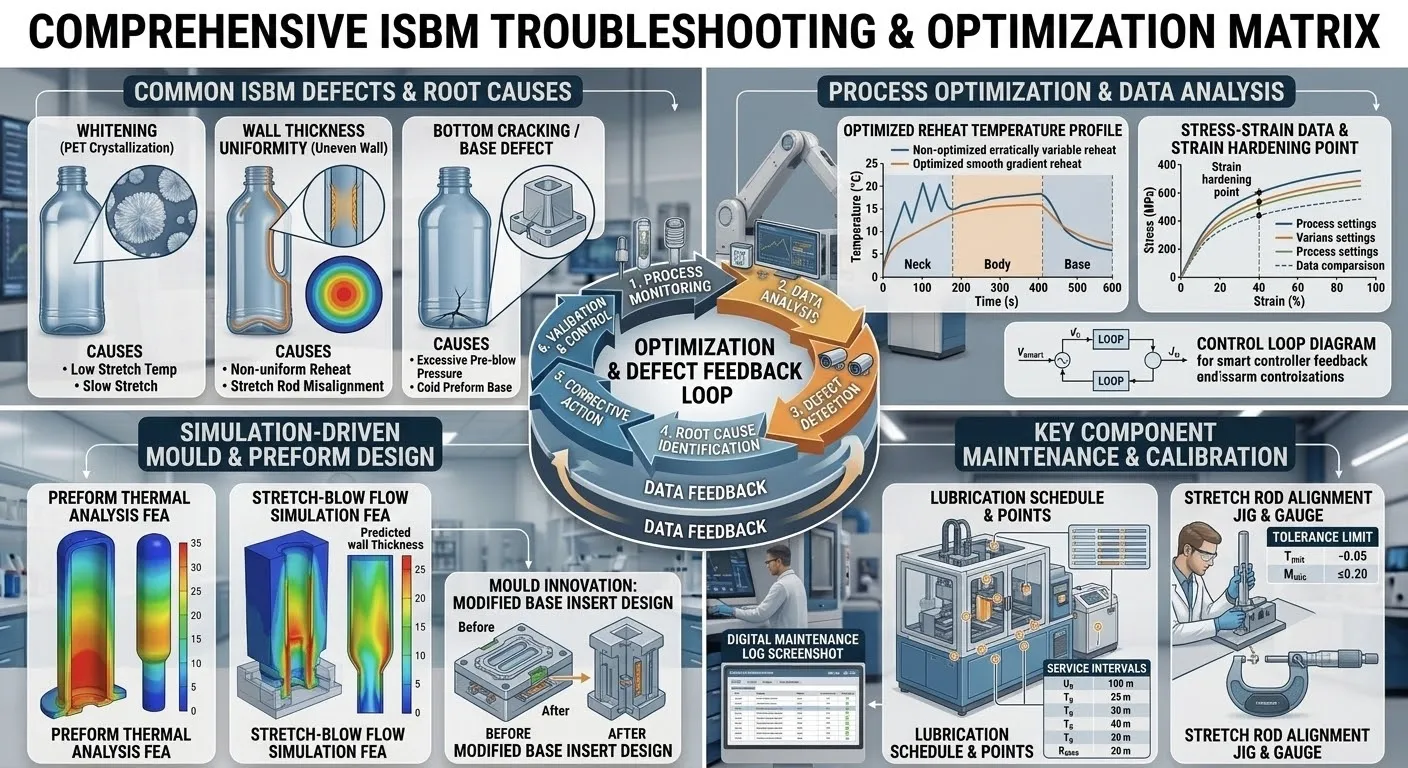
The thermodynamic reality of Polypropylene makes it notoriously difficult to stretch blow. The temperature window in which PP remains elastic enough to stretch, yet solid enough to retain biaxial orientation, is razor-thin. If the preform is merely one degree too cold, the stretch rod will mechanically tear the stiff polymer, resulting in severe stress whitening. If it is one degree too hot, the PP will melt entirely, failing to orient and resulting in a completely deformed container with catastrophic wall thickness variations.
As a leading Brazilian ISBM manufacturer, Ever-Power has mastered the complex thermal profiling required to process PP. We strongly leverage single-stage ISBM machinery for this material, as it allows us to precisely capture and manipulate the latent heat from the initial injection phase. By utilizing specialized nucleating agents and intensely calibrated thermal conditioning pots, we consistently produce PP containers that boast near-glass clarity alongside unmatched thermal resilience.
Heavy-Duty Engineering Resins: Polycarbonate (PC) and Tritan
When the application demands extreme ruggedness, repeated high-impact trauma, and long-term reusability over several years, standard commodity plastics fail. Markets including five-gallon water cooler jugs, premium reusable sports hydration bottles, baby feeding products, and commercial blender jars require the deployment of heavy-duty engineering resins within the ISBM process.
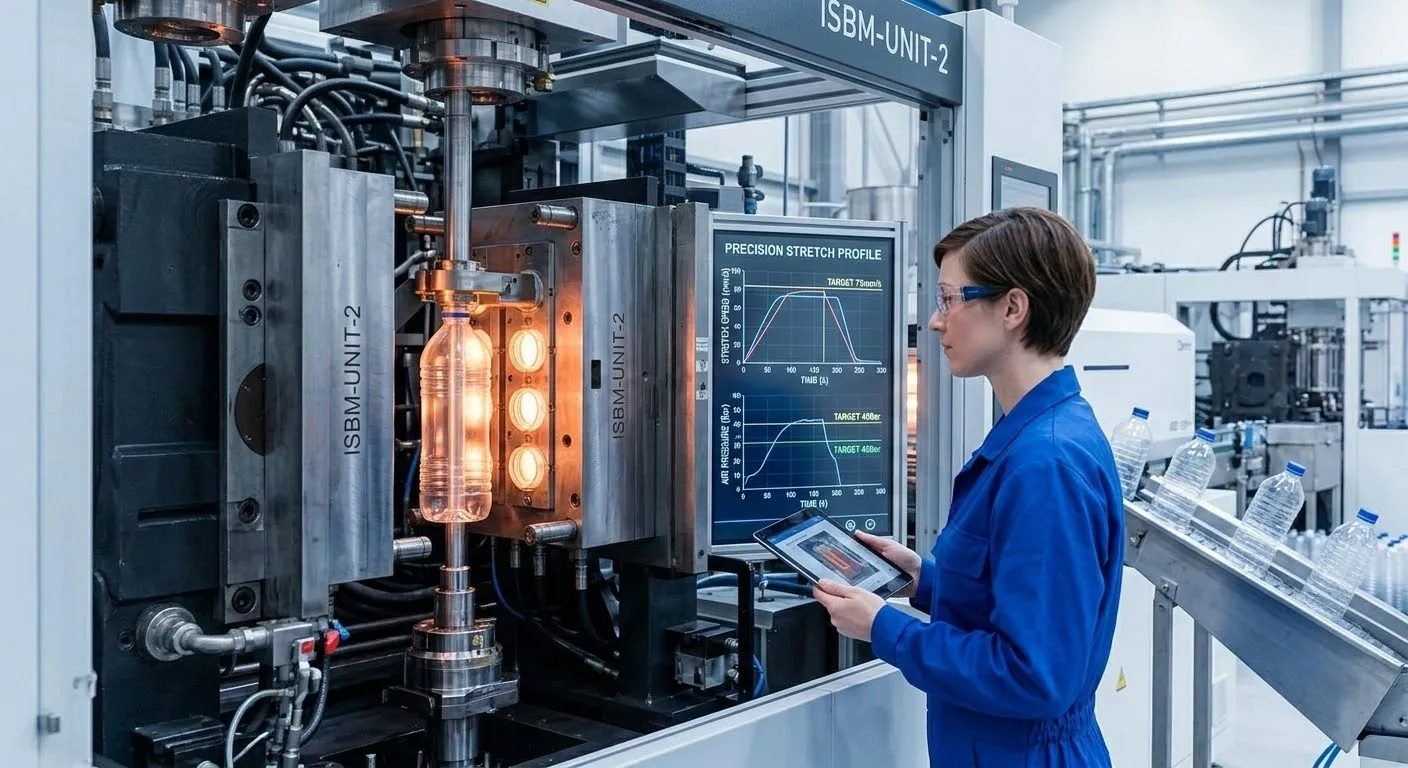
Polycarbonate (PC)
Historically, Polycarbonate was the undisputed champion of this category. It offers staggering impact strength; a PC container can literally be struck with heavy tools without shattering, while maintaining flawless optical transparency. Processing PC via ISBM requires heavy-duty machinery capable of generating immense injection pressures and sustaining exceptionally high melt temperatures, often exceeding three hundred degrees Celsius. However, due to stringent global regulations regarding the potential leaching of Bisphenol-A (BPA), the use of PC in food-contact and baby products has been heavily restricted.
The Modern Successor: Eastman Tritan Copolyester
To address the regulatory concerns surrounding Polycarbonate, materials science companies developed advanced alternatives like Eastman Tritan. Tritan perfectly replicates the extreme shatter resistance, dishwasher durability, and pristine clarity of PC, but it is one hundred percent free of BPA and all other endocrine-disrupting chemicals. Tritan requires similarly rigorous high-temperature processing parameters. Ever-Power operates highly specialized, heavily reinforced ISBM production lines dedicated specifically to these highly viscous engineering resins, ensuring we can deliver indestructible, regulatory-compliant packaging for premium global brands.
The Sustainability Mandate: Integrating Recycled PET (rPET)
No modern discussion regarding plastics used in injection stretch blow molding is complete without addressing environmental sustainability. Global legislative mandates and shifting consumer ethics are forcing massive corporate transitions toward the circular economy. Consequently, post-consumer recycled Polyethylene Terephthalate (rPET) has become a profoundly critical material in the ISBM portfolio.
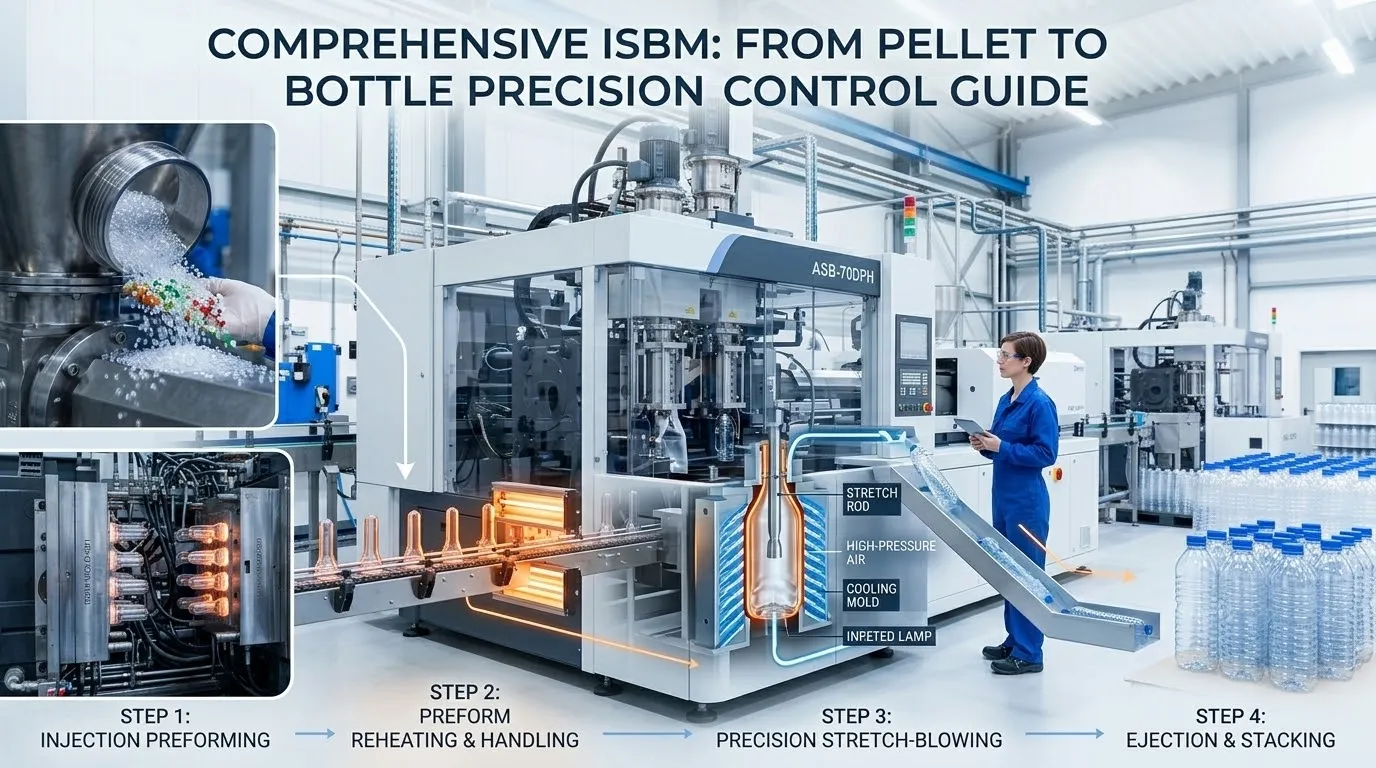
Introducing up to one hundred percent recycled flake into the highly sensitive ISBM environment presents a massive engineering challenge. Unlike pristine virgin resin, recycled materials inherently suffer from physical and thermal inconsistencies.
Overcoming the Rheological Chaos of rPET:
- Managing Intrinsic Viscosity Fluctuations
Different batches of rPET will possess varying molecular chain lengths, leading to erratic melt pressures during the injection phase. If uncorrected, this causes preforms to be underweight or incorrectly dimensioned. Ever-Power resolves this by deploying ultra-responsive, servo-driven injection controls that monitor cavity pressure in real-time, instantly compensating for viscosity drops to ensure perfect volumetric filling. - The Thermal Absorption Discrepancy
Because rPET often contains microscopic impurities or slight color variations, it absorbs infrared radiation at a completely different rate than virgin PET. In a reheat blow molding machine, this can cause the preforms to bake unevenly. Our engineering teams deploy highly sensitive thermal imaging sensors inside the conditioning ovens, dynamically adjusting the power of individual heating lamps to guarantee uniform heat distribution, regardless of the rPET blend percentage.
Pushing Boundaries: Multi-Layer Co-Injection and Barrier Technologies
While single-layer monolithic polymers satisfy the vast majority of packaging requirements, highly sensitive products such as craft beers, specialized medical reagents, or easily oxidized tomato ketchups require extreme barrier properties that a single layer of PET simply cannot provide. To solve this, advanced ISBM manufacturers utilize multi-layer co-injection technology.
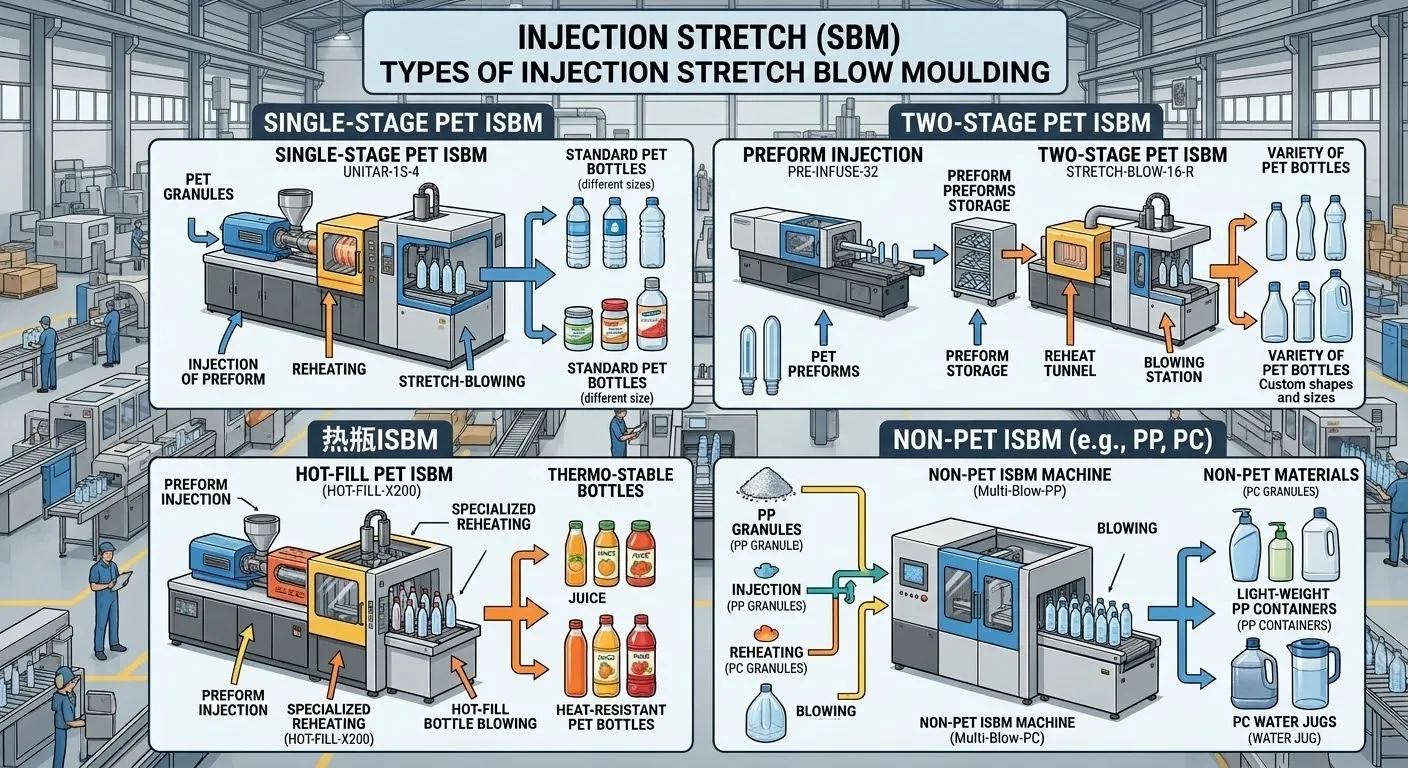
This highly complex process involves injecting three distinct layers of plastic into the mold cavity simultaneously. Typically, two thick outer layers of standard PET sandwich a microscopic, ultra-thin inner layer of a specialized barrier resin. The most common barrier material utilized is Ethylene Vinyl Alcohol (EVOH) or specialized Polyamides (Nylon). EVOH boasts an oxygen barrier rating thousands of times superior to standard PET.
When this sandwich-structured preform is heated and stretched, the inner layer of EVOH stretches perfectly in unison with the outer PET layers. The final result is a crystal-clear container that features an impenetrable, microscopic forcefield buried within its walls, aggressively blocking oxygen ingress and extending the shelf life of highly volatile contents from a few weeks to well over a year.
The Future Horizon: Bio-Based and Compostable Polymers
Material science is in a state of continuous evolution. Looking toward the future, the ISBM industry is actively testing next-generation bio-based polymers. Materials such as Polyethylene Furanoate (PEF) are generating massive industry interest. PEF is derived entirely from renewable plant-based feedstocks, completely decoupling packaging from fossil fuels. More importantly, PEF exhibits significantly higher thermal resistance and vastly superior oxygen and carbon dioxide barrier properties compared to standard PET. While mass-commercialization currently faces pricing and supply chain hurdles, Ever-Power is at the forefront of researching these sustainable, cutting-edge polymers to prepare our clients for the next era of green packaging.
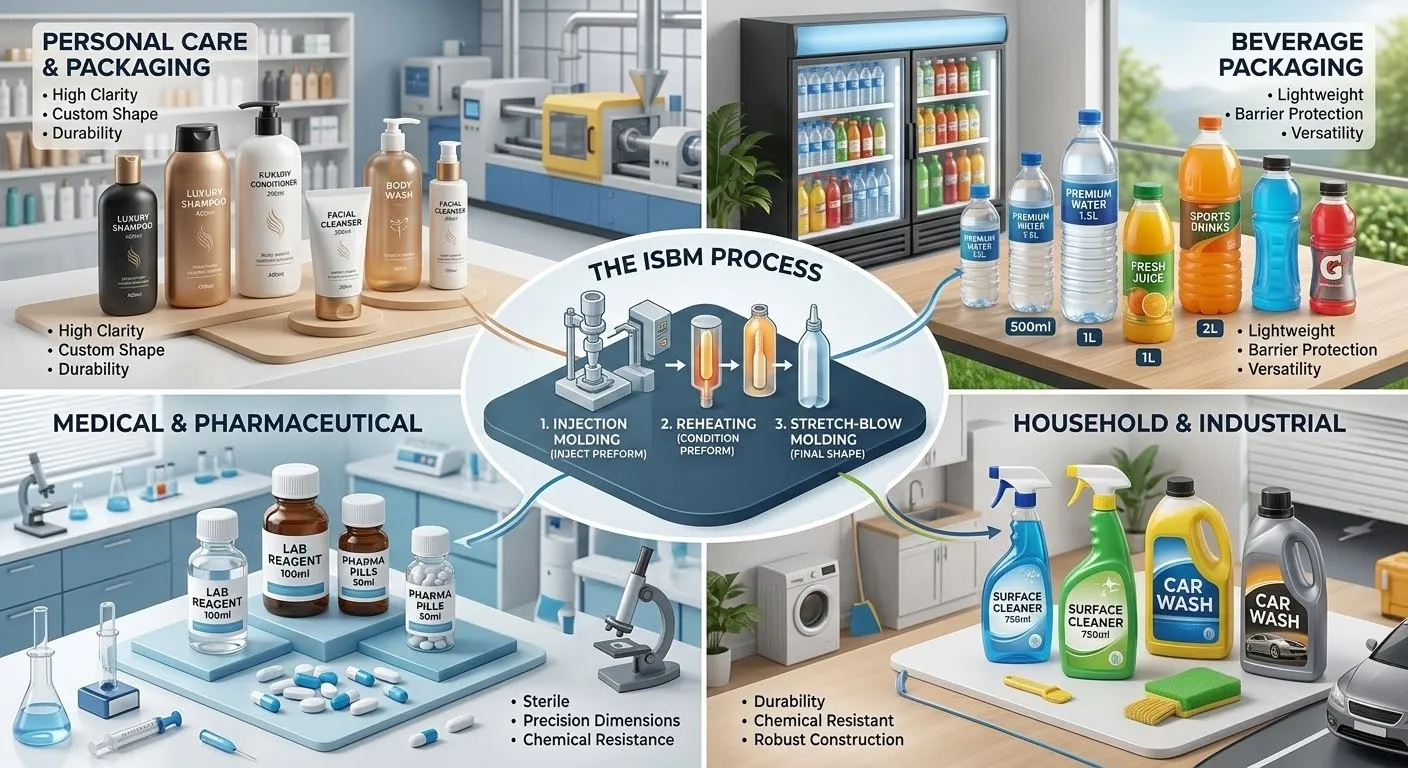
A Strategic Framework for ISBM Material Selection
With such a complex matrix of polymer options available, how does a brand ensure they are selecting the optimal resin for a new product launch? It requires a highly analytical, cross-departmental approach. Here is the engineering framework we utilize when consulting with global clients:
- 1.
Define the Thermodynamic Boundaries:
Will your product undergo high-temperature pasteurization? Will the consumer place the container in a microwave? If extreme heat is involved, PET is immediately disqualified, and you must pivot your strategy toward high-clarity Polypropylene or Tritan copolyester. - 2.
Analyze Chemical Compatibility and Shelf-Life Targets:
Does the liquid contain aggressive essential oils, high alcohol content, or volatile compounds? Is it highly susceptible to oxidation? This analysis dictates whether standard high-IV PET is sufficient, or if the expensive investment into multi-layer EVOH co-injection is mandatory to protect your brand equity. - 3.
Align with Corporate Sustainability Goals:
If your marketing heavily promotes environmental responsibility, integrating a high percentage of rPET or aggressively lightweighting your container design is a strategic necessity, transcending simple raw material cost comparisons. - 4.
Targeting Uncompromising Luxury Aesthetics:
If your cosmetic serum requires a heavy, glass-like base, sharp asymmetrical geometric angles, and a perfectly flawless, scratch-free surface, processing virgin PET through a dedicated single-stage ISBM platform is the only globally recognized solution.
Why Global Brands Rely on Ever-Power for Material Engineering
Understanding the theoretical properties of various ISBM materials is only the starting point. Executing flawless, high-volume production with these materials in a rigorous industrial environment separates standard contract manufacturers from true engineering partners. Many generic facilities can process standard commodity PET, but they suffer catastrophic failure rates when attempting to process highly viscous Tritan, narrow-temperature PP, or highly variable recycled flakes.
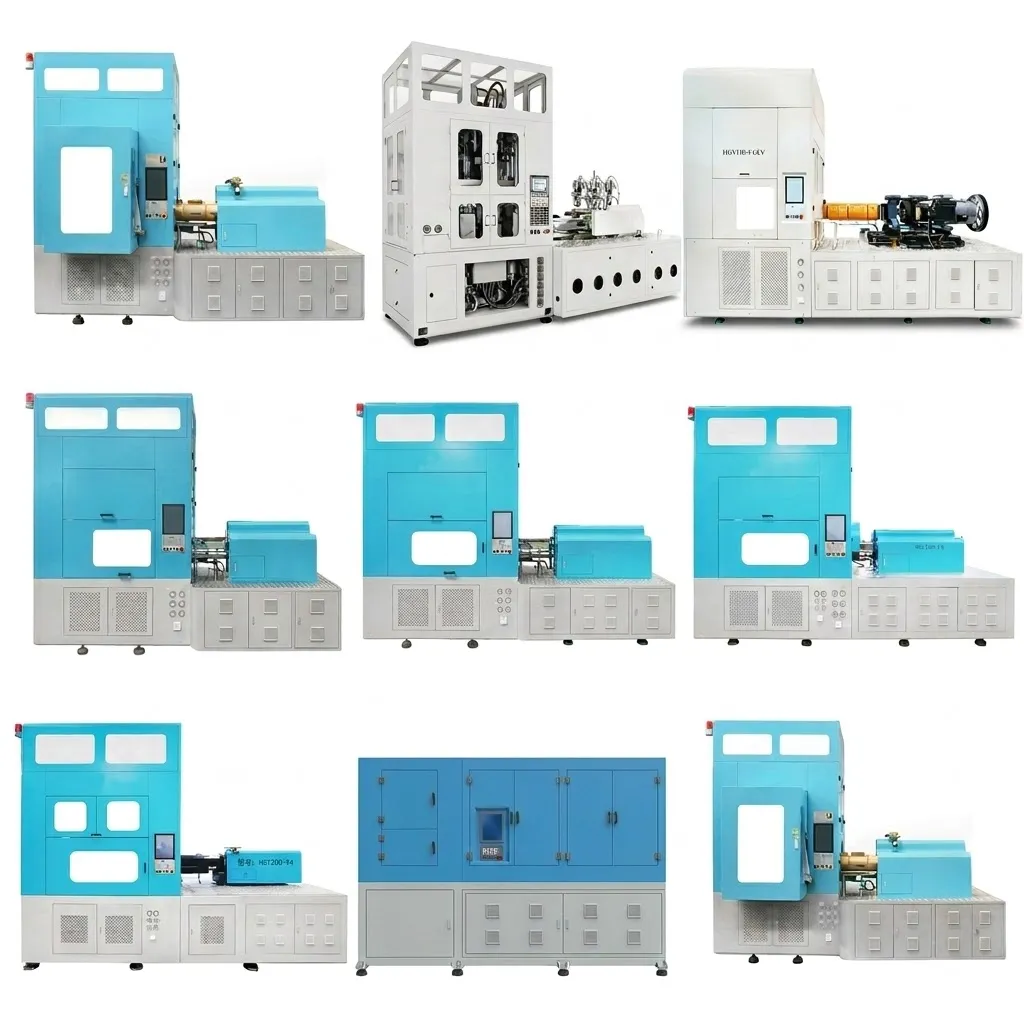
Operating as the premier manufacturing hub in South America, Ever-Power has constructed an impenetrable fortress of technical expertise. We operate an extensive, state-of-the-art fleet of fully electric, servo-driven injection stretch blow molding machines. More importantly, we employ a dedicated brain trust of polymer chemists, thermodynamic simulation engineers, and master toolmakers. By analyzing the molecular rheology of your chosen polymer, designing hyper-efficient cooling channels within our custom molds, and enforcing ruthless closed-loop parameter controls, we can conquer any material challenge your product demands.
Elevate Your Packaging Architecture
A container is far more than a simple plastic shell; it is the ultimate culmination of advanced material science and precision mechanical engineering. Selecting the perfect polymer grants your product an overwhelming competitive advantage, while the wrong choice results in supply chain failures and massive financial losses.
Are you searching for the definitive polymer solution for your upcoming product launch? Connect with your trusted Brazilian manufacturing partner, Ever-Power, and allow our chief material scientists to conduct a comprehensive, highly authoritative feasibility analysis on your packaging design today.