Welcome to the definitive engineering guide on modern plastic packaging technologies. Navigating the complex world of container manufacturing requires a deep understanding of polymer science, thermodynamic principles, and heavy machinery capabilities. Whether you are launching a premium skincare line, distributing vital pharmaceuticals, or scaling up a global beverage brand, the structural integrity and aesthetic perfection of your packaging are paramount. As a leading Brazilian ISBM manufacturer, the engineering team at Ever-Power frequently encounters one critical, foundational question from our global clientele: What is the difference between single-stage and two-stage ISBM?
To make an informed, economically sound, and technically viable decision for your supply chain, you must look beyond the surface. Both methodologies utilize the core principles of biaxial orientation to produce shatter-resistant, crystal-clear containers. However, the architectural pathways they take to reach that final product are vastly different. In this exhaustive, highly detailed technical resource, we will dissect the mechanical, financial, and qualitative variances between the 1-step ISBM process and 2-step ISBM manufacturing. By leaning on our decades of hands-on expertise, authority in the Latin American market, and unwavering commitment to trustworthy engineering data, we will empower you to select the optimal technology for your specific packaging requirements.
Establishing the Baseline: The Core Mechanics of Biaxial Orientation
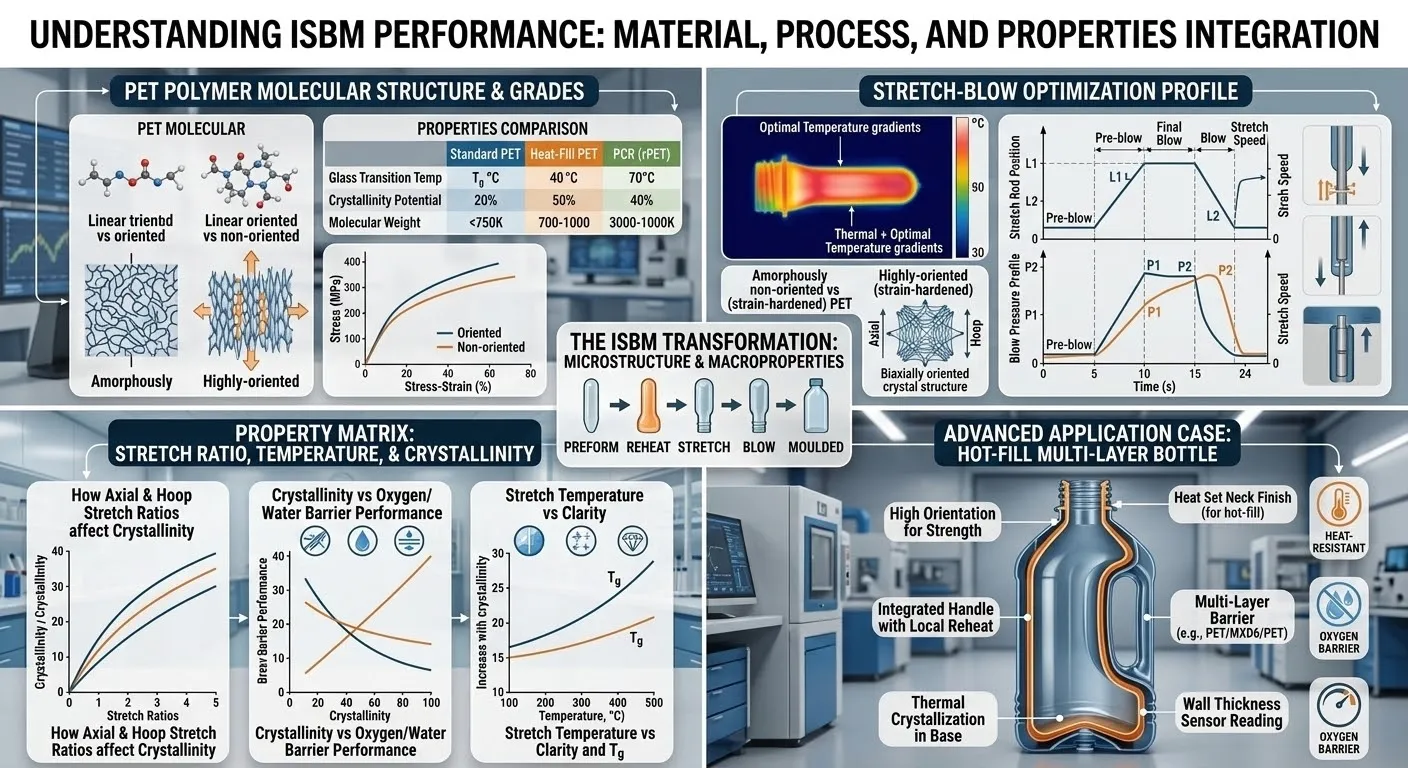
Before we contrast the two distinct systems, we must first establish a shared understanding of the underlying physics. Injection Stretch Blow Molding is fundamentally superior to standard extrusion blow molding because it actively manipulates the molecular structure of the polymer. This manipulation is achieved through a precisely choreographed sequence of thermal conditioning and mechanical stretching.
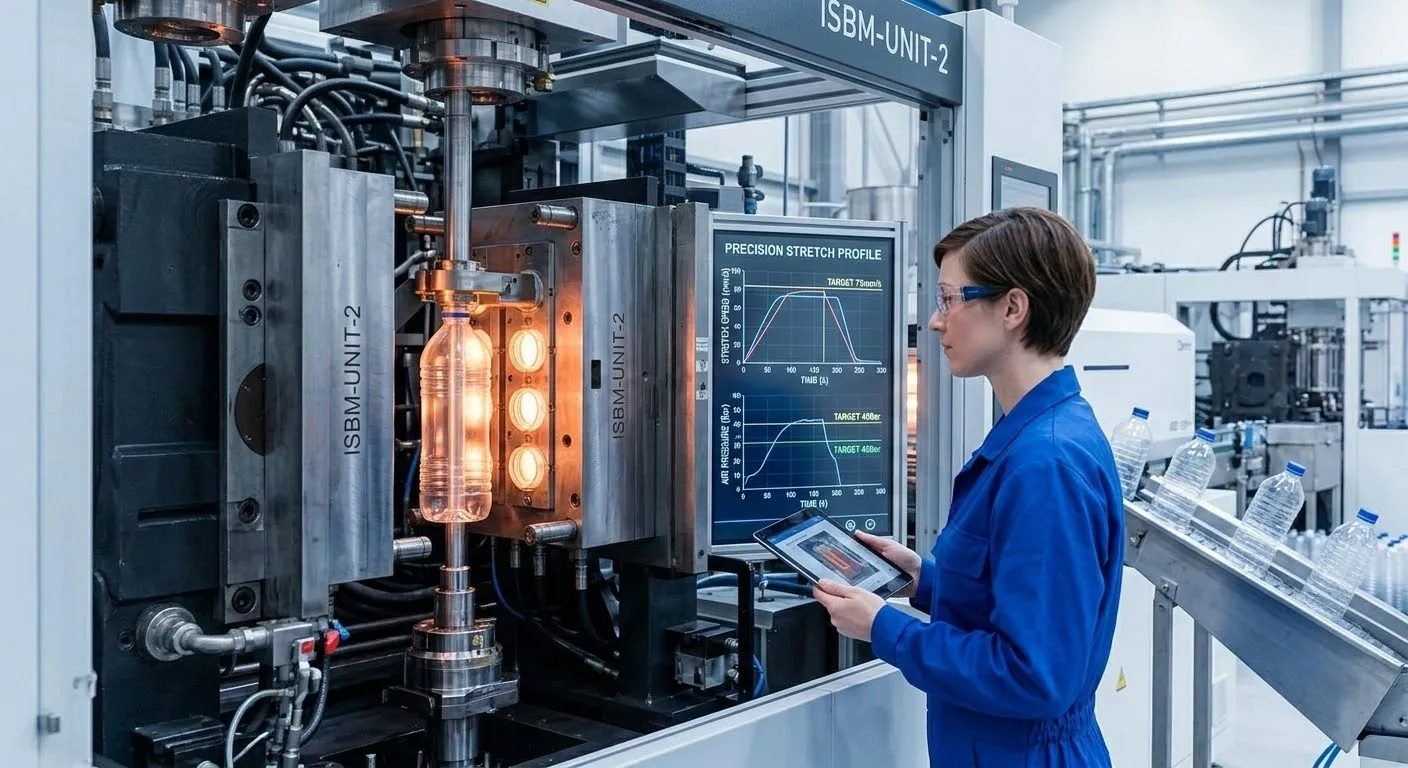
The process universally relies on a “preform.” A preform is a dense, test-tube-shaped piece of plastic. Crucially, the threaded neck of this preform is created via high-pressure injection molding against solid steel. This ensures the neck dimensions are geometrically perfect, guaranteeing a flawless, leak-proof seal with the final closure. The body of this preform is then heated to its specific glass transition temperature. Once pliable, a metal rod stretches the plastic vertically toward the base of the mold, while high-pressure air simultaneously expands the plastic horizontally against the chilled mold walls.
This simultaneous vertical and horizontal expansion forces the tangled, random polymer chains to align tightly in a cross-hatched pattern. This phenomenon, known as strain-induced crystallization or biaxial orientation, radically transforms the material properties. It magnifies the tensile strength, creates a formidable barrier against oxygen and carbon dioxide permeation, and eliminates light refraction, resulting in glass-like transparency. Both single-stage and two-stage methods achieve this molecular alignment, but their operational execution diverges completely.
Deep Dive: The Mechanics of the Single-Stage Process (1-Step)
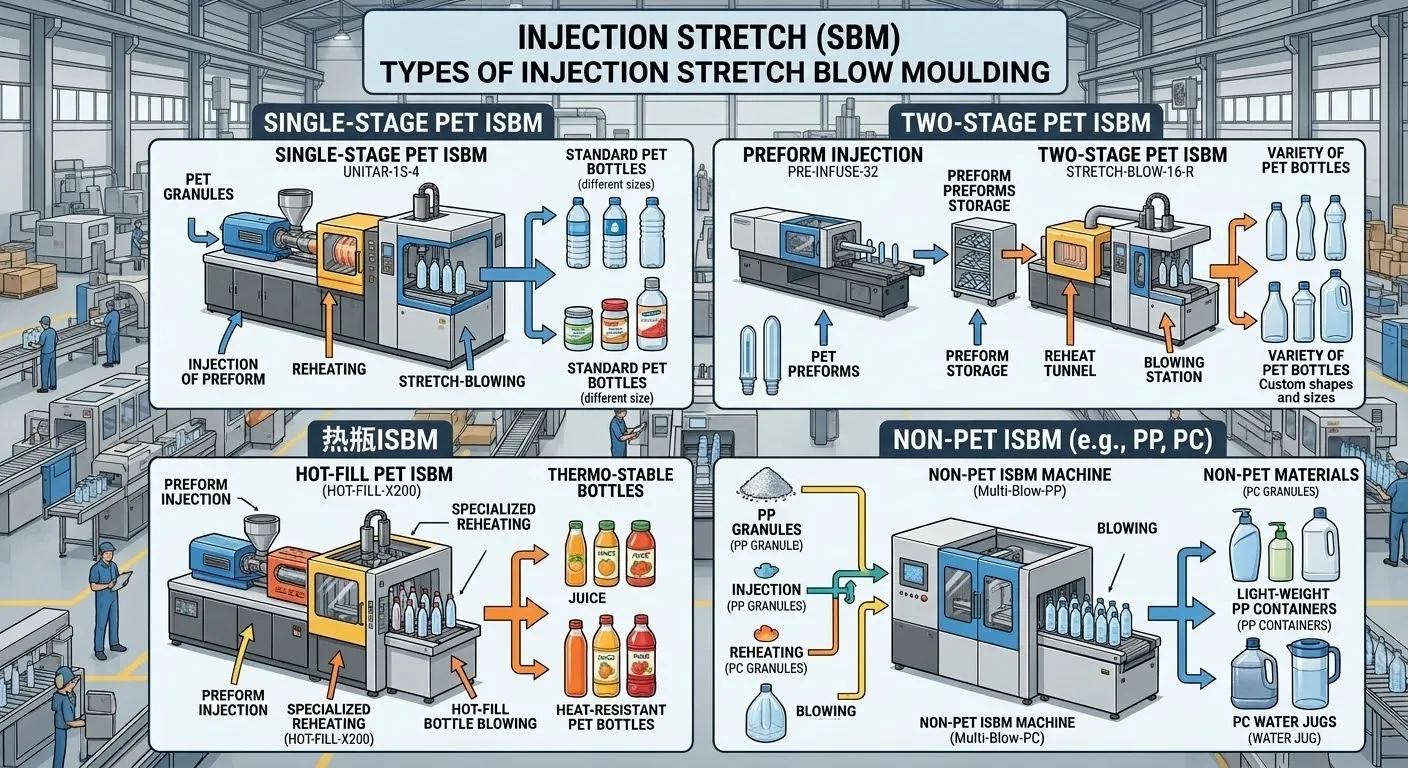
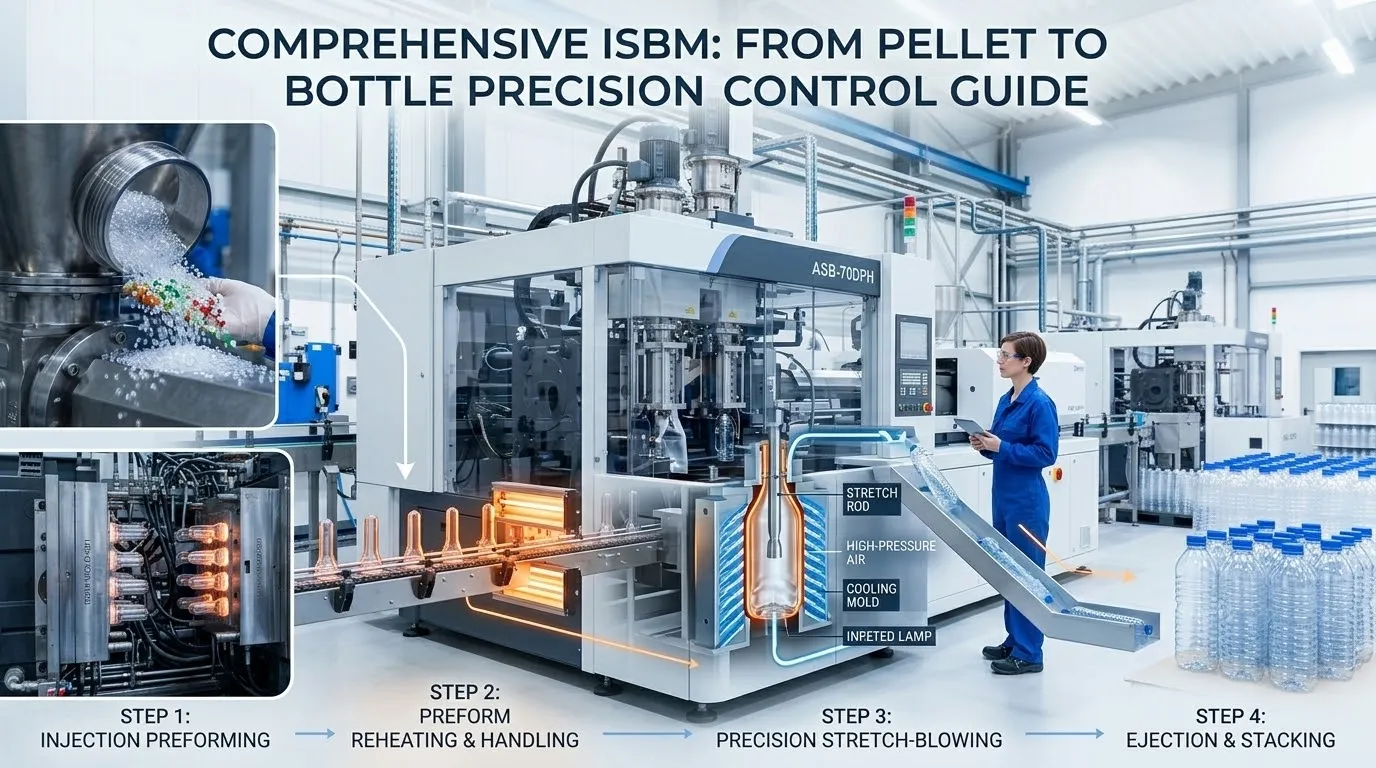
The single-stage ISBM architecture is a marvel of integrated engineering. In this methodology, the entire metamorphosis from raw plastic resin pellets to the final, ejected bottle occurs within the footprint of a single, continuous machine. The preform is injected, conditioned, blown, and ejected in one uninterrupted cycle. At no point does the plastic leave the controlled environment of the machine.
The Sequential Workstations of a 1-Step Machine
Most modern single-stage systems utilize a rotary carousel design featuring either three or four distinct workstations. Let us examine the precise actions occurring at each station:
- Station One: Precision Preform Injection
Raw polymer, such as Polyethylene Terephthalate, is thoroughly dried and fed into the injection barrel. The plastic is melted and injected under extreme pressure into a multi-cavity hot runner mold. This creates the preform. The cooling water in this mold is highly regulated to chill the plastic just enough to hold its shape without allowing it to fully solidify into a crystalline state. - Station Two: Advanced Thermal Conditioning
This station represents the true engineering genius of the 1-step ISBM process. The newly injected preform, still retaining a massive amount of its latent heat from the melting phase, is transferred here. Instead of heating a cold preform from scratch, the machine utilizes specialized conditioning pots to selectively add or remove heat from specific zones of the preform. This creates a highly customized thermal profile tailored precisely to the geometry of the final bottle. - Station Three: Biaxial Stretch and Blow
The thermally optimized preform enters the blow mold. The stretch rod descends, pinning the material to the base while pre-blow air initiates the expansion. Immediately following, a blast of high-pressure air forces the soft polymer against the cold steel or aluminum walls of the blow mold cavity. Contact with the cold metal instantly freezes the polymer, locking the biaxial orientation permanently into place. - Station Four: Clean Ejection
The finished, flawless containers are stripped from the core rods and ejected onto a conveyor belt. Because they were held firmly by the neck throughout the entire process, the containers have never collided with one another.
Deep Dive: The Mechanics of the Two-Stage Process (2-Step)
If the single-stage process is an integrated symphony, the two-stage process is a massive, high-speed relay race. The 2-step ISBM manufacturing methodology physically, spatially, and temporally decouples the injection of the preform from the blowing of the bottle. This separation is a deliberate engineering choice designed to maximize economies of scale and sheer production velocity.
Stage One: High-Volume Preform Production
In the first stage, dedicated injection molding machines, equipped with massive tools containing up to one hundred and forty-four individual cavities, rapidly produce millions of preforms. The sole objective here is speed and volume. The injected preforms are aggressively cooled with chilled water until they are completely solid and drop to ambient room temperature. They are then bulk-packed into large cardboard octabins or storage silos. These cold preforms are highly durable. They can be warehoused for months or shipped across oceans to entirely different continents without degrading.
Stage Two: The Reheat and Blow Operation
The second stage takes place on a completely separate piece of machinery known as a Reheat Stretch Blow Molding machine. The cold preforms are dumped into a hopper and sorted by an unscrambler, which lines them up perfectly. They are then fed continuously onto a moving track that carries them through a long heating tunnel.
Inside this tunnel, banks of high-intensity quartz infrared lamps radiate intense heat. The preforms rotate continuously on their vertical axis as they travel past the lamps, ensuring the heat penetrates evenly through the thick plastic walls, bringing the polymer back up to its critical glass transition temperature. Once adequately heated, high-speed transfer arms grab the soft preforms and thrust them into the rapidly spinning rotary blow mold station, where the stretch rods and high-pressure air instantly form the final bottles. Because the slow injection phase has been completely removed from this machine, the blowing speed is limited only by the mechanical limits of the transfer arms and pneumatic valves.
Comprehensive Contrast: What is the difference between single-stage and two-stage ISBM?
Having outlined the mechanical operations of both architectures, we can now conduct a rigorous, point-by-point comparison. Selecting the right technology requires a holistic evaluation of your aesthetic demands, production volume, capital budget, and supply chain logistics. Let us explore these critical differences in granular detail.
1. Aesthetic Perfection versus Minor Surface Imperfections
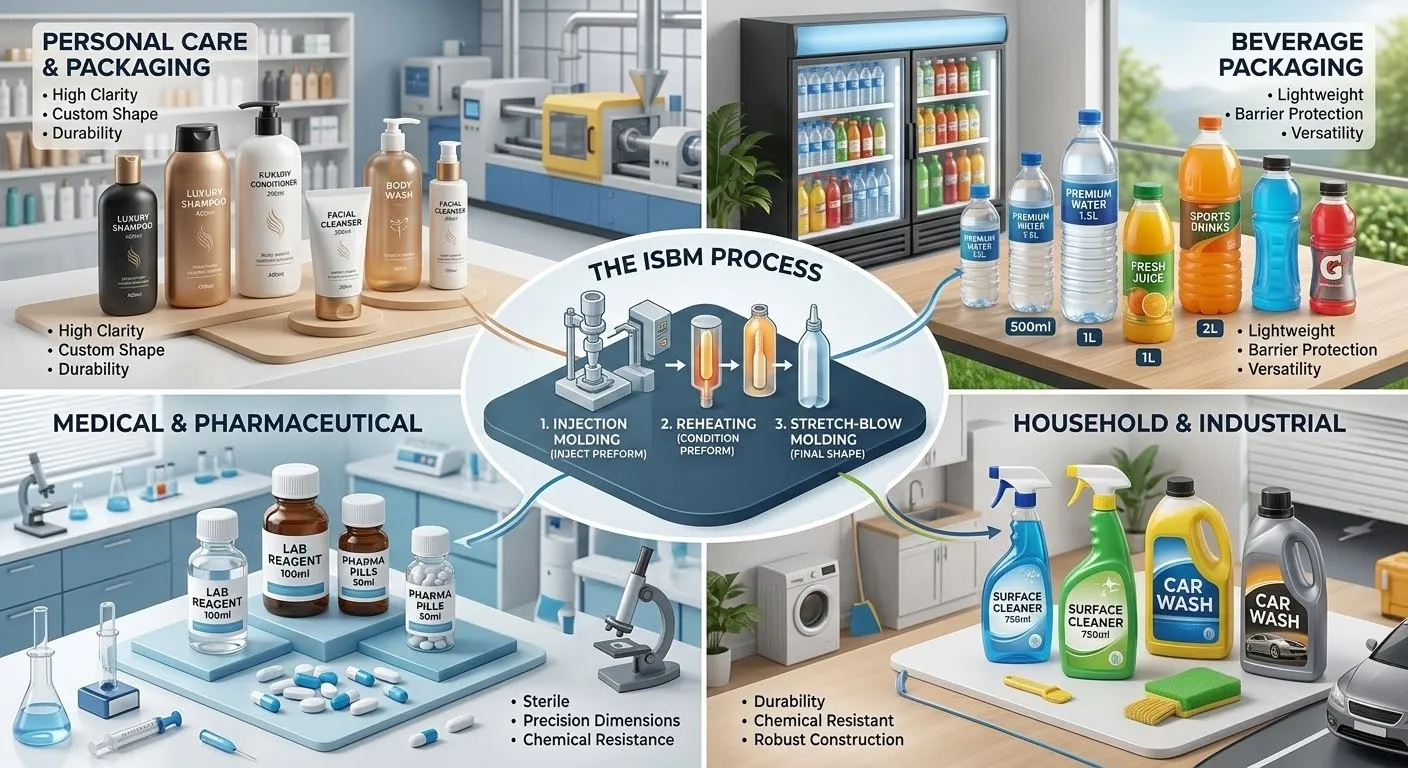
When producing packaging for luxury cosmetics, high-end serums, or premium personal care items, visual presentation is everything. The container must mimic the flawless clarity and smooth texture of polished glass. In this arena, single-stage ISBM is the undisputed champion. Because the preform is securely held by a neck ring from the moment it is injected until the finished bottle is ejected, it never experiences physical friction. It does not touch a storage bin, it does not rub against other preforms, and it is not tumbled through a mechanical unscrambler.
Conversely, the two-stage process involves aggressive bulk handling. When cold preforms drop from the injection mold into a massive bin, and later when they are churned violently in the sorting hopper of the blow molding machine, they inevitably scratch against one another. While these micro-scratches might be nearly invisible on the cold preform, they expand and become highly visible scuff marks once the plastic is stretched into a bottle. For commodity items like bottled water or soda, consumers do not care about these minor scuffs. However, for a fifty-dollar face cream, such imperfections are catastrophic to the brand image.
2. Machinery Footprint and Capital Investment Profiles
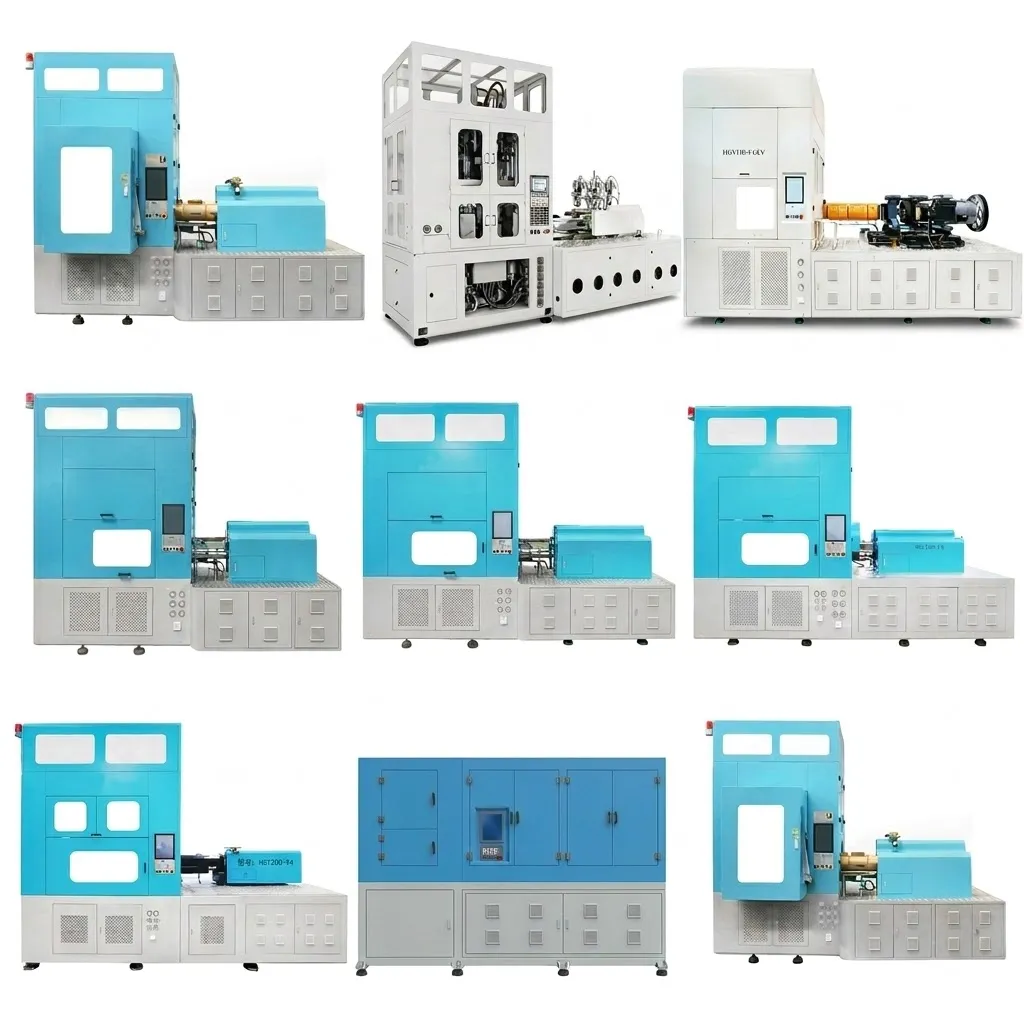
As a seasoned Brazilian ISBM manufacturer, Ever-Power advises clients to carefully assess their factory floor space and capital availability. A single-stage machine is incredibly compact. It is a self-contained manufacturing ecosystem. You feed raw resin into one end, and beautifully finished bottles emerge from the other. This makes it ideal for boutique manufacturers or cleanroom environments in pharmaceutical facilities where space is at a premium.
However, the tooling costs for single-stage machinery are exceptionally high. A complete mold set requires precision-machined injection cavities, hot runner systems, complex conditioning pots, and the final blow mold cavities. Every time you want to change the bottle design, you must invest in a massive, expensive toolset.
Two-stage manufacturing requires a massive industrial footprint if you intend to house both the injection machines and the blow machines under one roof. The injection machines require enormous clamping force, and the blow molders are massive, sprawling pieces of equipment. The initial capital expenditure to set up a full two-stage plant is staggering. Yet, there is a massive financial loophole: you do not have to buy the injection machine. Thousands of beverage companies simply purchase the blow molding equipment and buy their preforms from dedicated preform suppliers. Furthermore, changing a bottle design on a two-stage blow molder is relatively cheap, as you only need to purchase the aluminum blow molds, assuming you can use an existing standard preform.
3. Extreme Complexity in Container Geometry
Not all bottles are simple cylinders. Many modern packaging designs feature extreme ovals, flat rectangular profiles, asymmetrical shapes, or necks that are pushed entirely to one side of the container (offset necks). Achieving these shapes requires moving plastic aggressively into tight corners without thinning the walls out to the point of rupture.
The 1-step ISBM process excels at geometric complexity. Because it utilizes the latent heat from the injection phase, the core of the plastic wall remains highly fluid and pliable. Furthermore, the conditioning station allows engineers to apply distinct thermal zones. If a bottle is flat, the engineer can make the sides of the preform significantly hotter than the front and back, ensuring the plastic stretches easily into the wide shoulders of the flat bottle. This targeted thermal profiling is highly sophisticated.
The two-stage process struggles immensely with non-cylindrical shapes. The infrared reheat ovens rely on the preform spinning constantly to ensure even heating. While some highly advanced, extremely expensive two-stage machines offer “preferential heating” (stopping the rotation to blast heat onto one specific side), it is difficult to calibrate and rarely achieves the deep, penetrating thermal profile required for extreme asymmetrical shapes. For a standard round soda bottle, two-stage is perfect; for a bizarrely shaped custom perfume bottle, single-stage is mandatory.
4. Production Velocity and Absolute Economies of Scale
When evaluating what is the difference between single-stage and two-stage ISBM? one must look at the mathematical limits of output. Single-stage machines are inherently bottlenecked by thermodynamics. You cannot blow the bottle until the preform is injected and cooled to the exact right temperature. The thickest part of the preform dictates the entire cycle time of the machine. Consequently, single-stage machines generally produce a few thousand bottles per hour. They are designed for agility, high margins, and premium quality, not sheer volume.
Two-stage machines are built for planetary-scale consumption. By separating the slow injection process, the rotary blow molding machines can spin at terrifying velocities. A modern two-stage blow molder can easily eject eighty thousand to one hundred thousand bottles every single hour. For massive multinational beverage corporations producing millions of units per day, the 2-step ISBM manufacturing process is the only mathematically viable solution. The economies of scale achieved through this extreme velocity drastically drive down the unit cost of each container.
5. Global Supply Chain Logistics and Environmental Impact
The logistical architecture of the packaging industry is profoundly influenced by the two-stage method. Consider the volume of an empty two-liter soda bottle. It is mostly just trapped air. If a manufacturer uses a single-stage machine, they must ship massive trucks filled with finished, empty bottles to the beverage filling plant. The freight costs are astronomical, and the carbon emissions generated by dozens of trucks hauling what is essentially lightweight air are highly detrimental to the environment.
The two-stage methodology revolutionized this supply chain. A centralized injection molding facility can pack hundreds of thousands of dense, compact preforms into a single shipping container. These preforms are transported highly efficiently to the beverage filling plant. The filling plant has its own reheat blow molding machine integrated directly into the liquid filling line. The bottles are blown on-site, immediately filled with liquid, capped, and shipped to grocery stores. This “blow-in-place” model slashes transportation costs and drastically reduces the greenhouse gas emissions associated with the supply chain.
Polymer Compatibility: Materials in the ISBM Environment
While the acronym ISBM is almost synonymous with PET stretch blow molding, the technology is highly adaptable. However, different polymers behave uniquely in the single-stage versus the two-stage environment. Understanding polymer rheology is essential for an authoritative Brazilian ISBM manufacturer like Ever-Power.
Polyethylene Terephthalate (PET)
PET is the absolute standard. It has a relatively wide and forgiving processing window. Whether you are manipulating latent heat in a single-stage machine or blasting it with infrared radiation in a two-stage machine, PET responds beautifully to biaxial orientation. It yields unmatched clarity, excellent carbonation retention, and immense drop-impact resistance. It is the dominant material for both processes globally.
Polypropylene (PP)
Polypropylene is highly sought after because it can withstand high heat. It is perfect for bottles containing juices or medical fluids that must be hot-filled or sterilized via autoclave. It also offers a significantly better moisture barrier than PET. However, PP is notoriously difficult to stretch blow. Its glass transition temperature window is razor-thin.
In a single-stage machine, processing PP is challenging but manageable, as engineers can precisely capture the latent heat as it cools from the melt. In a two-stage process, reheating cold PP preforms is an engineering nightmare. Infrared radiation has a hard time penetrating PP evenly; the outside tends to melt while the inside core remains too cold to stretch, leading to catastrophic tearing or severe milky haze. Only highly specialized, heavily modified two-stage machines can effectively process PP at scale.
Engineering Resins: Polycarbonate (PC) and Tritan
For heavy-duty applications like reusable five-gallon water cooler jugs or premium shatterproof sports bottles, materials like Polycarbonate and Eastman Tritan are utilized. These polymers require extremely high melt temperatures and immense blowing pressures. Single-stage machinery is heavily favored for these materials. The ability to inject, condition, and blow massive, thick-walled containers without letting them cool down completely prevents the formation of internal stress fractures that plague heavy two-stage preforms.
Quality Assurance and Advanced Troubleshooting
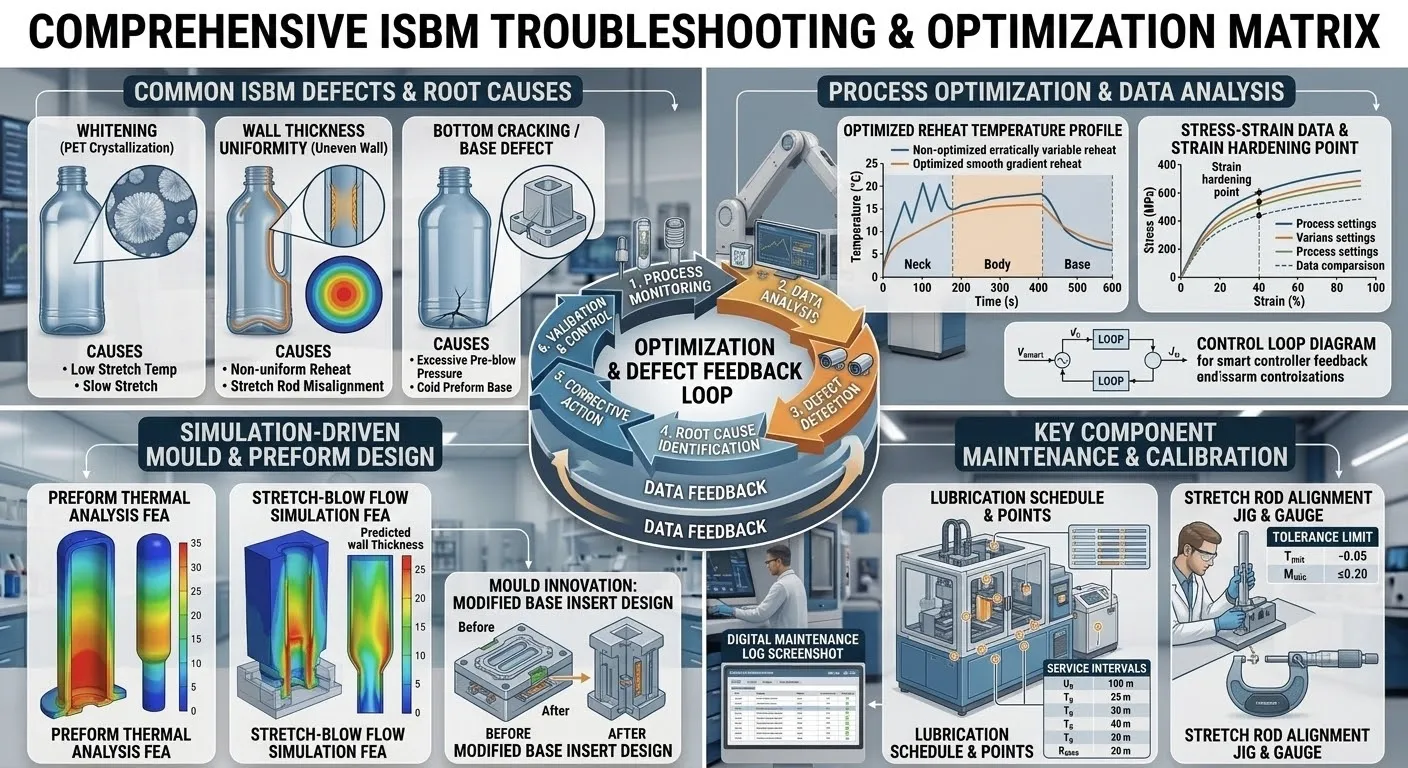
No manufacturing process is immune to thermodynamic fluctuations. A sudden change in factory ambient humidity or a slight drop in chilling water pressure can instantly generate defective bottles. A hallmark of trustworthiness and expertise is knowing exactly how to diagnose these defects. The troubleshooting matrix differs significantly depending on whether you are analyzing a 1-step or 2-step line.
Consider the defect known as Pearlescence (Stress Whitening). This appears as a rough, milky band on the bottle. It means the plastic was stretched while it was entirely too cold, causing the molecular chains to tear apart mechanically. On a two-stage machine, the immediate solution is to increase the output voltage to the infrared lamps targeting that specific zone on the preform. On a single-stage machine, the solution might involve extending the conditioning time, increasing the hot runner temperature, or raising the temperature of the conditioning pot to preserve more latent heat.
Conversely, consider Thermal Crystallization (Haze). This is a dense, smooth fog indicating the plastic was baked at too high a temperature, causing the amorphous structure to organize into large, light-blocking crystals. In the two-stage environment, this usually means the infrared lamps are set too high or the oven ventilation fans have failed, allowing stagnant hot air to bake the preforms. In the single-stage environment, thermal haze almost always points back to the injection phase; the cooling water in the injection mold might be too warm, failing to quench the molten plastic fast enough.
At Ever-Power, our quality control laboratories implement brutal testing regimens regardless of the manufacturing method. We conduct aggressive Top Load Testing, crushing bottles to ensure they will survive the massive weight of warehouse pallet stacking. We utilize high-pressure Burst Testing, inflating containers until they explode violently, precisely recording the failure thresholds to guarantee consumer safety for carbonated applications. Sectional weight analysis involves slicing bottles into distinct horizontal rings and weighing them on analytical balances to ensure perfect, symmetrical material distribution.
Sustainability, the Circular Economy, and rPET Integration
The future of plastic packaging is undeniably tied to environmental sustainability. Regulatory bodies globally are demanding the integration of post-consumer recycled plastic (rPET). Processing rPET introduces chaotic variables into the highly calibrated ISBM environment. Recycled flakes often possess a wider variance in intrinsic viscosity and can display inconsistent thermal absorption rates compared to virgin fossil-fuel resins.
Two-stage manufacturers face a steep challenge here. If a batch of rPET preforms absorbs infrared heat faster or slower than expected, the blow molding machine will instantly begin producing defective, off-center bottles. Constant monitoring and highly adaptive oven control systems are required. Single-stage machines, however, offer a slight advantage. Because the injection of the melt and the blowing of the bottle are controlled by the same central computer, operators can monitor the injection pressure of the rPET melt in real-time. If the viscosity changes, the system can automatically compensate by adjusting the conditioning temperatures down the line, yielding a more stable output.
Furthermore, the relentless engineering pursuit of “lightweighting” applies to both methodologies. By utilizing advanced finite element analysis (FEA) computer simulations, engineers at Ever-Power constantly redesign preform geometries and optimize stretch ratios. Over the past twenty years, we have successfully stripped away dozens of grams of plastic from standard bottle designs without sacrificing a single metric of burst pressure or top-load strength. This hyper-efficient use of polymer resin dramatically lowers the carbon footprint of massive global brands.
Why Global Brands Choose Ever-Power for ISBM Excellence
Understanding the profound technical distinctions underlying the question of what is the difference between single-stage and two-stage ISBM? is merely the theoretical foundation. Executing these processes flawlessly in a demanding commercial environment requires a manufacturing partner with immense technical depth, uncompromising quality standards, and regional authority.
As a premier Brazilian ISBM manufacturer, Ever-Power bridges the gap between sophisticated polymer science and high-volume industrial execution. Operating from strategically positioned, state-of-the-art facilities in South America, we command a comprehensive fleet of both single-stage and two-stage machinery. This duality ensures we never force a client into a suboptimal manufacturing method simply because it is the only equipment we possess. If your premium cosmetic brand requires the zero-defect, scratch-free surface of a 1-step line, we have the pristine cleanroom environment to deliver it. If your beverage conglomerate needs eighty million lightweight bottles produced with terrifying speed and minimal unit cost via a 2-step line, our heavy industrial sector is ready to ignite.
We do not just run machines; we engineer competitive market advantages. Our team of polymer scientists, thermodynamic engineers, and master toolmakers collaborate seamlessly to provide end-to-end solutions. From the initial 3D conceptual sketches and 3D printed rapid prototypes to aggressive lightweighting analysis, preform structural optimization, and global mass-market deployment, Ever-Power stands as a fortress of quality and innovation.
Are you ready to elevate your packaging architecture and optimize your production costs? Allow us to demonstrate our engineering capabilities firsthand.
Would you like me to connect you with our lead mechanical engineers to conduct a comprehensive structural analysis on your current container design?