What auxiliary equipment is needed for an ISBM machine? The Complete Facility Ecosystem
In the highly complex discipline of global plastic packaging manufacturing, a catastrophic error frequently made by emerging corporate procurement teams is viewing an Injection Stretch Blow Molding platform as an isolated, standalone appliance. You cannot simply plug a primary molding machine into a wall outlet, pour plastic pellets into a funnel, and expect flawless, glass-like containers to emerge. An ISBM machine is merely the thermodynamic and mechanical epicenter of a much larger, profoundly interconnected industrial ecosystem. At ہمیشہ کی طاقت, operating as the preeminent Brazilian ISBM manufacturer dominating the Latin American and international markets, we dedicate extensive engineering consultation to facility architecture. The most critical operational inquiry we address during facility blueprinting is: What auxiliary equipment is needed for an ISBM machine?
The auxiliary support machinery—often referred to as peripheral equipment—is the absolute lifeblood of the manufacturing process. Without a flawlessly integrated fleet of high-pressure air compressors, desiccant polymer dryers, and industrial thermodynamic water chillers, the primary ISBM machine will immediately fail. The auxiliary ecosystem dictates the maximum cycle speed, the optical clarity of the final product, the dimensional stability of the containers, and the overall profitability of the factory floor. In this exhaustively detailed, highly technical engineering dissertation, we will completely deconstruct the peripheral infrastructure required to operate a world-class injection stretch blow molding facility. We will explore the physics of resin dehydration, the mechanics of high-pressure pneumatics, and demonstrate how to perfectly align auxiliary capacities with the specific demands of your Ever-Power primary machinery.
The Respiratory System: High-Pressure and Low-Pressure Pneumatics
The stretch blow molding process is entirely dependent on the violent, instantaneous, and perfectly controlled delivery of compressed air. This pneumatic infrastructure is bifurcated into two distinct systems: low-pressure air for mechanical actuation and high-pressure air for polymer expansion. Sizing your compressor room incorrectly will result in crippling pressure drops, causing incomplete bottle formation and massive scrap rates.
1. High-Pressure Air Compressors (The Blow Air)
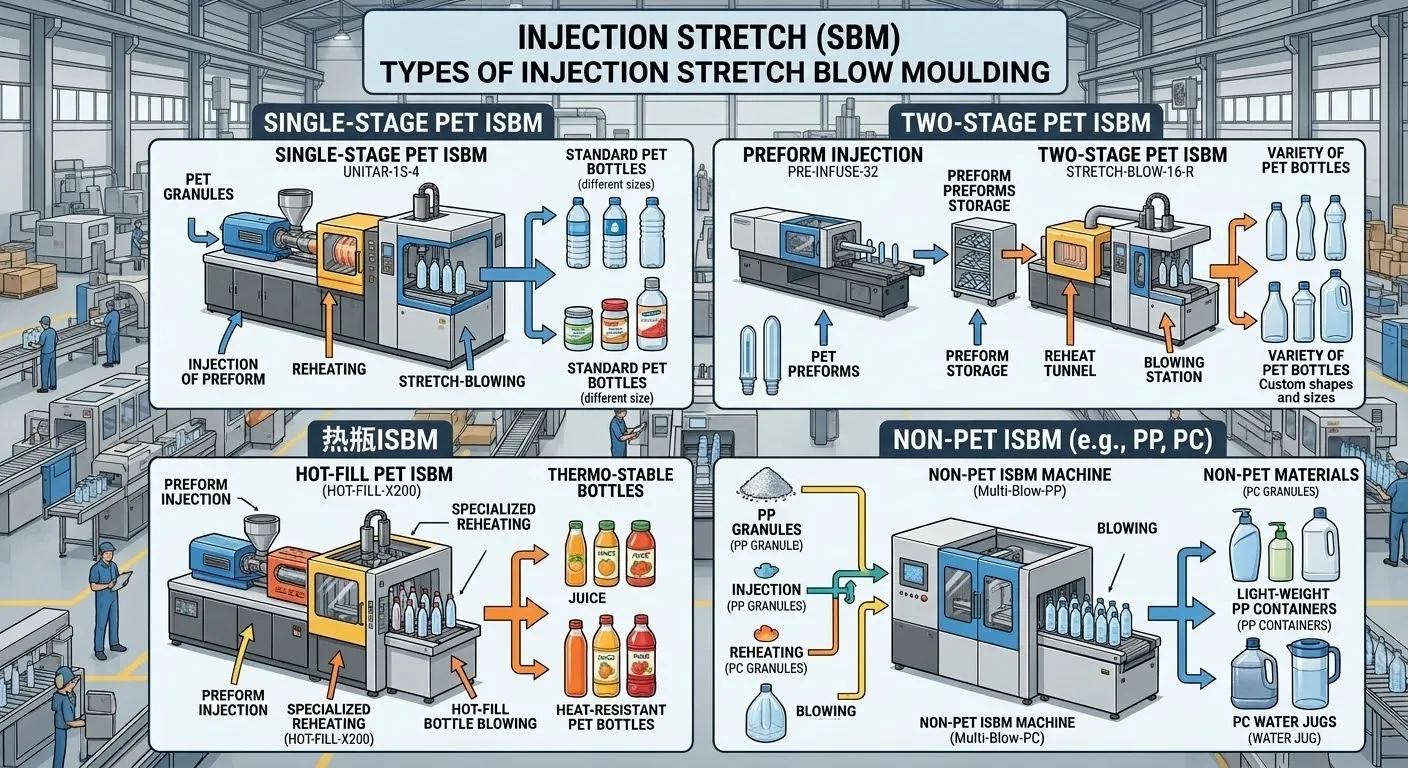
To force hot, pliable plastic against the chilled walls of an aluminum blow mold cavity and capture microscopic engraving details, the machine requires a massive blast of high-pressure air. For Polyethylene Terephthalate processing, this typically ranges between twenty-five to forty bar of pressure. Standard factory air compressors cannot generate this magnitude of force. You must procure specialized, multi-stage high-pressure industrial compressors.
The volumetric capacity of this compressor must directly align with the output of your machine. If you are operating our colossal EP-HGY650-V4 4-اسٹیشن انجکشن اسٹریچ بلو مولڈنگ مشین to produce massive five-gallon water cooler jugs, the volume of high-pressure air consumed per cycle is staggering. Similarly, if your facility deploys our ultra-high-velocity double-row architectures, such as the EP-HGY250-V4-B ڈبل-رو 4-اسٹیشن انجکشن اسٹریچ بلو مولڈنگ مشین یا EP-HGY200-V4-B 4-اسٹیشن انجکشن اسٹریچ بلو مولڈنگ مشین, you are blowing twice as many bottles simultaneously. The compressor must be sized to deliver extreme cubic meters per minute to prevent the line pressure from collapsing during the blow phase.
2. Low-Pressure Air Compressors (The Actuation Air)
While high pressure forms the bottle, low-pressure air governs the kinetic movements of the machine. Air cylinders actuate the robotic transfer arms, open and close safety gates, and drive the internal spools of directional valves. This system typically operates between seven to ten bar. A standard rotary screw compressor is utilized for this application. Maintaining highly stable low-pressure air is critical; if the pressure fluctuates, the mechanical timing of the transfer mechanisms will drift, causing the machine to crash and destroying the precision اپنی مرضی کے مطابق ون سٹیپ انجکشن اسٹریچ بلو مولڈز mounted inside.
3. Air Filtration and Refrigerated Drying
Compressing ambient factory air generates immense amounts of heat and condenses atmospheric humidity into liquid water. Pumping liquid water and compressor lubricating oil directly into your ISBM machine will instantly destroy the internal pneumatic valves and contaminate the interior of your plastic bottles. Therefore, the pneumatic ecosystem must include massive air receiver tanks to act as pressure capacitors, followed by a rigorous gauntlet of coalescing oil filters, particulate filters, and refrigerated or desiccant air dryers. The air entering the ISBM machine must be bone dry, featuring a negative dew point to ensure absolute mechanical longevity.
The Digestive System: Polymer Dehydration and Resin Handling
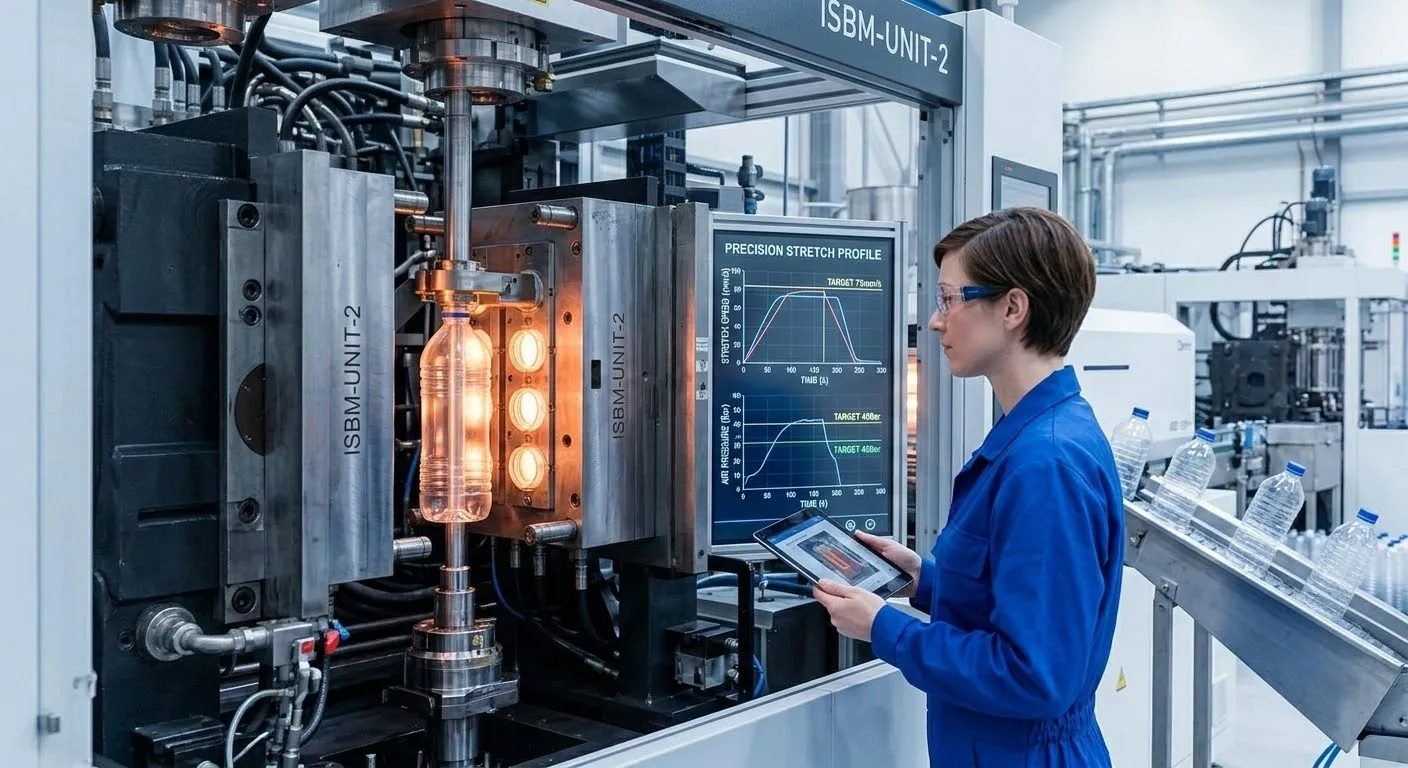
The raw material feeding system is arguably the most critical auxiliary component for maintaining final container quality. The vast majority of ISBM production utilizes Polyethylene Terephthalate. This specific polymer is profoundly hygroscopic, meaning it actively absorbs moisture from the ambient air at a molecular level. If you melt wet polymer, a catastrophic chemical reaction called hydrolysis occurs within the injection barrel.
1. Desiccant Dehumidifying Dryers
Hydrolysis literally breaks the long molecular chains of the plastic apart, drastically lowering its intrinsic viscosity. The resulting molten plastic becomes watery, impossible to stretch evenly, and cools into brittle bottles that will violently shatter under pressure. To prevent this, the facility must deploy advanced desiccant dehumidifying dryers. These units utilize molecular sieve beds to strip moisture from a closed loop of hot air, which is then blasted through a massive drying hopper filled with raw resin pellets.
The resin must be baked continuously for four to six hours at high temperatures in an environment with a dew point of minus forty degrees Celsius before it can enter the injection throat. When outfitting mid-tier industrial workhorses like our EP-BPET-125V4 4-اسٹیشن انجکشن اسٹریچ بلو مولڈنگ مشین or the standard EP-HGY150-V4 4-اسٹیشن انجکشن اسٹریچ بلو مولڈنگ مشین, the drying hopper must be volumetrically sized to hold at least six hours worth of the machine’s maximum hourly material consumption; otherwise, wet material will prematurely bypass the drying cycle and enter the melt stream.
2. Automated Vacuum Loaders and Centralized Feeding
Manually pouring heavy bags of raw resin into a towering drying hopper is an obsolete, hazardous practice that introduces contamination. Modern ISBM facilities utilize automated vacuum auto-loaders. These pneumatic devices suck raw pellets directly from storage gaylords on the factory floor and deposit them into the drying hopper. For massive operations utilizing heavy-duty machinery like our EP-HGY250-V4 4-اسٹیشن انجکشن اسٹریچ بلو مولڈنگ مشین یا EP-HGY200-V4 4-اسٹیشن انجکشن اسٹریچ بلو مولڈنگ مشین, a centralized material handling network is often architected, feeding perfectly dried resin through insulated stainless steel piping to multiple machines simultaneously from an isolated material preparation room.
The Circulatory System: Industrial Thermodynamics
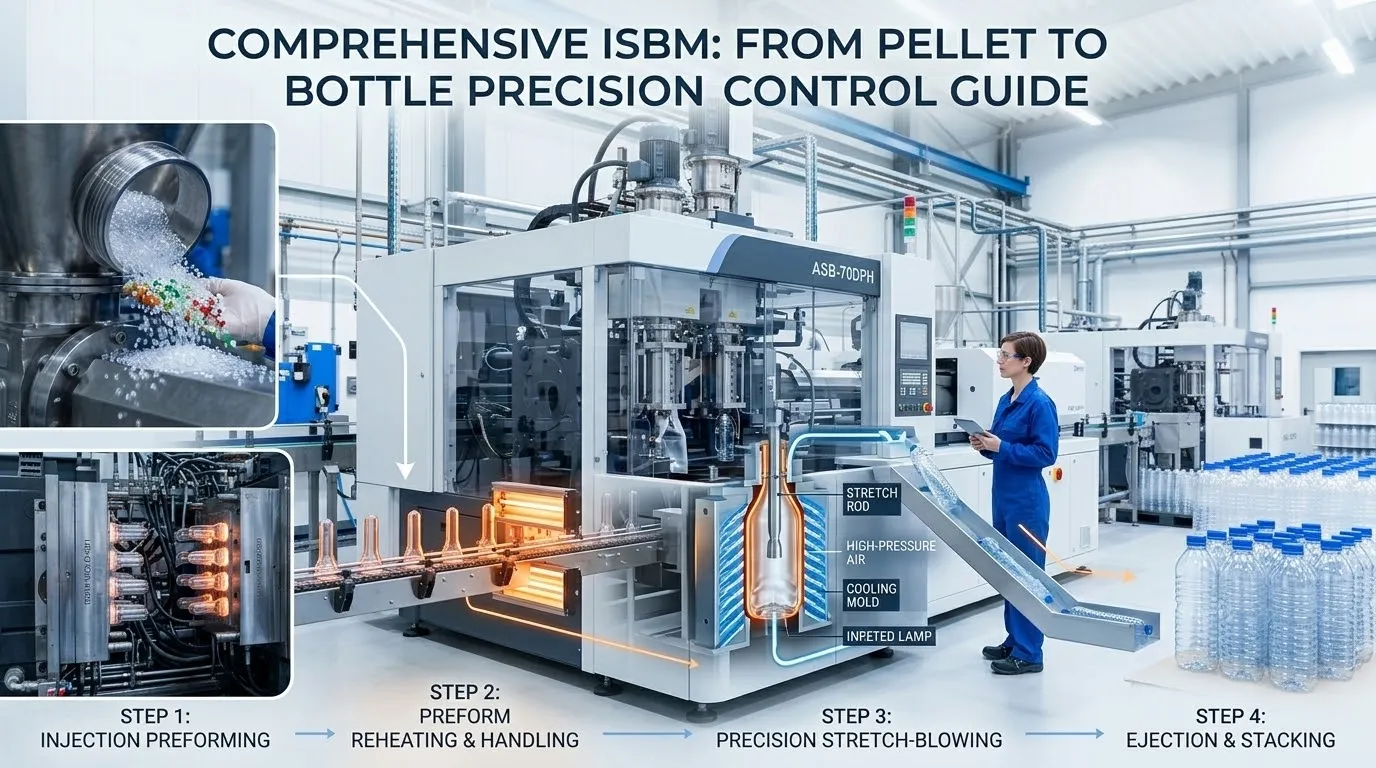
The ultimate production speed of an ISBM machine is not dictated by how fast the motors can move; it is strictly governed by how fast you can remove heat from the plastic. Polymer is a thermal insulator, making rapid cooling a profound engineering challenge. The thermodynamic auxiliary equipment is paramount to achieving profitable cycle times and flawless optical clarity.
1. Industrial Water Chillers
To freeze the molten plastic instantly upon injection and lock the biaxial orientation into place during the blow phase, massive volumes of freezing water must be pumped continuously through the intricate cooling channels of the tooling. Industrial water chillers act as the heart of this circulatory system. Depending on the geographic location of your facility and the ambient humidity, you must choose between air-cooled chillers or water-cooled chillers integrated with external cooling towers.
If your chiller lacks the required cooling tonnage, the water circulating through the mold will absorb heat faster than the chiller can remove it. The mold temperature will creep upward, forcing the machine operator to drastically slow down the cycle time to allow the plastic to cool, instantly destroying your projected hourly output capacity. When deploying highly compact, agile platforms like the EP-BPET-70V4 4-اسٹیشن انجکشن اسٹریچ بلو مولڈنگ مشین, a dedicated, appropriately sized portable chiller placed next to the machine is highly effective. However, a factory floor operating multiple high-velocity machines will require a massive centralized chiller plant.
2. Mold Temperature Controllers (MTCs)
While chillers are designed to remove heat, Mold Temperature Controllers are designed to add precise, localized heat to specific tooling components. In single-stage manufacturing, the hot runner manifold must be maintained at melting temperatures to prevent the polymer from freezing inside the distribution channels. Furthermore, the thermal conditioning pots must be supplied with highly regulated hot water or hot oil to manipulate the temperature profile of the preform prior to stretching.
This is particularly crucial for extreme packaging geometries. When utilizing the revolutionary EP-HGYS280-V6 6-اسٹیشن انجکشن اسٹریچ بلو مولڈنگ مشین, the presence of multiple independent conditioning stations requires a sophisticated fleet of MTC units. Each unit must meticulously regulate fluid temperatures to within a fraction of a degree, allowing packaging engineers to execute complex thermodynamic handoffs and stretch incredibly asymmetrical bottle shapes flawlessly. Conversely, for streamlined applications utilizing our EP-BPET-94V3 3-اسٹیشن انجکشن اسٹریچ بلو مولڈنگ مشین, the elimination of the conditioning station naturally reduces the auxiliary footprint by removing the need for dedicated conditioning MTC units.
Cleanroom Infrastructure and Servo Auxiliaries
The pharmaceutical and premium cosmetic sectors impose severe operational restrictions on manufacturing environments. When a brand deploys machinery into an ISO-certified cleanroom, the auxiliary equipment must align with absolute contamination control protocols. Traditional hydraulic machines emit micro-aerosolized oil vapors, contaminating the pristine air.
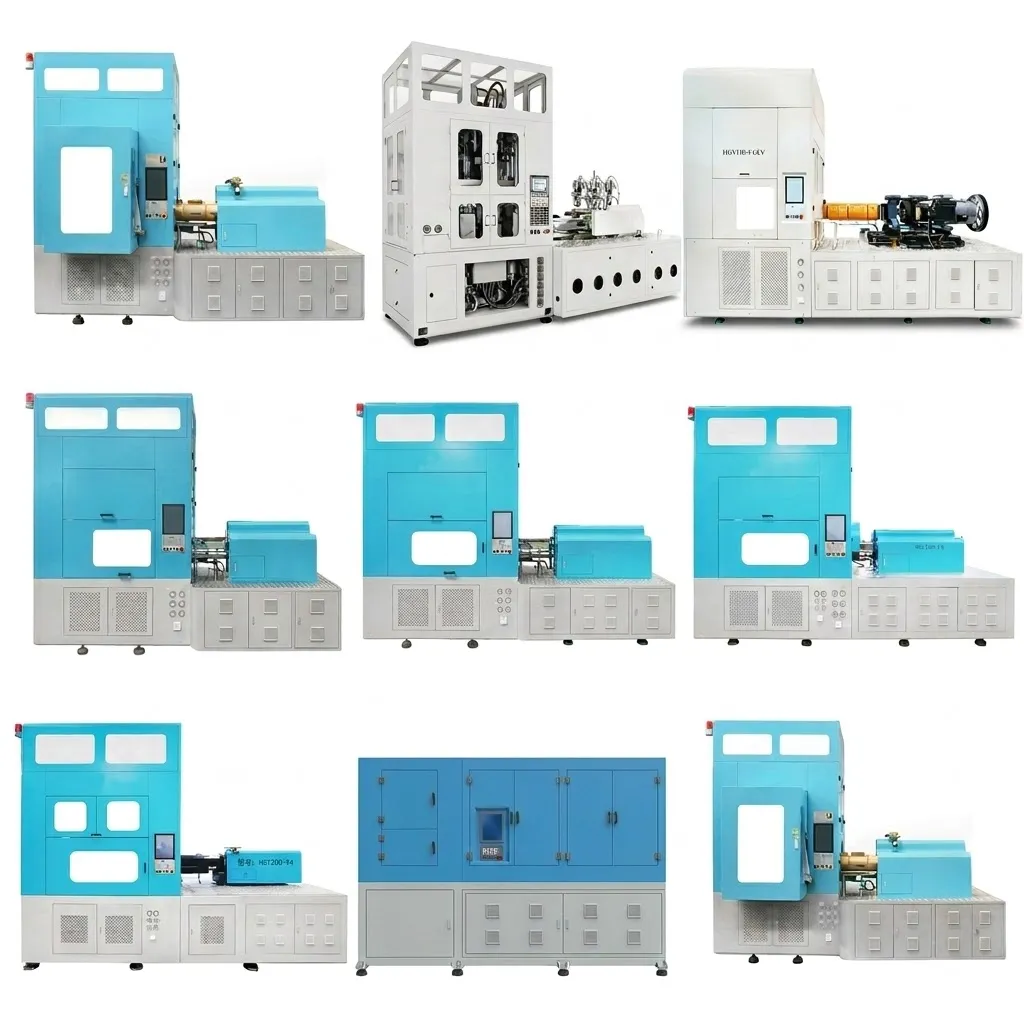
To satisfy these extreme regulatory requirements, Ever-Power engineered elite all-electric platforms. The EP-HGY150-V4-EV مکمل سروو 4-اسٹیشن انجکشن اسٹریچ بلو مولڈنگ مشین and the hyper-precise EP-HGY50-V3-EV مکمل سروو انجیکشن اسٹریچ بلو مولڈنگ مشین replace dirty hydraulics with pristine electromagnetic servo drives. However, deploying these machines also dictates how you structure your auxiliaries. In a cleanroom, massive noisy chillers and dusty resin dryers must be physically walled off in a separate, isolated utility corridor, with only clean piping and vacuum hoses penetrating the sealed manufacturing chamber to feed the servo platforms.
Downstream Automation and Material Recovery
The manufacturing ecosystem does not terminate when the bottle drops from the ejection station. If downstream logistics fail, the primary machine will instantly jam. High-speed ISBM platforms produce thousands of containers per hour. A robust network of highly engineered conveyor belts is mandatory to immediately transport the finished goods away from the machine footprint.
Furthermore, rigorous quality assurance requires downstream auxiliary integration. Advanced facilities deploy automated inline leak testers that pressurize every single bottle as it travels down the conveyor, instantaneously rejecting any container with microscopic seal defects. High-speed optical camera tunnels inspect the bottles for visual clarity and geometric perfection before they reach robotic palletizing stations.
Finally, sustainability mandates the integration of material recovery auxiliaries. Inevitably, machine calibration phases will produce rejected preforms or scrapped bottles. An industrial granulator, or crusher, is a vital piece of peripheral equipment. It mechanically grinds defective plastic back into usable flake, which is then pneumatically vacuumed back into the drying hopper, ensuring zero material waste and maximizing raw material profitability.
Architecting Your Ecosystem with Ever-Power
Navigating the complexities of industrial auxiliary sizing is a formidable engineering challenge. Purchasing an undersized chiller or an inadequate air compressor will perpetually bottleneck your multi-million dollar primary machinery, completely destroying your projected Return on Investment. Conversely, over-engineering the periphery results in wasted capital expenditure and bloated utility bills.
As the definitive engineering authority in Brazilian and global ISBM manufacturing, Ever-Power does not merely drop-ship molding machines; we architect total factory ecosystems. When you consult with our technical procurement teams, we analyze your specific polymer choices, thermodynamic loads, and output goals to meticulously calculate the precise auxiliary capacities required. We ensure your entire infrastructure operates in perfect, synchronized harmony to deliver uncompromising manufacturing dominance.
Engineer Your Complete Manufacturing Infrastructure
Do not jeopardize your primary machinery investment by neglecting the vital peripheral systems required to sustain it. Partner with a vertically integrated authority capable of architecting a flawless, end-to-end thermodynamic and pneumatic facility.
Are you ready to initiate a comprehensive technical audit for your complete facility infrastructure? Visit our global engineering headquarters at https://isbmmolding.com/ or contact our elite procurement deployment team directly at [email protected] to begin your strategic consultation.