Modern ambalaj teknolojisinin ön saflarına hoş geldiniz. Bir marka sahibi, ambalaj mühendisi veya tedarik zinciri uzmanıysanız, gelişmiş plastik kalıplama teknikleriyle üretilen kapların olağanüstü kalitesiyle muhtemelen karşılaşmışsınızdır. Ancak, önde gelen Brezilyalı ISBM üreticisi Ever-Power'da sıkça duyduğumuz bir soru tam olarak şudur: ISBM süreci nasıl çalışır? Bu teknolojinin ardındaki mekaniği, termodinamiği ve polimer bilimini anlamak, ambalaj stratejinizi optimize etmek, ürün güvenliğini sağlamak ve marka sunumunuzu yükseltmek için çok önemlidir.
Bu kapsamlı ve son derece detaylı kılavuzda, Enjeksiyonlu Gerdirme Şişirme Kalıplama yönteminin karmaşıklıklarını ele alacağız. Sizi, ham plastik reçine peletlerinden, dünya çapındaki perakende raflarını süsleyen kusursuz, kristal berraklığındaki şişelere kadar bir yolculuğa çıkaracağız. Geniş mühendislik deneyimimiz ve yetkin sektör bilgimizden yararlanarak, bu üretim konusu hakkında mevcut en güvenilir ve derinlemesine kaynağı size sunmayı amaçlıyoruz.
Teknolojinin Tanımı: Enjeksiyonlu Gerdirme Şişirme Kalıplama Tam Olarak Nedir?
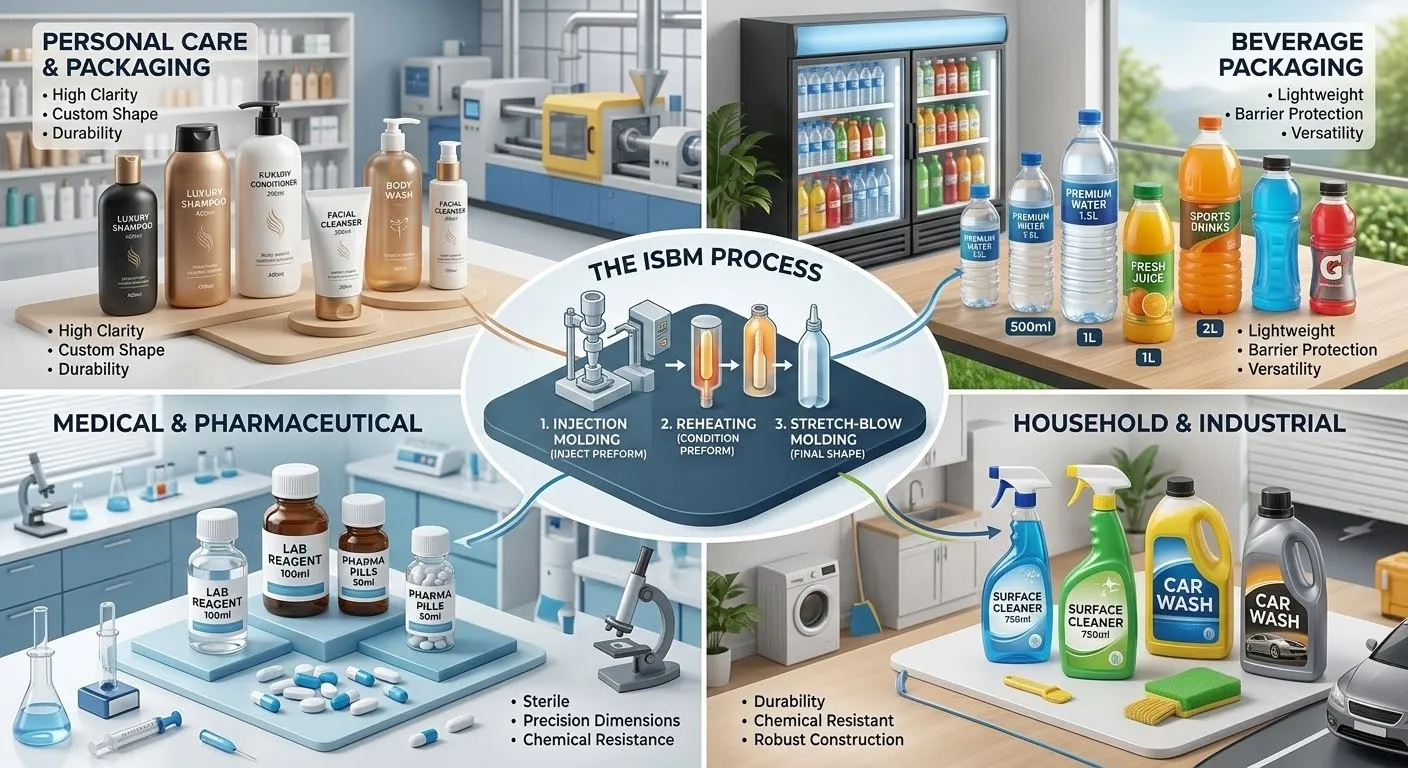
ISBM sürecinin nasıl çalıştığı sorusunu yanıtlamak için öncelikle net bir tanım yapmalıyız. Enjeksiyonlu Gerdirme Şişirme Kalıplama, esas olarak Polietilen Tereftalat (PET) gibi malzemelerden içi boş plastik kaplar üretmek için kullanılan gelişmiş bir üretim tekniğidir. Sıcak plastiğin sürekli, kalibre edilmemiş bir tüpünün kalıba bırakıldığı geleneksel ekstrüzyon şişirme kalıplamasının aksine, germe şişirme yöntemi son derece kontrollü, çok aşamalı bir işlemdir.
Bu teknolojinin en belirgin özelliği, "ön kalıp" oluşturulmasıdır. Ön kalıp, halihazırda şişenin nihai, dişli boyun kısmının tamamen şekillendirilmiş halini içeren, katı, test tüpü benzeri bir plastik parçadır. Bu ön kalıp daha sonra ısıtılır, fiziksel bir çubukla mekanik olarak gerilir ve ardından yüksek basınçlı hava ile dışarı doğru üflenerek nihai kalıp boşluğunun şeklini alır. Plastik malzemenin hem dikey hem de yatay olarak gerilmesi, biaksiyel oryantasyon adı verilen moleküler bir değişime neden olur ve bu da kabın fiziksel özelliklerini önemli ölçüde iyileştirir.
Birinci Aşama: Ön Şeklin Enjeksiyon Kalıplama Yöntemiyle Üretilmesi
Yolculuk, asıl şişirme aşamasından çok önce başlar. ISBM sürecinin nasıl çalıştığını anlamanın ilk kritik adımı, ön kalıbın enjeksiyonunu incelemektir. Bu aşama son derece hassasiyet gerektirir, çünkü burada ortaya çıkan herhangi bir hata, nihai şişede daha da büyüyecektir.
Reçine Kurutma ve Hazırlama
PET gibi malzemeler için işlem, kurutma haznelerinde başlar. PET, higroskopik bir polimerdir, yani çevredeki havadan nemi aktif olarak emer. Bu nem, plastik eritilmeden önce tamamen giderilmezse, enjeksiyon haznesinin içinde hidroliz olarak bilinen kimyasal bir reaksiyon meydana gelir. Hidroliz, polimer zincirlerini kelimenin tam anlamıyla parçalayarak plastiğin içsel viskozitesini azaltır. Bu da basınç altında kırılacak kırılgan ve zayıf bir kapla sonuçlanır. Ever-Power'da, Brezilya'daki üretim tesislerimiz, işleme başlamadan önce reçinenin nem içeriğini milyonda kırk parçanın altına düşüren son teknoloji ürünü kurutucu sistemler kullanmaktadır.
Eritme ve Enjeksiyon
Kuruduktan sonra, reçine peletleri enjeksiyon kalıplama makinesinin ısıtılmış haznesine düşer. Haznenin içinde, devasa bir Arşimet vidası döner. Vidanın dönmesinden kaynaklanan sürtünme, dış ısıtıcı bantlarla birleşerek plastiği viskoz bir sıvıya dönüştürür. Bu homojen eriyik daha sonra aşırı basınç altında çok gözlü çelik bir kalıba enjekte edilir.
Enjeksiyon kalıbı, mühendisliğin bir harikasıdır. Son şişenin tam ağırlığını, dişli boynun kesin boyutlarını ve ön kalıbın duvar kalınlığı profilini belirler. Boyun yüzeyinin bitişi özellikle önemlidir. Katı çeliğe karşı enjeksiyon kalıplama yöntemiyle üretildiği için, dişler mükemmel şekilde oluşturulur ve son kapak takıldığında sızdırmaz bir conta sağlar. Bu, boynun kalıba karşı plastik üflenerek oluşturulduğu ve genellikle pürüzlü, düzensiz yüzeylerle sonuçlanan diğer şişirme kalıplama tekniklerine göre büyük bir avantajdır.
Soğutma ve Amorf Hal
Erimiş plastik ön kalıp boşluğunu doldurduktan hemen sonra, çelik kalıptan geçen soğuk su plastiği hızla soğutur. Bu hızlı soğutma kesinlikle hayati önem taşır. Plastik çok yavaş soğursa, kristalleşmeye başlayarak bulanık ve opak hale gelir. Plastik hızla dondurularak, amorf, son derece şeffaf bir duruma kilitlenir. Sonuç olarak, işlemin bir sonraki aşamasına hazır, berrak ve katı bir ön kalıp elde edilir.
İkinci Aşama: Isıl Şartlandırma ve Yeniden Isıtma İşlemi
Katı ön kalıbı germek ve şişirmek için, tekrar bükülebilir bir duruma getirilmesi gerekir. Ancak tamamen eritilemez; çok özel bir termodinamik aralığa kadar ısıtılması gerekir. Bu, cam geçiş sıcaklığı olarak bilinir.
PET için bu sıcaklık aralığı inanılmaz derecede dardır ve tipik olarak 95 ile 105 derece Celsius arasındadır. Ön kalıp çok soğuksa, moleküler zincirler gerilmeye direnç göstererek mekanik yırtılmalara ve inci parlaklığı olarak bilinen mikroskobik kırılmalara neden olur. Ön kalıp çok sıcaksa, plastik kristalleşmeye başlayarak bulanıklaşır veya basitçe eriyerek yüksek basınçlı şişirme aşamasında şeklini koruyamaz.
Modern bir ISBM işleminde, ön şekillendirilmiş parçalar, sürekli bir konveyör zinciri üzerinde yüksek hassasiyetli bir fırından geçirilir. Yüksek yoğunluklu kuvars kızılötesi lambaların bulunduğu sıraların yanından geçerken sürekli olarak dönerler. Bu dönme hareketi, termal enerjinin ön şekillendirilmiş parçanın tüm çevresine eşit olarak uygulanmasını sağlar.
Ayrıca, ısıtma yukarıdan aşağıya doğru homojen değildir. Gelişmiş makineler, teknisyenlerin ayrı ayrı yatay lamba bölgelerinin gücünü ayarlamasına olanak tanır. Bu, ön kalıbın daha kalın gövdesine daha fazla ısı ve daha ince bölgelerine daha az ısı uygulayarak özelleştirilmiş bir termal profil oluşturabileceğimiz anlamına gelir. Dişli boyun kısmı, yoğun fırın sıcaklıklarından dolayı bozulmaması için genellikle soğuk su rayları kullanılarak ısıdan tamamen korunur.
Üçüncü Aşama: Germe ve Üflemenin Karmaşık Mekaniği
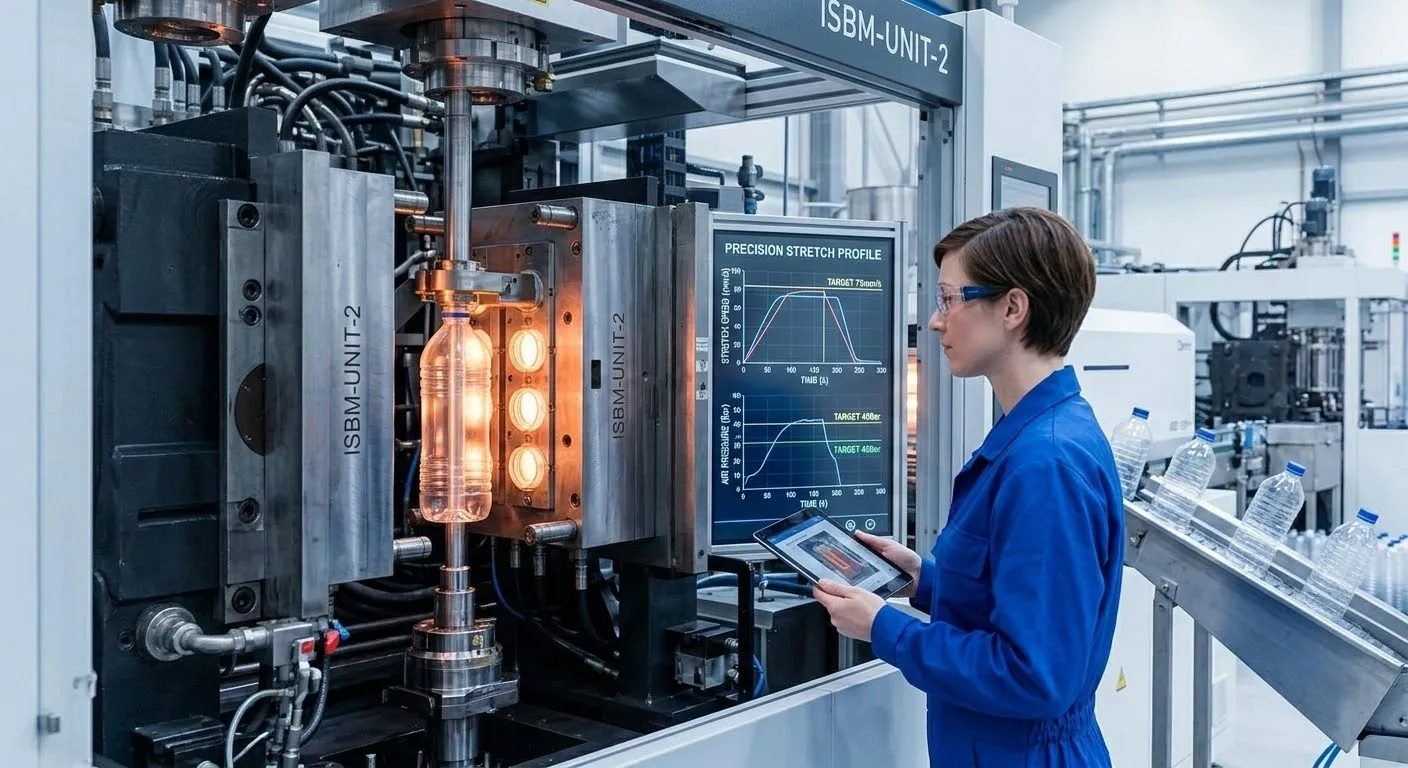
Şimdi meselenin özüne geliyoruz. Birisi ISBM sürecinin nasıl çalıştığını sorduğunda, genellikle hayal ettikleri şey bu belirli saniye dilimidir. Isıl işlem görmüş ön kalıp, hızlı robotik tutucular aracılığıyla açık şişirme kalıbına aktarılır. Şişirme kalıbının devasa çelik yarım parçaları, ön kalıbın soğuk boyun kısmını çevreleyerek kapanır ve plastiğin sıcak, esnek gövdesini içi boş kalıp boşluğunun tam ortasında mükemmel bir şekilde askıda tutar.
Aşağıda, mekanik hareket ve pnömatik gücün son derece senkronize bir balesi yer almaktadır.
- Adım 1: Germe Çubuğuyla İniş
Kalıp kapanır kapanmaz, çelik veya yüksek derecede parlatılmış alüminyum bir germe çubuğu, boyundaki açıklıktan aşağı iner. Güçlü pnömatik silindirler veya ultra hassas elektrikli servo motorlar tarafından tahrik edilen çubuk, ön kalıbın iç tabanına temas edene kadar aşağı doğru hareket eder. Aşağı doğru itmeye devam ederek, sıcak plastiği kalıbın tabanına doğru uzunlamasına fiziksel olarak gerer. Bu aşağı doğru itme, polimer zincirlerinin dikey yönelimini sağlar. - Adım 2: Üfleme Öncesi Genleşme
Germe çubuğunun inişiyle neredeyse eş zamanlı olarak, yüksek hassasiyetle ayarlanmış bir valf açılır ve ön kalıba nispeten düşük basınçlı bir hava akışı sağlanır. Buna ön üfleme denir. Ön üflemenin amacı, plastiği inen germe çubuğundan uzaklaştırarak yavaşça genişletmek ve sıcak polimerin metale yapışmasını önlemektir. Balonlaşma sürecini başlatır ve malzemenin kalıbın dibinde birikmemesini sağlar. Bu adımın tam zamanlaması ve basıncı, düzgün duvar kalınlığı için kritik öneme sahiptir. - 3. Adım: Yüksek Basınçlı Üfleme
Germe çubuğu kalıbın dibine ulaşıp plastiği tabana sabitledikten sonra, ana üfleme vanası açılır. Bazen kırk barı aşan yüksek basınçlı havanın büyük bir dalgası, genişleyen kabarcığın içine püskürtülür. Bu muazzam kuvvet, plastiği şiddetle dışarı doğru iter ve üfleme kalıbının soğutulmuş iç duvarlarına çarpar. Yüksek basınç, plastiğin kalıp boşluğuna tasarlanmış her küçük oyulmuş detaya, logoya ve yapısal çıkıntıya akmasını sağlar. - Adım 4: Soğutma ve Egzoz
Sıcak plastik, kalıbın soğuk çelik veya alüminyum duvarlarıyla temas ettiği anda anında donar. Bu hızlı soğuma, yeni hizalanmış, çift eksenli yönlendirilmiş moleküler yapıyı kalıcı olarak yerinde kilitler. Soğuma süresinin saniyenin çok küçük bir bölümünden sonra, bir egzoz valfi açılır ve şişenin içindeki yüksek basınçlı hava hızla atmosfere boşaltılır. Germe çubuğu yukarı doğru çekilir, büyük kalıp parçaları ayrılır ve bitmiş, tamamen şekillendirilmiş şişe makineden dışarı atılır.
Çift Eksenli Yönelimin Bilimi: Gerilmenin Önemi
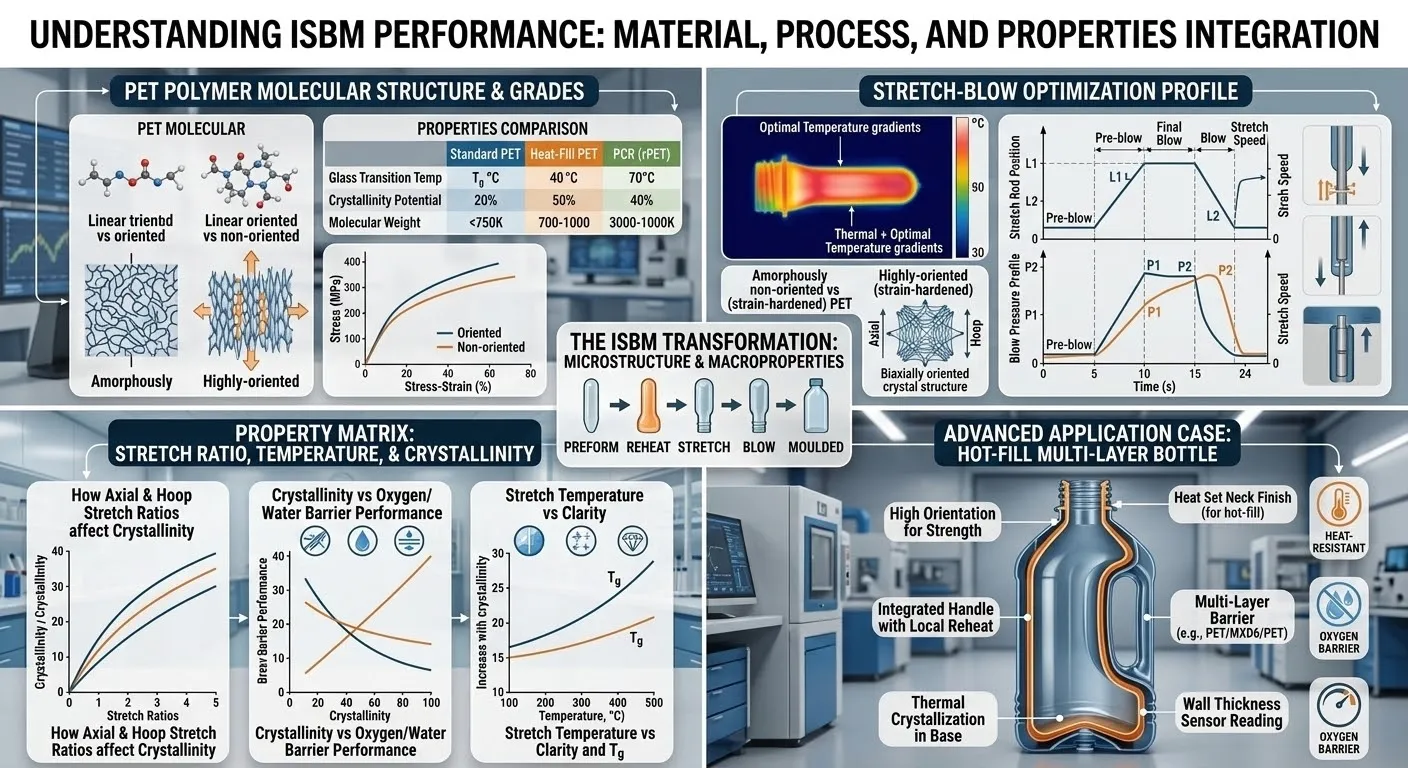
ISBM sürecinin nasıl işlediğini gerçekten kavramak için, mikroskobik düzeyde gerçekleşen polimer bilimini anlamak gerekir. Neden önceden şekillendirilmiş bir kalıp yapıp onu germek yerine, erimiş bir tüpten doğrudan şişe üflemek daha kolay?
Cevap, çift eksenli yönelimde yatıyor. Ham plastik sıvı halden soğuduğunda, uzun moleküler zincirleri tıpkı büyük bir kase pişmiş spagetti gibi rastgele birbirine dolanır. Bu rastgele düzenleme yapısal bütünlükten yoksundur ve gazlara karşı oldukça geçirgendir.
ISBM işlemi sırasında, germe çubuğu bu birbirine dolanmış zincirleri dikey olarak hizalamaya zorlar. Daha sonra yüksek basınçlı hava, onları şişenin çevresi boyunca yatay olarak germeye ve hizalamaya zorlar. Bu çift yönlü germe, sıkıca örülmüş, birbirine kenetlenen bir polimer zincirleri matrisi oluşturur. Bu gerilme kaynaklı kristalleşme, malzemenin fiziksel özelliklerini tamamen değiştirir.
İlk olarak, kabın çekme dayanımını önemli ölçüde artırır. Çift eksenli yönlendirilmiş bir şişe, bükülmeden muazzam iç basınca ve önemli üst yük ağırlığına dayanabilir. İkincisi, bu sıkı moleküler doku, müthiş bir bariyer oluşturur. Mikroskobik bir kalkan görevi görerek, karbondioksit moleküllerinin soda şişesinden kaçmasını ve oksijen moleküllerinin içeri girerek hassas gıda ürünlerini bozmasını engeller. Son olarak, polimerlerin hizalanması, ışığın minimum kırılmayla malzemeden geçmesine olanak tanıyarak, markaların üstün raf çekiciliği için talep ettiği parlak, cam benzeri bir şeffaflık sağlar.
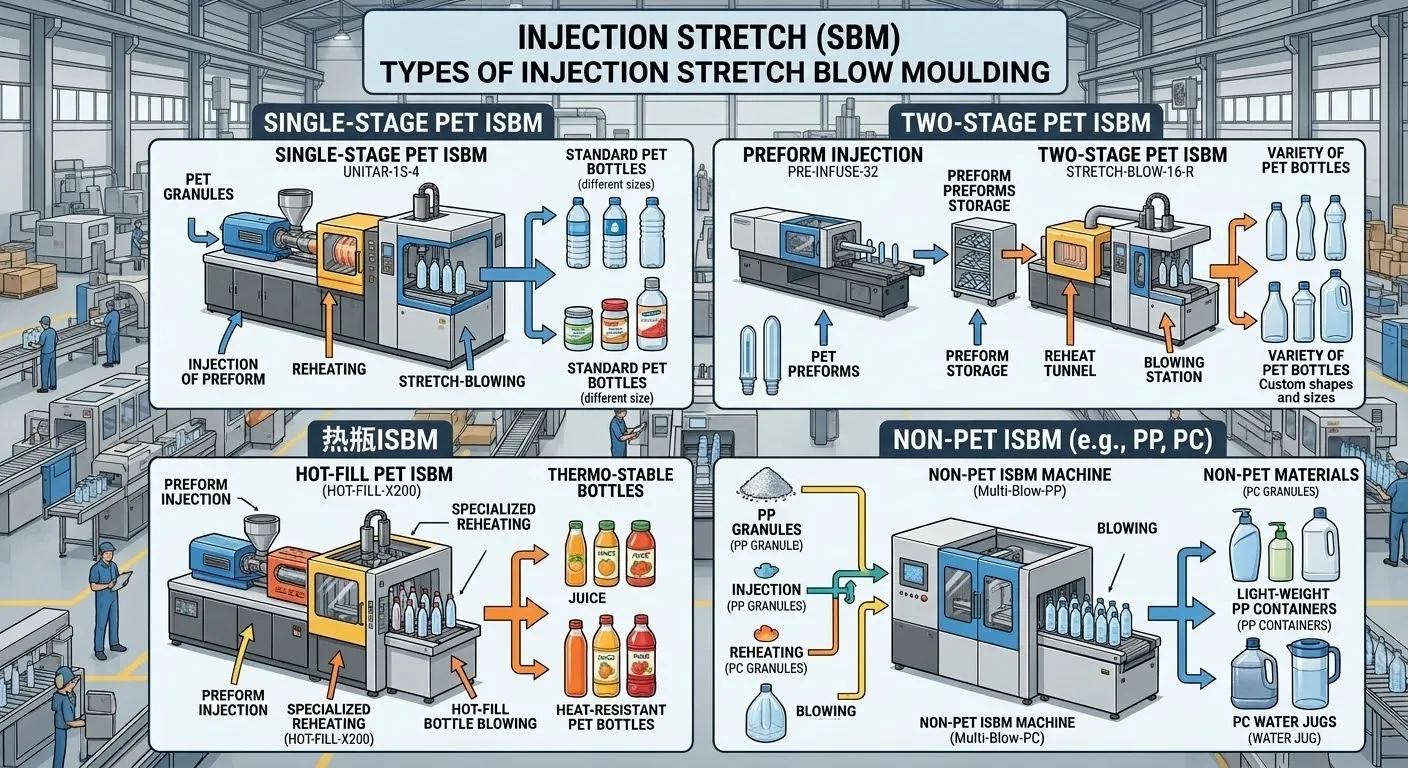
Mimari Varyasyonlar: Tek Aşamalı ve İki Aşamalı Üretim
Germe ve üfleme işlemlerinin temel fiziği aynı kalırken, işlemi gerçekleştirmek için kullanılan makineler üretim hacmine, şişe tasarımına ve son kullanım uygulamasına bağlı olarak önemli ölçüde değişiklik gösterir. Ever-Power'da, Brezilya'daki ISBM üretim tesisimiz, iki ana metodolojiyi de kapsamaktadır: tek aşamalı işlem ve iki aşamalı işlem.
Tek Aşamalı Süreç (1 Adım)
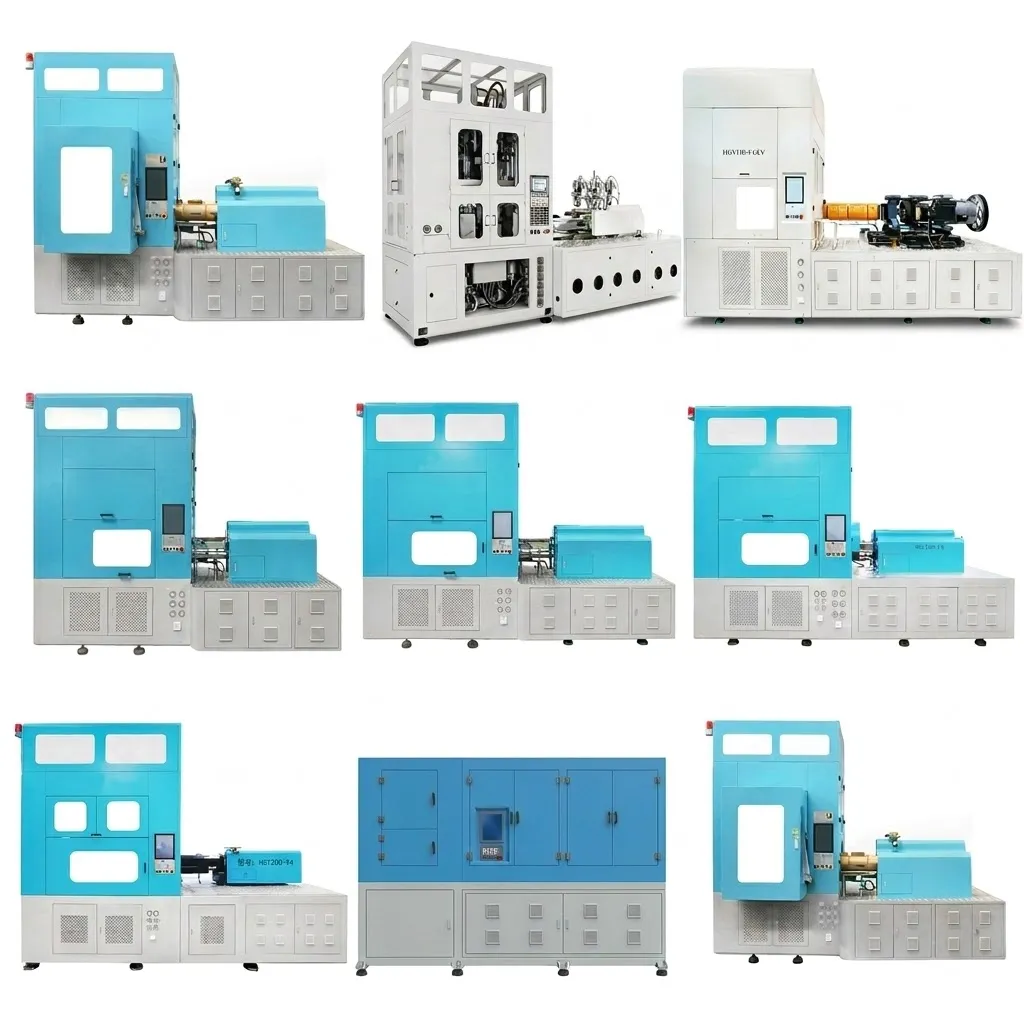
Tek kademeli bir makinede, ham plastik granülden bitmiş şişeye kadar tüm dönüşüm, tek bir sürekli ekipman parçası içinde gerçekleşir. Makine, tipik olarak döner tabla veya doğrusal formatta düzenlenmiş bir enjeksiyon istasyonu, bir termal şartlandırma istasyonu, bir germe-şişirme istasyonu ve bir fırlatma istasyonuna sahiptir.
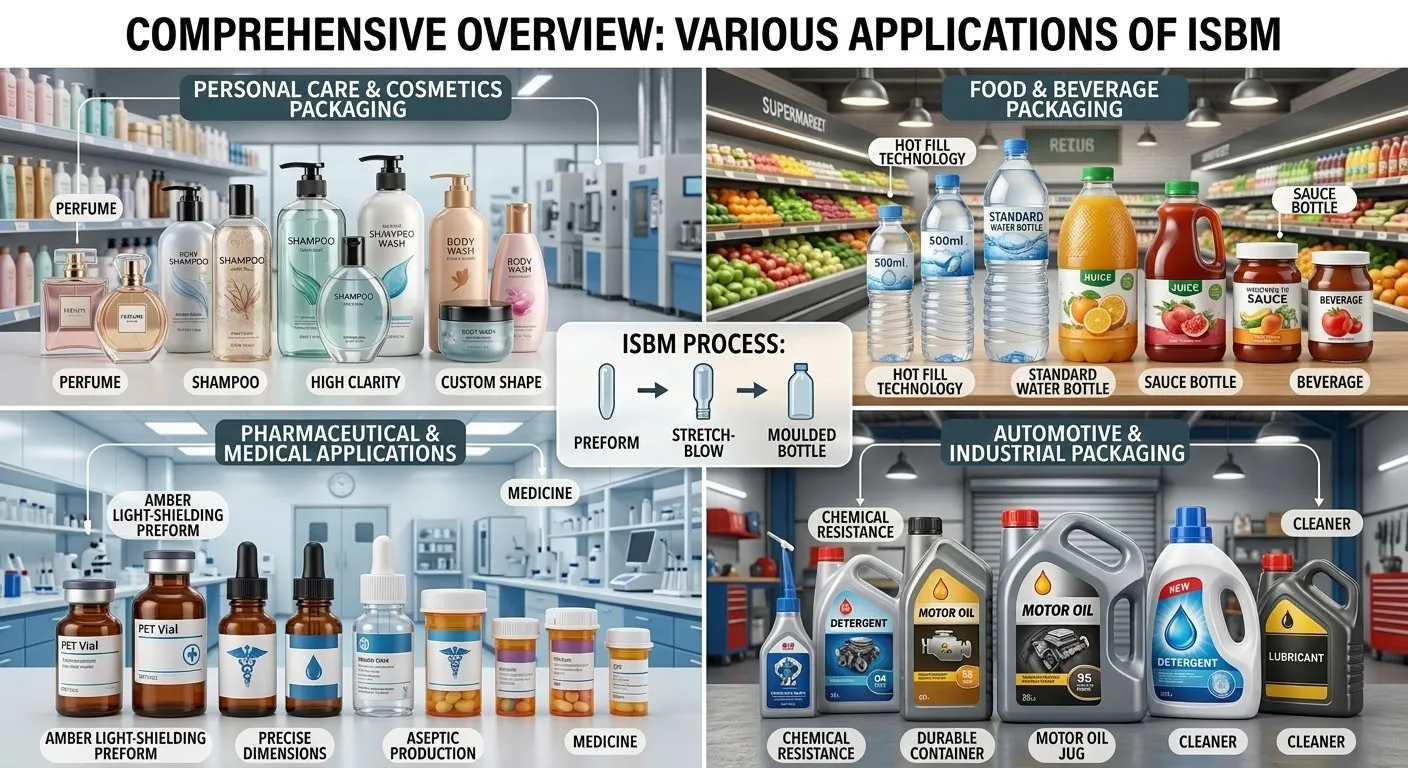
Tek aşamalı işlemin en büyük avantajı kusursuz yüzey kalitesidir. Ön kalıp makineden hiç çıkmadığı için çevreye maruz kalmaz, başka bir ön kalıpla temas etmez ve depolama kabında asla savrulmaz. Bu, yüzey çizikleri, aşınmaları veya kirlenme riskini tamamen ortadan kaldırır. Bu nedenle, tek aşamalı ISBM, görsel mükemmelliğin vazgeçilmez olduğu premium kozmetik endüstrisi, üst düzey kişisel bakım ürünleri ve özel ilaç kapları için mutlak altın standarttır. Ayrıca, ön kalıbın yönünü kaybetmeden termal profilin yoğun bir şekilde özelleştirilebilmesi nedeniyle, oval şampuan şişeleri veya dikdörtgen kaplar gibi oldukça karmaşık, silindirik olmayan şekillerin üretimi için de mükemmeldir.
İki Aşamalı Süreç (2 Adımlı)
İki aşamalı işlem, ön kalıbın enjeksiyon kalıplama işlemini şişenin gerdirme üfleme işleminden fiziksel olarak ayırır. İlk aşamada, devasa, yüksek boşluklu enjeksiyon kalıplama makineleri milyonlarca ön kalıp üretir. Bu ön kalıpların oda sıcaklığına soğumasına izin verilir, büyük sekizli kutulara paketlenir ve aylarca saklanabilir veya dünya çapında sevk edilebilir.
İkinci aşamada, bu soğuk ön kalıplar bağımsız bir yeniden ısıtmalı germe şişirme kalıplama makinesine beslenir. Makine, ön kalıpları sürekli olarak bir kızılötesi fırından geçirerek, şişelere şişirilmeden önce cam geçiş sıcaklığına geri getirir.
İki aşamalı yöntem, muazzam ölçek ekonomileri için tasarlanmıştır. Küresel içecek endüstrisinin omurgasını oluşturmaktadır. İşlemleri ayırarak, bir içecek markası ön kalıpları toplu olarak satın alabilir ve şişeleri yalnızca şişeleme tesisinde doldurmadan hemen önce şişirebilir. Bu, ülke genelinde boş şişelerin (içi boş şişeler) nakliyesiyle ilişkili maliyeti ve karbon ayak izini önemli ölçüde azaltır. İki aşamalı makineler, saatte on binlerce şişeyi aşan üretim kapasiteleriyle son derece yüksek hızlarda çalışır.
Süreçteki Sorunları Giderme: Kusursuz Kalite Kontrolü Sağlama
ISBM sürecinin nasıl çalıştığını anlamak, aynı zamanda nasıl başarısız olduğunu da anlamak anlamına gelir. Plastik germe işlemi için gereken termodinamik denge hassastır. Fabrika ortam sıcaklığında, soğutma suyu akışında veya basınçlı hava basıncında meydana gelen küçük bir dalgalanma bile kusurlu ürünlere yol açabilir. Önde gelen Brezilyalı ISBM üreticisi Ever-Power, titiz, veri odaklı sorun giderme protokolleri uygulamaktadır. En yaygın kusurları ve bunları çözmek için gereken mühendislik çözümlerini inceleyelim.
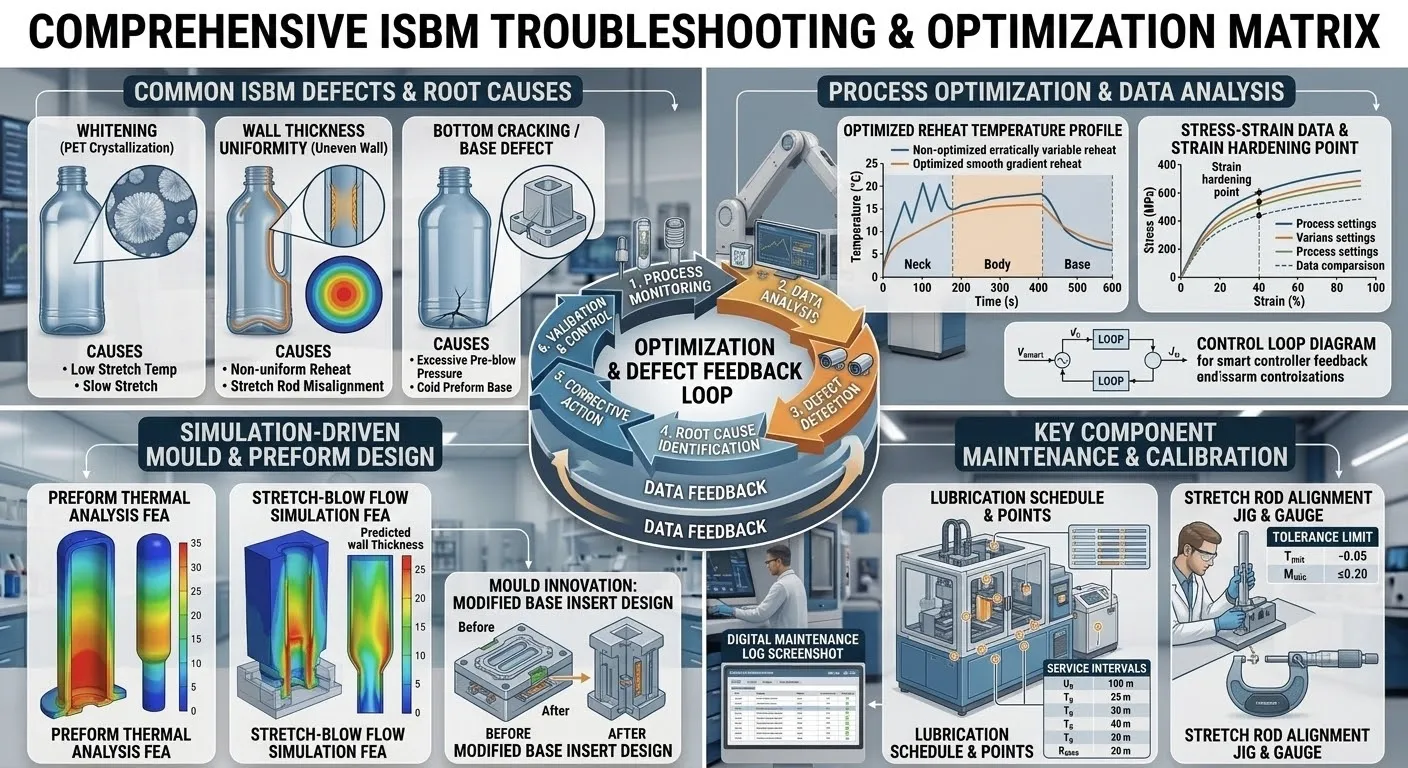
İnci Parlaklığının (Stres Kaynaklı Beyazlama) Belirlenmesi ve Giderilmesi
Sedeflenme, şişenin gövdesinde veya tabanında sütlü, opak, beyazımsı bir pus olarak kendini gösterir. Dokunulduğunda hafif pürüzlü bir his verir. Bu kusur, plastiğin moleküler yapısının doğal elastik sınırının ötesine gerilmesiyle, polimer matrisinin mikroskobik düzeyde kelimenin tam anlamıyla parçalanması sonucu oluşur.
Sorunun temel nedeni neredeyse her zaman soğuk plastikle ilgilidir. Eğer ön kalıp fırında yeterince ısıtılmazsa veya ısı ön kalıp duvarının çekirdeğine kadar tam olarak nüfuz etmezse, plastik çok sert kalır. Germe çubuğu ve yüksek basınçlı hava bu soğuk plastiğe çarptığında, düzgün bir şekilde gerilmek yerine yırtılır. Uzman çözümü, şişenin bulanık bölgesine karşılık gelen kızılötesi lambaların ısı çıkışını artırmak veya ısının ön kalıp duvarına nüfuz etmesi için daha fazla bekleme süresi sağlamak amacıyla makine döngüsünü biraz yavaşlatmaktır.
Termal Kristalleşmeyle (Pusuyla) Mücadele
İnci parlaklığı soğuk germeden kaynaklanırken, termal kristalleşme bunun tam tersidir; aşırı ısıdan kaynaklanır. Bir ön kalıp, optimum işleme aralığının çok üzerindeki sıcaklıklara çok uzun süre maruz bırakılırsa, amorf moleküler zincirler kendilerini sferolit adı verilen büyük, oldukça düzenli kristal yapılar halinde organize etmeye başlar. Bu sferolitler ışığı dağıtarak, genellikle şişenin boyun veya ağız kısmına yakın yoğun, bulutlu bir sis oluşturur.
Termal pusu ortadan kaldırmak için mühendislerin ısı profilini hızla düşürmesi gerekir. Bu, etkilenen bölgedeki kızılötesi lambaların güç yüzdesini düşürmeyi içerir. Ayrıca, sıcak havanın ön kalıpların etrafında birikmemesini sağlamak için fırın havalandırma sisteminin kapsamlı bir şekilde incelenmesini ve enjeksiyon kalıbı ve boyun koruma raylarından geçen soğutma suyunun doğru sıcaklık ve basınçta aktığının doğrulanmasını gerektirir.
Merkezden Kaymış Kapıların ve Düzensiz Duvar Dağılımının Düzeltilmesi
Giriş noktası, plastik şişenin tabanının tam ortasında görülebilen küçük enjeksiyon noktasıdır. Kusursuz bir işlemde, bu giriş noktası tam ortada kalır. Ancak, giriş noktası bir tarafa doğru kayarsa, asimetrik malzeme dağılımını gösterir. Şişenin bir tarafı tehlikeli derecede ince ve zayıf olurken, diğer tarafı gereksiz yere kalın olur.
Bu kusur, üst yük dayanımı ve patlama basıncı değerlerini ciddi şekilde tehlikeye attığı için son derece kritiktir. Mekanik sorunlardan, örneğin bükülmüş bir germe çubuğundan veya yanlış hizalanmış bir şişirme kalıbından kaynaklanabilir. Daha sıklıkla, termodinamik veya pnömatik bir sorundur. Ön şekillendirilmiş parça fırında düzgün dönmüyorsa, bir taraf diğerinden daha sıcak ve yumuşak hale gelir ve bu da düzensiz bir şekilde gerilmesine neden olur. Alternatif olarak, ön şişirme basıncı çok yüksekse veya saniyenin bir kısmı kadar erken tetiklenirse, plastik germe çubuğu onu tabana güvenli bir şekilde sabitlemeden önce kontrolsüz bir şekilde şişer ve bu da merkezden kaymış bir girişle sonuçlanır. Bunu düzeltmek, ön şişirme zamanlayıcılarının ve basınç regülatörlerinin hassas bir şekilde yeniden kalibre edilmesini gerektirir.
Temel Test ve Kalite Güvence Protokolleri
ISBM sürecinin nasıl işlediğini bilmek, ancak çıktının kalitesini kanıtlayabiliyorsanız değerlidir. Dünya standartlarında üretim, aralıksız kalite güvencesi gerektirir. Ever-Power'da, laboratuvarlarımız her üretim partisinin katı uluslararası standartları karşılamasını garanti etmek için sürekli olarak tahribatlı ve tahribatsız test rejimleri yürütmektedir.
- Üstten Yük Direnci Testi
Şişeler, boyun kısmına yavaşça artan bir aşağı doğru kuvvet uygulayan mekanik bir prese yerleştirilir. Bu, şişenin depo paletlerine istiflendiğinde karşılaşacağı muazzam ağırlığı simüle eder. Makine, şişenin bükülmesine veya çökmesine neden olacak tam kuvveti ölçer. Kötü işleme nedeniyle duvar kalınlığı düzensiz ise, şişe erken bozulacaktır. - Patlama Basıncı Analizi
Özellikle gazlı meşrubatlar için hayati önem taşıyan bu testte, şişe kapatılır ve kap şiddetli bir şekilde patlayana kadar katlanarak artan bir basınçla su pompalanır. Patlama basıncını, hacim genişleme yüzdesini ve kırılmanın tam yerini titizlikle kaydediyoruz. Taban kısmındaki bir kırılma genellikle işlem sırasında yetersiz ısıya veya aşırı içsel gerilime işaret eder. - Kesit Ağırlığı ve Malzeme Dağılımı
Plastik malzemenin germe şişirme aşamasında mükemmel şekilde dağıldığından emin olmak için teknisyenler, şişeyi boyun, omuz, ana gövde paneli ve taban olmak üzere ayrı bölümlere ayırmak için sıcak tel kesiciler kullanırlar. Her bölüm, orijinal tasarımın katı mühendislik özelliklerine uygunluğunu doğrulamak için yüksek hassasiyetli analitik terazilerde tartılır.
İşlemle Uyumlu Gelişmiş Malzemeler
PET, Enjeksiyonlu Germe Şişirme Kalıplama sektörünün tartışmasız şampiyonu olsa da, çift eksenli yönlendirmeye uygun tek polimer değildir. Farklı pazar segmentleri farklı kimyasal ve termal özellikler gerektirir ve bu işlem, çeşitli gelişmiş malzemelere son derece uyarlanabilir.
Polipropilen (PP): PP, yüksek ısı direnci ve mükemmel kimyasal bariyer özellikleri nedeniyle büyük ilgi görüyor. Özellikle meyve suları, soslar ve sterilize edilmesi gereken tıbbi çözümler gibi sıcak dolum uygulamaları için oldukça tercih ediliyor. Ayrıca PET'e göre doğal olarak daha hafiftir. Bununla birlikte, PP'nin işlenmesi oldukça zordur. PP'nin gerilmesi için termodinamik aralık son derece dardır. Ön kalıp sadece bir veya iki derece fazla soğuksa yırtılır; bir veya iki derece fazla sıcaksa erir. PP germe şişirme işleminde ustalaşmak, Ever-Power gibi gelişmiş bir üreticinin ayırt edici özelliğidir.
Polikarbonat (PC) ve Tritan: Aşırı dayanıklılık, tekrarlanan darbelere karşı direnç ve uzun süreli yeniden kullanılabilirlik gerektiren uygulamalar için Polikarbonat veya Eastman Tritan gibi mühendislik reçineleri kullanılır. Bu malzemeler, beş galonluk su sebili şişeleri, premium spor şişeleri ve bebek besleme ürünlerinde yoğun olarak kullanılır. Bu polimerler, önemli ölçüde daha yüksek işlem sıcaklıkları ve çok yüksek şişirme basınçları gerektirir; bu da özel, ağır hizmet tipi makineleri zorunlu kılar.
Üretimin Geleceği: Sürdürülebilirlik, Hafifletme ve rPET
ISBM sürecinin bugün nasıl işlediğini anlamak, sürdürülebilir geleceğine dair net bir bakış açısını da içermelidir. Çevreye duyarlı ambalajlara yönelik küresel talep sektörü dönüştürüyor ve streç şişirme kalıplama süreci bu değişimi yönlendirmek için benzersiz bir konumda bulunuyor.
En önemli değişimlerden biri, yaygın olarak rPET olarak adlandırılan, tüketim sonrası geri dönüştürülmüş PET'in entegrasyonudur. Modern üretim ekipmanları ve gelişmiş proses kontrolleri, artık yüzde yüze kadar geri dönüştürülmüş reçine pulları kullanarak kristal berraklığında, yüksek performanslı şişeler üretmemizi sağlıyor. rPET'in işlenmesi büyük zorluklar içeriyor; ham madde, kaynak malzemeye bağlı olarak değişen içsel viskozite ve hafif renk bozulmasından sıklıkla etkileniyor. Bununla birlikte, enjeksiyon aşamasında agresif eriyik filtrasyonu ve şişirme aşamasında son derece uyarlanabilir, gerçek zamanlı ısı profillemesi sayesinde, bu farklılıkları azaltabilir, plastik atık döngüsünü kapatabilir ve döngüsel ekonomiyi ileriye taşıyabiliriz.
Dahası, sürekli "hafifletme" çabası, bu teknolojinin mutlak hassasiyetini vurgulamaktadır. Son yirmi yılda mühendisler, standart yarım litrelik bir su şişesinin toplam plastik ağırlığını, üstten yükleme mukavemetinden veya patlama basıncından ödün vermeden yüzde elliden fazla azaltmayı başardılar. Bu, ön kalıbın titizlikle yeniden tasarlanması, boyun kısmının kısaltılması ve her bir polimer zincirinden maksimum performansı elde etmek için esneme oranlarının optimize edilmesiyle sağlanır. Hafifletme, hammadde tüketimini önemli ölçüde azaltır ve bitmiş ürünlerin küresel olarak taşınmasıyla ilişkili karbon emisyonlarını önemli ölçüde düşürür.
Küresel Markalar Brezilya'da Ever-Power'a Neden Güveniyor?
Enjeksiyonlu Gerdirme Şişirme Kalıplama (ISBM) sürecinin inceliklerine hakim olmak, sadece makine satın almaktan daha fazlasını gerektirir; derin mühendislik yeteneği, tavizsiz kalite standartları ve onlarca yıllık uygulamalı deneyim gerektirir. Önde gelen Brezilyalı ISBM üreticisi olarak Ever-Power, ambalaj sektöründe en yetkin ve güvenilir ortak olmak için kaynaklarını adamıştır.
Brezilya'da stratejik olarak konumlandırılmış, son teknolojiye sahip tesislerimizden faaliyet göstererek, müşterilerimize benzersiz bir teknik mükemmellik ve tedarik zinciri çevikliği sunuyoruz. İster lüks bir kozmetik lansmanı için tek aşamalı bir işlemin kusursuz yüzey kalitesine, ister büyük bir içecek lansmanı için iki aşamalı bir işlemin yüksek hızlı, yüksek hacimli verimliliğine ihtiyacınız olsun, mühendislik ekiplerimiz projenizi ilk CAD tasarımından tam ölçekli seri üretime kadar optimize etmek için gereken hassas bilgiye sahiptir.
Biz sadece şişe üretmiyoruz; rekabet avantajı yaratıyoruz. Markanızla yakın bir şekilde çalışarak, özel bariyer gereksinimlerinizi, estetik hedeflerinizi ve sürdürülebilirlik amaçlarınızı anlıyor ve ürününüzü rakiplerinden üstün kılan özel bir ISBM çözümü geliştiriyoruz.
Bir sonraki projenizde ISBM sürecinden nasıl faydalanabileceğimizi görüşmek üzere sizi önde gelen ambalaj mühendislerimizden biriyle görüştürmemi ister misiniz?