How much space is required to install an ISBM machine? A Complete Facility Planning Guide
When corporate facility directors and industrial architects embark on the construction or expansion of a plastic packaging plant, spatial geometry is just as critical as the capital expenditure budget. In the highly complex world of polymer processing, industrial real estate is a premium asset. Allocating inadequate factory floor space leads to logistical nightmares, severe safety hazards, and catastrophic maintenance inefficiencies. As an authoritative Brazilian ISBM manufacturer dominating the Latin American and global markets, the engineering infrastructure team at Ever-Power frequently consults with multinational brands during their blueprint phases. The most critical logistical question we address is universally consistent: How much space is required to install an ISBM machine?
Calculating the required square footage for an Injection Stretch Blow Molding platform is far more complex than simply measuring the physical dimensions of the primary machine chassis. An ISBM machine is not an isolated appliance; it is the thermodynamic epicenter of a massive industrial ecosystem. To guarantee operational fluidity, one must calculate the footprint of the primary equipment, the auxiliary support machinery, the raw material staging zones, the finished goods conveyor networks, and the mandatory safety clearances required for heavy crane operations. In this profoundly detailed, highly technical facility planning guide, we will completely deconstruct the spatial requirements of modern ISBM manufacturing. We will provide precise layout strategies to maximize your production density while preserving uncompromising operational efficiency and workplace safety.
The Illusion of the Static Machine Footprint
The most devastating error a procurement team can make is downloading a technical specification sheet, reading the length and width of the machine, and drawing a tightly fitted box on their factory floor plan. The physical chassis of the machine represents only a fraction of the total required installation envelope.
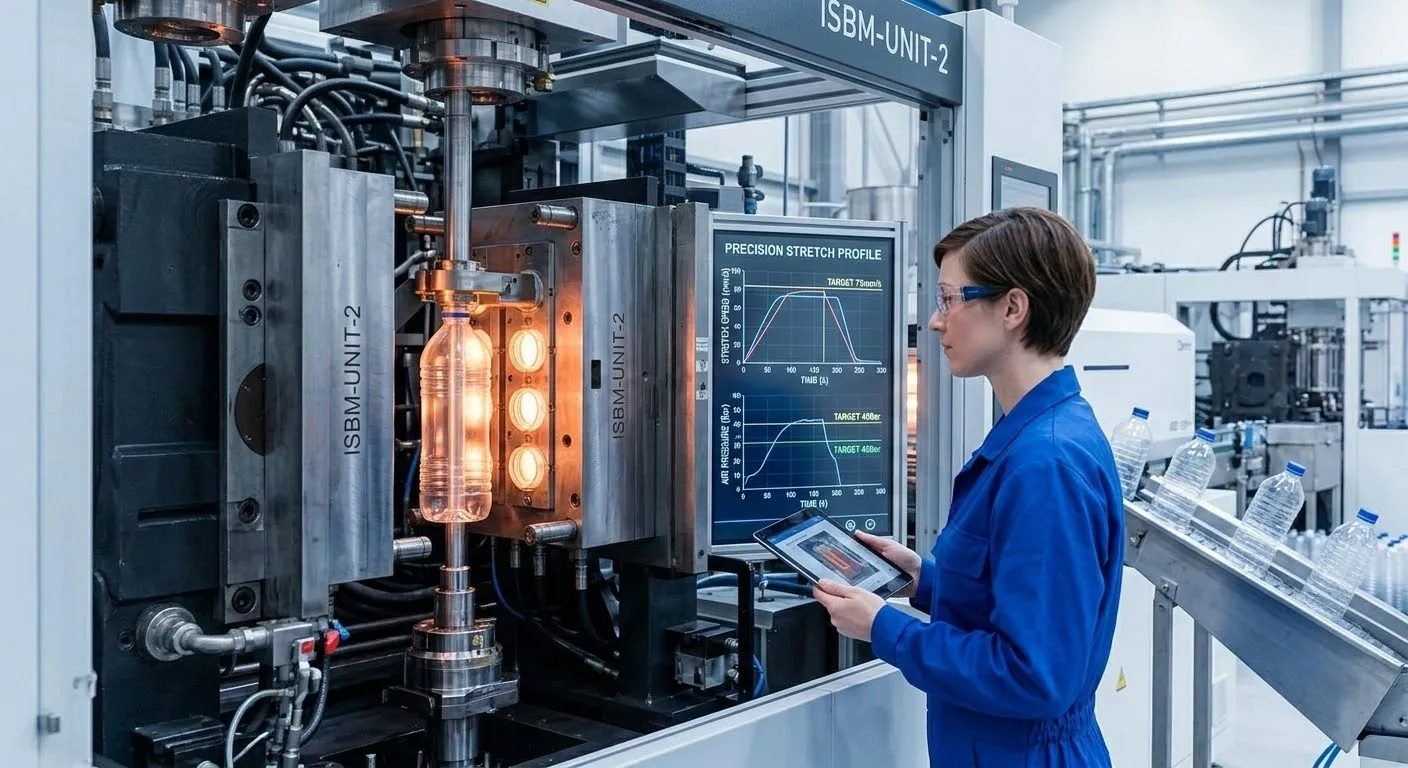
You must calculate the “dynamic operational footprint.” This encompasses the space required when the machine is in full production, when its heavy steel doors are swung entirely open for maintenance, and when technicians are utilizing heavy lifting equipment to extract and replace massive injection molds. If a machine measures four meters in length and two meters in width, attempting to squeeze it into a five by three meter bay will paralyze your facility. When a critical internal component fails, your maintenance technicians will have zero physical clearance to maneuver wrenches or extract heavy hydraulic cylinders, turning a minor two hour repair into a crippling multi day production halt.
Categorizing Space by Production Capacity
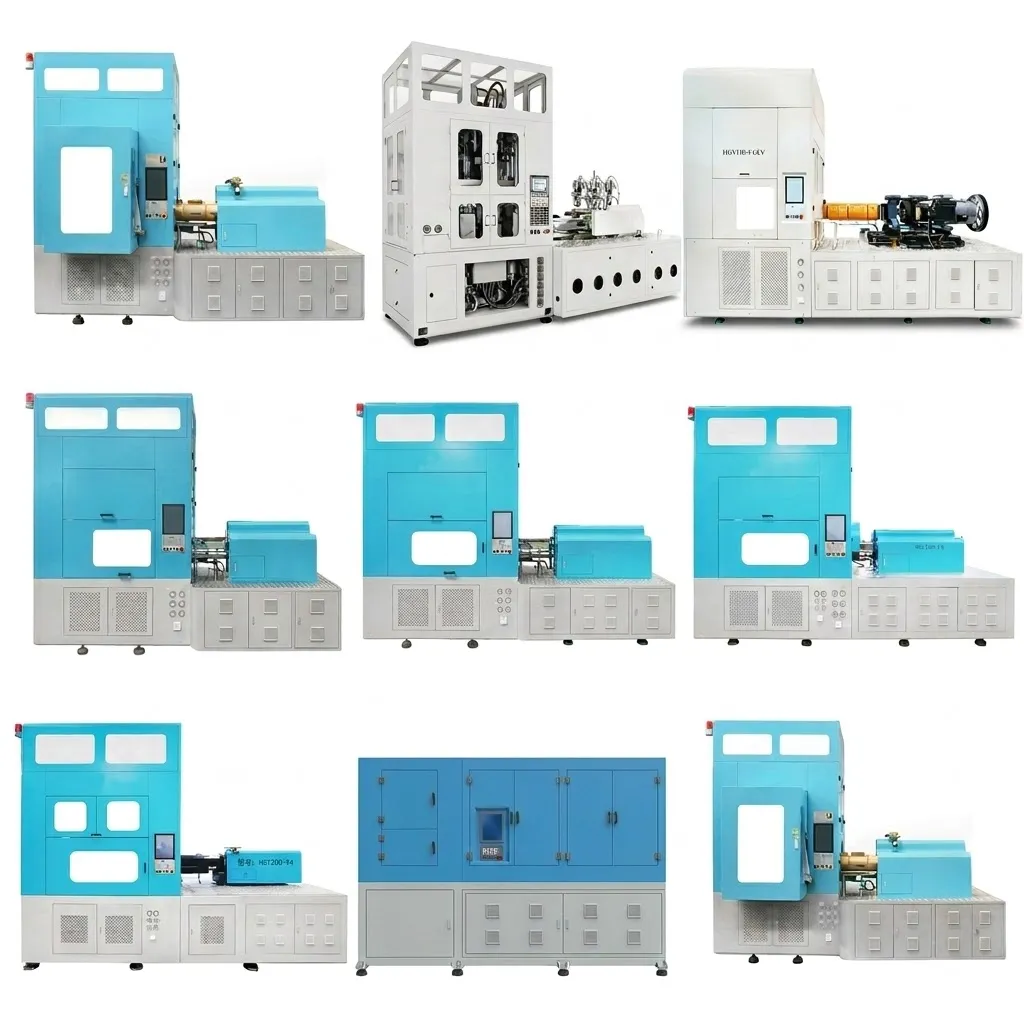
The baseline chassis footprint scales directly with the clamping tonnage, injection capacity, and target output of the platform. Ever-Power engineers a comprehensive spectrum of machinery, each demanding a distinct spatial strategy.
1. Compact and Agile Boutique Platforms
For niche cosmetic manufacturers, specialized pharmaceutical cleanrooms, or rapid prototyping laboratories, space is an absolute premium. We engineered highly condensed architectures to deliver supreme quality within minimal boundaries. The Máquina de moldagem por injeção e sopro de 4 estações EP-BPET-70V4 and the ultra precise Máquina de moldagem por injeção e sopro com servoacionamento completo EP-HGY50-V3-EV are designed for extreme spatial efficiency. For these agile platforms, a dedicated foundational footprint of roughly four by three meters is typically sufficient for the main chassis.
For simple geometric containers where latent heat preservation eliminates the need for thermal conditioning, the Máquina de moldagem por injeção e sopro de 3 estações EP-BPET-94V3 provides an even more streamlined physical profile. By eliminating the fourth workstation entirely, the machine chassis is inherently shorter, allowing boutique facilities to maximize their output density per square meter.
2. The Mid-Range Industrial Workhorses
The global packaging sector relies heavily on mid range capacity platforms. These machines require larger tie bar spacing to accommodate multi cavity tooling, demanding a larger factory envelope. The incredibly reliable Máquina de moldagem por injeção e sopro de 4 estações EP-BPET-125V4 and the heavy duty Máquina de moldagem por injeção e sopro de 4 estações EP-HGY150-V4 require a more expansive operational zone. Furthermore, if the facility requires the absolute cleanliness and energy efficiency of our electric architecture, the Máquina de moldagem por injeção e sopro com estiramento totalmente servo de 4 estações EP-HGY150-V4-EV utilizes similar spatial dimensions but alters the layout of external electrical control cabinets. For these mid tier platforms, facility architects should calculate a primary machine envelope of at least six by four meters.
3. High-Velocity and Extreme Scale Infrastructure
When transitioning to massive industrial production, the spatial requirements become monumental. To achieve extreme high speed output for global beverage brands, the Máquina de moldagem por injeção e sopro de 4 estações EP-HGY200-V4 e o Máquina de moldagem por injeção e sopro de 4 estações EP-HGY250-V4 represent immense physical structures designed to absorb tremendous kinetic forces.
To maximize output density without purchasing two separate machines, Ever-Power developed profound double row architectures. The Máquina de moldagem por injeção e sopro de 4 estações EP-HGY200-V4-B and the colossal Máquina de moldagem por injeção e sopro de estiramento de 4 estações e 2 fileiras EP-HGY250-V4-B effectively double the cavitation of the tooling. While these double row machines demand a massive, reinforced concrete foundation and a substantial operational envelope of roughly eight by five meters, they save immense amounts of total factory space by eliminating the need for duplicate auxiliary systems and duplicate operator workflows.
For the absolute extremes of custom packaging, such as heavy five gallon water jugs or incredibly complex asymmetrical bottles requiring multiple thermal manipulation stages, the spatial demands are unparalleled. The massive Máquina de moldagem por injeção e sopro de 4 estações EP-HGY650-V4 requires heavy industrial zoning due to its immense injection barrel length. The revolutionary Máquina de moldagem por injeção e sopro de 6 estações EP-HGYS280-V6, featuring six independent workstations, possesses a longer, highly specialized chassis footprint to accommodate the extended rotary indexing table.
The Hidden Consumers: Auxiliary Equipment Integration
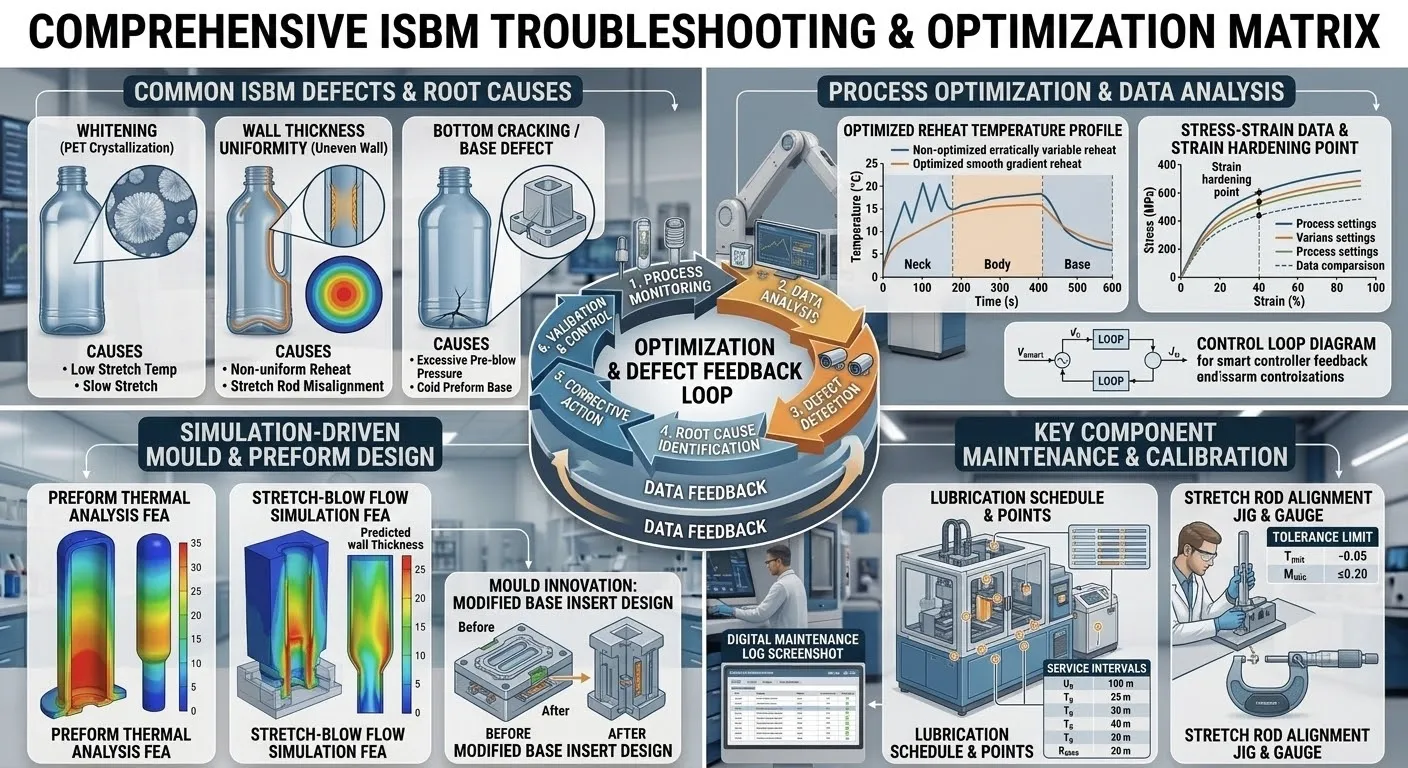
The most frequent error in facility mapping is neglecting the massive footprint of auxiliary machinery. An ISBM platform cannot function without a dedicated fleet of supporting technologies, all of which require significant square footage and strategic placement.
Polymer Drying and Resin Handling
Materials like Polyethylene Terephthalate are incredibly hygroscopic. They must be aggressively dried before melting. Industrial desiccant dryers and their associated massive resin hoppers demand considerable space. While hoppers can sometimes be mounted directly onto the injection barrel carriage, this requires immense vertical ceiling clearance. More frequently, the drying units are situated on the floor adjacent to the machine, requiring at least a two by two meter dedicated zone, alongside robust vacuum piping networks to transport the dry pellets to the machine throat.
High-Pressure Pneumatic Infrastructure
The stretch blow process requires a violent, instantaneous supply of compressed air, frequently exceeding thirty five bar. This necessitates colossal, multi stage air compressors and massive vertical air receiver tanks. Because high pressure compressors generate deafening noise and severe structural vibrations, they cannot be placed directly next to the delicate ISBM machine. They mandate a completely separate, acoustically isolated utility room with heavy duty ventilation, requiring significant remote square footage.
Industrial Water Chilling Units
Thermodynamic control is the soul of cycle time optimization. Heavy duty industrial chillers must pump massive volumes of freezing water through the Moldes personalizados de injeção e sopro em uma única etapa to solidify the plastic instantly. These chillers exhaust massive amounts of heat into the ambient environment. They must be positioned with vast clearance perimeters to ensure adequate airflow over their condenser coils; otherwise, they will overheat, fail, and immediately halt your entire production line.
Mandatory Maintenance and Operational Clearances
Beyond the physical hardware, you must engineer empty space into your floor plan. A facility layout that packs machinery shoulder to shoulder is a catastrophic liability.
The Injection Screw Extraction Zone: Over the lifespan of the machine, the massive Archimedes injection screw will require extraction for deep cleaning, abrasive wear inspection, or metallurgical replacement. This solid steel screw can be several meters long. You must maintain a completely unobstructed linear corridor extending directly outward from the rear of the injection barrel to allow technicians to physically pull the screw completely out of the machine chassis.
Electrical and Hydraulic Cabinet Swings: Industrial safety regulations mandate specific clearance zones around high voltage electrical cabinets. The heavy steel doors of the machine’s control panels must swing open a full one hundred and eighty degrees without striking structural columns, auxiliary chillers, or pedestrian walkways. Technicians require sufficient space to safely probe active circuitry during complex thermodynamic troubleshooting.
Vertical Dynamics: Ceiling Heights and Heavy Lifting
Factory planning is a three dimensional discipline. Neglecting the vertical axis will cripple your operational capabilities. The most critical vertical requirement involves the exchange of injection stretch blow molds. These custom tooling sets are immensely heavy blocks of solid steel and aircraft aluminum. They cannot be manipulated by hand.
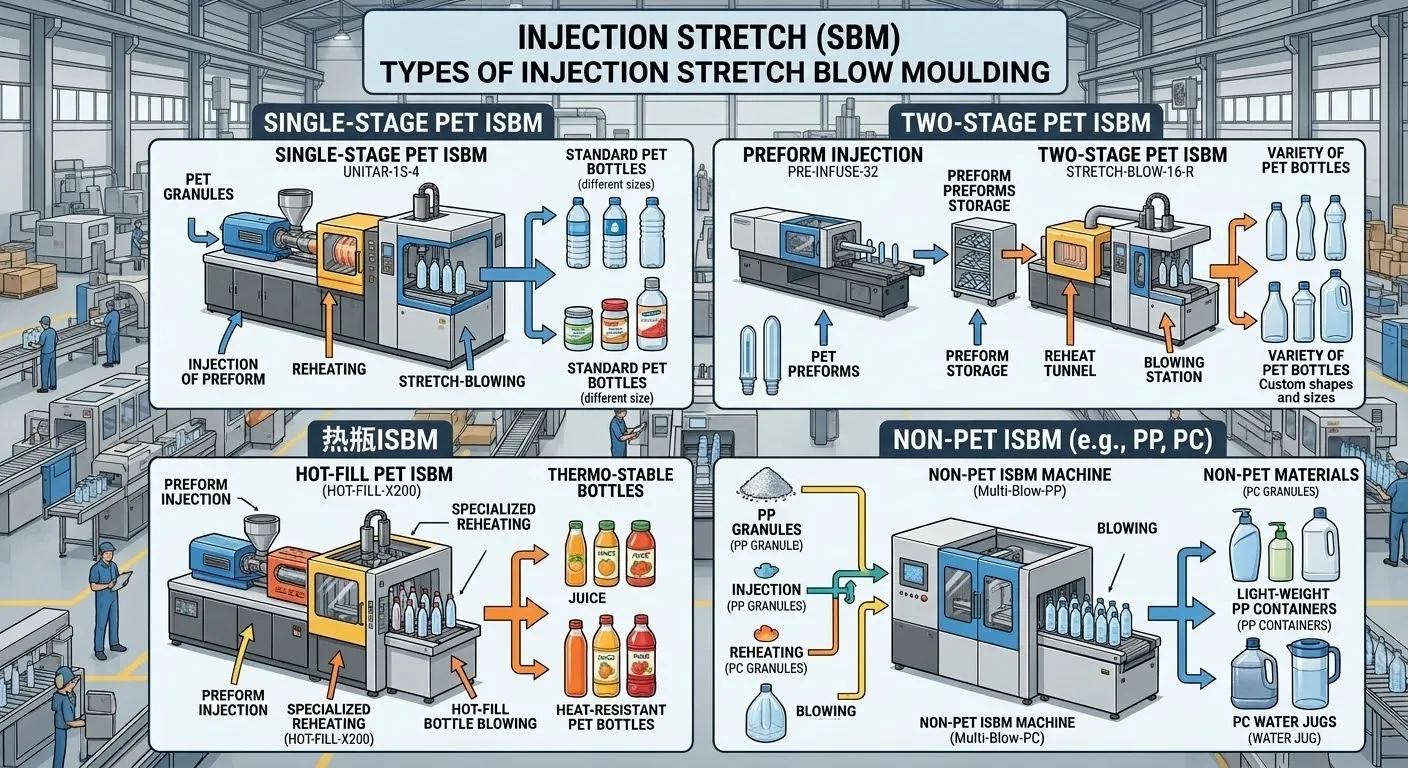
Your facility must feature a heavy duty overhead gantry crane system spanning the entire machine installation zone. The ceiling height must accommodate the total height of the ISBM machine, plus the vertical clearance required to lift a massive mold completely over the top of the machine’s tie bars, plus the physical height of the crane hoist and rigging tackle itself. For towering industrial platforms, a minimum clear ceiling height of six to eight meters is absolutely mandatory to execute safe, efficient tooling changeovers without risking devastating collisions with the machine superstructure.
End of Line Automation and Logistics
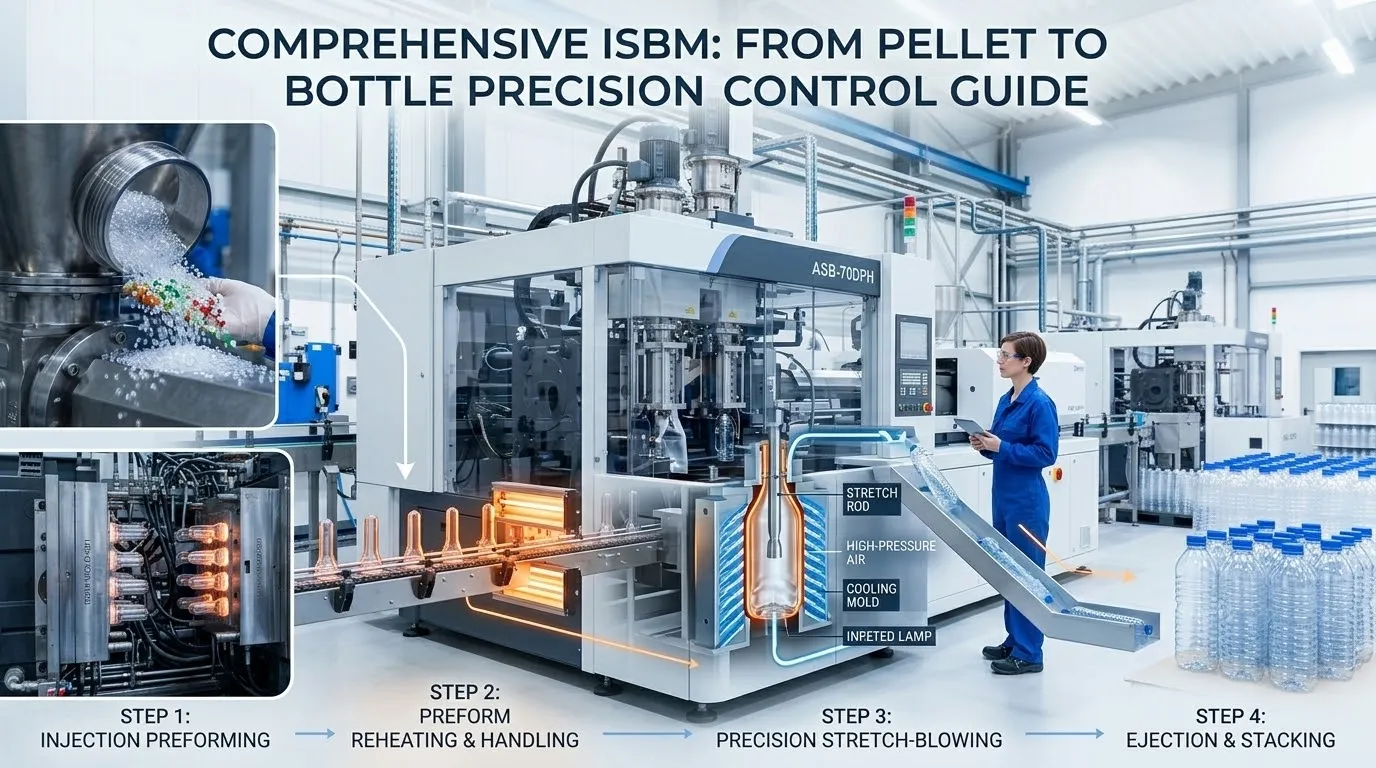
The ISBM process concludes when the flawless container is ejected from the machine, but the spatial requirements continue downstream. High speed platforms eject thousands of bottles per hour. If you do not allocate massive square footage for automated take out systems, the bottles will literally pile up and jam the ejection port within minutes.
Facility blueprints must include expansive linear corridors for high speed conveyor belts. Furthermore, space must be meticulously allocated for downstream quality assurance hardware, such as inline automated leak testers, optical camera inspection tunnels, and massive robotic palletizing stations. Attempting to compress the finished goods logistics into a narrow corridor will create an insurmountable bottleneck, artificially suppressing the ultimate output capacity of your expensive injection stretch blow molding infrastructure.
Architecting Your Spatial Strategy with Ever-Power
Determining the exact spatial footprint required to install your next generation packaging line is a highly unforgiving mathematical exercise. Relying on generic machine dimensions will inevitably result in compromised operator safety, blocked maintenance corridors, and severe logistical bottlenecks that destroy long term profitability.
As the undisputed engineering authority in Brazilian and global ISBM manufacturing, Ever-Power provides unprecedented, comprehensive facility mapping services. When you partner with our industrial architects, we do not merely ship a crate of machinery to your loading dock. We analyze your specific factory blueprints, map the integration of massive high pressure auxiliary systems, engineer flawless overhead crane access routes, and calculate the exact dynamic footprint required to operate your custom double row or full servo platforms at maximum efficiency.
Optimize Your Industrial Real Estate Today
Do not jeopardize your massive capital investment with inadequate spatial planning. Partner with a vertically integrated manufacturing authority to engineer a flawless, hazard free production floor designed for absolute industrial dominance.
Are you ready to initiate a highly technical spatial analysis and infrastructure audit for your upcoming packaging facility? Visit our corporate engineering hub at https://isbmmolding.com/ or contact our elite procurement consulting team directly at [email protected] to secure your facility’s future.