ISBM vs IBM: Which one should I choose for my packaging?
Navigating the complex landscape of modern plastic manufacturing requires a profound understanding of polymer science, thermodynamic processing, and mechanical engineering. For supply chain directors, brand managers, and packaging engineers, the container that holds your product is never just a vessel; it is a critical protective barrier, a brand ambassador, and a massive component of your overall operational expenditure. When planning a new product launch, whether it is a luxury cosmetic serum, a life saving pharmaceutical formulation, or a high volume consumer beverage, one foundational question inevitably arises in the engineering boardroom: ISBM vs IBM: Which one should I choose for my packaging?
At Мәңгілік күш, a leading and highly authoritative Brazilian ISBM manufacturer, our engineering teams field this exact question on a daily basis. The choice between Injection Stretch Blow Molding and Injection Blow Molding is not merely a matter of preference; it is a strategic decision that fundamentally alters the optical clarity, mechanical strength, material efficiency, and capital investment profile of your entire production line. In this exhaustive, heavily detailed technical guide, we will dissect the microscopic differences and the massive macroeconomic impacts of both technologies, empowering you to make the optimal decision for your global packaging strategy.
Defining the Architectural Framework: What is IBM?
To thoroughly evaluate the difference between ISBM and IBM, we must first establish a clear baseline of how each technology operates. Let us begin with Injection Blow Molding. IBM is a highly established, traditional manufacturing process that is primarily utilized for producing small, hollow plastic containers. The process is defined by its complete lack of mechanical stretching.
The IBM process generally operates on a three station rotary machine. In the first station, molten polymer is injected under high pressure over a core pin and into a heated cavity to form a preform. This preform looks similar to a small test tube with a fully formed, threaded neck. Crucially, the neck finish is injection molded, granting it excellent dimensional accuracy. The core pin, still holding the hot preform, then indexes to the second station. In this blow station, the mold clamps around the hot plastic, and compressed air is introduced through the core pin, inflating the plastic outward to match the shape of the mold cavity. Finally, the core pin indexes to the third station, where the finished bottle is stripped off and ejected.
Because there is no mechanical stretch rod involved, the polymer molecules in an IBM container expand radially but remain in a largely random, unoriented state once they cool against the mold walls. This lack of biaxial orientation is the defining limitation of the Injection Blow Molding process, heavily dictating the types of materials it can successfully process and the structural integrity of the final container.
The Evolutionary Leap: Understanding ISBM Technology
Injection Stretch Blow Molding represents a monumental evolutionary leap in plastic packaging technology. The critical differentiator, as the name implies, is the introduction of the “Stretch” phase. This single mechanical addition transforms the microscopic structure of the polymer, unlocking completely new realms of material performance.
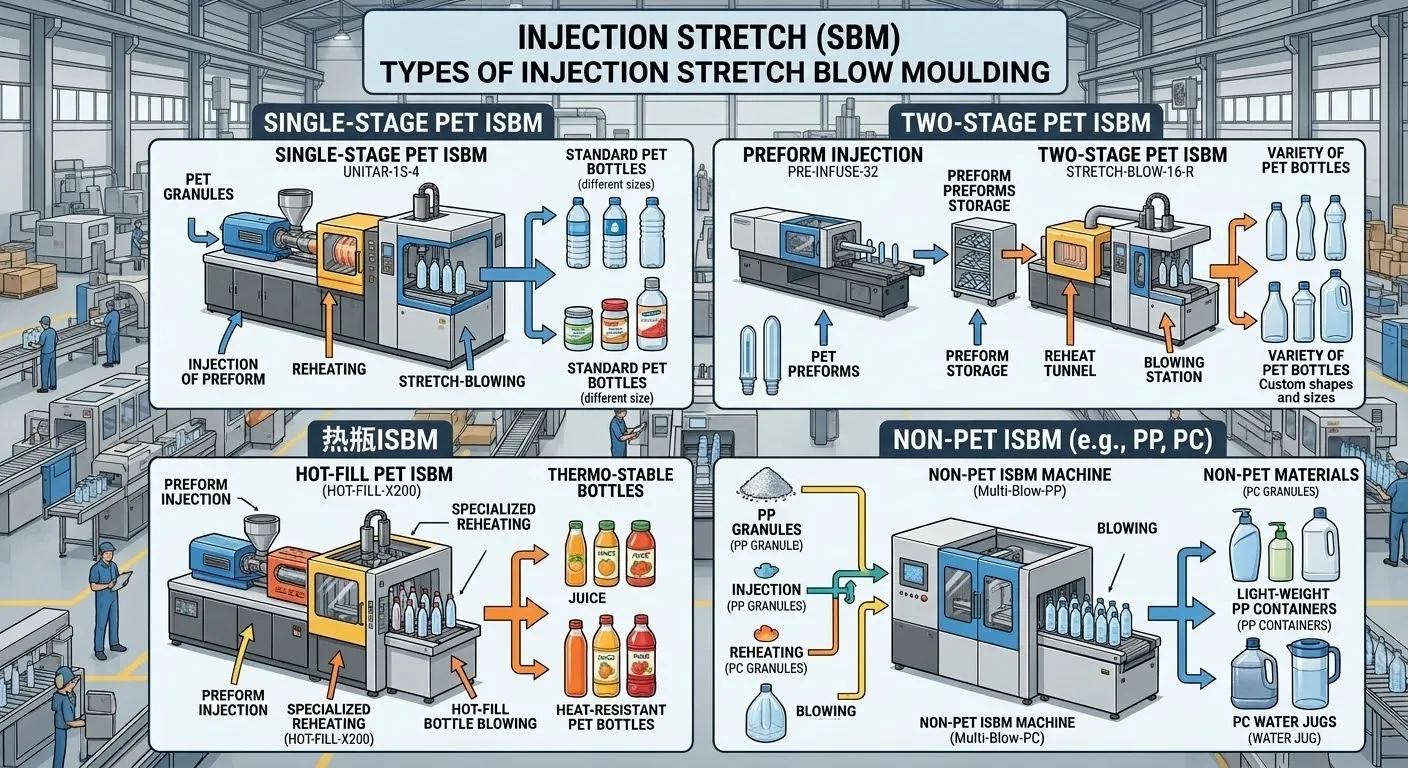
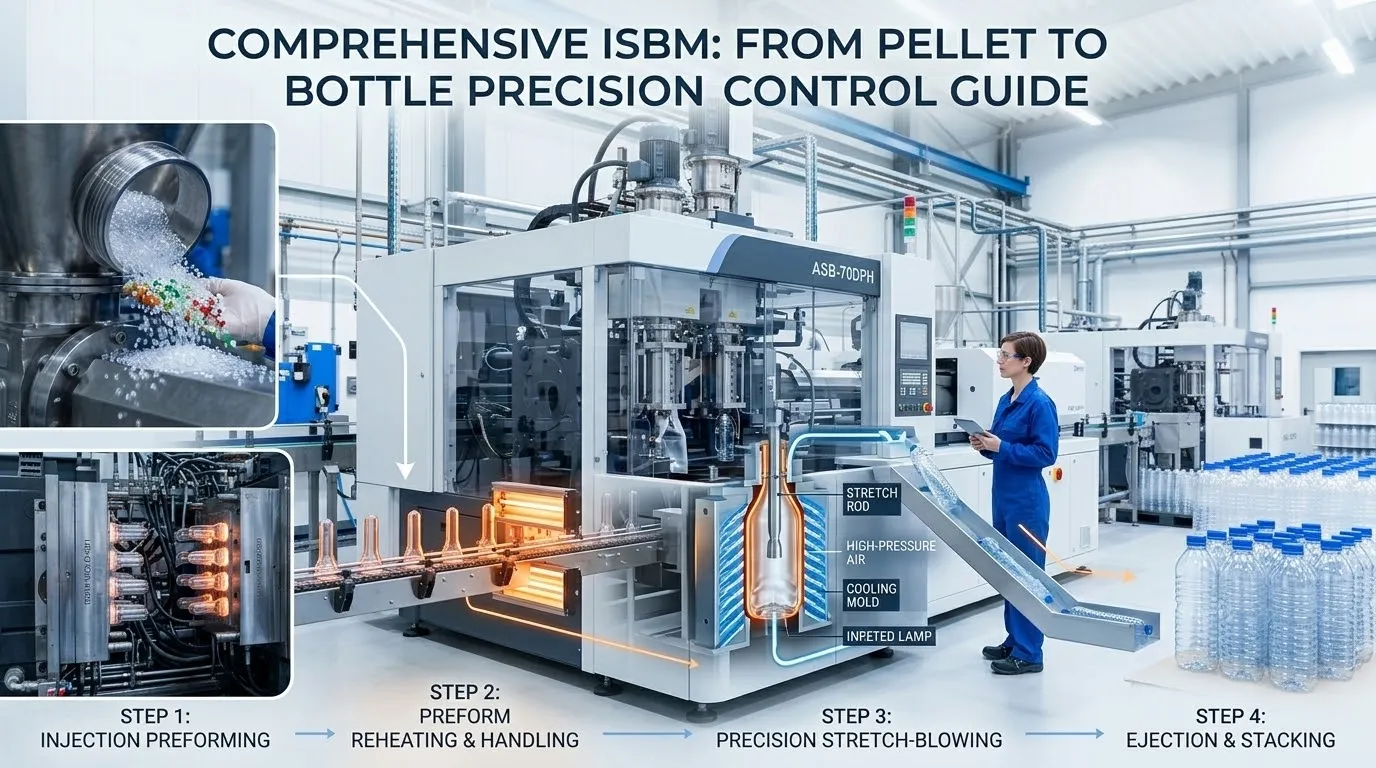
Modern single step ISBM systems, such as the highly agile EP-HGY50-V3-EV толық серво инъекциялық созылу үрлеу қалыптау машинасы, operate on a highly sophisticated three or four station carousel. The first station mirrors IBM; high quality polymer is injected to create a precise preform with a perfect neck finish. However, the preform is then transferred to a specialized thermal conditioning station. Here, the latent heat from the injection phase is meticulously manipulated. Engineers can create custom thermal profiles, making specific zones of the preform hotter or cooler depending on the final geometry of the container.
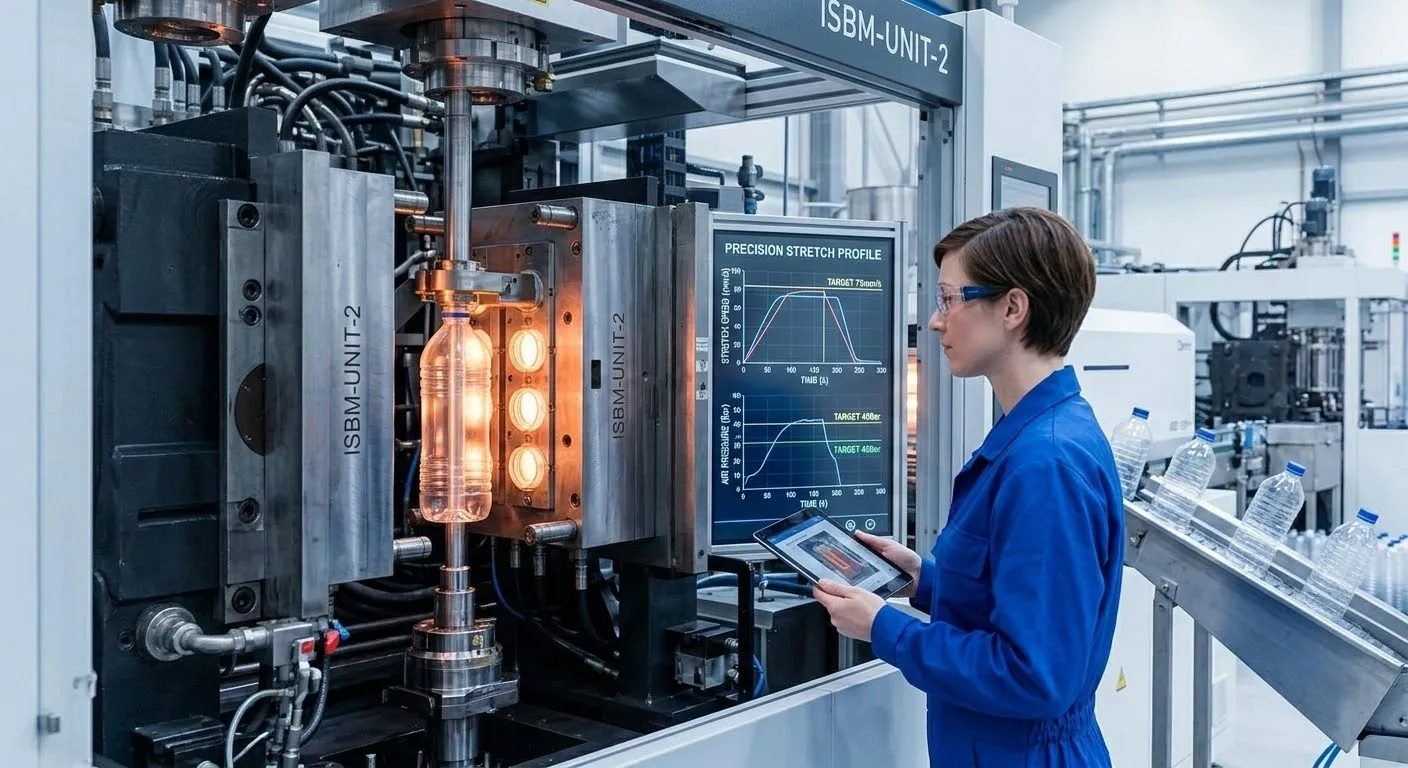
The conditioned preform is then moved to the stretch blow station. A highly precise mechanical stretch rod descends through the neck, physically pushing the hot polymer downward to the base of the mold. Simultaneously, high pressure air forces the plastic outward against the cavity walls. This simultaneous vertical and horizontal displacement forces the random polymer chains to align tightly into a cross hatched matrix. This phenomenon, known as strain induced crystallization or biaxial orientation, is the secret behind the overwhelming superiority of ISBM containers in modern packaging applications.
Material Compatibility: The Crucial Divide
When deciding between Injection Stretch Blow Molding vs Injection Blow Molding, material selection is frequently the immediate deciding factor. The two processes handle different families of polymers with vastly different success rates.
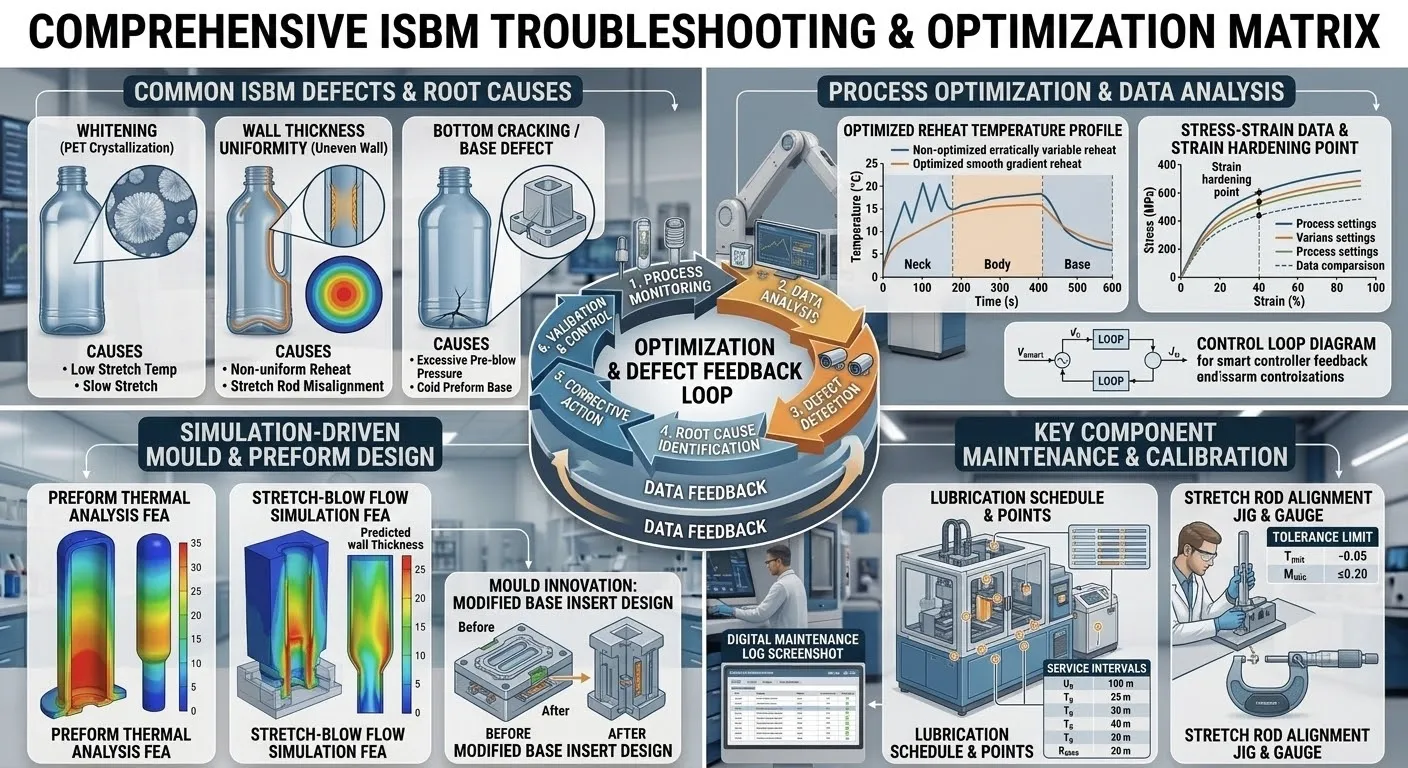
IBM is traditionally the dominant technology for processing Polyolefins, specifically High Density Polyethylene and Low Density Polyethylene. These materials process beautifully without the need for mechanical stretching. IBM is also highly capable of processing standard Polypropylene for applications where high heat resistance is required but absolute crystal clarity is not a priority. However, IBM struggles immensely to process Polyethylene Terephthalate. Because PET lacks high melt strength, trying to blow it without a stretch rod guiding the material results in wildly uneven wall distribution, severe thick and thin spots, and a completely unacceptable, structurally compromised container.
Conversely, ISBM is the absolute undisputed master of Polyethylene Terephthalate. The entire process was essentially engineered to exploit the unique properties of PET. When subjected to biaxial orientation, PET transforms from a brittle, amorphous state into a highly resilient, glass like structure. For manufacturers requiring high output PET production, Ever-Power offers dedicated platforms like the EP-BPET-125V4 4 станциялы инъекциялық созылу үрлеу қалыптау машинасы and the highly efficient EP-BPET-94V3 3 станциялы инъекциялық созылу үрлеу қалыптау машинасы. Furthermore, advanced ISBM technology has evolved to master highly clarified Polypropylene and extremely viscous engineering resins like Tritan copolyester, offering brands a vastly expanded material portfolio compared to standard IBM capabilities.
Aesthetic Brilliance and Optical Clarity
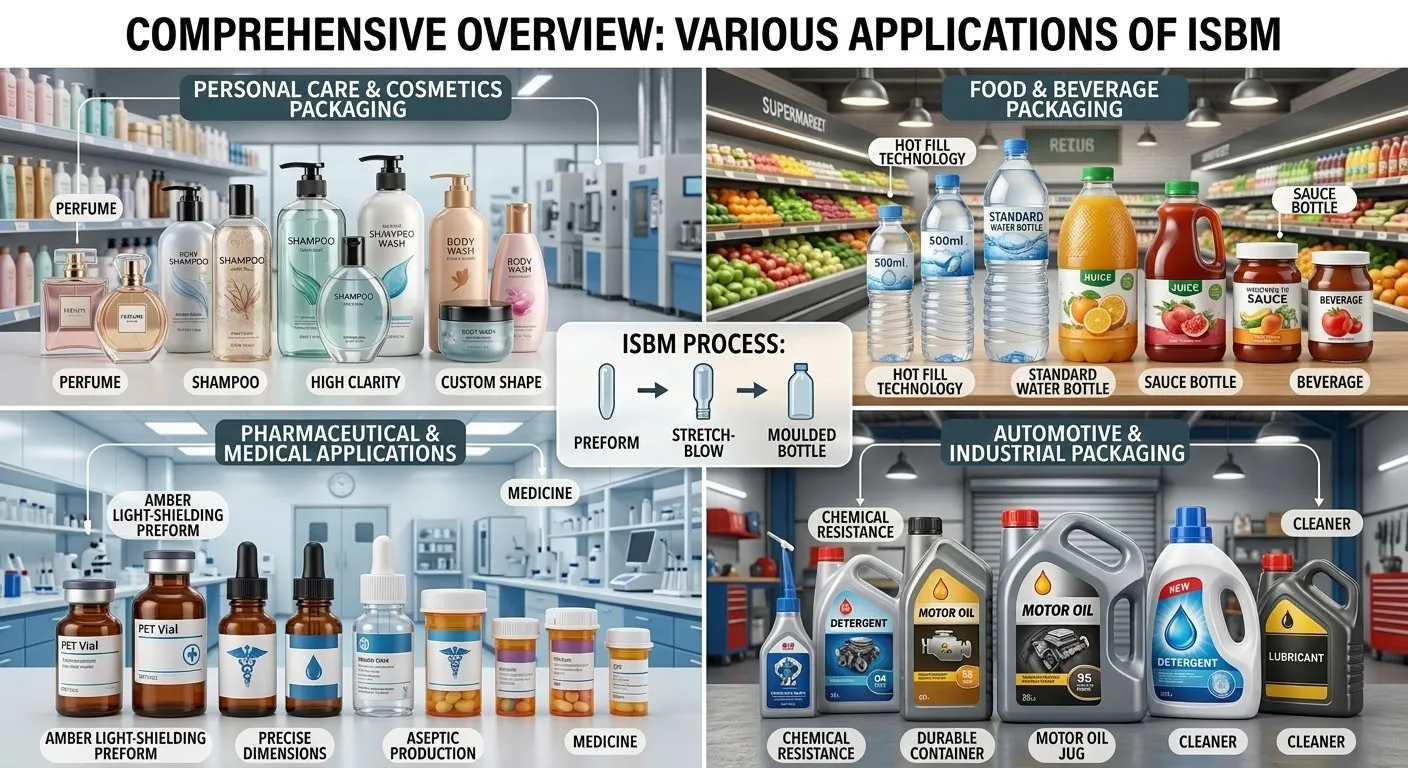
In the luxury cosmetic, premium personal care, and high end beverage markets, the container must serve as a silent salesperson. Visual appeal is paramount. The debate regarding which one should I choose for my packaging becomes incredibly simple when supreme optical clarity is the primary requirement.
IBM containers, particularly those made from Polyolefins, are inherently opaque, translucent, or milky in appearance. Even when IBM attempts to process certain clear resins, the lack of molecular alignment results in a dull surface finish that lacks premium reflectivity. If your product requires the consumer to see a vibrant liquid inside, IBM is generally the wrong choice.
ISBM, on the other hand, delivers unparalleled optical perfection. The strain induced crystallization generated by the stretch rod aligns the polymer chains so tightly that light passes through the container wall with almost zero refraction or scattering. The result is a brilliant, highly reflective, glass like appearance. To achieve completely bespoke, highly complex, heavy walled luxury designs with this glass like finish, Ever-Power engineers Бір сатылы инъекциялық созылу үрлеу қалыптарына арналған арнайы тапсырыс tailored specifically to your exact brand geometry, ensuring zero surface scratches and absolute aesthetic dominance on the retail shelf.
Mechanical Strength, Durability, and Lightweighting
The structural integrity of your packaging dictates its survival through the brutal reality of global supply chains. When evaluating the difference between ISBM and IBM from an engineering perspective, the mechanical testing data heavily favors the stretch blow process.
Because IBM containers lack biaxial orientation, their tensile strength is purely reliant on the sheer volume of plastic used in the wall thickness. To make an IBM bottle stronger, you must make it thicker, which drastically increases your raw material consumption and unit cost. If an IBM bottle is dropped, the random molecular structure is highly susceptible to impact fracturing or severe denting.
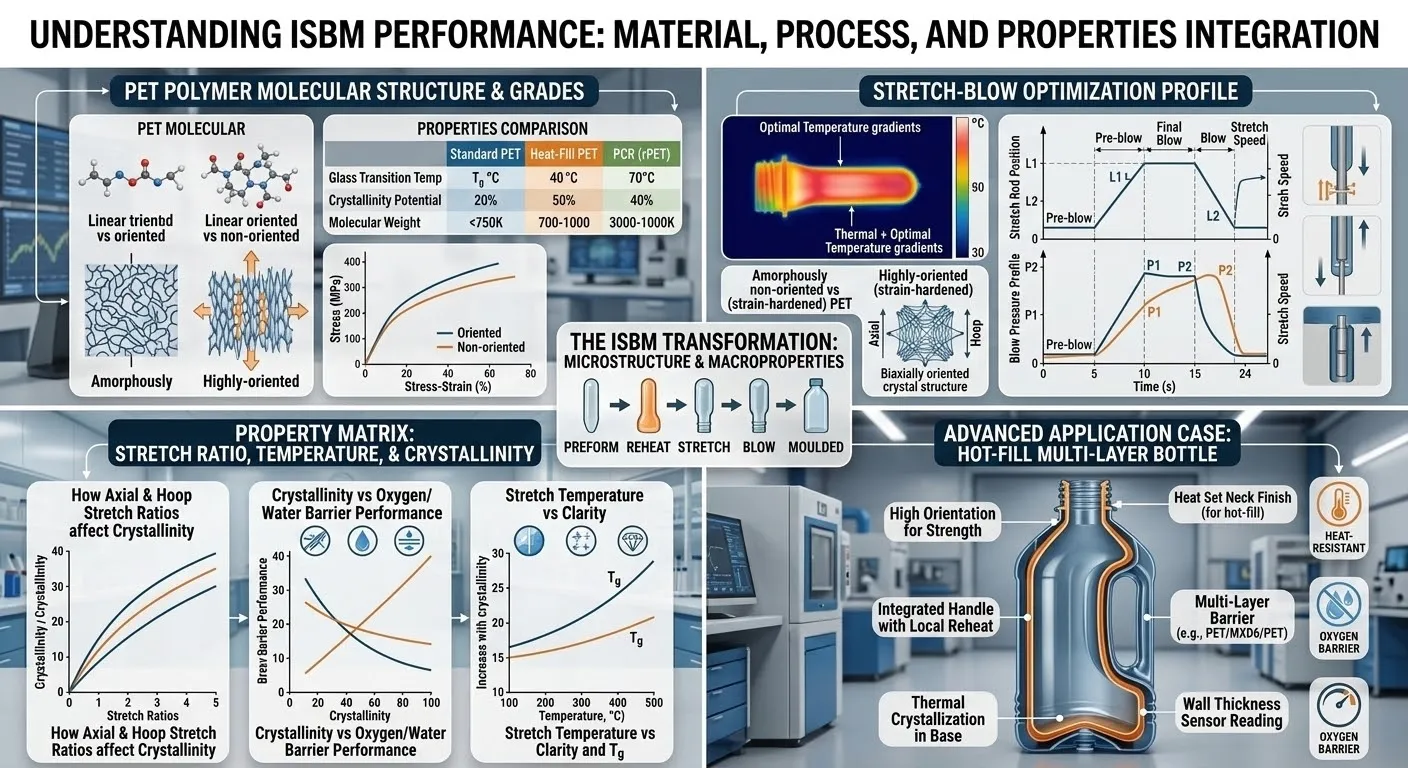
ISBM completely upends this paradigm. The tightly woven molecular matrix generated by biaxial stretching provides immense inherent strength. An ISBM bottle can withstand massive internal carbonation pressure without ballooning, and it provides exceptional vertical top load strength, preventing pallet collapse in warehouses. Most importantly, this extreme strength allows packaging engineers to aggressively “lightweight” the container. You can strip significant amounts of plastic out of the bottle design without sacrificing drop impact resistance. This aggressive lightweighting yields massive financial savings on raw polymer resin and significantly reduces your corporate carbon footprint.
Tooling Economics and Capital Investment Profiles
Procurement directors must closely analyze the capital expenditure required to bring a new packaging design to market. Both technologies require substantial upfront investment, but the tooling structures are notably different.
IBM tooling is generally considered slightly less complex. A standard IBM mold set requires the injection cavities, the core pins, and the blow cavities. However, changing an IBM mold is highly labor intensive, as aligning the massive core pins with the blow cavities requires extreme mechanical precision. Misalignment leads to catastrophic machine crashes and destroyed tooling.
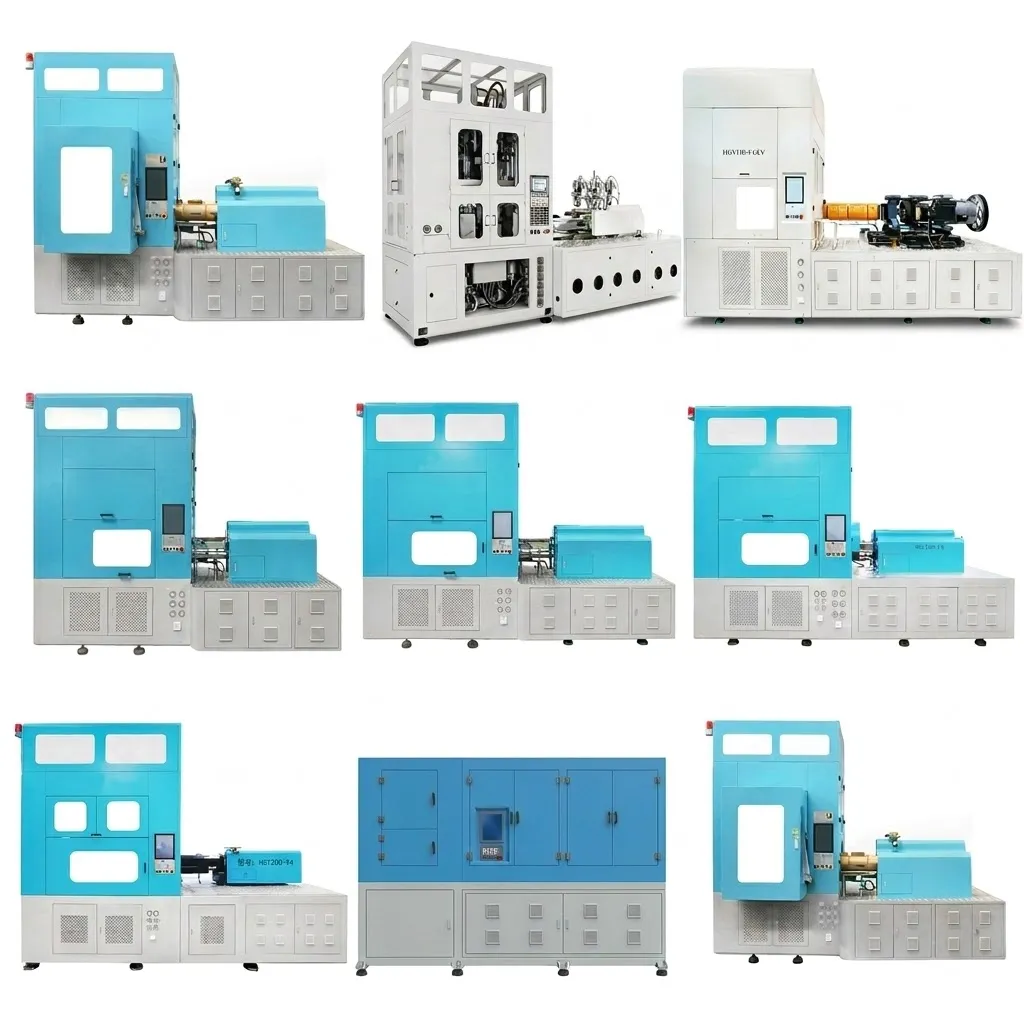
ISBM tooling is an intricate feat of thermal engineering. A complete set requires high precision injection cavities, hot runner manifolds, specialized thermal conditioning pots, blow cavities, and stretch rod assemblies. While the initial tooling cost for ISBM can be higher depending on cavitation, the operational flexibility is vastly superior. For clients looking to enter the market with lower initial capital expenditure while maintaining high precision, Ever-Power offers the highly compact EP-BPET-70V4 4 станциялы инъекциялық созылу үрлеу қалыптау машинасы. This platform allows boutique brands to leverage the immense quality of ISBM without the massive financial overhead of a colossal industrial machine.
Production Capacities, Volumes, and Machine Scalability
When deciding ISBM vs IBM: Which one should I choose for my packaging, evaluating your target annual production volume is absolutely critical. Both technologies have distinct sweet spots regarding output capacity.
IBM machines are historically highly efficient for extremely small containers, typically ranging from three milliliters up to two hundred and fifty milliliters. Because they do not require a long stretch stroke, the mechanical movements are very short and fast. Small pill packer bottles and tiny hotel amenity bottles are frequently produced on IBM lines due to rapid cycle times on small capacity vessels.
However, as container sizes increase beyond five hundred milliliters, IBM becomes highly inefficient. The immense injection pressure required to fill a massive preform over a long core pin pushes the limits of the machinery, and cooling that thick plastic takes an eternity, killing the cycle time. ISBM scales brilliantly for large containers. For massive volume production of medium to large containers, Ever-Power provides heavy industrial solutions like the EP-HGY650-V4 4 станциялы инъекциялық созылу үрлеу қалыптау машинасы. This behemoth provides the clamping tonnage and injection capacity necessary to shoot heavy preforms for wide mouth food jars or large household chemical containers.
For high speed, continuous output of standard beverage or personal care packaging, the EP-HGY250-V4-B екі қатарлы 4 станциялы инъекциялық созылу үрлеу машинасы is an engineering marvel. By utilizing a double row tooling architecture, we effectively double the cavitation and hourly output of the machine without doubling its footprint on your factory floor. For slightly lower volume requirements, the standard EP-HGY250-V4 4 станциялы инъекциялық созылу үрлеу қалыптау машинасы and the highly reliable EP-HGY200-V4-B 4 станциялы инъекциялық созылу үрлеу қалыптау машинасы or single row EP-HGY200-V4 4 станциялы инъекциялық созылу үрлеу қалыптау машинасы offer perfect operational balance and rapid return on investment.
Pharmaceutical Packaging: A Shifting Paradigm
The pharmaceutical sector presents a fascinating case study in the Injection Stretch Blow Molding vs Injection Blow Molding debate. For decades, IBM was the unchallenged standard for medical pill packers and small liquid medication bottles, predominantly utilizing High Density Polyethylene. The industry accepted the opaque, milky look of HDPE because IBM provided the perfect, injection molded neck finish required for hermetic foil seals and child resistant closures, ensuring zero leakage.
However, a massive paradigm shift is currently occurring. Pharmaceutical companies are aggressively transitioning toward PET containers manufactured via ISBM. Why? Because ISBM provides the exact same perfect, injection molded neck finish for absolute seal integrity, but adds the immense benefits of crystal clear transparency and vastly superior gas barrier properties. Pharmacists and patients can visually inspect the medication for contamination or degradation without opening the bottle.
To serve this highly regulated, uncompromising sector, Ever-Power engineered specific full servo platforms. The EP-HGY150-V4-EV толық серво 4 станциялы инъекциялық созылу үрлеу қалыптау машинасы entirely eliminates hydraulic oil from the operational cycle. This zero emission, all electric drive system prevents any risk of aerosolized oil contamination, making it the ultimate manufacturing platform for deployment inside strict ISO certified medical cleanroom environments. For facilities that do not require full cleanroom compliance but still demand rapid cycle times, the standard hydraulic EP-HGY150-V4 4 станциялы инъекциялық созылу үрлеу қалыптау машинасы provides exceptional reliability.
Advanced Container Geometries and Design Limitations
Industrial designers constantly push the boundaries of packaging geometry to secure shelf dominance. When analyzing the difference between ISBM and IBM regarding design freedom, the capabilities are starkly different.
IBM is highly restricted by the core pin. The final bottle shape cannot deviate significantly from the cylindrical shape of the core pin, otherwise the plastic will stretch unevenly when blown, causing severe thinning at the edges. IBM struggles massively with flat oval bottles, asymmetrical shapes, or containers with offset necks (where the opening is pushed to one side of the bottle). If your design is a simple, small round cylinder, IBM is fine. If it is complex, IBM will fail.
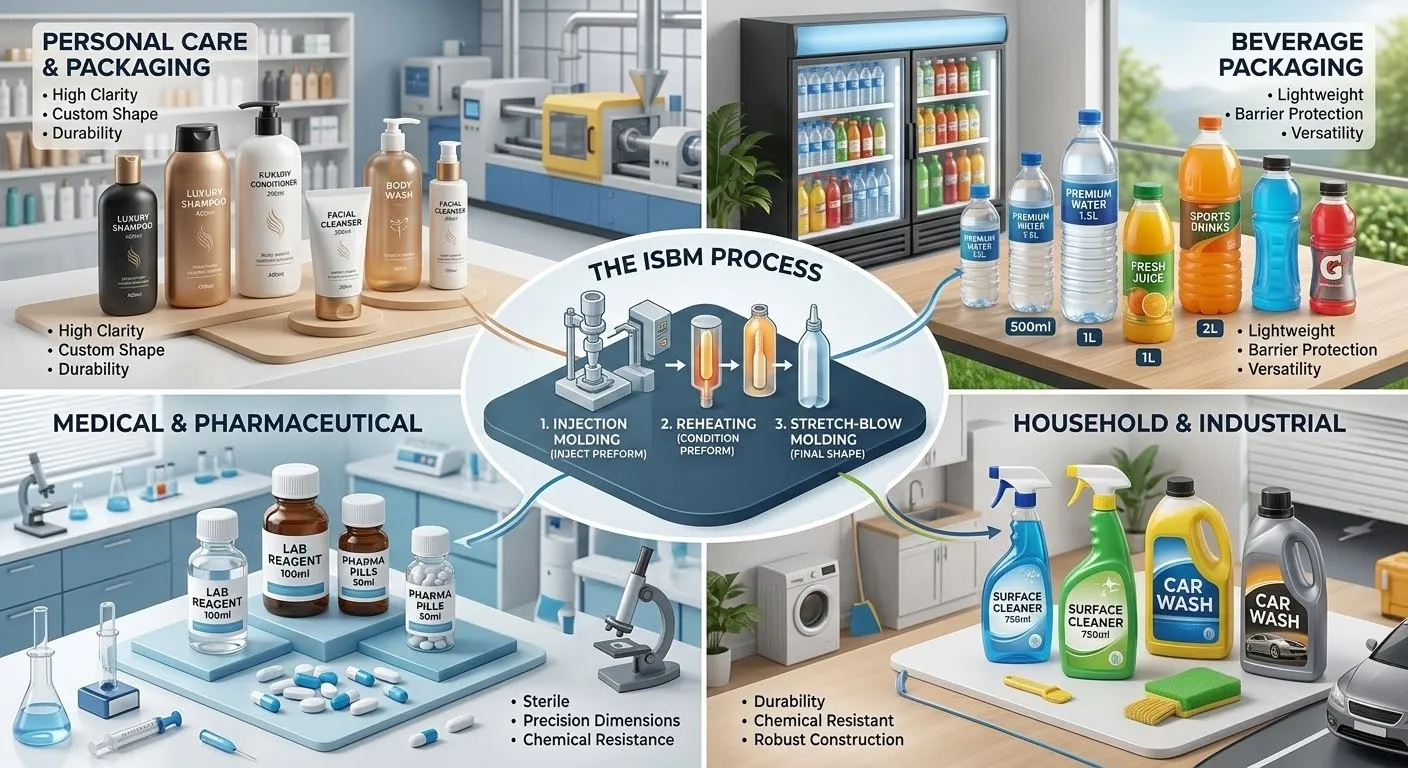
ISBM offers unparalleled design freedom. Because the stretch rod guides the material vertically, and the thermal conditioning station can apply highly specific heat profiles to different sides of the preform, engineers can force the plastic to flow perfectly into incredibly complex mold corners. We routinely manufacture deeply contoured trigger spray bottles, ultra flat cosmetic flasks, and sharply angled geometric designs using ISBM. For the most extreme geometric challenges, where extended thermal profiling is required to manipulate the plastic without inducing stress, our massive EP-HGYS280-V6 6 станциялы инъекциялық созылу үрлеу қалыптау машинасы provides two additional workstations, granting engineers the ultimate canvas for thermodynamic manipulation and flawless material distribution.
Sustainability and the Circular Economy
Environmental stewardship is no longer an optional corporate initiative; it is a global mandate. When evaluating packaging technologies, sustainability metrics are critical. ISBM possesses a massive inherent advantage over IBM in the realm of material efficiency.
As previously detailed, the biaxial orientation of ISBM allows for aggressive lightweighting. Using less plastic per bottle directly correlates to massive reductions in fossil fuel consumption and carbon emissions during freight transportation. Furthermore, modern ISBM machinery is exceptionally adept at processing high percentages of Post Consumer Recycled PET. Utilizing recycled flake introduces severe viscosity fluctuations during the injection phase. Ever-Power machinery utilizes highly advanced servo controls to perform millisecond closed loop pressure adjustments, ensuring that even when processing highly variable recycled resins, the preforms are injected flawlessly, closing the loop on plastic waste and driving the circular economy forward.
The Ever-Power Advantage: Your Global Manufacturing Partner
Deciding between ISBM vs IBM: Which one should I choose for my packaging is a monumental decision. It dictates the aesthetic appeal, the structural integrity, and the financial profitability of your product line. Based on the overwhelming evidence regarding optical clarity, material strength, lightweighting potential, and design freedom, Injection Stretch Blow Molding is undeniably the superior technology for the vast majority of modern consumer packaging applications.
However, acquiring the machinery is only the first step. You require an engineering partner capable of translating your vision into flawless, high volume reality. As a deeply established Brazilian ISBM manufacturer, Ever-Power stands as a fortress of technical authority in the Latin American and global markets. We do not simply assemble equipment; we engineer comprehensive, turnkey production ecosystems. From the initial thermodynamic simulation of your custom preform to the final deployment of our massive, high output servo platforms, our dedicated team of polymer scientists and master toolmakers ensures your project is executed with absolute perfection.
Transform Your Packaging Strategy Today
Do not compromise on the quality, strength, or visual impact of your brand. Leverage the supreme engineering capabilities of modern ISBM technology to dominate your market sector, optimize your supply chain, and maximize your operational profitability.
Are you ready to initiate a comprehensive technical feasibility analysis for your upcoming product launch? Visit our corporate headquarters at https://isbmmolding.com/ or contact our lead engineering consultants directly at [email protected] to begin architecting your future packaging solutions.