Why are PET bottles mostly manufactured by ISBM?
Take a moment to observe the packaging landscape in any modern supermarket or high end cosmetic boutique. The vast majority of transparent, shatterproof containers you encounter are crafted from a specific polymer known as Polyethylene Terephthalate, universally abbreviated as PET. However, the sheer existence of this raw material does not explain its dominance. To transform raw plastic pellets into a brilliant, glass like, indestructible container requires a highly specific manufacturing intervention. As a leading Brazilian ISBM manufacturer, the engineering and polymer science teams at エバーパワー frequently consult with global brands on this exact phenomenon. The definitive answer lies in the flawless, almost symbiotic relationship between the polymer chemistry of PET and the mechanical thermodynamics of Injection Stretch Blow Molding.
In this exhaustive, deeply technical engineering dissertation, we will deconstruct the fundamental reasons why these two elements are inextricably linked. We will explore the microscopic polymer physics, the thermodynamic processing windows, and the insurmountable commercial advantages that make ISBM not just the preferred method, but the only mathematically and structurally viable method for producing high quality PET containers at a global scale.
The Unique Polymer Physics of Polyethylene Terephthalate
To understand why the Injection Stretch Blow Molding process is mandatory, one must first understand the structural behavior of PET. Polyethylene Terephthalate is a thermoplastic polymer resin belonging to the polyester family. When PET is melted into a liquid state and rapidly cooled or quenched, it forms an amorphous structure. In this amorphous state, the long molecular chains of the polymer are tangled together randomly, much like a dense bowl of cooked spaghetti. Amorphous PET is transparent but possesses relatively low mechanical strength and poor barrier properties against gases.
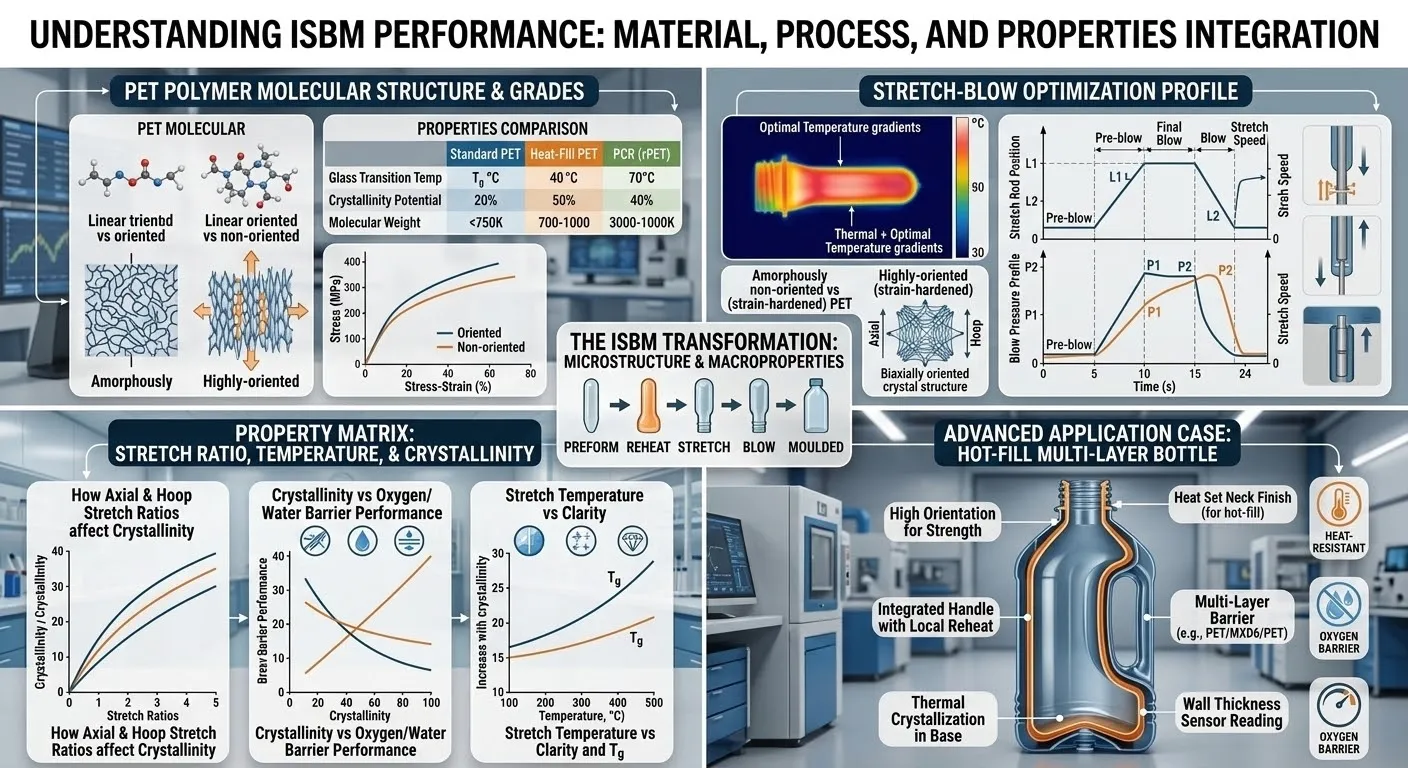
If you heat this amorphous PET slightly, it becomes highly elastic, reaching what is known as its glass transition temperature. If you heat it excessively, it crystallizes in a disorganized manner, turning milky white, opaque, and brittle. This is known as thermal crystallization. The ultimate goal of high performance packaging is to align these molecular chains in a highly ordered, tightly packed structure without inducing thermal haze. This is where the magic of mechanical manipulation comes into play.
The Miracle of Biaxial Orientation
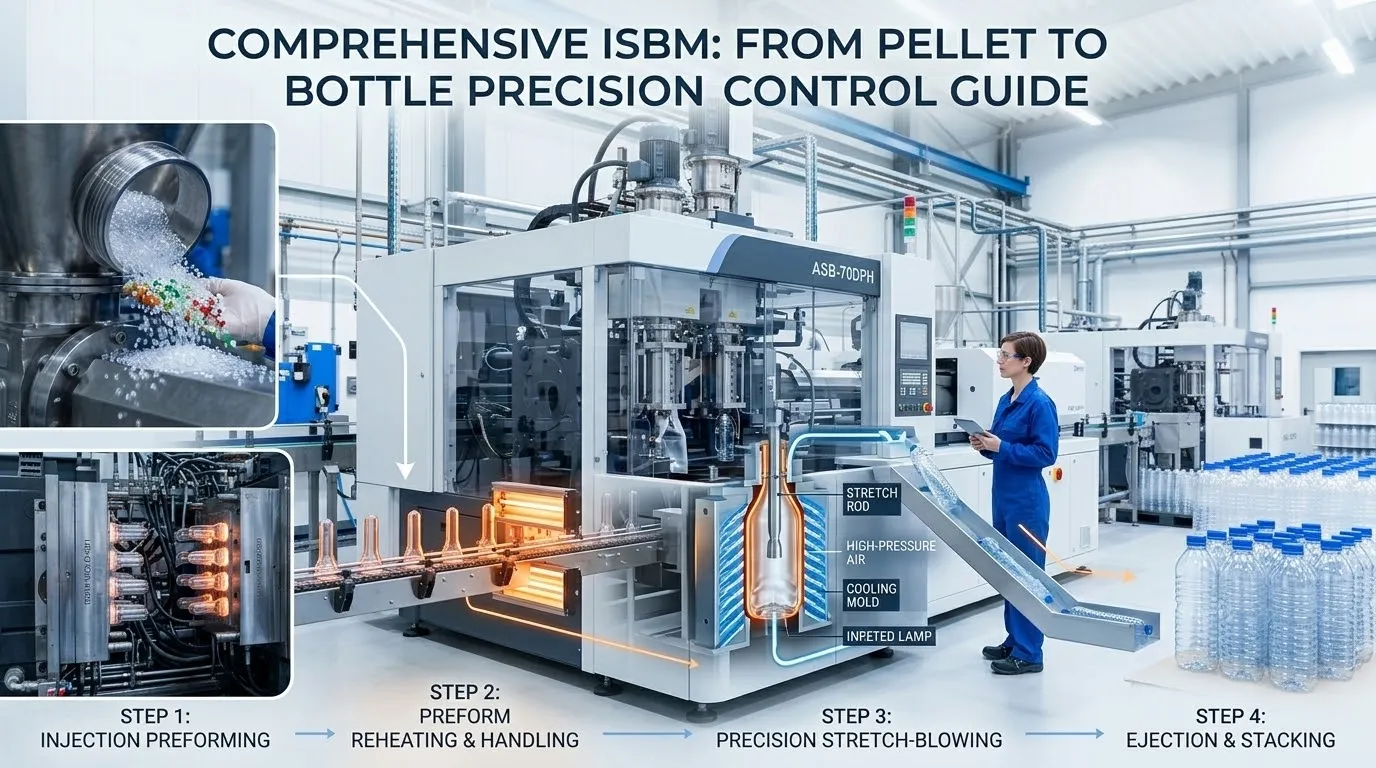
The defining characteristic of ISBM is the “Stretch” phase. This is the exact reason why ISBM and PET are a perfect match. When an injection molded PET preform is heated precisely to its glass transition temperature window, the ISBM machine introduces a mechanical stretch rod. This rod descends into the preform, physically pushing the hot polymer downward toward the base of the blow mold cavity. This action forces the tangled polymer chains to unfold and align themselves parallel to the vertical axis of the container.
Simultaneously, a massive blast of high pressure compressed air inflates the preform outward against the chilled walls of the mold cavity. This forces the polymer chains to stretch and align horizontally around the circumference of the container. This simultaneous vertical and horizontal stretching is called biaxial orientation. Because the plastic is stretched mechanically while in a semi solid state, it undergoes strain induced crystallization. The molecules form a tightly woven, interlocking lattice structure that is fundamentally different from the random amorphous state.
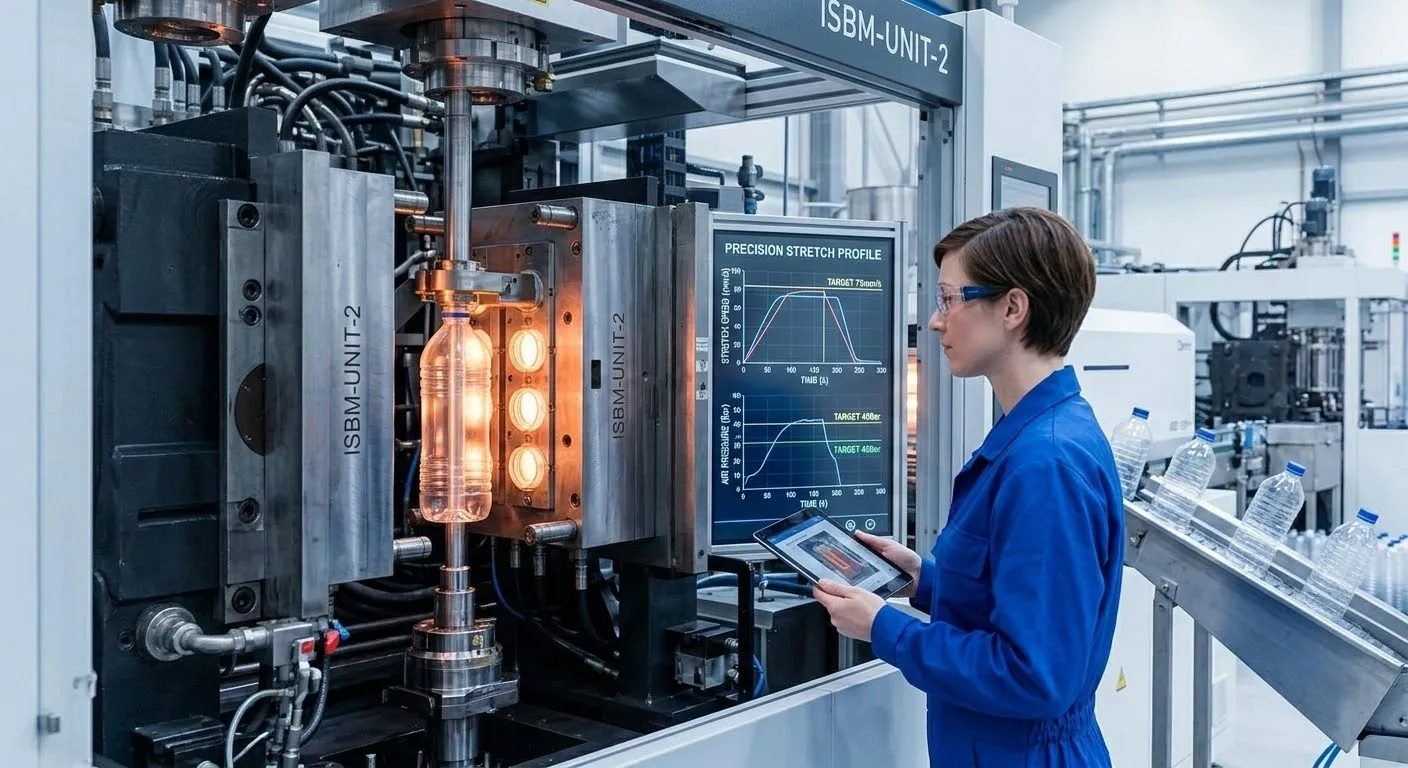
This microscopic realignment is responsible for the staggering physical transformation of the PET material. It is the reason a flimsy, thick preform is transformed into a highly rigid, ultra thin, shatterproof bottle. Other blow molding techniques simply blow air into a molten tube of plastic without the mechanical stretch rod, resulting in zero vertical orientation and minimal strain induced crystallization. Without ISBM, PET cannot achieve its true structural potential.
Why Extrusion Blow Molding Fails with PET
To further illustrate why ISBM is the dominant technology, we must examine why alternative methods fail. Extrusion Blow Molding is a popular process for making milk jugs and large industrial drums, typically using High Density Polyethylene. In this process, the machine extrudes a continuous, hollow tube of completely molten plastic called a parison. The mold clamps around this molten tube, and air blows it outward.
PET has incredibly low melt strength. If you attempt to extrude PET into a hollow tube, the plastic is too fluid; it behaves like hot syrup. Gravity immediately pulls the molten tube downward, causing it to stretch uncontrollably, thin out, and collapse under its own weight before the mold can even close around it. While some highly specialized, heavily modified extrusion machines can process specific, slow crystallizing grades of PET, it is vastly inefficient, produces massive amounts of scrap, and completely fails to generate the biaxial orientation required for high strength applications. Therefore, creating a solid preform first via injection molding, and then stretching it via ISBM, is the only mathematically stable way to process this specific polymer.
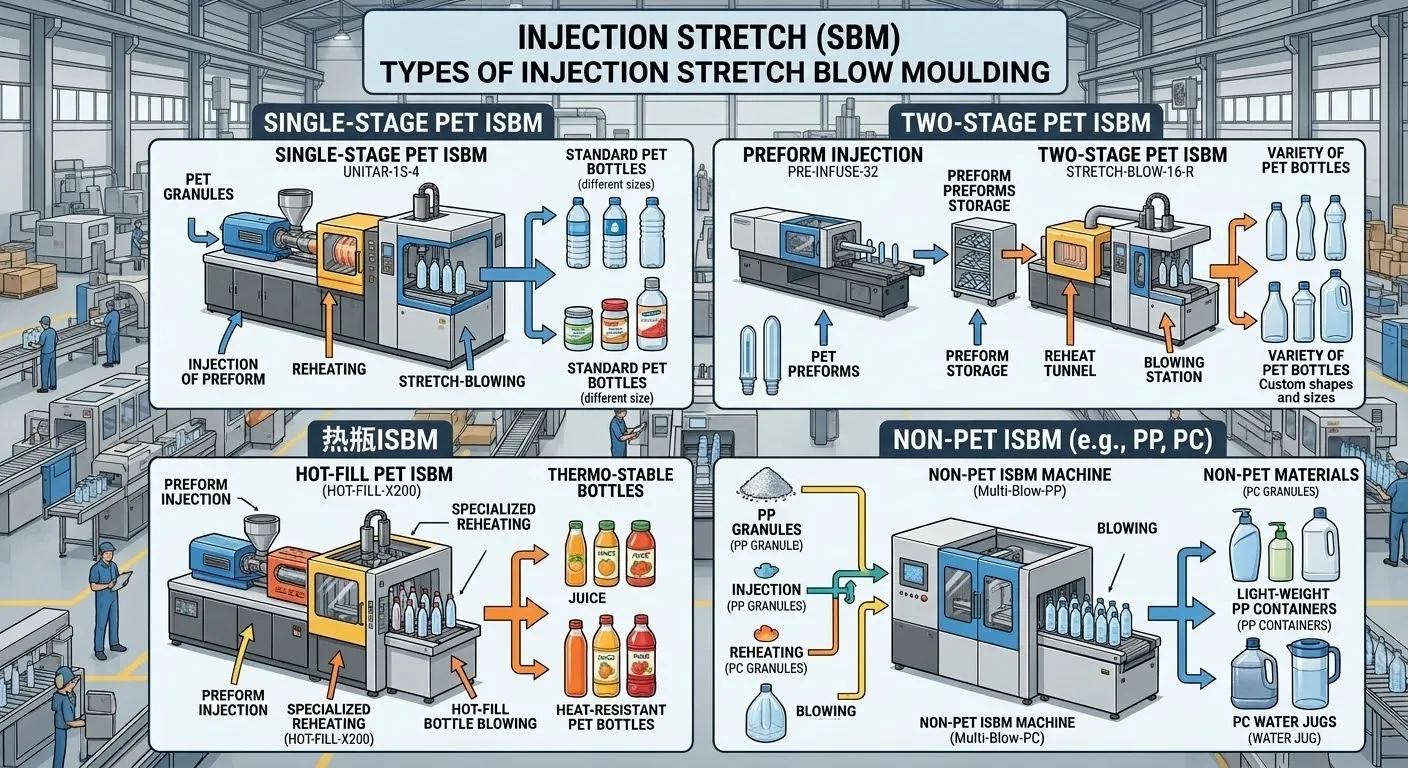
The Pursuit of Optical Perfection
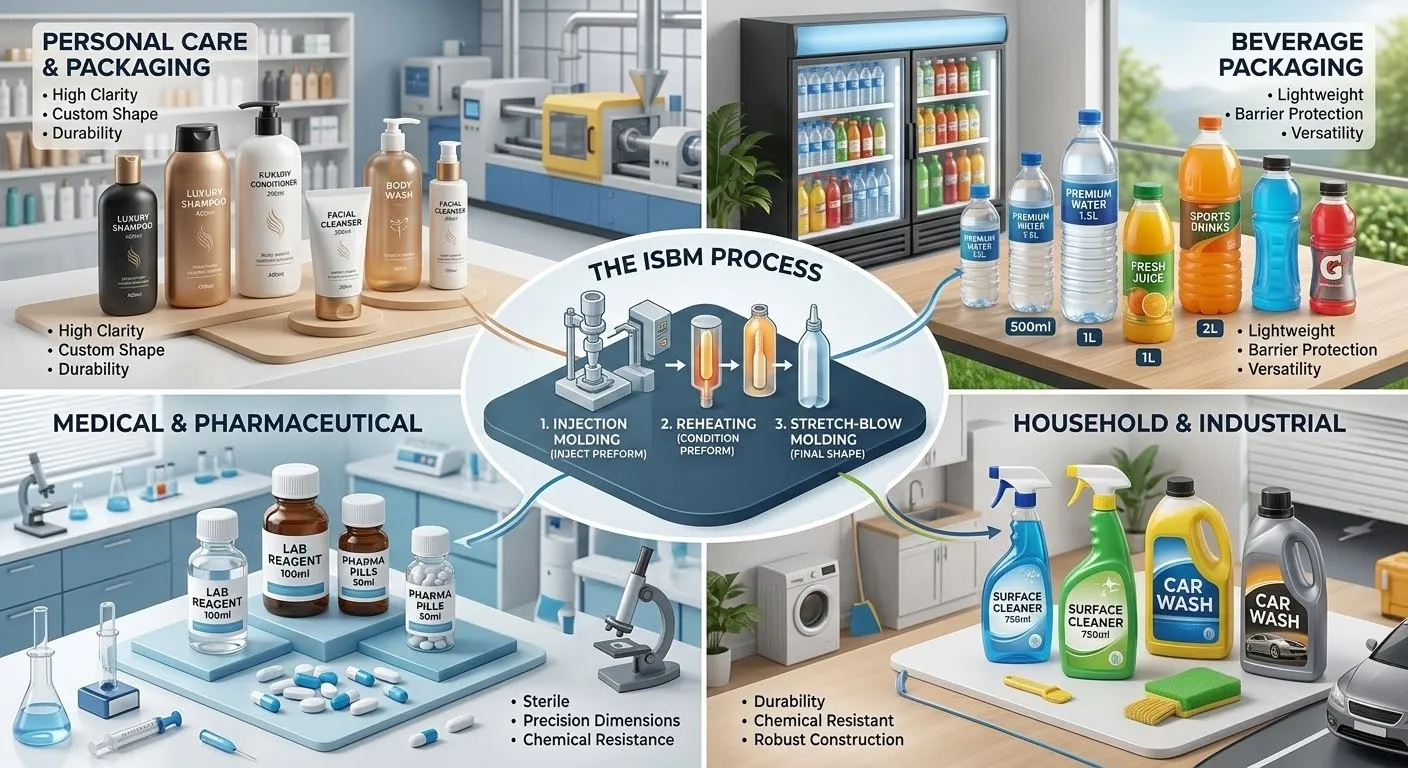
In the luxury cosmetic, premium personal care, and high end beverage markets, the container is a silent salesperson. Visual appeal is absolutely paramount. Brands demand packaging that mimics the brilliant, reflective quality of heavy crystal glass without the associated fragility and exorbitant shipping weight.
The strain induced crystallization achieved through ISBM packs the PET molecules so densely and uniformly that it virtually eliminates the microscopic voids that scatter light. When light passes through the wall of a biaxially oriented PET bottle, it does so with minimal refraction. The result is unparalleled optical clarity and a highly glossy surface finish. Furthermore, because single stage ISBM machines inject the preform and blow the bottle in one continuous cycle, the hot plastic never touches another preform or a storage bin. This ensures the surface remains entirely devoid of microscopic scratches or scuff marks, delivering absolute aesthetic perfection to the retail shelf.
To achieve these flawless, thick walled, glass like designs for boutique cosmetic brands, Ever-Power engineers highly specialized カスタムワンステップ射出延伸ブロー金型. These bespoke tools are meticulously polished to mirror finishes and feature highly complex internal water cooling channels to ensure the heavy plastic mass cools perfectly transparent without developing thermal haze. For deploying these custom molds in agile production environments, the highly compact EP-BPET-70V4 4ステーション射出延伸ブロー成形機 provides the ultimate platform for low volume, ultra premium cosmetic packaging manufacturing.
Uncompromising Dimensional Precision: The Neck Finish
A container is useless if it cannot be sealed effectively. In industries such as pharmaceuticals, agricultural chemicals, and carbonated beverages, the integrity of the seal prevents life threatening contamination, hazardous chemical spills, and the loss of internal gas pressure.
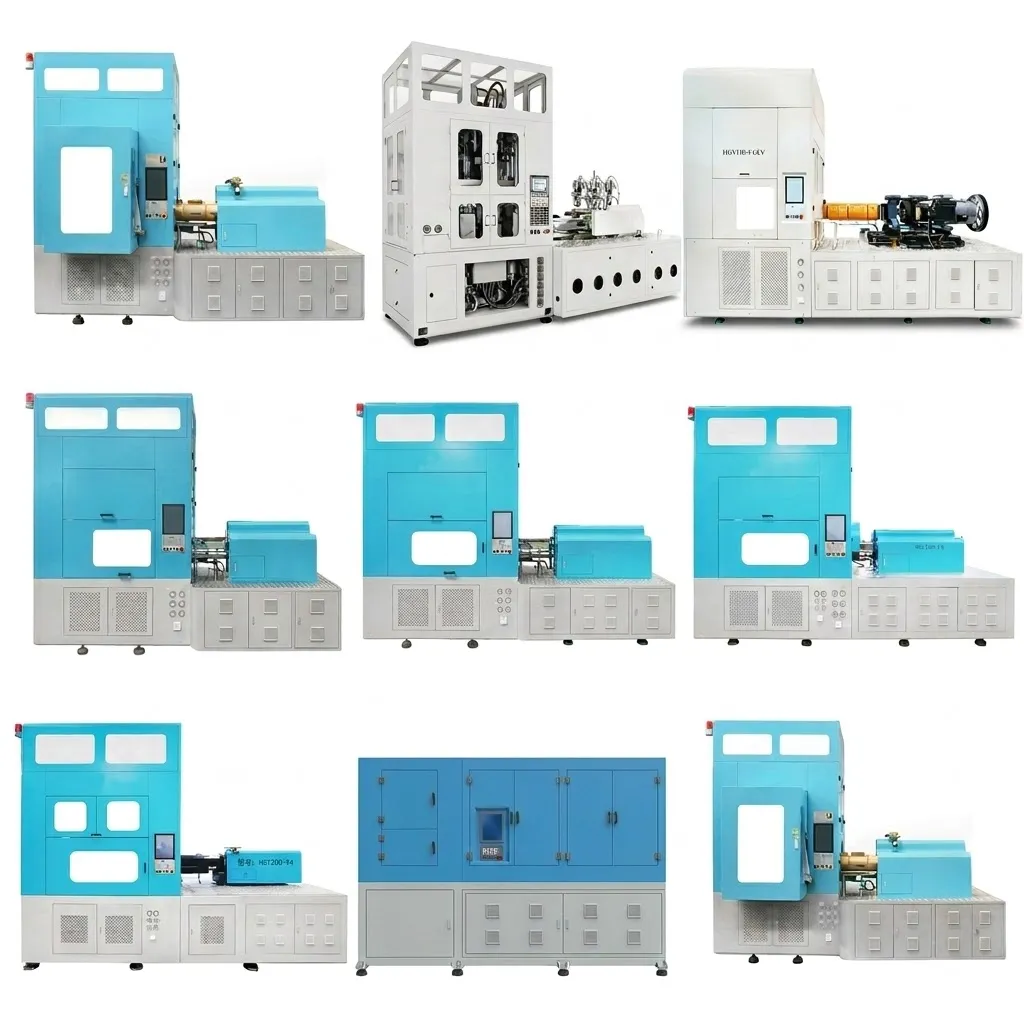
The ISBM process begins with the high pressure injection molding of the preform. During this phase, molten PET is shot into a solid steel mold cavity that defines the neck finish. Because it is molded against solid steel under immense pressure, the resulting threads, sealing rings, and locking mechanisms possess dimensional tolerances measured in fractions of a millimeter. When the bottle is later blown, this neck area is shielded from heat and remains completely unchanged. This guarantees a mathematically perfect fit with any screw cap, lotion pump, or hermetic foil seal.
For medical and pharmaceutical applications demanding absolute precision and zero contamination, we provide the EP-HGY150-V4-EV フルサーボ4ステーション射出延伸ブロー成形機. This all electric platform eliminates hydraulic oil entirely from the actuation systems, guaranteeing a pristine, emission free manufacturing environment suitable for stringent ISO certified cleanroom facilities.
Overcoming Gas Permeation: The Ultimate Barrier
Many consumable products are incredibly sensitive to atmospheric gases. Carbonated soft drinks rely on trapped carbon dioxide to maintain their effervescence. Conversely, edible oils, fresh fruit juices, and vitamin supplements rapidly degrade, oxidize, and spoil if exposed to ambient oxygen. Unoriented plastics have large microscopic gaps between their polymer chains, allowing gas molecules to pass through the container wall relatively easily.
The biaxial orientation achieved by ISBM fundamentally alters the permeability of PET. The tightly interlocked molecular lattice acts as a dense physical shield. It dramatically shrinks the free volume within the polymer matrix, effectively blocking the transmission of oxygen inward and carbon dioxide outward. This supreme barrier property is the exact reason why the global carbonated beverage industry transitioned entirely away from glass and aluminum toward ISBM PET bottles decades ago.
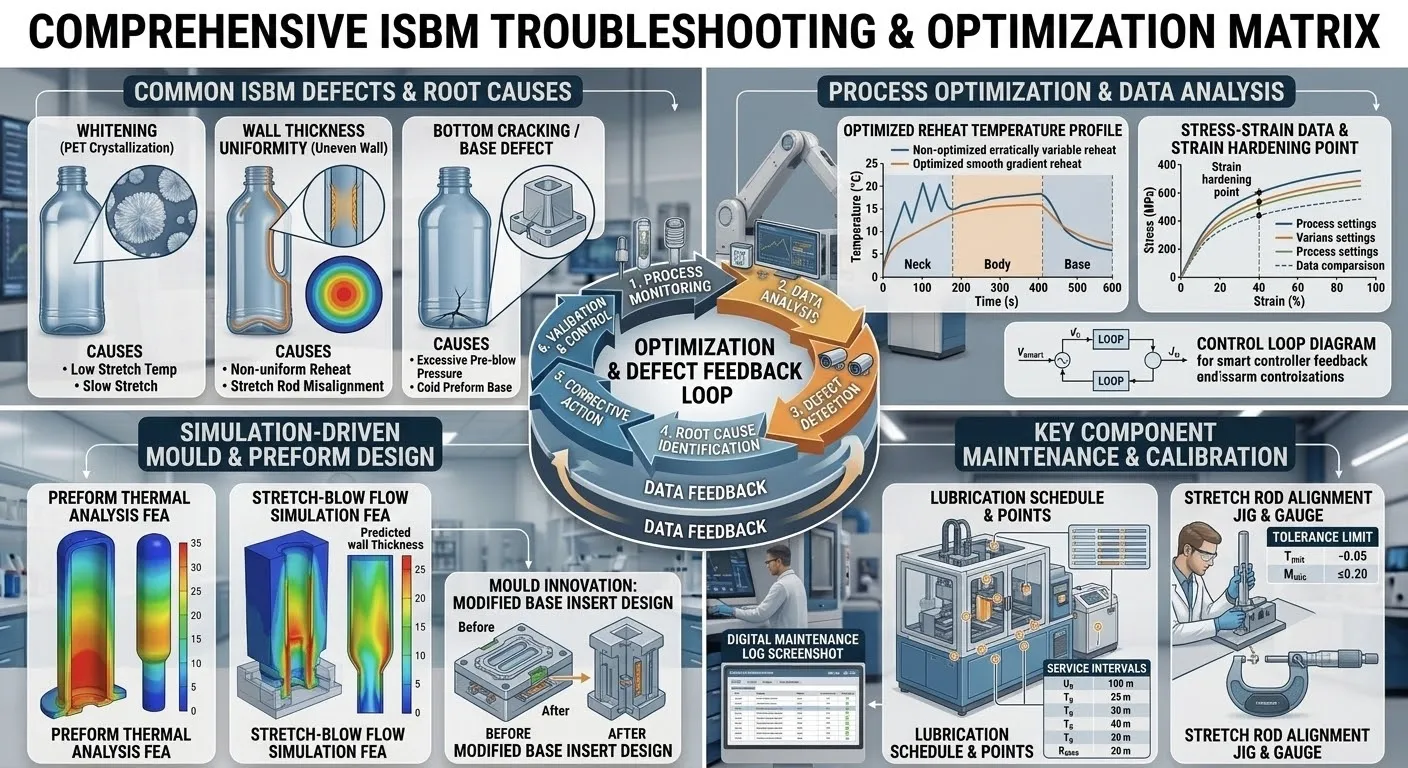
To support the colossal production volumes demanded by the global beverage sector, Ever-Power engineered a massive suite of high capacity machines. The EP-HGY250-V4-B 2列4ステーション射出延伸ブロー成形機 features a revolutionary double row tooling architecture, effectively doubling the hourly output without doubling the factory footprint. For standard high speed operations, the single row EP-HGY250-V4 4ステーション射出延伸ブロー成形機 and the highly reliable EP-HGY200-V4-B 4ステーション射出延伸ブロー成形機 deliver the unrelenting performance required to satisfy global thirst.
The Economic Engine: Aggressive Lightweighting
In industrial manufacturing, polymer resin is the single largest ongoing operational expenditure. Because the ISBM process increases the tensile strength of PET so dramatically, packaging engineers are afforded the unique opportunity to aggressively thin out the walls of the container. This practice, known across the industry as lightweighting, allows a bottle to maintain its burst pressure and top load structural integrity while utilizing a fraction of the raw material.
Over the last two decades, advanced ISBM engineering has allowed manufacturers to strip more than fifty percent of the plastic weight out of standard drinking water bottles. When a multinational corporation produces billions of units annually, shaving even two grams of PET off a single bottle design translates to tens of millions of dollars in saved resin costs. Furthermore, lightweighting drastically reduces the shipping weight of finished goods, resulting in massive reductions in freight fuel consumption and corporate greenhouse gas emissions.
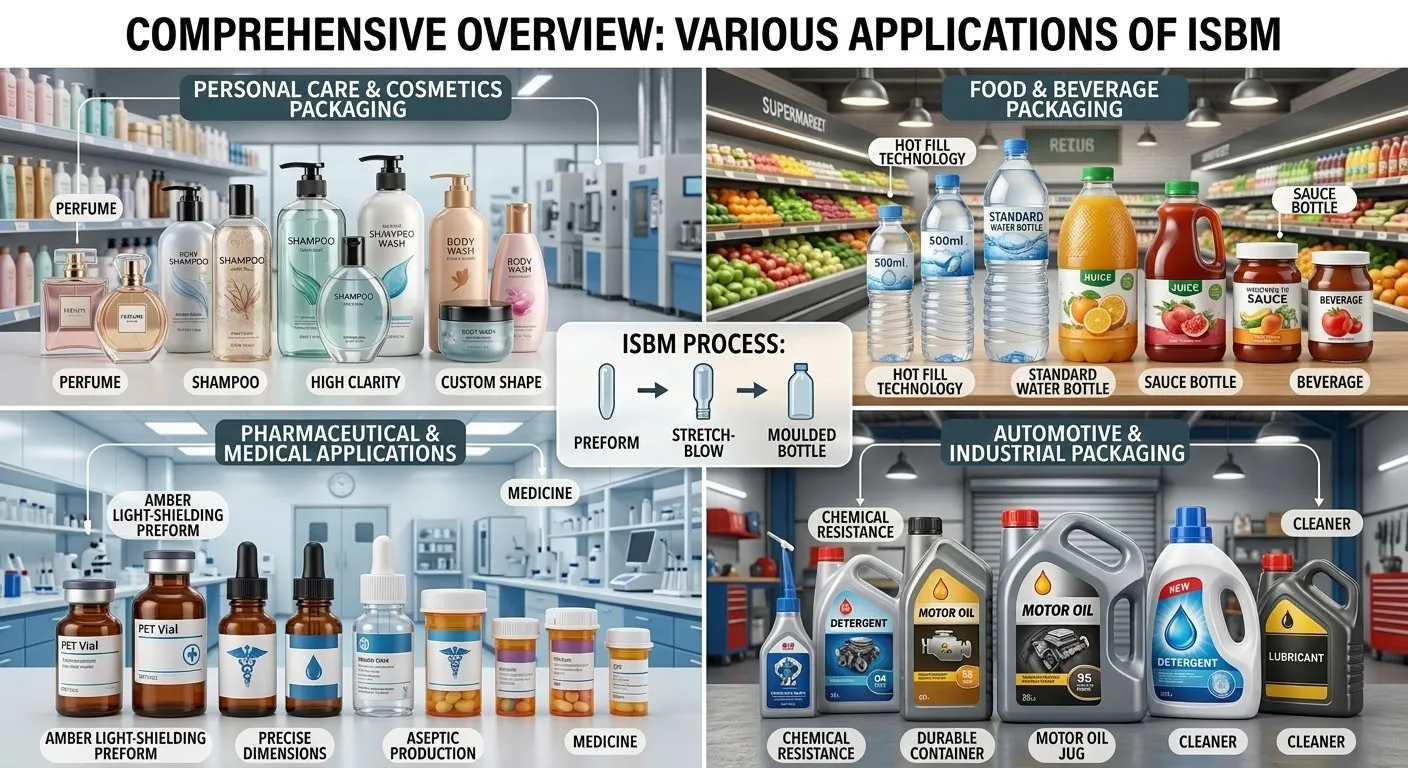
To execute complex lightweighting designs without compromising wall distribution, highly stable machinery is required. The EP-HGY200-V4 4ステーション射出延伸ブロー成形機 provides the exact clamping force and injection consistency necessary to mold ultra thin preforms. For boutique manufacturers and mid sized operations looking to maximize efficiency, the EP-HGY150-V4 4ステーション射出延伸ブロー成形機 そして非常に機敏な EP-BPET-125V4 4ステーション射出延伸ブロー成形機 deliver outstanding thermodynamic control over lightweight material profiles.
Mastering Extreme Geometries: Wide Mouth and Asymmetrical Designs
While cylindrical beverage bottles are ubiquitous, modern retail shelves are dominated by highly irregular shapes designed for ergonomic handling or brand differentiation. Trigger spray bottles feature extreme asymmetrical designs, while peanut butter and mayonnaise require massive wide mouth openings for consumer access. Stretching PET into these extreme geometries is an immense thermodynamic challenge.
Single stage ISBM machines excel at this because they utilize the latent heat from the injection phase. The conditioning station can apply highly specific thermal zones to the preform, making one side significantly hotter and more pliable than the other. This allows the stretch rod to push the plastic deep into the sharp corners of an asymmetrical mold without tearing.
For massive wide mouth food jars, the preform diameter is extremely large, meaning the available stretch ratio is severely limited. To conquer this, immense injection pressure and clamping force are required. Ever-Power engineered the colossal EP-HGY650-V4 4ステーション射出延伸ブロー成形機 specifically for shooting massive, heavy walled preforms for the food sector. For highly sensitive container designs requiring extended thermal soaking and multi stage conditioning to eliminate internal stress, the EP-HGYS280-V6 6ステーション射出延伸ブロー成形機 provides an unprecedented six separate workstations, granting packaging engineers the ultimate canvas for thermodynamic manipulation.
The Sustainable Future: Integrating rPET
The future of PET manufacturing is inexorably linked to the circular economy. The ability to process Post Consumer Recycled PET, commonly known as rPET, is a mandatory requirement for modern ISBM equipment. Recycled flakes introduce severe viscosity fluctuations and erratic thermal absorption rates into the manufacturing environment, which can cause massive defect rates on outdated machinery.
Ever-Power addresses this challenge through advanced automation. Our high performance platforms, including the specialized EP-BPET-94V3 3ステーション射出延伸ブロー成形機 そして超精密 EP-HGY50-V3-EV フルサーボ射出延伸ブロー成形機, utilize millisecond closed loop servo controls. These systems constantly monitor the injection pressure and automatically compensate for the shifting viscosity of rPET, ensuring that every single preform is injected with absolute volumetric perfection, thus driving the sustainability mandate forward without sacrificing container quality.
Your Global Manufacturing Partner
The question of why PET bottles are mostly manufactured by ISBM is definitively answered by the indisputable laws of polymer physics and thermodynamic engineering. The ISBM process unlocks the true potential of Polyethylene Terephthalate, transforming an amorphous resin into a brilliant, indestructible, highly efficient packaging solution. However, mastering this process requires far more than basic machinery; it requires an uncompromising commitment to engineering excellence.
As a deeply established Brazilian manufacturing authority, Ever-Power stands ready to transform your conceptual packaging designs into a high volume reality. Our comprehensive suite of advanced machinery and custom tooling solutions guarantees that regardless of your product volume, geometric complexity, or material requirements, we possess the exact technological framework to execute your project flawlessly.
Elevate Your Packaging Infrastructure Today
Do not let outdated manufacturing methods compromise the structural integrity, aesthetic brilliance, or financial profitability of your brand. Leverage the supreme capabilities of modern ISBM technology with a partner you can trust.
Are you prepared to initiate a comprehensive technical feasibility study for your next generation packaging line? Visit our corporate headquarters at https://isbmmolding.com/ or contact our elite engineering consultants directly at [email protected] to begin architecting your solution.