200トン射出成形機の価格はいくらですか?
The cost of a 200-ton injection moulding machine varies substantially depending on the machine type, drive system, country of manufacture, and application. For buyers specifically looking to produce finished PET or PP bottles, the relevant machine is a one-step ISBM machine — specified by injection clamping force in kilonewtons (kN), not by ton class — and the cost structure is different from general injection moulding equipment. This article explains both.
Understanding Tonnage vs kN Clamping Force
In general injection moulding, machine size is commonly described in tonnes — the clamping force that holds the mould closed during injection. A 200-ton machine exerts approximately 2,000 kN (kilonewtons) of clamping force. This is a large machine by general IM standards, suited to large moulds with many cavities or large parts requiring high injection pressures.
In ISBM machine specifications, injection clamping force is quoted in kN, not tonnes, and the values are much smaller because preform moulds are compact. Ever-Power’s ISBM machine range spans 50 kN to 400 kN — a 400 kN machine is approximately 40 tonnes of injection clamping force, which is considered a large ISBM machine capable of producing containers up to 10 litres. A 200-ton (2,000 kN) injection moulding machine is not an ISBM machine; it is a general injection moulding platform.
Cost of a 200-Ton General Injection Moulding Machine
For a standard general injection moulding machine at 200 tonnes, indicative price ranges by type and origin:
| Machine Type | Origin | Indicative Price Range (USD) |
|---|---|---|
| Hydraulic, standard | China | USD 25,000 – 60,000 |
| サーボ油圧式 | China | USD 40,000 – 90,000 |
| All-electric | Japan / Europe | USD 120,000 – 250,000 |
| Servo-hydraulic, premium | Europe | USD 150,000 – 300,000+ |
These are indicative ranges only. Actual pricing depends on specific configuration, included tooling, delivery, installation, and after-sales package. Prices also fluctuate with raw material costs, exchange rates, and supplier lead times.
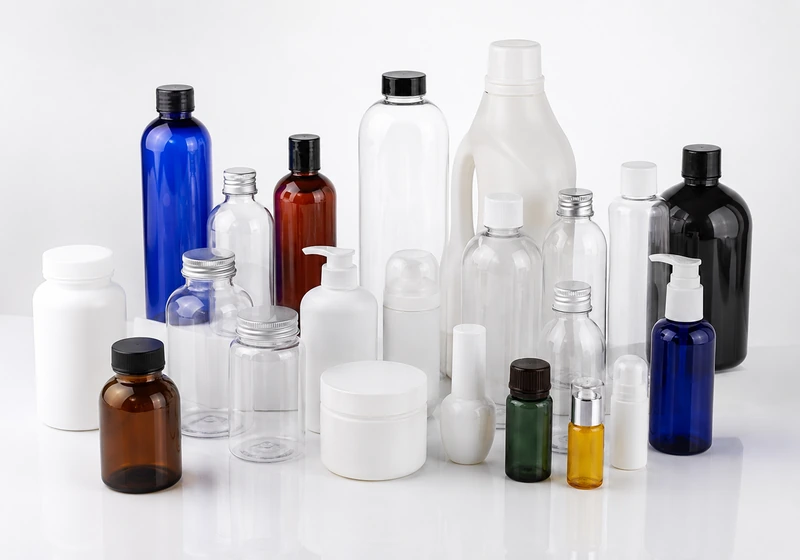
Finished PET and PP bottles from one-step ISBM machines — if your goal is producing bottles rather than solid parts, an ISBM machine is the relevant equipment category.
Cost of One-Step ISBM Machines (For Bottle Production)
If your goal is producing finished PET or PP bottles, the relevant equipment is a one-step ISBM machine. These are specified by injection clamping force in kN and priced differently from general IM machines:
| Ever-Power Model | Clamp Force | Bottle Range | Application |
|---|---|---|---|
| EP-HGY50-V3-EV | 50 kN | 30~500ml | Pharma, cosmetic |
| EP-HGY150-V4 | 150 kN | 100ml~2L | Water, pharma, personal care |
| EP-HGY200-V4 | 200 kN | 200ml~3L | Beverage, food, cosmetic |
| EP-HGY250-V4 | 250 kN | 500ml~5L | Edible oil, large food containers |
| EP-HGY650-V4 | 400 kN | 2~10リットル | Industrial, agrochemical |
Contact Ever-Power directly for current pricing on specific models. Machine cost should always be evaluated alongside mould cost (typically USD 15,000–80,000 depending on cavity count and complexity), installation, commissioning, and the energy cost implications of the drive system over the machine’s operating life.
Total Cost of Ownership: Beyond the Purchase Price
Machine purchase price is typically 30–50% of the total cost of ownership over a 10-year operating life. The remaining 50–70% comprises energy consumption, maintenance and spare parts, mould tooling, and the cost of downtime when the machine is not running. For both general IM and ISBM machines, the drive system has the largest single impact on energy cost:
- Fixed-speed hydraulic — pump runs continuously; highest energy consumption; lowest purchase price
- サーボ油圧式 — pump driven on demand by servo motor; 30–45% energy saving vs fixed hydraulic; moderate purchase premium
- Full servo (all-electric) — each axis driven by independent servo motor; 40–55% energy saving vs fixed hydraulic; highest purchase price; preferred for pharmaceutical and cleanroom applications
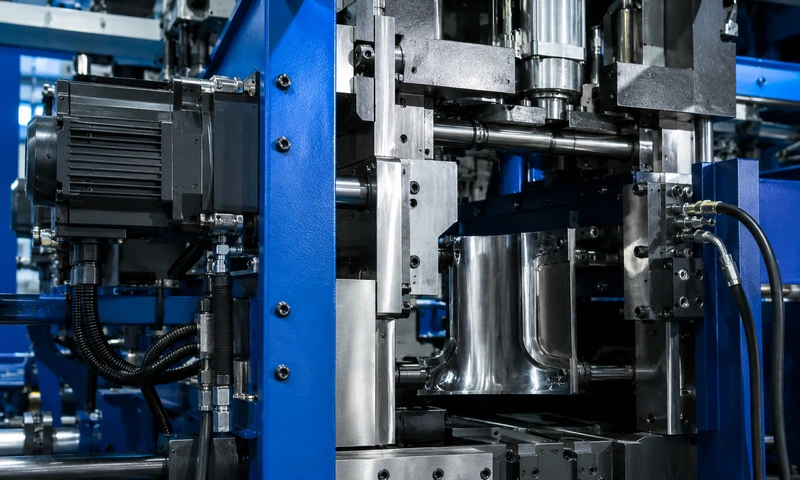
Servo-hydraulic clamping on the EP-HGY series — on-demand pump operation reduces energy consumption by up to 45% versus fixed-speed hydraulic.
Need a price for an ISBM machine matched to your bottle specification?
Send Ever-Power your bottle drawing, resin type, target output, and cavity count — we respond with a machine recommendation and indicative pricing within 24 hours.
Browse the full EP-HGY and EP-BPET ISBM machine range with technical specifications, or contact us for a total cost of ownership comparison for your specific production requirements.
よくある質問
How much does a mould cost in addition to the machine?
For one-step ISBM machines, a matched mould set (preform mould, blow mould, and stretch rod) typically costs USD 15,000–80,000 depending on cavity count, bottle complexity, and mould material. Single-cavity aluminium moulds for simple bottle formats sit at the lower end; 4–6 cavity moulds in beryllium copper or pre-hardened steel for complex shapes sit at the upper end. The mould is the most capital-intensive consumable in ISBM production and should be factored into the total investment calculation from the outset.
Is a 200-ton injection moulding machine suitable for making PET bottles?
Not directly. A 200-ton general injection moulding machine can produce PET preforms, but it cannot produce finished bottles in one operation. To produce finished PET bottles, you need either a one-step ISBM machine (pellets in, bottles out) or a two-step system (a preform injection machine plus a separate reheat blow moulder). If your goal is producing finished bottles with the simplest capital structure, a one-step ISBM machine is the correct choice.
What is the payback period on an ISBM machine investment?
Payback period depends heavily on the application. For a manufacturer replacing purchased containers with in-house ISBM production, payback is typically 18–36 months at commercial production volumes, based on the margin between the purchased container price and the in-house cost of production. For manufacturers replacing an ageing machine, the combined energy saving and maintenance cost avoidance from a modern servo machine typically produces a payback period of 2–4 years on the replacement investment.